 English
 Le français
 Türkçe

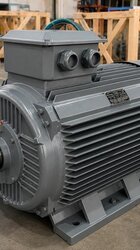
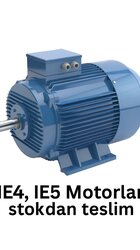
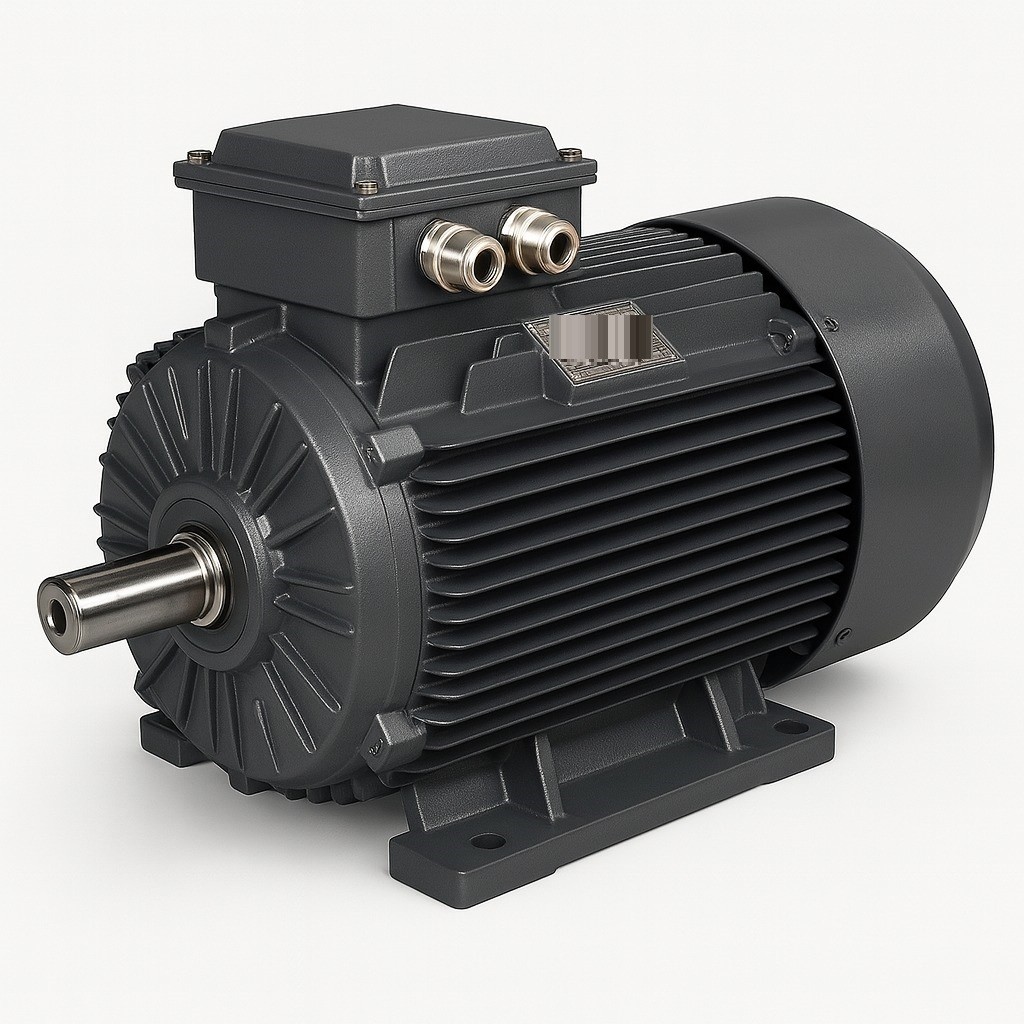

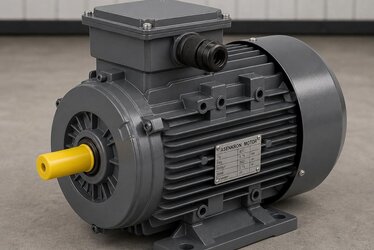
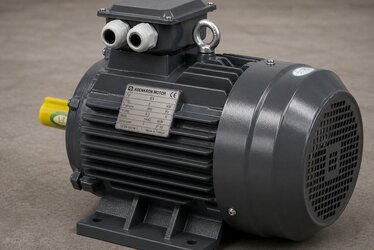
On a line where energy is a large share of running cost, motor selection goes beyond matching power to speed. Over a few years, the efficiency class of a long-running drive creates a consumption difference worth several times what the machine itself cost. IE3, IE4 and IE5 are graded under IEC 60034-30-1.
The Classes and What They Repay
The standard steps low-voltage asynchronous motors through IE1 standard, IE2 high, IE3 premium, IE4 super premium and IE5 ultra premium. Every rung upward means the same shaft power is produced from less grid power. On a 22 kW four-pole machine the one or two points between IE3 and IE4 read as a rounding error, until the drive runs 6000 to 8000 hours a year and the annual consumption figure is compared.
- IE3 (Premium): the minimum legal level in many applications, and a balanced first cost on ordinary pump, fan or conveyor duty.
- IE4 (Super Premium): picked where heavy drives run continuously, with losses clearly below IE3.
- IE5 (Ultra Premium): aimed at the lowest loss level on compressors, main fans and large pump sets that never stop.
Poles, Speed and the Load They Suit
Pole count fixes the synchronous speed on a 400 V / 50 Hz network: two poles turn about 3000 rpm, four poles 1500 rpm, six poles 1000 rpm, and the rotor lags each figure a little through slip. Compressors and certain fans want two poles; general purpose pumps and conveyors settle on four; slow mixers and crushers work better on six. The class only pays out when the pole choice already matches the load.
Frame Material and Weight
Vibration is damped by cast iron, which also moves heat out to the surface, and that is why continuous heavy lines and crushing plants specify it. Aluminium wins where the motor is light enough to carry and mount by hand on lower-power duty. Both materials are available in the same efficiency class; the decision comes from the thermal and mechanical load, not from the class.
IP55, F Class and S1 in Practice
IP55 is the usual protection level: sealed against dust ingress and against jets of water arriving from any direction, which covers dusty ceramic, cement and food plants. Insulation is F class, safe up to a 155 °C winding temperature. Standard duty is S1: the machine carries rated load continuously and the winding settles at one steady temperature.
Where the Saving Shows Up
Water and waste water pumps, ventilation and process fans, production line conveyors, screw and piston compressors, crushers and mills all convert the class difference straight into a lower bill. On drives that run all day, the extra outlay comes back comparatively quickly. Further technical detail on class selection is collected in our motor technical notes.
Working Out the Annual Saving
The method is short. Shaft power divided by efficiency gives the grid power drawn, done for both classes; the difference is then multiplied by the yearly hours and by the tariff paid per kWh. Where a drive runs without stopping, that figure normally covers the price gap inside a few years.
What Oversizing Costs
Peak efficiency on an asynchronous machine lives between 75 and 100 percent loading. Order one much larger than the duty needs and it spends its life down at a light load point, where power factor sags while the efficiency curve falls away from its peak. Measuring the actual load torque before selecting keeps both the first cost and the annual consumption in the right place.
Adding a Frequency Inverter
Speed control pays again on variable-flow pumps and fans, because a centrifugal characteristic makes absorbed power fall with speed cubed: a modest cut in speed at part load already gives a visible energy gain. Low base losses in an IE3 to IE5 machine make that gain larger. Before ordering, check thermal protection and the insulation class against the drive, and afterwards keep the fan cowl and cooling fins clean, since a dust layer raises winding temperature and quietly erodes the efficiency you paid for.