 English
 Le français
 Türkçe


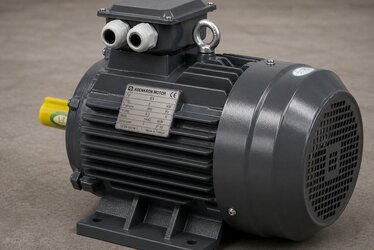
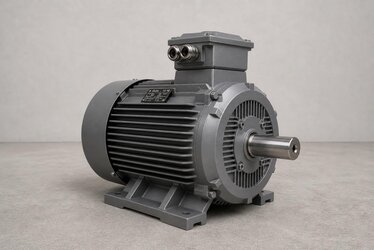
Three-Phase Motor Types, Selection and Prices
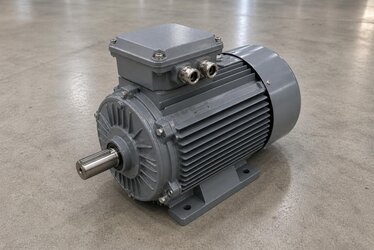
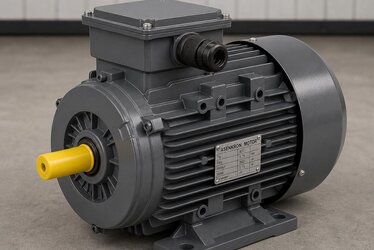
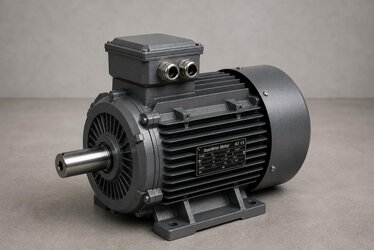
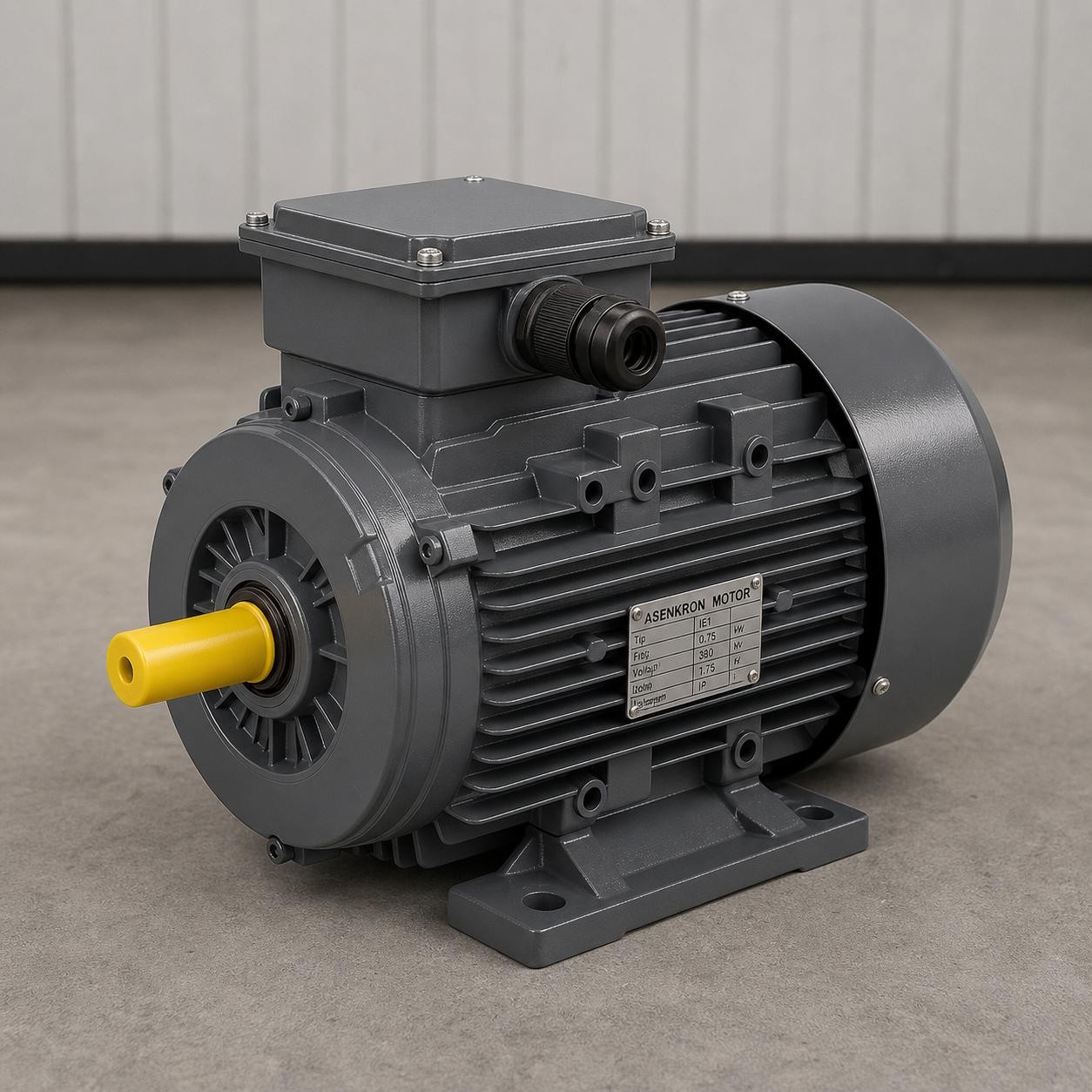
A three-phase motor is an industrial electric motor that converts energy supplied by a three-phase electrical network into mechanical motion. Three-phase induction motors are widely used in industrial machinery thanks to their balanced operation, high efficiency, and broad power range.
Three-phase electric motors are used in pumps, fans, conveyors, compressors, crushing and screening plants, concrete batching plants, feed mills, cranes, and recycling machinery. A correctly selected motor helps equipment operate reliably, keeps energy consumption under control, and reduces maintenance requirements.
Where Are Three-Phase Motors Used?
Three-phase motors are suitable for equipment operating continuously or under heavy loads. Main application areas include:
- Water pumps, booster systems, and fire-fighting pumps
- Fans, ventilation, smoke extraction, and HVAC systems
- Conveyors, elevators, and material-handling systems
- Compressors and compressed-air equipment
- Crushing and screening plants, crushers, and vibrating machinery
- Concrete batching plants, asphalt plants, and mining equipment
- Feed, flour, food-processing, and packaging machinery
- Cranes, gearboxes, mixers, and special-purpose machinery
Why Are 1500 RPM Three-Phase Motors So Common?
One of the most commonly used motor types in Türkiye is the 4-pole, approximately 1500 RPM three-phase motor. Due to the induction operating principle, its actual operating speed is generally between 1400 and 1470 RPM, depending on the load.
1500 RPM three-phase motors offer a suitable speed-torque balance for pumps, fans, conveyors, compressors, and geared systems. For applications requiring higher speed, 3000 RPM motors can be selected. For applications requiring higher torque at lower speed, 1000 RPM motor options may be more suitable.
What Should Be Considered When Selecting a Three-Phase Motor?
Selecting the right three-phase motor should not be based on kW rating alone. The following details should be evaluated together:
Power and load characteristics
The motor power must match the continuous load requirement of the machine. Load characteristics are particularly important for equipment with demanding starting conditions, such as conveyors, crushers, mixers, and presses.
Speed and number of poles
At 50 Hz, 2-pole motors operate at approximately 3000 RPM, 4-pole motors at approximately 1500 RPM, and 6-pole motors at approximately 1000 RPM.
Frame and mounting type
B3 foot-mounted, B5 large-flange, B14 small-flange, B34 foot-and-small-flange, and B35 foot-and-large-flange motors meet different mounting requirements. When replacing an existing motor, the frame size, shaft diameter, flange dimensions, and mounting-hole measurements must be checked.
Efficiency class
IE3 and IE4 efficiency-class motors can help reduce energy costs, especially in equipment operating for long hours. In addition to the purchase price, annual operating time and electricity consumption should also be considered.
Three-Phase Motor Prices: What Determines Them
The following table lists standard, mainly IE3, 1500 RPM, B3 foot-mounted three-phase motors by power. Prices vary depending on brand, frame material, mounting type, efficiency class, and stock availability. You can see the current price with the See Price button on the product page.
| Motor Power | Price |
|---|---|
| 0.55 kW | See Prices |
| 0.75 kW | See Prices |
| 1.1 kW | See Prices |
| 1.5 kW | See Prices |
| 2.2 kW | See Prices |
| 3 kW | See Prices |
| 5.5 kW | See Prices |
| 7.5 kW | See Prices |
| 11 kW | See Prices |
| 15 kW | See Prices |
| 18.5 kW | See Prices |
| 30 kW | See Prices |
| 45 kW | See Prices |
| 90 kW | See Prices |
| 110 kW | See Prices |
You can see the current price of each motor in the table with the See Price button. Especially for motors rated at 18.5 kW and above, cast-iron housing, IE3/IE4 efficiency class, voltage, bearing design, and delivery time can noticeably affect the price. For an accurate quotation, power, speed, frame, and mounting details should be specified together.
What Determines Three-Phase Motor Prices?
Three-phase motor prices vary according to:
- Motor power and speed
- IE2, IE3, or IE4 efficiency class
- Aluminium or cast-iron housing
- B3, B5, B14, B34, and B35 mounting type
- Copper winding, VPI application, and bearing selection
- Voltage, frequency, thermal protection, and special application requirements
- Stock availability, delivery time, and current material costs
Therefore, two motors with the same power rating may have different prices. For a fair comparison, power, speed, frame, efficiency class, and mounting type should all be the same.
DRG Motor Three-Phase Motor Solutions
DRG Motor supplies three-phase induction motor solutions in 1000, 1500, and 3000 RPM alternatives, with a primary focus on 1500 RPM motors. Its main product program includes IE3 and IE4 efficiency-class motors in the 0.55–355 kW range, available for B3, B5, B14, B34, and B35 mounting requirements.
100% copper winding, VPI application, the right housing selection, and technical guidance based on operating conditions are important factors for motor service life and operational continuity. Technical specifications should be evaluated together when selecting motors for pumps, fans, conveyors, compressors, crushing and screening equipment, and other industrial applications.
For a three-phase motor quotation and correct product selection, please share the required power, speed, mounting type, duty cycle, and the machine application. Visit our electric motors page to explore the full product range.
Click to see current prices and order these motors nowSEE PRICES →
Frequently Asked Questions
What voltage does a three-phase motor use?
In industrial applications in Türkiye, three-phase motors are generally used with 380–400 V, 50 Hz electrical networks. The voltage values and star/delta connection shown on the motor nameplate must always be checked.
Why is the actual speed of a 1500 RPM motor lower?
The synchronous speed of a 4-pole motor is 1500 RPM. Due to its induction operating principle, the actual speed under load is generally lower, typically between 1400 and 1470 RPM.
Is checking only the kW rating enough when purchasing a three-phase motor?
No. Speed, frame size, mounting type, shaft diameter, operating time, ambient conditions, and the machine’s load characteristics are also required for correct motor selection.
What is the difference between an IE3 and an IE4 motor?
IE4 motors target higher energy efficiency than IE3 motors. The energy-cost advantage can become more significant in high-power applications that operate for long hours.