 English
 Le français
 Türkçe

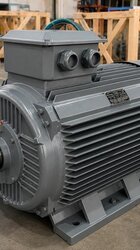
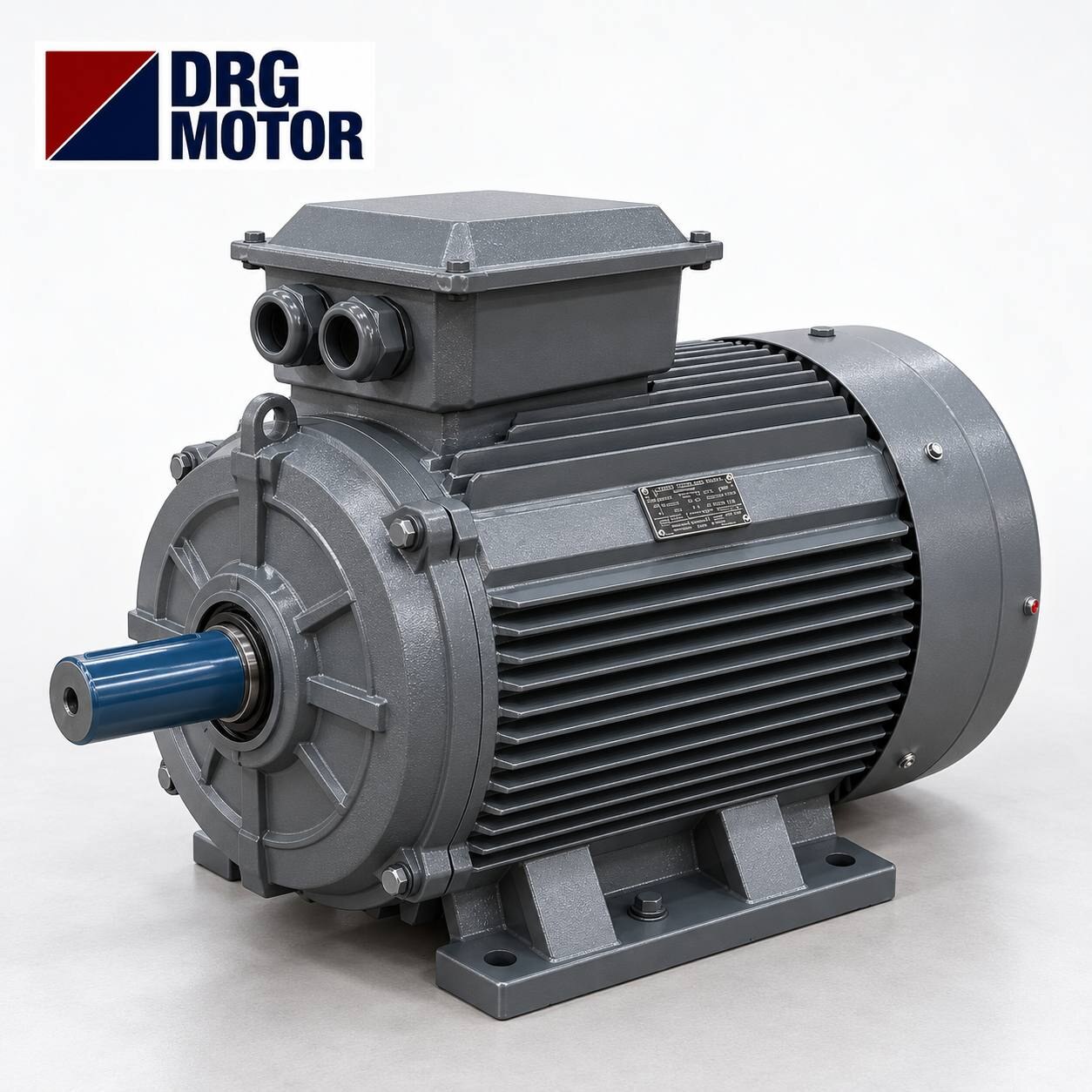

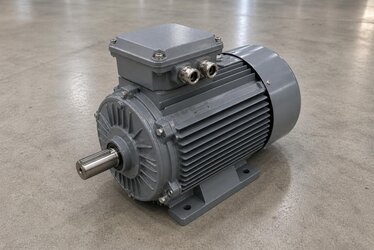
Roughly 50 HP in imperial terms, 37 kW is the rating where medium-heavy industrial drives start. Crushers and screening plants, conveyor lines, large centrifugal pumps and air compressors all cluster around it. Cast iron frames at this size are the norm rather than the option, and the choice that follows is which efficiency class the running hours justify.
Where 37 kW Sits in the IEC Ladder
Between 30 kW and 45 kW on the standard step chart, fed from a 400 V / 50 Hz supply, usually in a 200L or 225 frame depending on pole count. It is the last stretch of low voltage before medium voltage becomes the sensible answer. Rated current is around 65 A on a two pole model and 68 to 70 A on a four pole, so cable cross section, contactor and thermal overload are sized from those figures and not from the kW alone.
Pole Count Sets the Speed, Speed Sets the Torque
- 2 pole, 3000 rpm: high speed, low torque. Centrifugal pumps, high pressure fans, compressors.
- 4 pole, 1500 rpm: the common choice. Conveyors, agitators, general drives, gearbox pairings.
- 6 pole, 1000 rpm: low speed, high torque. Crushers, mills, loads that start hard.
Actual shaft speed sits slightly below synchronous because of slip; a four pole unit turns somewhere between 1450 and 1480 rpm at full load. The squirrel cage rotor keeps that slip small, which is what keeps the power transfer efficient.
Why Grey Iron at 37 kW
Mass becomes an advantage once the shaft carries real radial load. Grey iron damps vibration, suppresses resonance and takes the shock a crusher or a reciprocating compressor feeds back through the coupling. Its thermal behaviour is steadier than aluminium under sustained load.
IE3 or IE4
Efficiency classes come from IEC 60034-30-1; every step up draws less electricity for identical shaft output.
- IE3, Premium: about 93.3 percent at full load, meeting the legal minimum across most applications in Europe and Turkey.
- IE4, Super Premium: about 94.2 percent and above, worth the premium where the machine runs long hours.
What the One Point Is Actually Worth
Take a 37 kW motor running 16 hours a day, 300 days a year: 4800 operating hours. The roughly one percent gain from IE3 to IE4 cuts the electrical draw by about 0.4 kW on average, close to 1900 kWh over the year. Repeat that across dozens of similar drives on one site and the invoice difference stops being theoretical.
Protection, Insulation, Duty
- IP55: dust-tight, with water jets from any angle doing no harm; the code for dusty, humid plant.
- F class insulation: windings rated to 155 °C, usually held to the B class rise so they last longer.
- S1: designed to run continuously at rated load.
How the 37 kW Frame Is Fixed
- B3, foot mounted: bolted to a base, driving through a coupling.
- B5, flange mounted: bolted straight onto a pump or gearbox.
- B14, face flange: the smaller flange, used in compact assemblies.
- B35: foot and flange together, doubly supported.
Typical Duties
Centrifugal and submersible pumps, large industrial fans, air compressors of screw and piston type, belt conveyors, crushers, granulator mills and agitators. Add a frequency inverter and speed becomes continuously adjustable, which sharpens process control and softens the start enough to protect the mechanics downstream.
Settling the Specification
Decide the load character first, constant torque or variable, then the required speed, starting conditions, ambient and running hours. Push the class toward IE4 where the hours are long, specify cast iron for the frame where the load is heavy, and set protection from the environment rather than the catalogue default.