 English
 Le français
 Türkçe


Whenever an electric motor burns out in an industrial setting, the same question arises: should we rewind this motor or buy a new one? Rewinding is the process of stripping out the coils of a burnt or faulty motor and winding it again from scratch with new conductors. Done correctly, it is an economical and sustainable solution; but when poor workmanship is involved, the motor's efficiency can drop permanently. In this article we examine, drawing on DRG's field experience, how rewinding affects motor efficiency, when the efficiency loss stays small, when it leads to a serious drop in performance, and what to consider when making the decision.
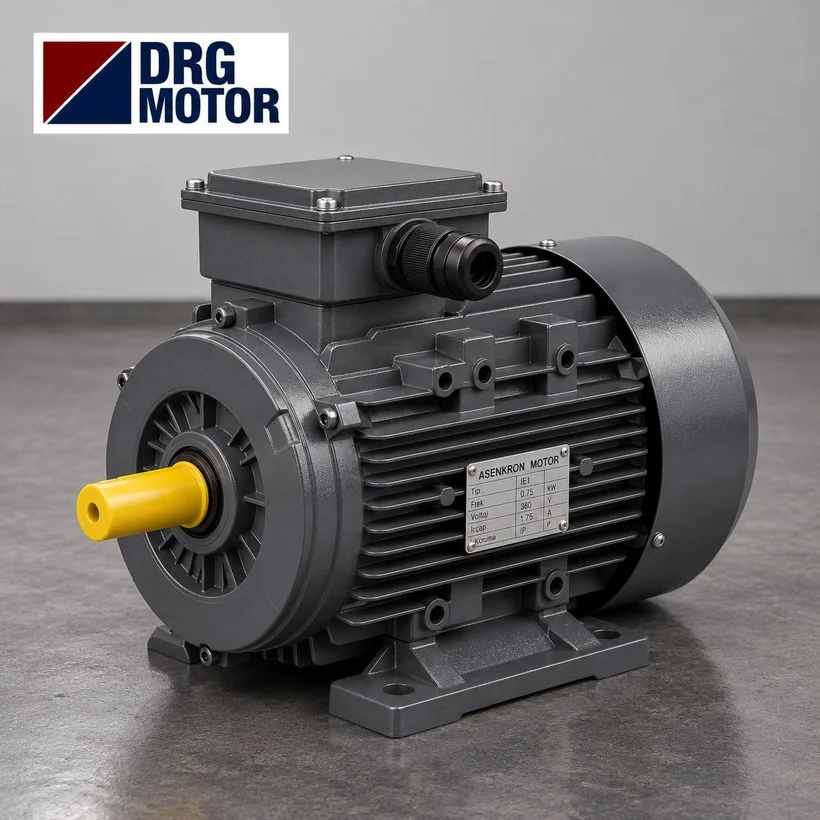
What Exactly Is Rewinding?
The heart of an induction motor is the copper windings in the stator. These windings are designed according to a specific wire cross-section, number of turns and insulation class. When the windings deteriorate due to heat, moisture, overload or voltage fluctuation, the motor burns out. In rewinding, the old windings are completely removed, the insulation material in the stator slots is cleaned, and new windings with the same electrical properties are installed. The quality of the work depends on how faithfully each of these steps follows the original design. We examined the decisive role of winding workmanship on efficiency in detail in our article on electric motor winding quality.
Does Rewinding Reduce Efficiency?
The short answer: usually very little, sometimes none at all. The long answer depends on the quality of the workmanship. In a rewind done in a good workshop, the efficiency loss often stays negligible and is unnoticeable in practice. By contrast, careless stripping or the wrong choice of materials can lower efficiency noticeably. Over the years, that translates into a significant energy cost. Considering that a motor runs for hundreds, even thousands of hours over its lifetime, it is important to grasp how even a small efficiency difference grows into a large energy loss over time.
An important point is this: rewinding itself is not an operation that reduces efficiency. What causes efficiency loss is the mistakes made during the winding process. The problem is not in the idea of rewinding, but in how it is carried out. The same motor, wound in two different workshops, can give completely different results. That is why a blanket judgement like "rewinding reduces efficiency" is wrong; the correct statement is "poorly done rewinding reduces efficiency."
Why Is the Core Lamination Stack So Important?
The motor's magnetic core is formed by pressing thin silicon-steel laminations on top of one another. Each lamination is separated from its neighbour by a thin layer of insulation. This layer limits the eddy currents that circulate between the laminations. The biggest source of efficiency loss is precisely the damage to this insulation during rewinding.
The Danger of High-Temperature Stripping
The most common method of easily stripping out old windings is to heat the stator in an oven and burn off the insulation and varnish. The critical point here is the oven temperature. If the temperature is not kept under control, the thin insulation separating the laminations also burns, and the laminations partially weld together. The generally accepted limit is that the oven temperature must not exceed a certain threshold; above that threshold, the core insulation degrades irreversibly. In controlled ovens, the temperature is continuously monitored and the core is protected by cooling when necessary.
Workshops in a hurry tend to overheat the oven to speed up the job. This choice, made to save a few minutes, permanently lowers the motor's efficiency, because core damage cannot be compensated for no matter how good the subsequent winding is. For this reason, the stripping stage is perhaps the most critical yet most neglected step of rewinding.
How Do Eddy Current Losses Increase?
When the lamination insulation is damaged, the laminations make electrical contact with one another and effectively turn into a thick metal block. As the magnetic field changes, larger eddy currents begin to circulate in this block. These currents turn into heat, increasing iron loss. You can find how motor efficiency losses are classified in our article on electric motor efficiency losses.
The Effect of Choosing the Wrong Wire Cross-Section
The cross-section of the copper wire used in rewinding must be the same as the original. If thinner wire is used, the winding resistance increases, copper loss (I²R loss) rises, and the motor heats up more. Using thinner wire to cut costs is a choice that looks like a saving in the short term but comes back as energy loss and early failure in the long run. Since copper loss is proportional to the square of the current, even a small increase in resistance turns into serious heating under load, and this heat both lowers efficiency and shortens insulation life.
Some workshops may tend to use aluminium wire instead of copper. Aluminium has a higher resistance than copper; to achieve the same performance, a thicker cross-section is needed, and this does not always fit in the slots. Winding a motor that was originally copper with aluminium means, in most cases, a step backwards in terms of efficiency. The correct decision is to stay faithful to the original material and cross-section.
Click to see current electric motor prices and order nowSEE PRICES →
Number of Turns and Connection Diagram
Each winding has a specific number of turns, and this number determines the motor's speed, torque and magnetic saturation point. If the number of turns is taken wrong during rewinding, the motor either produces insufficient torque or runs inefficiently by entering excessive magnetic saturation. That is why it is essential to carefully record the original winding data before stripping.
The Insulation Class Must Be Preserved
Motors are built according to insulation classes such as F or H. If a lower-class varnish or insulation material is used in rewinding, the motor cannot withstand the same temperature and its life is shortened. A quality rewind uses material at least equal to the original class.
Slot Fill Factor
The copper fill factor in the stator slots is a critical parameter for efficiency. A good fill means more copper, and that means lower resistance. In rushed or carelessly hand-done windings, the fill factor drops, air gaps increase, and the motor both heats up and vibrates.
Varnishing and Impregnation
After the windings are completed, they are impregnated with varnish. This process protects the windings from moisture, fixes them mechanically and improves heat conduction. If impregnation is done incompletely, the windings wear out from vibration, absorb moisture, and the risk of short circuit increases. Quality impregnation directly extends the life of a rewound motor.
Efficiency Loss Scenarios
The table below summarises the typical effect of different workmanship qualities on efficiency. The ratings reflect general trends based on industry observation.
| Workmanship Quality | Typical Efficiency Effect | Outcome |
|---|---|---|
| Controlled oven, correct wire and winding | Negligible loss | Unnoticeable in practice |
| Mid-level workshop, small deviations | Small loss | Acceptable |
| Careless high-temperature stripping | Noticeable loss | Energy cost rises |
| Thin wire + low fill + core damage | High loss | Consider a new motor |
When Does Rewinding Make Sense?
For high-power motors (generally above 7.5 kW), rewinding is often economical. The larger the motor, the higher the value of the copper and cast housing inside it, and reusing them is advantageous both in terms of cost and environment. We elaborated on this circular approach in our article on electric motor remanufacturing and the circular economy.
Large motors have another advantage: sourcing a new one can take time. Rather than waiting for a new specialised motor, rewinding the existing one often gives a faster result. In facilities where production downtime is very costly, this time saving alone can justify rewinding. Still, winding quality should not be sacrificed for the sake of speed.
When Is a New Motor More Appropriate?
For low-power motors, buying a new motor is often more sensible than rewinding. Moreover, if the old motor is in a low efficiency class, switching to a high-efficiency new motor instead of rewinding it is far more profitable in the long run. We examined this topic in our article on high-efficiency electric motors.
Compare Efficiency Classes
If your burnt motor is in a low efficiency class, rewinding keeps it at that same level (at best). Yet switching to a higher-efficiency next-generation motor can provide a noticeable drop in your annual energy consumption. To see how this difference plays out over time, take a look at the high-efficiency motor payback period calculation.
Think About Life Cycle Cost
The real cost of a motor is determined not by the moment of purchase but by the energy it consumes over its lifetime. In most industrial motors, energy makes up by far the largest share of the total cost. When making the rewinding decision, you need to look not just at the repair cost but at the whole motor life cycle cost.
The Rotor Side Should Not Be Ignored
Rewinding usually concerns the stator, but the condition of the rotor also affects efficiency. Broken rotor bars or a worn rotor make the motor inefficient no matter how good the winding is. We addressed the importance of rotor winding and copper quality in our article on rotor copper-wound electric motors.
Tests After Rewinding
A quality workshop always tests after winding is complete. Winding resistance, insulation resistance (megger), surge test and, where necessary, no-load current measurement confirm that the winding is sound. If these tests are skipped, the motor may fail again shortly after being sent to the field.
What Does the No-Load Current Test Tell Us?
The current a rewound motor draws when run with no load gives a clue about the health of the core. A higher-than-expected no-load current usually indicates that the core insulation has been damaged and iron loss has increased. This simple test can catch hidden efficiency losses before the motor goes into the field.
Vibration and Noise Check
A poorly done winding can create an unbalanced magnetic field, leading to vibration and noise. A quiet, vibration-free motor after rewinding is a good indicator of workmanship quality. Our article on reducing electric motor noise and vibration offers guidance on this subject.
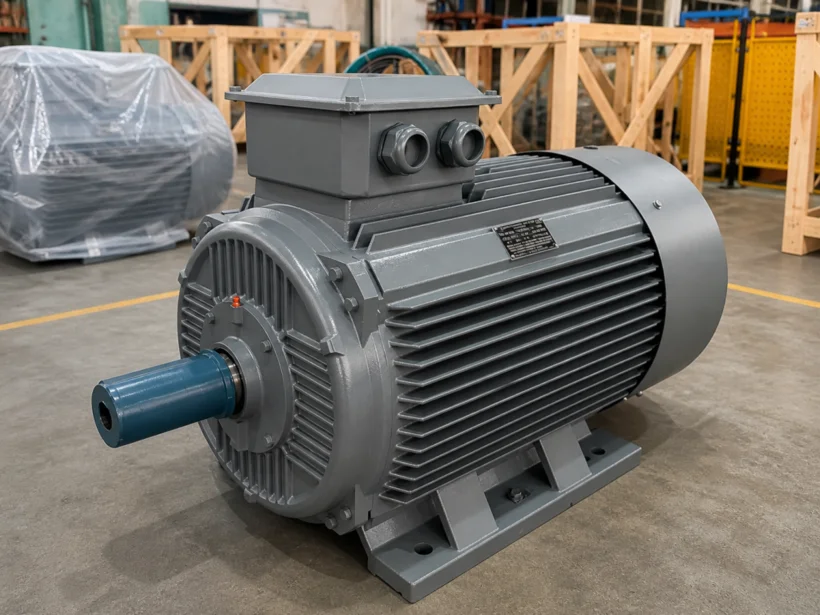
How Is the Cost Comparison Made?
When deciding, put three items side by side: the rewinding cost, the investment in a new motor, and the annual difference in energy consumption between the two options. Spending heavily to rewind an old, low-efficiency motor is, in most cases, a false saving.
Backup Strategy in Critical Processes
On critical lines where production stoppage is very costly, it is wise to bring a spare motor into service while having the burnt motor rewound. This way the process is managed without rushing the winding quality and without stopping production.
Rewinding from an Environmental Perspective
Producing a new motor consumes considerable energy and raw materials due to cast housing and copper production. Rewinding a motor with a sound housing means reusing these resources. As long as the efficiency loss is kept small, rewinding is an environmentally friendly choice. A motor's housing can last for decades; the windings, on the other hand, can be renewed several times over its lifetime. Scrapping a sound housing and buying a new motor each time is wasteful both economically and environmentally.
But there is another side to this equation. If rewinding significantly reduces efficiency, the extra energy the motor consumes over its lifetime quickly cancels out the savings made in the production process. Therefore, the environmental gain materialises only on condition that the winding preserves high efficiency. A low-quality winding harms both the wallet and the environment.
The Importance of Choosing the Right Workshop
The success of rewinding depends entirely on workmanship quality. A workshop that uses a controlled oven temperature, records the original winding data, selects the correct wire and insulation material, and tests after winding keeps efficiency loss at a negligible level. You can explore DRG's industrial motor portfolio in our article on industrial electric motors.
Common Mistakes
The mistakes we encounter most often in the field are these: not controlling the oven temperature, stripping without recording the original winding data, using thin wire for cost, leaving impregnation incomplete, and not testing after winding. Each of these mistakes directly affects efficiency or life.
Rewinding or Refurbishment?
In some cases, not only the windings but also parts such as the bearings, terminal box and fan are renewed. This comprehensive refurbishment can bring the motor close to as-new performance. When deciding, you need to evaluate the motor's age, intensity of use and efficiency class together.
Prevent Burnouts with Predictive Maintenance
In fact, the best rewind is the one that is never needed. By monitoring the motor's temperature, current and vibration, you can catch faults before the winding burns out. The electric motor predictive maintenance approach largely prevents sudden burnouts.
Summarising the Decision Table
For high-power motors with sound housings and adequate efficiency class, a quality rewind is the right choice. For low-power or low-efficiency old motors, switching to a next-generation high-efficiency motor is usually wiser. Always making the decision on the basis of life cycle cost protects both the budget and energy efficiency.
Recover Efficiency with a Frequency Inverter
You can partly compensate for the efficiency of a rewound motor with the right drive. In variable-speed applications, the frequency inverter energy saving optimises the motor's operating point and lowers total consumption.
The Right Decision with DRG Motor
The choice between rewinding and a new motor is often more complex than it looks, and the right answer is determined by the motor's power, age, efficiency class and intensity of use. At DRG, with both our high-efficiency next-generation motors and our engineering support, we help you make the decision that will minimise your facility's energy costs. If you cannot decide while standing over a burnt motor, get in touch with us; let us determine together the solution best suited to your power, operating hours and efficiency target. To explore new motor options, you can also visit our Buy Electric Motors Online page. DRG Motor stands by you with energy-focused motor solutions that respect the circular economy.
DRG Electric Motors Suited to This Topic
The models below are available in the DRG Motor online shop. Click a model code to see its technical data, dimensions and current price, and order right away.
- DRG-100L1-4 – 2.2 kW – 1450 rpm – aluminium frame
- DRG-132S-4 – 5.5 kW – 1460 rpm – cast iron frame
- DRG-160M-4 – 11 kW – 1465 rpm – cast iron frame
- DRG-180L-4 – 22 kW – 1470 rpm – cast iron frame
Click to see current prices of all electric motors and order nowSEE PRICES →