 English
 Le français
 Türkçe

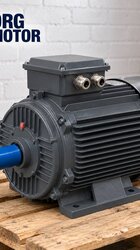
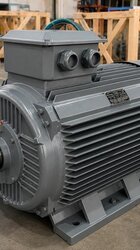

Looking only at the price tag when buying an electric motor is like seeing only the visible tip of an iceberg. The economic reality of a motor reveals itself across the years you run it, because the total cost of owning an induction motor is shaped far beyond its purchase price by energy consumption, maintenance, unexpected downtime and the scrap value at the end of its life. The Life-Cycle Cost (LCC) approach is exactly the method that lets you see this whole picture. In this article, from the engineering perspective of DRG Motor, we explain how to break down the lifetime cost of an electric motor item by item, why energy is the decisive element of this equation, and why a motor chosen on purchase price alone so often ends up with the highest total cost.
What Is Life-Cycle Cost (LCC)?
Life-cycle cost is the present-value total of all costs an asset generates from procurement to decommissioning. For electric motors, this calculation covers a far broader picture than the purchase price alone. A motor may run for 15-20 years, often 24 hours a day; over that span, the electricity it consumes dwarfs the initial amount you paid for it many times over.
The LCC logic lets you make the decision over the entire life of the motor instead of a single moment. This way, you can see whether a motor that looks advantageous at the time of purchase ends up generating a higher total cost within five years because of its energy consumption. This perspective completely changes the direction of an investment decision, especially in continuously running industrial applications.
Why the Price Tag Is a Misleading Indicator
The price tag reflects only the cost of the motor at the moment of procurement and never changes afterward. Yet the real cost of the motor begins to accumulate every day once it is commissioned. Choosing between two motors by looking only at the purchase price means making the decision based on the smallest cost item. That is why the price tag, on its own, is a misleading comparison tool; it only becomes meaningful when evaluated together with the lifetime cost.
Its Relationship with Total Cost of Ownership (TCO)
Life-cycle cost is closely related to the concept of total cost of ownership (TCO). TCO covers all the direct and indirect costs of owning an asset, while LCC handles those costs by spreading them across the asset's lifetime. Both concepts serve the same purpose: taking the decision out of a single moment and spreading it across the asset's entire service life. For industrial motors, this means building a value-driven rather than a price-driven purchasing culture.
The Core Items of LCC
The life-cycle cost of an electric motor consists of items that look independent but all draw from the same purse. Defining them correctly determines the reliability of the calculation.
Purchase and Procurement Cost
This includes the motor's price tag along with transport, customs (if any) and procurement expenses before installation. It is the only item most users look at when making a decision; yet its share within the lifetime cost is usually very small. For a continuously running motor, the purchase price is only a small slice of the total LCC.
Installation and Commissioning Cost
Mounting the motor on its base, aligning the coupling, electrical connections, eliminating misalignment and the initial commissioning tests all fall under this item. A well-executed installation lowers maintenance costs by preventing future vibration and bearing problems from the very start. Installation is therefore both an initial expense and a savings investment.
Energy Cost: The Hidden Part of the Iceberg
The true center of gravity of the LCC equation is energy. In a continuously running industrial motor, the vast majority of the lifetime cost comes from the electricity bill. Every kilowatt-hour the motor draws turns directly into an operating expense, and that expense accumulates over the years.
This is precisely why a motor's efficiency is far more decisive than its purchase price. A difference of one or two percentage points in efficiency seems negligible in the short term; but multiplied by thousands of operating hours, it reaches a serious sum. Understanding where electric motor efficiency losses come from also shows you how to shrink this item.
Why Does Energy Make Up the Vast Majority of LCC?
Let us make this concrete: imagine a high-power motor running thousands of hours a year. The annual energy consumption of this motor often exceeds its purchase price. As this cost piles up over five, ten, fifteen years, the price you paid at the start becomes small next to the total.
For this reason, efficiency in motor selection is not a luxury preference but a parameter that directly affects the profit-and-loss equation. An efficient motor does the same work with fewer losses, so it saves money every hour it runs.
Maintenance and Lubrication Costs
Periodic maintenance, bearing replacement, grease lubrication, fan and housing cleaning all fall under this item. In a well-designed motor, this cost is predictable and relatively low. Correctly planning bearing greasing and lubrication intervals both reduces the risk of failure and keeps the maintenance budget stable.
Unplanned maintenance is always an unplanned cost. A predefined maintenance schedule extends the motor's life while keeping total LCC under control.
Downtime Cost: The Item Most Often Overlooked
An unexpected motor stoppage is not measured by the value of the motor alone. A stopped motor often halts an entire production line. Lost production, delayed deliveries and emergency service costs can climb far above the price of the motor itself.
That is why reliability is a feature measured directly in money within LCC. The predictive maintenance approach makes this downtime cost largely avoidable by warning of failures in advance.
Scrap (Disposal) Value and End of Life
When the motor reaches the end of its life, the cast iron in its housing, the copper windings and the other metals carry a certain scrap value. This is a small but not negligible item in LCC, and it pulls the total cost down somewhat. A motor built with quality material holds value even at the end of its life.
Typical LCC Distribution: The Share of Each Item
The table below shows how the life-cycle cost is distributed in a typical continuously running industrial induction motor, with approximate shares. Although the figures vary by application, the overall picture always points in the same direction: energy dominates.
| LCC Item | Typical Share of Total | Explanation |
|---|---|---|
| Energy consumption | ~90% and above | The largest item in continuous operation; directly tied to efficiency |
| Purchase price | ~2-5% | The price tag; a small slice of the total |
| Maintenance and lubrication | ~2-3% | Periodic maintenance, bearings and grease |
| Installation / commissioning | ~1-2% | Mounting, alignment, initial tests |
| Downtime | Variable | Depends on lost production; sometimes exceeds all items |
| Scrap value | Negative (reducing) | Lowers the total cost somewhat at end of life |
What the table tells us is clear: almost the entire lifetime cost of a motor comes from energy. This shows that the purchase decision is in fact an efficiency decision.
How Is LCC Calculated? A Step-by-Step Approach
For the LCC calculation, you first determine the motor's annual running hours and average load. Then, using the motor's efficiency, you find the annual energy consumption and, by multiplying it by the electricity tariff, the annual energy cost. You spread this annual cost over the motor's expected life and add maintenance and other items.
For a more rigorous calculation, you convert future expenses to present value, because a unit of currency to be paid five years from now is worth less than one today. But even for a rough comparison, multiplying the annual energy cost by the lifetime is usually enough to lead you to the right decision.
The Effect of Annual Running Hours and Load Factor
In a motor running only a few hundred hours a year, the purchase price is relatively more important; but in a motor running 24 hours a day, energy overshadows everything. Likewise, the load point at which the motor operates is critical. Running an oversized motor at partial load lowers efficiency and adversely affects LCC.
How an Efficient Motor Quickly Recovers Its Initial Premium
With a high-efficiency motor, the difference at the time of purchase is often recovered within months in continuous operation. By consuming less energy, the motor closes this gap, and afterwards every operating hour turns into net savings.
If you want to see this logic in numbers, our content on the payback period of a high-efficiency motor explains with examples how long it takes for the additional investment in an efficient motor to pay for itself.
Why Purchase Price Alone Does Not Show the Most Economical Motor
A motor chosen only by its purchase price often runs at lower efficiency. What you think you saved at purchase goes back through the electricity bill every operating hour. Within a few years, that difference returns, more than fully, inside the energy bill you do pay.
That is why the motor chosen on purchase price alone and the most economical motor are often different. The right decision is made by looking at lifetime cost.
The Decisive Role of Efficiency Class in LCC
The motor's efficiency class directly determines the largest item of LCC. A higher efficiency class means fewer losses, less heat and a lower energy bill. The advantage offered by high-efficiency electric motors should be evaluated not merely as a technical feature, but as a saving that lasts a lifetime.
Making LCC Visible with Energy Monitoring
The LCC calculation starts with an estimate, but becomes far more powerful when you measure actual consumption. With electric motor energy monitoring systems, you can continuously track the motor's real consumption, validate your paper LCC calculation with field data and catch deviations early.
Lowering the Energy Item with a Frequency Inverter
In applications requiring variable load, adjusting the speed to demand instead of running the motor at fixed speed and throttling the flow provides serious savings. Saving energy with a frequency inverter noticeably shrinks the energy item of LCC, especially in pump and fan applications.
Optimizing Cost with Correct Sizing
Choosing a motor larger than needed both raises the purchase price and lowers efficiency due to a low load factor. Sizing to actual need optimizes both the initial cost and the energy cost. Taking into account the effect of ambient temperature and altitude on motor selection is also part of correct sizing.
The Cost of Cooling and Heat Losses
An inefficient motor converts a larger share of the energy it consumes into heat. This heat both shortens the motor's own life and can create an additional cooling load in enclosed spaces. So efficiency loss is reflected not only in the electricity bill, but sometimes also in the air-conditioning cost of the environment. An efficient motor reduces this indirect expense as well by producing less heat.
The Contribution of Insulation Class and Lifespan to LCC
The motor's insulation class determines its resistance to operating temperature and therefore its lifespan. More durable insulation extends the motor's expected service life and lets LCC spread over more years. A long life means dividing the total cost over more years, which lowers the effective annual cost. For this reason, insulation quality is an indirect but real LCC parameter.
LCC Priority by Application Type
In continuously running applications such as compressors, pumps, fans and conveyors, the energy item dominates; here efficiency is everything. In intermittent or rarely operated applications, the purchase price and durability come to the fore. LCC analysis clarifies which parameter is the priority in which application.
The Strategic Value of LCC in Industrial Applications
If dozens of motors run in a facility, the LCC of each forms a large part of the total energy budget. An efficiency-focused renewal in industrial electric motors creates a permanent reduction in the facility's total energy cost. That is why LCC is a management tool not for a single motor, but for the entire motor fleet.
Present Value and the Time Value of Money
In a rigorous LCC calculation, future expenses are converted to present value. An energy bill to be paid five years from now does not carry the same weight as today's money, because money has a time value. When this present-value adjustment is applied, costs in distant years weigh slightly less in today's decision. Even so, the dominance of the energy item is so high that, even after this adjustment, the efficient motor stands out in almost every scenario.
The Effect of Rising Energy Prices on LCC
Electricity prices tend to rise over time. This further enlarges the advantage of the efficient motor, because every price increase widens the difference that the inefficient motor charges every hour. Anticipating that the energy price will not stay constant when doing the LCC calculation strengthens the decision in favor of the efficient motor. In other words, the efficiency gap that looks marginal today becomes even more valuable with future price increases.
Renew or Repair? The Decision from an LCC Perspective
When an old, inefficient motor fails, having it repaired looks like the lower outlay at first glance. But from the LCC perspective, continuing to run a low-efficiency old motor often costs more in total than switching to a new, efficient one. A rewound old motor may lose a little more of its efficiency and permanently raise the energy bill. This decision must be made by looking not only at the repair cost, but at the energy cost over the remaining life.
Power Factor and the Indirect Cost of Reactive Load
Induction motors draw reactive power from the grid, and the power factor drops further at low load. A low power factor can create additional cost in some tariff structures and unnecessarily burdens the facility's electrical infrastructure. A correctly sized motor running at an appropriate load reduces this indirect cost as well, contributing positively to LCC.
Turning LCC Analysis into a Purchase Decision
The result of LCC analysis comes down to a simple decision: when comparing two motors, choose the one with the lower total lifetime cost. Most of the time, this motor is the one whose price tag is a bit higher but whose efficiency is markedly better. This approach replaces the short-term feeling of savings with long-term real savings.
DRG Motor for a Choice That Pays Off for a Lifetime
At DRG Motor, we design the induction motors we supply with an engineering mindset that rewards you not only on the first day, but throughout every year they run. High efficiency, durable construction and predictable maintenance keep the life-cycle cost of our motors low; so what lasts is not the price you paid, but the savings you gain. To determine together the most suitable, most economical motor solution for your facility over its lifetime, you can explore DRG Motor products and get in touch with our engineering team. The right motor pays off not on the day you buy it, but every hour it runs.
Click to see current prices and order these motors nowSEE PRICES →