 English
 Le français
 Türkçe


What a 7.5 kW 1500 RPM Motor Costs and Why the Figure Moves
Most enquiries for a 7.5 kW frame at 1500 RPM arrive on the day a motor has stopped. A pump has tripped, a fan has gone quiet, and somebody is standing in front of a nameplate reading it into a phone. What matters in that moment is whether the replacement will bolt onto the same bed, take the same coupling and accept the same cable.
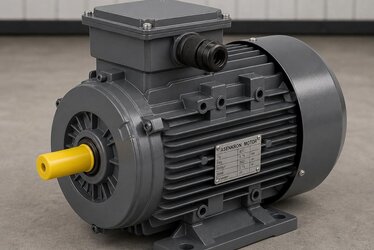
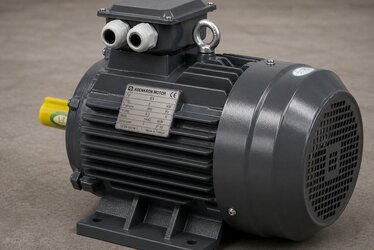
The nameplate carries everything needed for the match: rating, speed, frame reference, mounting code and shaft dimensions. Photographing it is faster and safer than reading it out, because a single digit misheard in the frame reference sends the wrong motor to site. If the plate has corroded away, the mounting centres, the shaft diameter and the height from the base to the shaft centre will identify the frame instead.
Before the new motor goes down, the coupling and the base deserve a look. A failure at this rating is often caused by misalignment or by a foundation bolt that worked loose months earlier, and fitting a new machine onto the same fault simply schedules the next breakdown. Belt tension is worth checking for the same reason.
Reading the 7.5 kW Line of the List
The 7.5 kW four-pole machine turns at 1500 RPM, the speed most pumps and fans of this size are built around. Torque at that speed is what the driven machine actually feels, so a faster motor of the same rating is not a substitute for it.
At 1500 RPM the frame runs with less vibration and less noise than a two-pole unit and the bearings see a gentler life. That is the practical reason this speed is stocked more deeply than any other at 7.5 kW. It is also why a belt drive at this rating usually outlasts the motor it is fitted to: the pulley turns at a pace the belt can live with.
Where the old unit was oversized for its duty, the replacement is a chance to correct it: a motor running at a fraction of its rating all day wastes both capital and efficiency.
7.5 kW in industrial water pumping and ventilation
Where 7.5 kW frames go into service:
Most orders at this rating fall into these duties:
- Water pumping sets
- Booster stations
- Fire pump duty
- Ventilation plant
- Exhaust fan banks
- Cooling circuits
- Compressor units
- Belt conveyors
- Packaging lines
- Food processing machines
- Plastics machinery
- Woodworking benches
- Farm equipment
- Irrigation sets
- Textile machines
- Recycling lines
- Mixers and agitators
- Chemical process duty
One frame covers all of them, which is why this rating turns over faster than any other in the medium range.
What Changes the 7.5 kW Quotation
The price attached to a single rating depends on how the motor is built and how quickly it has to arrive.
The items that move the figure:
- Efficiency class, IE3 Premium or IE4 Super Premium
- Copper winding content
- Cast iron housing
- IP55 enclosure
- Class F insulation
- Mounting: B3, B5 or B35
- Bearing grade
- Rotor balancing tolerance
- Manufacturing standard applied
- Whether the rating is in stock
- Requested delivery date
- Number of units on the order
The cheapest line of a price list is rarely the cheapest motor after a year of running.
The 7.5 kW Data Block
Every 7.5 kW motor here is built to IEC standards and rated for continuous industrial service.
Standard Technical Features
- Output 7.5 kW
- Speed 1500 RPM
- Four poles
- Three-phase winding
- Supply 380–400 V
- Mains frequency 50 Hz
- IE3 Premium as standard
- IE4 Super Premium on request
- Copper wound
- Cast iron frame
- Sealed to IP55
- Insulation Class F
- Rotor balanced on assembly
- Built for low vibration
- Quiet at the working point
- Industrial bearings
- Rated for continuous duty
- Made to IEC
- B3, B5 and B35 available
Where the Class Pays on a 7.5 kW Drive
A 7.5 kW motor working two shifts spends more on electricity in a year than it cost to buy, so the class marking is the part of the specification with a financial consequence.
IE3 Premium and IE4 Super Premium units at this rating give:
- Less electricity for the same shaft power
- Cooler running under continuous load
- Better mechanical efficiency
- Smaller loss in the winding and the iron
- Longer intervals between maintenance stops
- More years before a rewind
- Lower running cost across the life
- Less waste heat left in the room
Across the years a 7.5 kW drive stays in service, those items outweigh the gap between two quotations.
Build of the 7.5 kW Frame
Construction at this rating is conventional and proven.
What the frame is made of:
- Cast iron housing
- Balanced rotor assembly
- Copper windings
- Fan cooling across the fins
- Mechanical strength for belt loads
- Steady behaviour under continuous load
- Industrial bearings
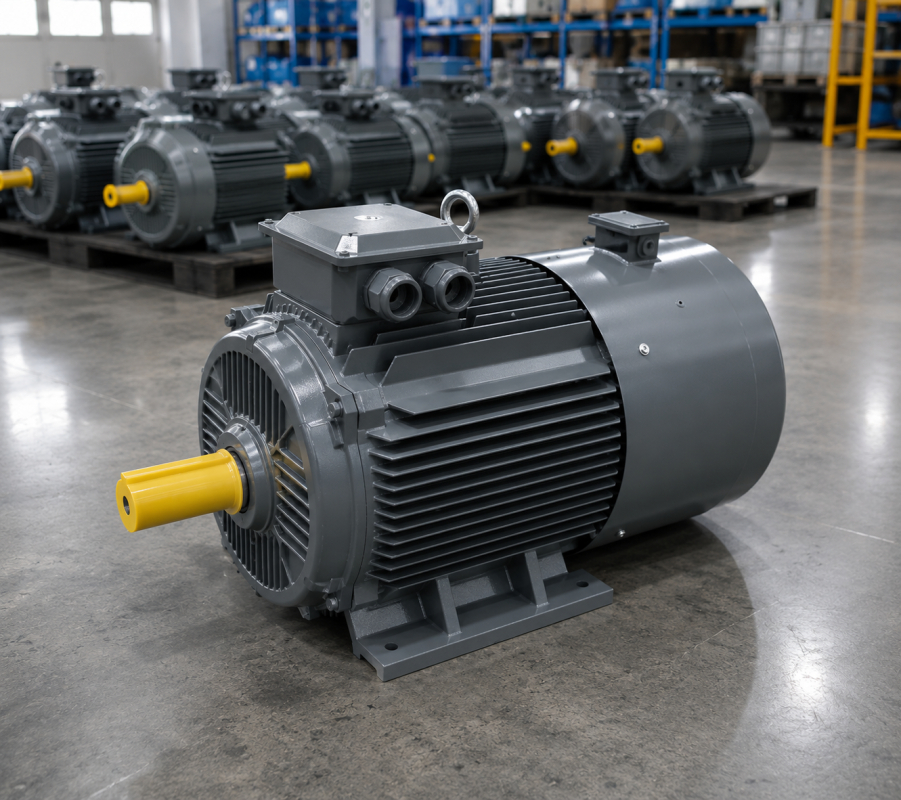
Nothing exotic goes into this frame, which is exactly why a 7.5 kW motor can be serviced anywhere. Bearings, fan cover and terminal box are standard parts, a rewind is routine work for a local shop, and the frame can usually be reused when the winding finally fails. Keeping the old motor as a repairable spare is cheaper than buying two.
Reasons Buyers Stay With DRG
Buyers return to this rating for stock depth rather than for a slogan.
What comes with the order:
- Stock held on the common variants
- Dispatch within the working week
- Wholesale pricing on quantity
- Engineering advice on the duty
- Help matching an existing nameplate
- After-sales support
- Consistent manufacturing quality
- IE3 and IE4 options
- Warranty terms in writing
- A named contact for the order
Buy Your 7.5 kW 1500 RPM Electric Motor from DRG Motor
For a 7.5 kW 1500 RPM three-phase motor, send the nameplate of the unit being replaced or the duty of the new machine.
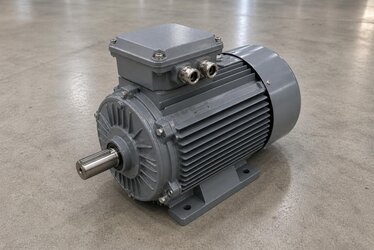
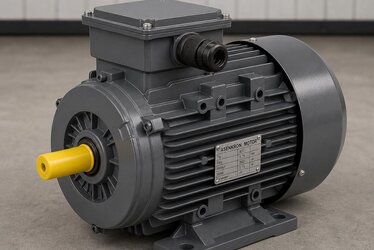
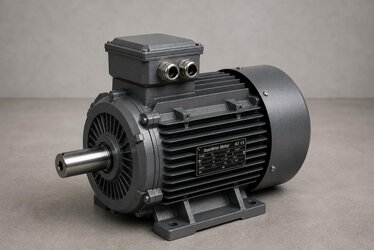
Motors leave with copper windings, cast iron construction, IP55 protection, Class F insulation and IEC-compliant engineering.
Ask for the current 7.5 kW price, the stock position and the delivery date in one message, and all three come back together.