 English
 Le français
 Türkçe


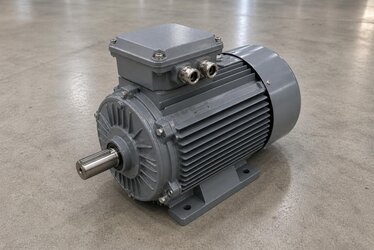
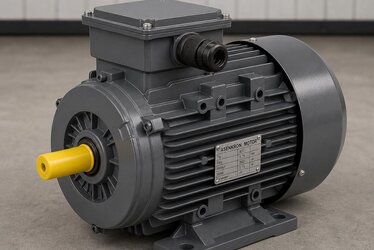
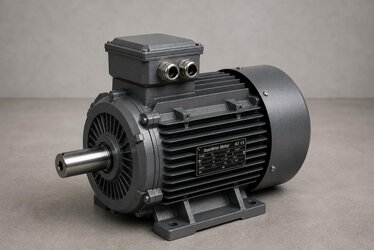
3 kW 1500 RPM Three Phase Electric Motor – The Workshop Rating
A workshop that has managed on single-phase sockets meets its limit somewhere around this rating. The 3 kW three-phase motor is very often the first one in the building that needs a proper supply, a proper isolator and an electrician rather than a plug.
That changes what has to be prepared before the motor arrives. A three-phase feed, an isolator within reach of the machine, a starter suited to the load and an earth that has been tested: none of it is expensive at this size, but all of it has to exist on the day. Buying the motor first and thinking about the supply afterwards is the usual mistake.
The reward for that work is a machine that starts without dimming the lights, runs cooler and stops needing a capacitor that fails every second winter.
Why the 1500 RPM Version Is the One Stocked
A 3 kW four-pole motor at 1500 RPM gives the torque a small machine needs without the speed that shortens belt and bearing life. On light equipment the faster alternative is heard immediately, and in a room where somebody works all day that matters as much as the power figure.
The lower speed also keeps the pulley ratio sensible. A bench machine driven from a 1500 RPM shaft usually needs one belt step rather than two, which removes a jockey pulley, a bearing and a source of noise from the design.
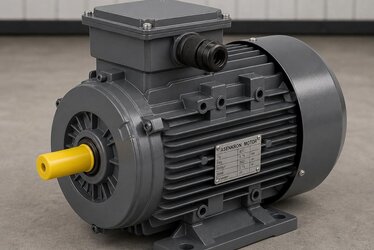
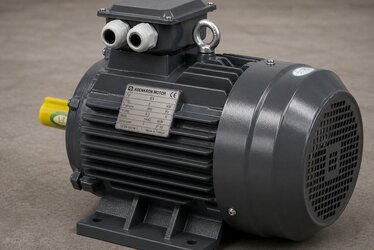
Its compact frame drops into existing brackets on most small machinery, so a replacement rarely needs new steelwork, and the shaft height at this rating has hardly changed in decades.
Centrifugal pumps and irrigation equipment at 3 kW
Machines that take a 3 kW frame:
Common installations:
- Centrifugal pump sets
- Booster groups
- Irrigation pumps
- Ventilation units
- Cooling fans
- Small compressors
- Short conveyors
- Mixers
- Agitators
- Packaging machines
- Food processing benches
- Plastics machinery
- Woodworking machines
- Farm equipment
- Textile machinery
- Chemical process units
- Recycling equipment
- Light production lines
On all of them the motor is a component rather than the plant, and it is bought on availability as much as on price. A workshop losing a day of work over a 3 kW motor has already paid for the spare it did not keep.
What Affects 3 kW 1500 RPM Electric Motor Prices?
At this rating the differences between two quotations are small in money but large in what arrives.
What the price covers:
- IE3 Premium or IE4 Super Premium class
- Copper in the windings
- Cast iron frame
- IP55 enclosure
- Class F insulation
- B3, B5 or B35 mounting
- Bearing grade
- Rotor balancing precision
- Manufacturing standard
- Production method
- Whether it is on the shelf
- Delivery date
- Order quantity
A workshop that keeps one spare of this rating loses less to downtime than one that shops for the lowest line each time. At this size the difference between the cheapest and the dearest offer is smaller than one afternoon of stopped work.
Ratings and Standards
Each 3 kW motor is built to IEC standards and rated for continuous industrial service.
Standard Technical Features
- 3 kW output
- 1500 RPM
- Four poles
- Three-phase
- 380–400 V
- 50 Hz
- IE3 Premium
- IE4 Super Premium optional
- Copper windings
- Cast iron housing
- IP55
- Class F
- Balanced rotor
- Low vibration
- Quiet running
- Industrial bearings
- Continuous duty
- IEC built
- B3, B5, B35
Improve Efficiency and Reduce Operating Costs
A single 3 kW motor costs little to run. Ten of them along a bench, running from morning to evening, add up to a mid-sized drive that nobody ever put on a drawing, and that is the case for looking at the class even on small frames.
IE3 Premium and IE4 Super Premium versions at this rating give:
- Lower electricity consumption
- Cooler running
- Higher mechanical efficiency
- Smaller losses in copper and iron
- Longer intervals between services
- A longer working life
- Lower cost per running hour
- Less heat in a small workshop
Counted across a bench full of machines rather than one motor, the class begins to matter here too, and the calculation is easier than it looks: the hours are the same for every machine in the room.
Engineered for Long-Term Industrial Reliability
A small motor takes the same abuse as a large one and gets far less attention. It is mounted by whoever is free, wired quickly and then left alone for years, so the build is kept plain and serviceable rather than clever.
Key engineering features include:
- Cast iron body
- Rotor balanced in the shop
- Copper winding
- Fan cooling
- Frame strength for bench mounting
- Steady running under load
- Long-life bearings
Parts availability is what keeps a workshop motor running, and nothing in this frame is unusual. A bearing change is done on the bench with the machine in place, the terminal box takes ordinary glands, and a rewind costs a fraction of a new unit when the frame itself is sound.
DRG Motor in Practice
Small ratings are bought on stock depth, because nobody waits three weeks for a 3 kW motor. Where the machine is old and the plate unreadable, a photograph of the frame and a measurement across the mounting feet are usually enough to identify the replacement.
Our advantages include:
- Small ratings kept on the shelf
- Same-week dispatch
- Trade pricing
- Help sizing the machine
- Replacement matching from a photograph of the plate
- Support after delivery
- Consistent build
- IE3 and IE4 both available
- Warranty in writing
- A person to call
Buy Your 3 kW 1500 RPM Electric Motor from DRG Motor
For a 3 kW 1500 RPM three-phase motor, give the mounting and the shaft size of the unit being replaced.
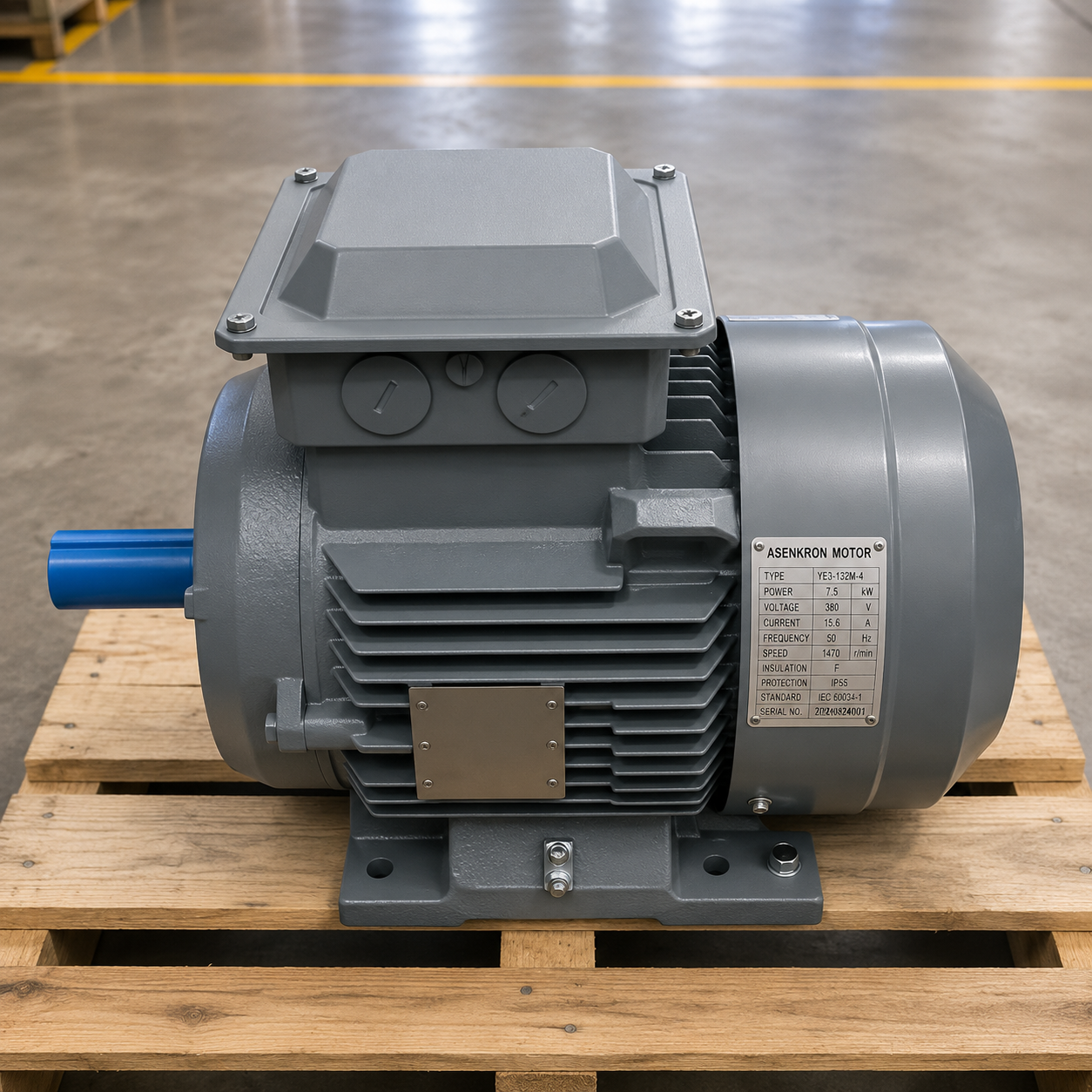
The motors are wound in copper, cast in iron, sealed to IP55, insulated to Class F and built to IEC standards.
Ask for the current 3 kW price together with the stock position and the delivery date.