 English
 Le français
 Türkçe


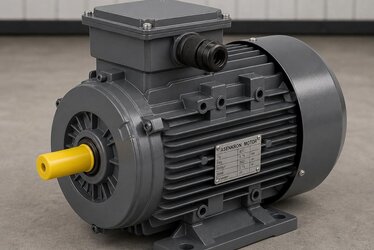
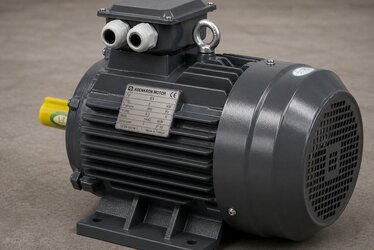
0.55 kW 1500 RPM Three Phase Motor – The Smallest Frame in the Range and Where It Belongs
The 0.55 kW frame is where a three-phase drive stops being about power and starts being about air, noise and space. At roughly 0.75 HP it turns a duct fan, a small extract unit, a booster set or a light packaging drive, and in nearly every one of those positions the motor is bolted inside an enclosure or above a ceiling where nobody will look at it again for years.
That is why buyers ask about 0.55 kW 1500 RPM electric motor prices in the same enquiry as stock and delivery. The sum per unit is small, the quantity is not, and the cost of climbing back into a ceiling void to change a failed unit is a multiple of the motor itself.
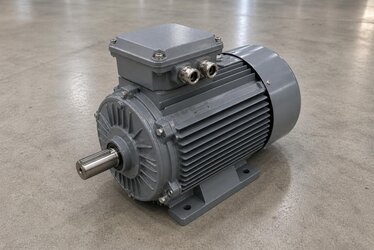
DRG Motor builds the 0.55 kW four-pole three-phase machine to IEC dimensions at 380–400 V, 50 Hz, so a replacement drops into the footprint of the unit it follows. What follows is what the smallest frame actually asks of whoever specifies it.
What 0.75 HP Really Covers
A 0.55 kW four-pole machine turning near 1500 RPM gives steady torque at low absolute output. Sized correctly it runs cool and quiet. Sized as though it were a large motor scaled down, it is the first item in the installation to fail, because at this rating the protection setting and the airflow around the frame decide the service life rather than mechanical strength.
The small envelope is the reason the frame is chosen, and also the reason it is so often fitted somewhere with no air movement at all — which is the commonest cause of an early failure at this rating.
Where the 0.55 kW Frame Is Used
The duties that suit the smallest three-phase frame share two features: modest torque and long unattended running.
Typical positions include:
- Ducted supply and extract fans
- Ceiling void and plant room ventilation units
- Fan coil and air handling unit drives
- Cooling fans on cabinets and enclosures
- Small booster pump sets
- Dosing and metering pumps
- Circulation pumps on heating and chilled loops
- Light roller and belt conveyors
- Packaging and labelling machinery
- Filling and capping heads
- Small mixers and agitators on batch tanks
- Workshop grinders, saws and bench machinery
- Vibrating feeders and small screens
- Bottling and food handling lines
- Textile winding and take-up drives
- Laboratory and pilot plant equipment
- Small air compressor and vacuum units
- Sorting line drives in recycling plants
- Agricultural feeders and augers
- Automation cells running several motors per machine
In all of them the motor is a component inside somebody else's machine, so what matters at the order stage is that it fits, that it is protected correctly, and that the one ordered in two years is identical to this one.
What the Smallest Frame Asks For
Three things decide whether a 0.55 kW motor lasts: the thermal setting, the air around it, and the mounting.
In practice that means:
- Thermal overload set from the nameplate current, not from the rating
- Cooling air still able to reach the fan cover once the machine is enclosed
- Fan path kept clear of dust, lint and packaging debris
- Mounting that carries the load without pulling the shaft out of line
- Cable and gland sized so the terminal box closes on its gasket
- Direction of rotation checked before the driven machine is coupled
- Ambient temperature taken inside the enclosure, not in the room
- Quiet running confirmed in position rather than on the bench
- Part reference recorded so the next replacement is identical
- A spare held wherever the position is hard to reach
None of these costs anything at the ordering stage. Every one of them costs something afterwards.
What Moves 0.55 kW 1500 RPM Electric Motor Prices
At this rating the material content is small, so the figure is moved as much by how the motor is ordered as by what is inside it.
The items that shift it:
- IE3 Premium Efficiency or IE4 Super Premium Efficiency
- Frame material, as aluminium or cast iron
- Aluminium or cast iron frame
- IP55 as standard, or higher protection for wash-down positions
- Class F insulation
- B3, B5 or B35 mounting
- Non-standard shaft diameter or flange dimension
- Terminal box orientation for a fixed cable route
- 100% copper windings
- Bearing specification where the position cannot be serviced
- Thermistor or thermal protection fitted in the winding
- Stock position against the delivery date you need
- Terminal box gasket and cable entry suited to the position
- Raw material and market conditions
On a repeat order the same specification is quoted against the same reference, so the unit going into a machine next year is the unit that went into it last year.
Technical Specifications
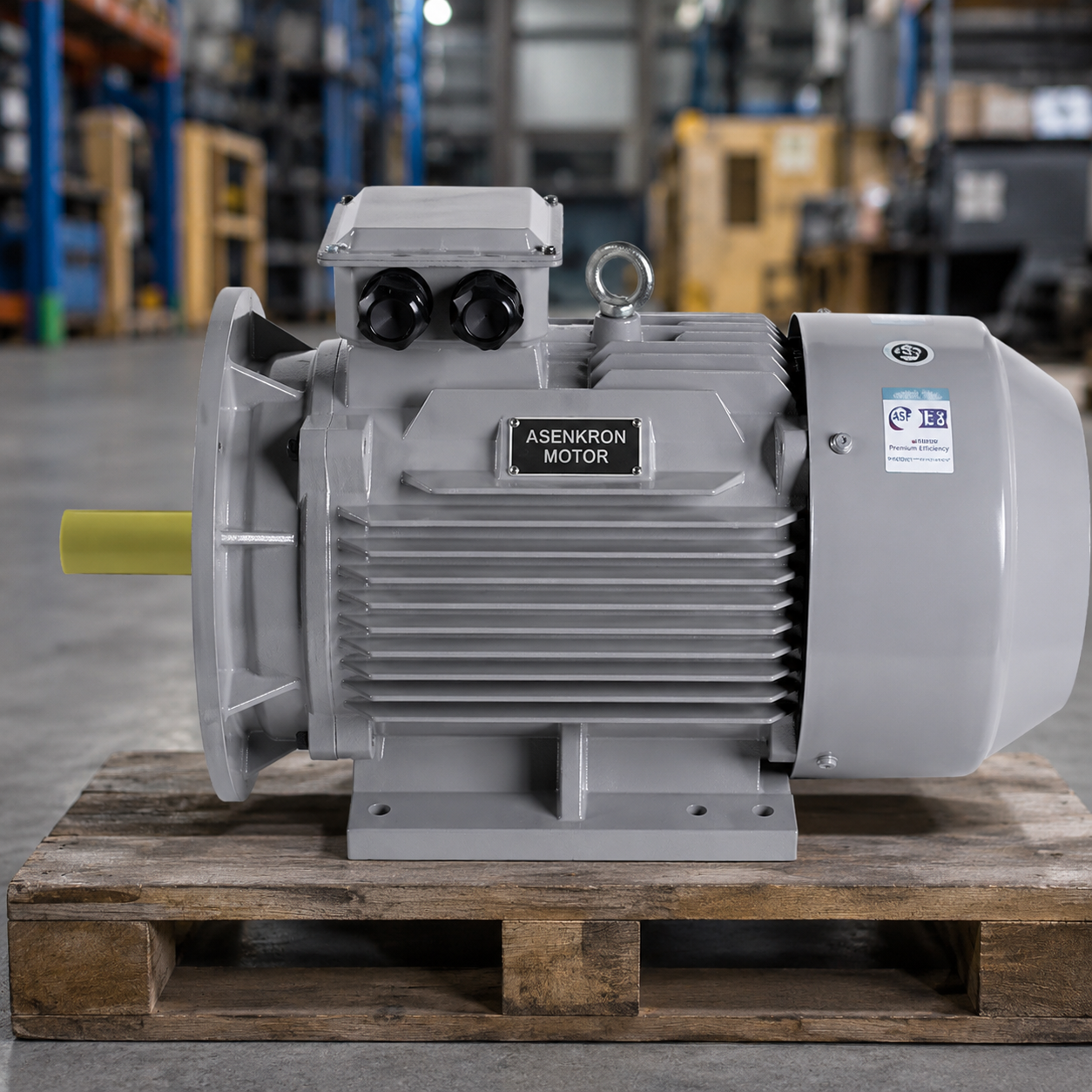
The 0.55 kW three-phase machine is built to IEC dimensions, so it interchanges with the frame it replaces.
Standard Technical Features
- Rated Output: 0.55 kW
- Approximate Power: 0.75 HP
- Rated Speed: 1500 RPM
- Four-pole induction motor
- Three-phase operation
- Operating Voltage: 380–400 V
- Frequency: 50 Hz
- IE3 Premium Efficiency
- Optional IE4 Super Premium Efficiency
- 100% copper windings
- Cast iron or aluminum frame options
- IP55 protection class
- Class F insulation
- Precision-balanced rotor
- Low vibration design
- Quiet operation
- Long-life industrial bearings
- Continuous-duty operation
- IEC-compliant construction
- Available in B3, B5, and B35 mounting configurations
Energy Cost at a Small Rating
One 0.55 kW motor is invisible on an electricity bill. A ventilation plant running dozens of them around the clock is not, and that is the case in which the efficiency class earns its price back.
Where several small machines run continuously, IE3 and IE4 give:
- Lower current per unit, multiplied across the whole installation
- Less heat rejected into the enclosure or the ceiling void
- Cooler windings and slower insulation ageing
- Reduced load on the supply and the protection devices
- Longer intervals between interventions in awkward positions
- Fewer unplanned call-outs to inaccessible units
- Lower cost per running hour across the batch
- A smaller share of the plant's total electrical demand
The gain per motor is small. The gain per installation is what shows on the meter.
Commissioning a Unit You Cannot Reach Later
The last chance to find anything wrong with a 0.55 kW motor is the hour before the access panel closes over it. After that, the next visit is usually caused by a failure.
Checks before the panel goes back on:
- Direction of rotation confirmed with the driven machine coupled
- Running current measured and compared with the nameplate
- Thermal overload set to the measured current, then recorded
- Winding temperature checked after the unit has run warm
- Terminal box gasket seated and the cable relieved of strain
- Airflow at the fan cover confirmed in the closed position
- Part reference and settings written on the panel record
Seven checks, one hour, and the unit stops being the part of the plant that fails without warning.
Symptoms at the Smallest Rating
When a 0.55 kW motor does fail, the symptom usually names the cause, and the cause is rarely the motor itself.
What each symptom normally means:
- Hums but will not start — a phase missing at the terminals
- Trips on every start — overload set below the running current
- Runs hot at normal load — fan path blocked or no air at the position
- Noisy at speed — loose fan cover or a bearing at the end of its life
- Smell of hot varnish — the winding has run over temperature
- Fan delivers little air — motor turning the wrong way
- Occasional trips through the shift — more starts than the duty allows
- Vibrates in position — coupling or fan wheel out of balance
- Damp inside the terminal box — gasket not seated after cabling
- Fails again after replacement — the position itself has no air movement
Specifying the 0.55 kW Frame for an Awkward Position