 English
 Le français
 Türkçe

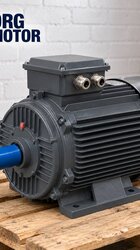
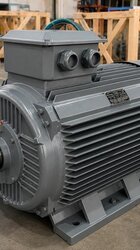
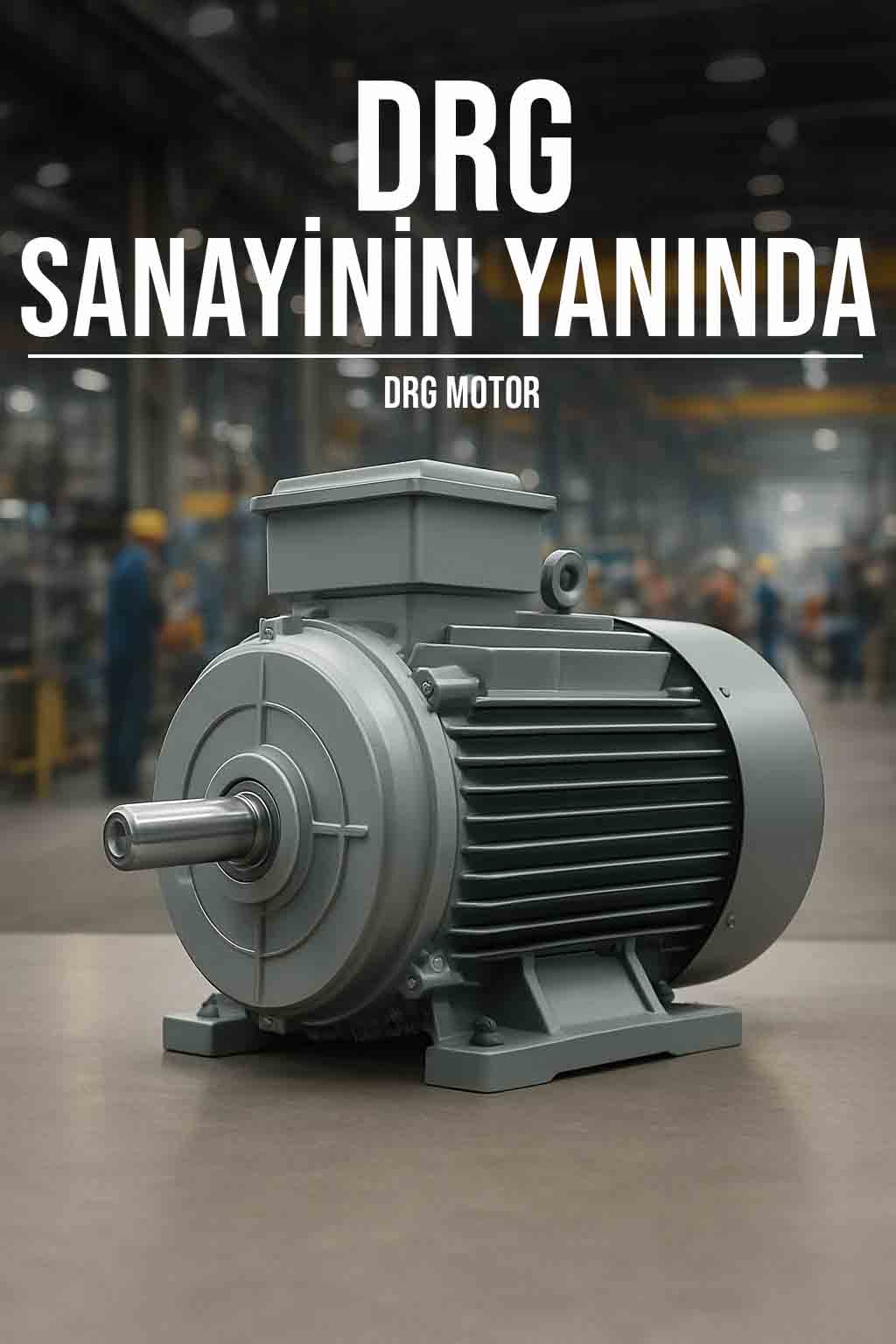

A 250 kW drive sits at the heavy end of low-voltage industry: large centrifugal pumps, compressed air packages, crusher and grinding lines, wide main-line conveyors. At this rating an error in the pole count, or in the efficiency class, costs money every hour the shaft turns.
The Technical Frame of the 250 kW Class
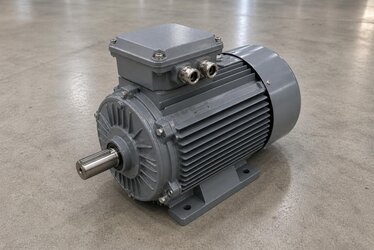
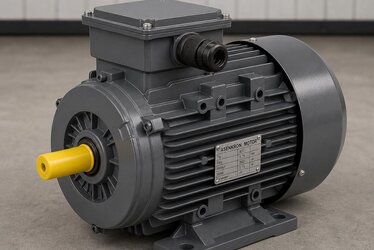
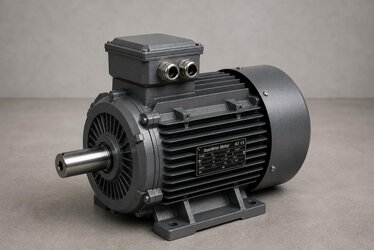
Machines of this size are typically built in 315 and 355 frames as three-phase squirrel cage asynchronous motors on 400 V / 50 Hz. Two-pole models turn near 2980 rpm and suit high-speed compressor and fan duties; four-pole models sit around 1485 rpm for general industrial drive; six-pole models at 990 rpm go to crushers and mills where torque comes before speed. Full-load slip generally falls in the 1 to 1.5 percent band.
- Rated power: 250 kW, roughly 340 HP
- Supply: 400 V / 50 Hz, three phase
- Protection: IP55, covering dust and low-pressure jets of water
- Insulation: F class, commissioned with margin left on winding temperature
- Duty: S1 continuous
Half a Point of Efficiency at This Size
IEC 60034-30-1 grades motors from IE1 through IE5. At 250 kW a four-pole IE3 machine reaches roughly 96.5 percent nominal efficiency, while IE4 versions climb above 97 percent. The gap looks trivial written down. On a large drive that never stops it is not: IE4 designs get there with more conductor cross-section, lower-loss electrical steel and reworked slot geometry.
The Yearly Number
Assume 6000 operating hours. A 0.5 point efficiency difference on a 250 kW load removes about 1.3 kW of continuous loss, which comes to roughly 7800 kWh across the year. Multiply that across a hall full of large drives and the class difference clears the purchase premium well inside the equipment's life.
Cast Iron at This Rating
Frames here are predominantly grey cast iron. The material damps vibration and holds mechanical rigidity under the shock loading a crusher, mill or heavy conveyor feeds back into the shaft. Aluminium saves weight, but at 250 kW the demands on thermal mass and mechanical strength point firmly to cast iron. Background on how frame choice interacts with efficiency sits in our electric motor articles.
Cooling and Thermal Management
Loss heat at 250 kW is an order above what small frames produce. Standard machines use IC411: a shaft-mounted fan blowing along the frame fins. Inside cabinets or in hot halls, the intake must stay clear and hot air recirculation has to be blocked. Above 40 °C ambient, derating enters the calculation. Harder duties move to forced external cooling with IC416, and PT100 sensors in the winding raise the alarm before the temperature threshold is crossed.
Getting the Machine Started
With the rotor stationary the winding draws a multiple of rated current, and on a 250 kW drive that inrush stresses the protection gear and the supply transformer alike. Bringing it up in stages calls for star-delta switching, a soft starter or else a frequency converter. B3 foot, B5 flange and B35 foot-and-flange forms cover the usual mountings, with bearing selection verified against the real radial and axial load. Inverter-fed windings need insulation chosen for voltage pulses.
Torque Follows the Pole Count
Rated torque on a 250 kW four-pole machine running near 1485 rpm reaches about 1600 Nm; the same power delivered at six poles produces markedly more torque at lower speed. Crushers, mills and heavy conveyors therefore pick poles for breakaway capability, not just for shaft speed.
Keeping It Running
Bearing and insulation health set the service life. Vibration measurement, relubrication intervals and periodic insulation resistance tests catch trouble early, and operating F class insulation at a B class temperature rise stretches winding life. Before a 250 kW order goes out, write down the crusher or pump duty cycle, the hours the shaft will turn each year and how the drive couples; those three answers fix the efficiency class, the pole number and the mounting form together.