 English
 Le français
 Türkçe

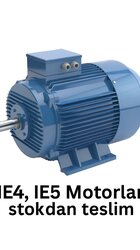
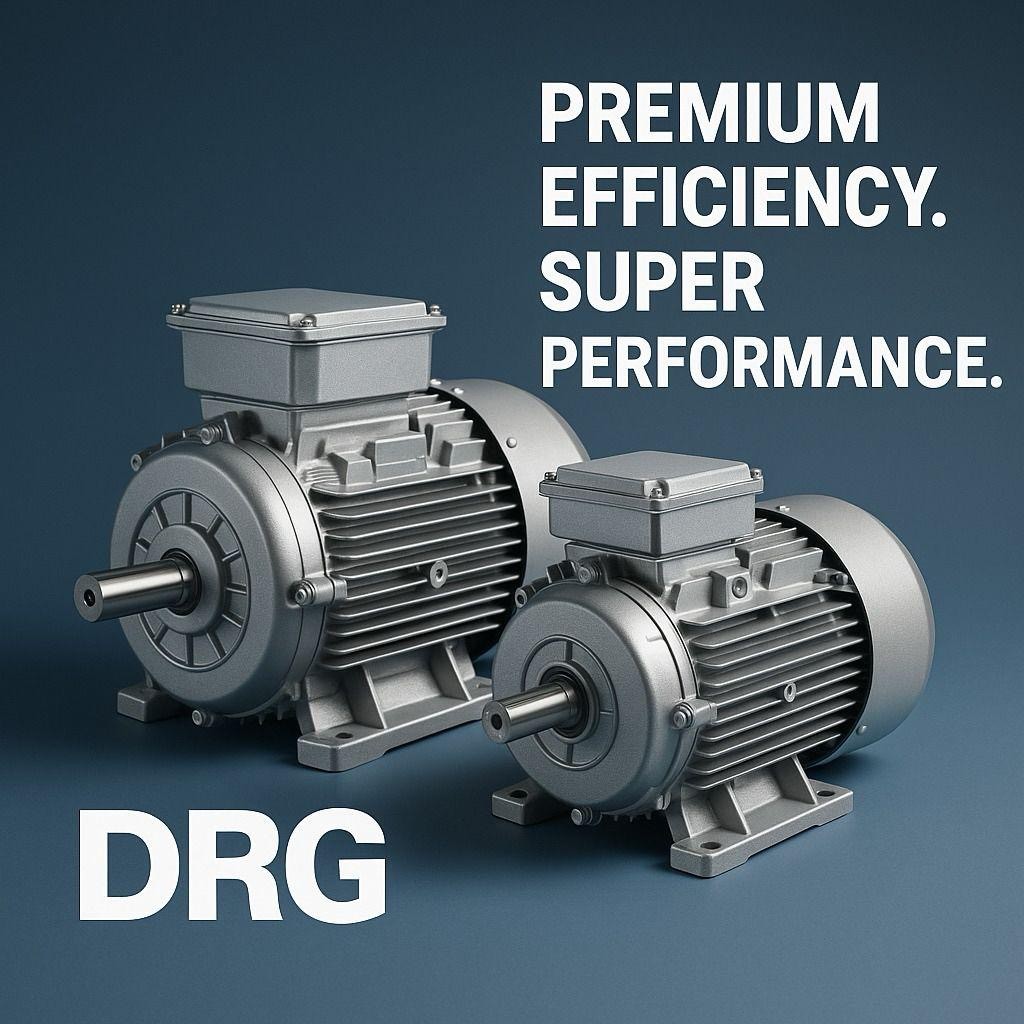

Energy cost in an industrial plant is dominated by what its motors draw, so even a modest improvement in motor efficiency separates the annual figures over time. The question worth answering is not which class is highest, but which class actually earns its price on the shaft in front of you.
What the Class Number Actually States
An efficiency figure states what fraction of the drawn current turns into useful shaft power. IEC 60034-30-1 rates that performance from IE1 Standard through to IE5 Ultra Premium. Higher classes trim the losses sitting in the core steel, the conductors and the bearings, so less of the input ends up warming the frame. Lifting a 15 kW machine from IE3 to IE4 buys one to two points, and where the shaft turns around the clock that is counted in megawatt-hours before the year is out.
Separating IE3, IE4 and IE5
All three count as high efficiency, but they aim at different usage profiles:
- IE3 (Premium): the mandatory floor for most industrial applications, balancing good efficiency against a reasonable first cost.
- IE4 (Super Premium): extra saving on long-hour, high-consumption drives, with the price difference recovered through running time.
- IE5 (Ultra Premium): the lowest-loss and coolest-running class, chosen for uninterrupted critical processes where energy dominates the cost.
The highest class is not automatically the right one. On a motor with low annual hours, the additional cost of IE5 may never come back.
Frame Strength Behind the Efficiency
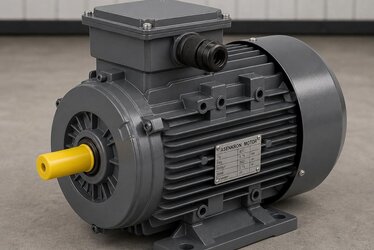
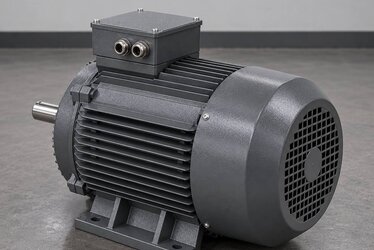
An efficient machine has to be mechanically sound to keep its figures in the field. Cast iron survives vibration and impact for years in heavy industry; aluminium, lighter and quick to shed heat, suits cleaner, moderately loaded duty. Squirrel cage rotors contain nothing that wears, so upkeep stays light.
Sectors Where It Shows
- Pump and fan systems for water, waste water and ventilation
- Compressor and refrigeration packages
- Conveyor and material handling installations
- Crushing-screening plants and mineral processing equipment
- Concrete batching plants and mixing units
Most of these run 12 to 24 hours a day, which is why every rung of the class ladder reaches the monthly invoice.
The Saving as a Figure
Put 15 kW onto a shaft turning 6000 hours across the year and a two percent efficiency gain comes to roughly 1800 kWh saved. Multiply by the dozens of machines across a site, and the total climbs fast. Read against lifetime cost, the efficient unit usually beats the cheap one: the initial price gap is more than covered by the electricity it does not consume.
What Decides Efficiency on Site
The nameplate class describes ideal conditions. Real efficiency depends on load ratio, supply quality and how the machine is installed. Asynchronous motors work best between 75 and 100 percent of rated load, and the same motor loses efficiency when lightly loaded. Choosing one larger than necessary can erase the advantage of a high class entirely.
Mounting Forms and Speeds
Geometry decides the mounting: B3 feet for floor installation, B5 large flange for direct connection to a gearbox or pump, B14 small flange for compact equipment. Speed follows the pole number — 3000 rpm at two, 1500 rpm at four, 1000 rpm at six — and the pick is made from the turning effort the driven machine needs. On duties whose flow rises and falls, feeding the motor from a converter instead of closing down a valve trims part-load consumption.
Ambient Conditions and Upkeep
Washdown lines, open-air crushing sites and damp mines call for IP56 or IP65 rather than IP55, and furnace halls, foundries and boiler rooms lean on the margin F class insulation provides, moving to H class or forced cooling when that margin runs out. Maintenance stays light: bearing checks and clean cooling surfaces. Before ordering, write down the ambient conditions, the measured load ratio and the yearly running hours of the drive; those three lines settle the class better than any general recommendation.