 English
 Le français
 Türkçe

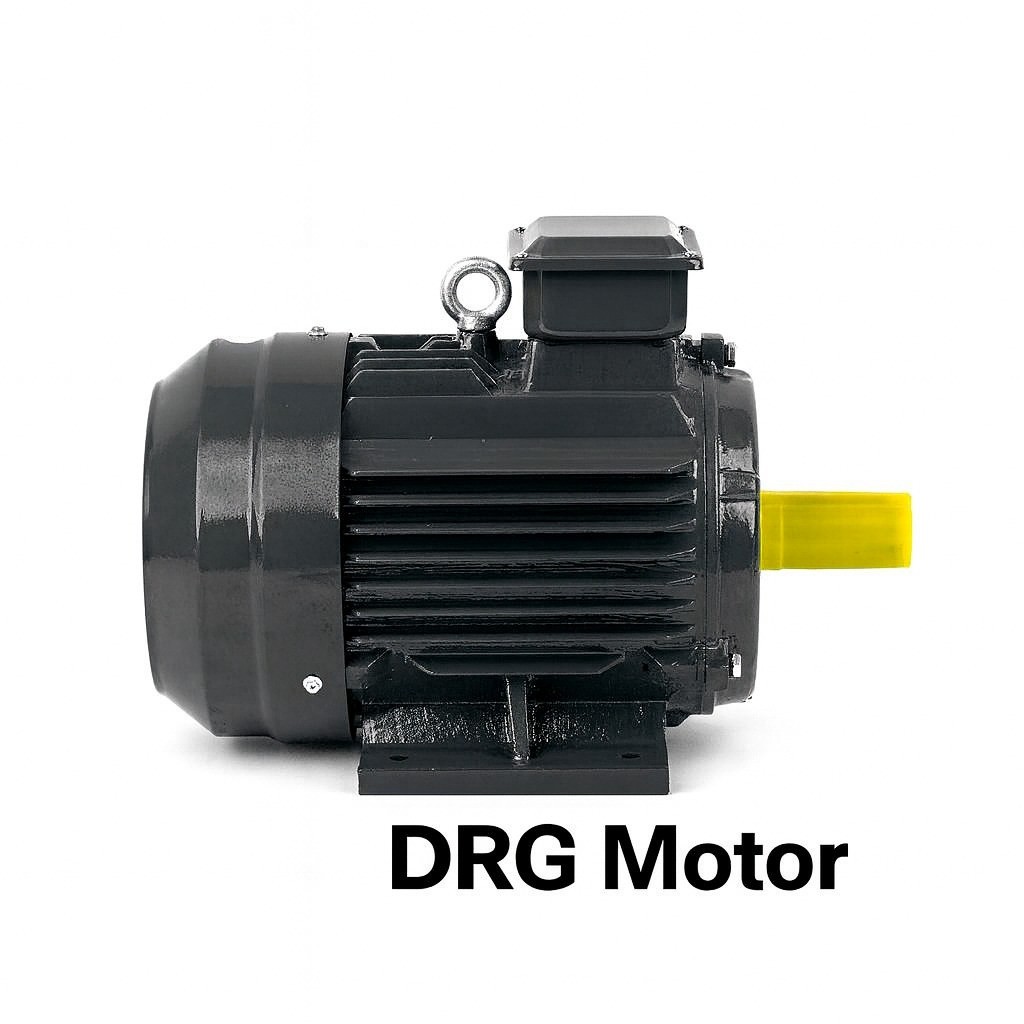

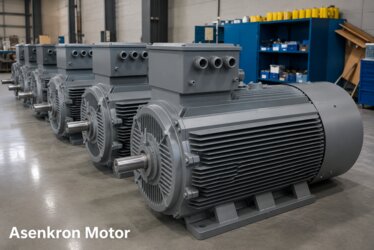
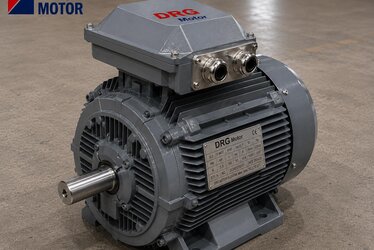
Grey cast iron earns its place in heavy industry for two reasons: it absorbs vibration and it refuses to deform under shock. Where a drive is hammered by impact loads, the frame material decides how long bearings and winding survive.
What Cast Iron Actually Is
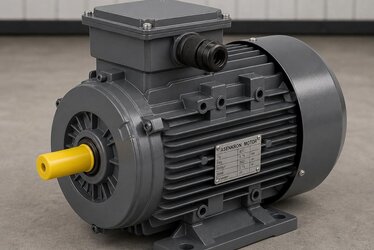
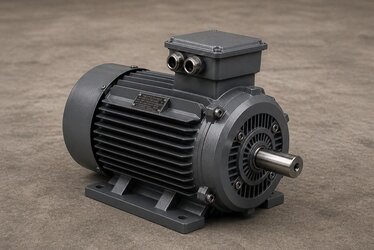
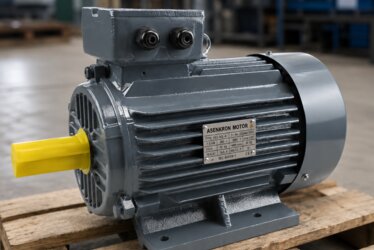
Grey cast iron is a high-carbon material shaped by casting, and the graphite flakes inside its structure give it a high capacity to damp vibration. As a motor frame it lends real mechanical strength to the assembly holding rotor and stator, though it weighs more than aluminium.
What the Frame Buys You
- Mechanical strength: it resists deformation under shock and fluctuating load.
- Vibration damping: the graphite structure absorbs vibration and protects bearings and winding.
- Dimensional stability: the rotor-stator air gap stays put through temperature swings.
- Solid feet and flange faces: secure fixing under heavy mounting conditions.
- Long field life: frame integrity is kept in abrasive, demanding environments.
Reading the Cast Iron Motor's Plate
These are three-phase asynchronous machines with squirrel-cage rotors, matched to a 400 V / 50 Hz supply. A typical configuration reads:
- IE3 premium efficiency option under IEC 60034-30-1
- IP55 sealing against dust and sprayed water
- Class F insulation at 155 °C, usually held to class B rise in service
- S1 continuous duty
- 2, 4 and 6 pole options at 3000, 1500 and 1000 rpm
- Ratings from 0.55 kW to 355 kW
Cast Iron Against Aluminium
Aluminium weighs little, dumps heat fast and fits light to medium loads and equipment that gets moved often. Cast iron is heavy and far stronger against impact and vibration. On crushers, mills, presses and heavy conveyors, that difference is what keeps the machine mechanically intact year after year.
Flange and Foot Arrangements
Three IM configurations cover most needs. B3 is horizontal foot mounting, the type seen most often in industry. B5 is the large flange used for pump and gearbox connections. B14 is the small flange for compact machine builds. A solid casting can be machined precisely at the foot and flange faces, which makes alignment easier during installation and keeps vibration down afterwards.
Where They Earn Their Keep
- Crushers, mills and grinders
- Heavy belt conveyors and elevators
- Press, pump and compressor drives
- Agitators and mixer systems
- Mining, cement and metalworking plants
The working principle behind these machines is covered in our asynchronous AC motor article.
Damping Vibration and Noise
The clearest technical advantage of the material is damping. Graphite flakes swallow mechanical vibration, so the motor is quieter and passes less shake into the structure. On crushers and mills this protects bearing life, and the gearbox, pulleys and couplings on the same drive train last longer too.
Starting Method for a Heavy Frame
High-power cast iron motors are brought on line differently depending on the load. Star-delta limits inrush at medium ratings. A soft starter reduces the mechanical jolt where the start has to be gentle. A frequency inverter gives controlled starting and energy savings where the process needs variable speed. Driven-machine inertia and supply capacity together settle the choice.
Questions to Settle Before Ordering
Power alone does not specify one of these motors. Load torque, starting characteristic, how the frame is mounted and how many poles it carries get settled as one set. Shock-loaded crushers and presses call for the strongest frame plus high starting torque. Above 40 °C ambient, or at altitude, apply a derating so the machine does not overheat.
Write the load torque and duty type of the driven machine next to the required kW before you compare quotations; cast iron shields a motor against vibration, never against being the wrong size.