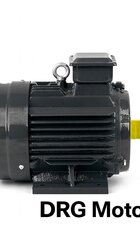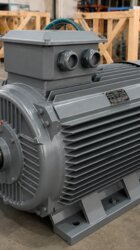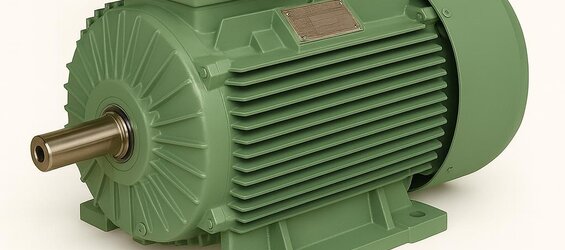

160 kW 3000 Rpm Electric Motor
160 KW 3000 RPM ELECTRIC MOTOR CONTACT: +90 542 666 11 11 The 160 kW electric motor operating at 3000 revolutions per minute is developed to provide high performance and durabili... More Details
The two most critical parameters for choosing an electric motor correctly are power (kW or HP) and speed (rpm). The torque and speed required by the application are defined by these two values. In this category we have grouped motors by power and speed, so you can easily find a model that exactly matches your need, such as a 110 kw electric motor or a 1500 rpm motor.
Motor power determines the work it can do and is expressed in kilowatts (kW) or horsepower (HP) (1 HP ≈ 0.746 kW). The DRG Motor range spans from small powers such as 0.18 kW up to high powers of 355 kW and above. Correct power selection prevents both strain from insufficient power and wasted energy from oversizing.
Power and speed must be considered together; different speeds at the same power produce different torque. For efficient choices see high efficiency motors, and for motor type the asynchronous AC motors page. Energy savings can also be achieved by controlling speed with a variable frequency drive (inverter). For all power and speed options and prices, explore the DRG Motor range.
At the same power, lower-speed motors produce higher torque; therefore 1000 or 750 rpm are preferred for heavy-load applications and 3000 rpm for speed-priority ones. The right power-speed combination benefits both energy efficiency and equipment life.
How do I convert kW to HP? 1 HP is about 0.746 kW; multiplying the kW value by roughly 1.36 gives the approximate horsepower.

160 KW 3000 RPM ELECTRIC MOTOR CONTACT: +90 542 666 11 11 The 160 kW electric motor operating at 3000 revolutions per minute is developed to provide high performance and durabili... More Details

Low-kW electric motors running at 3000 rpm are designed for high-speed light applications thanks to their two-pole construction. They are common in small pumps, fans, compact machi... More Details

15 kW 3000 RPM ELECTRIC MOTOR CONTACT: +90 542 666 11 11 The 15 kW 3000 RPM electric motor designed and manufactured by DRG Motor is a durable and high-performance solution for h... More Details

High-kW electric motors running at 3000 rpm combine high speed with high power through their two-pole design. They are used in large centrifugal pumps, high-pressure fans and blowe... More Details

160 kW 1500 RPM ELECTRIC MOTOR CONTACT: +90 542 666 11 11 The 160 kW 1500 RPM electric motor by DRG Motor is a high-performance solution built for heavy-duty industrial operation... More Details

Standard electric motors with 132 kW power and 1500 rpm speed are high-performance asynchronous motors designed for medium to heavy-duty industrial applications. These motors stand... More Details

The 75 kW 1500 RPM electric motor is a high-performance motor widely used in industrial facilities and heavy-duty applications. These motors are designed to provide reliable perfor... More Details

High-kW electric motors are the backbone of high-power applications such as cranes, crushers, large pump and fan systems, compressors and heavy production lines. For these motors, ... More Details

250 kW 1500 RPM ELECTRIC MOTOR CONTACT: +90 542 666 11 11 The 250 kW 1500 RPM electric motor from DRG Motor is a powerful and durable solution designed for heavy industrial appli... More Details

A frequency inverter can change the speed of an induction motor, but how it does so depends on the control method you choose. There are two fundamental approaches: scalar V/f contr... More Details

A soft starter limits the inrush current and mechanical shock of an induction motor by gradually raising the starting voltage instead of connecting the machine directly to the line... More Details

When a crane lowers its load, when an elevator descends, or when a high-inertia centrifuge slows down, the motor does not actually stop; it begins to convert mechanical energy back... More Details

When an electric motor is switched on directly, it draws a current far above its normal running level and a sudden mechanical jolt occurs. This abrupt start strains the motor, the ... More Details

Most electric motors are designed to run at a single fixed speed. Some applications, however, require the motor to operate at two different speeds. One of the solutions that answer... More Details

Some applications require a motor to run at two different speeds. One of the common ways to obtain two speeds from a single motor is the Dahlander connection. This method provides ... More Details

In industry, electric motors are often designed to run at a fixed speed. Yet in many applications, the motor does not always need to turn at full speed. This is where the frequency... More Details

High–Low kW Motors - DRG MotorOur Quick Access Phone Numbers: +90 (542) 666 11 11 +90 (532) 345 49 86 Mail : info@drgmakina.com Electric motors are widely regard... More Details

When we talk about an electric motor's power, we often look at the kilowatt figure; yet what actually moves a load is torque. Torque is the turning force a motor produces on its s... More Details

How fast an electric motor turns is not a matter of chance; it is determined from the start by certain physical laws. Two motors of the same power can turn at completely different... More Details