 English
 Le français
 Türkçe


How fast an electric motor turns is not a matter of chance; it is determined from the start by certain physical laws. Two motors of the same power can turn at completely different speeds, and this difference directly affects the success of the application. In this article we examine in detail what determines an electric motor's speed (RPM): the effect of frequency, pole count, slip, load and voltage.
To review the general operation of a motor, see the how an electric motor works article; here the focus is entirely on the determinants of speed.
What Is Speed (RPM)?
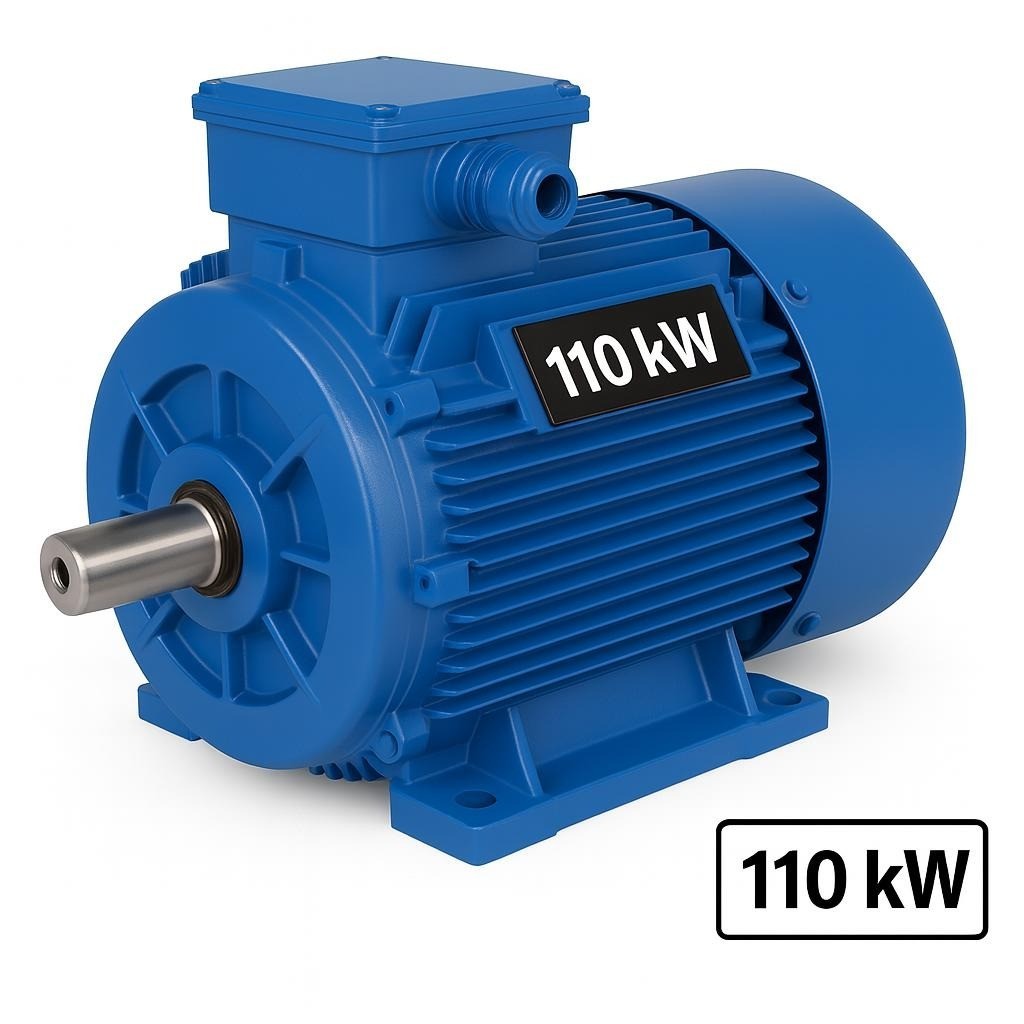
Speed expresses how many full turns a motor's shaft makes per minute and is usually shown as RPM (revolutions per minute). This value determines how fast the machine connected to the motor will run. How much water a pump delivers, how much air a fan blows, or how fast a conveyor advances all depend directly on the motor's speed.
This is why choosing the right speed is as important as choosing the right power. A motor turning too fast can strain the machine it drives; a motor turning too slowly cannot do the expected job. Understanding the factors that determine speed is the basis for choosing the right motor.
Synchronous Speed: The Basic Determinant
At the basis of a motor's speed lies the synchronous speed. Synchronous speed is the rotation speed of the rotating magnetic field produced by the stator and depends on only two variables: the mains frequency and the motor's pole count. These two values set the motor's theoretical maximum speed from the start.
The actual rotor speed is slightly lower than the synchronous speed because of slip; but synchronous speed is the main framework that determines which speed band the motor will run in. You can find a detailed look at how the rotating field forms and its speed in the rotating magnetic field article.
The Effect of Frequency
The mains frequency is one of the two basic factors determining speed. Frequency shows how many times per second the alternating current changes direction and is 50 Hz in many countries, including Türkiye. As the frequency increases, the rotating field turns faster, so the motor runs faster. When the frequency decreases, the motor slows down.
This direct relationship explains why frequency drives are such a powerful tool. By changing the frequency, we can adjust the motor's speed as we wish. A motor running on a 60 Hz supply turns about twenty percent faster than on 50 Hz with the same pole count.
The Effect of the Pole Count
The second basic factor determining speed is the motor's pole count. The pole count depends on how the stator windings are arranged and determines how many steps the rotating field takes to complete one turn. As the pole count increases, the rotating field turns more slowly, so the motor runs at a lower speed.
For this reason, two motors connected to the same frequency turn at different speeds if they have different pole counts. High-pole motors are chosen for applications needing low speed, and low-pole motors for applications needing high speed. The pole count is a permanent feature that sets the motor's speed at the design stage.
Speeds of 2, 4, 6 and 8-Pole Motors
On a 50 Hz supply, the relationship between pole count and synchronous speed is standard and is summarized in the table below. These values show the speed bands most often encountered in motor selection.
| Pole Count | Synchronous Speed (50 Hz) | Typical Full-Load Speed |
|---|---|---|
| 2 poles | 3000 rpm | ~2850-2950 rpm |
| 4 poles | 1500 rpm | ~1440-1480 rpm |
| 6 poles | 1000 rpm | ~950-980 rpm |
| 8 poles | 750 rpm | ~710-740 rpm |
As you can see, when the pole count doubles, the synchronous speed halves. The full-load speed is slightly below these values because of slip. You can review different power and speed alternatives in the power and speed options section.
Slip and Actual Speed
Synchronous speed is a theoretical value; the motor's actual rotation speed is slightly lower. The difference comes from slip. Because the rotor of an asynchronous motor must turn slightly behind the rotating field to produce torque. This is why a motor with a synchronous speed of 1500 rpm turns at around 1450-1480 rpm in practice.
The rated speed on the motor's nameplate is this actual full-load speed. To see in more detail the effect of slip on speed, see the slip in induction motors article.
The Effect of Load on Speed
Load is an important factor affecting a motor's actual speed. When the motor is idle, because slip is very small, the rotor gets very close to synchronous speed and turns at almost its maximum speed. As the load increases, the rotor slows down a little, slip grows, and the speed drops somewhat.
However, this drop is usually small; an asynchronous motor runs at an almost constant speed over a wide load range. This stability makes the asynchronous motor ideal for many applications. Still, an excessive load drops the speed noticeably and strains the motor.
The Effect of Voltage
The supply voltage also affects the motor's speed indirectly. When the voltage drops, the torque the motor produces decreases; to carry the same load, the motor slips more and its speed drops somewhat. A serious voltage drop can cause the motor to be unable to handle the load and to overheat.
This is why it is important to run the motor at the voltage stated on its nameplate. A balanced and correct voltage provides both a stable speed and safe operation. Voltage imbalance, on the other hand, adversely affects speed and efficiency.
How Is Speed Changed?
The most modern and efficient way to change a motor's speed is to use a frequency drive (VFD). The drive adjusts the speed steplessly by raising and lowering the frequency applied to the motor. In this way, a single motor can run over a very wide speed range and turn at exactly the speed needed for the application.
A frequency drive provides large energy savings, especially in variable-flow applications such as pumps and fans, because speed on demand means energy on demand. This is why, in modern facilities, speed control is usually provided by a drive.
Pole-Changing Motors
Before frequency drives, one way to change speed was pole-changing motors. These motors can run at two different pole counts, and therefore two different speeds, by changing the winding connection. For example, a motor can turn at both 1500 and 3000 rpm depending on the connection.
Two-speed motors are still used in elevators, cranes and some ventilation systems. However, the stepless and wide speed range offered by the frequency drive has replaced this method in most modern applications.
The Relationship Between Speed and Torque
There is an inverse relationship between speed and torque. At the same power, a low-speed motor produces higher torque, while a high-speed motor produces lower torque. Because power depends on the product of torque and speed. This is why low-speed, high-torque motors are preferred in applications handling heavy loads.
Speed selection is therefore a matter of speed and of torque. You can find a detailed look at how torque is produced and its relationship with speed in the torque in electric motors article.
Choosing Speed by Application
The right speed is determined by the application. Applications requiring high speed, for example some pumps and compressors, run on 2-pole high-speed motors. For medium-speed applications, fans and general industrial machines, 4-pole motors are the most common choice. For heavy and slowly turning loads, 6 or 8-pole motors are used.
For example, fan motors for ventilation and pump motors for water systems are offered with suitable speed options. The right speed directly affects both efficient operation and equipment life.
High Speed or Low Speed?
High-speed motors are usually smaller and lighter; they deliver the same power from a smaller frame. However, high speed can increase noise and vibration and may be too fast for some applications. Low-speed motors run more quietly and produce higher torque, but are larger and heavier for the same power.
This is why speed selection is a matter of balance. The speed, torque, size and noise criteria required by the application must be evaluated together. The right balance gives the best result in terms of both performance and efficiency.
Measuring Speed
A tachometer is used to measure a motor's actual speed. This device reads the shaft speed directly and shows how many rpm the motor turns. The measured value is compared with the rated speed on the nameplate to determine whether the motor is running normally.
A lower-than-normal speed can be a sign of overload, low voltage or a fault. This is why, in critical applications, speed measurement is an important part of maintenance and allows early detection of possible problems.
Speed and Efficiency
Speed selection also directly affects energy efficiency. Instead of throttling a motor with an unnecessarily high speed in an application, choosing a motor with the right speed is far more efficient. Speed control with a frequency drive in particular provides large savings in variable-load applications.
High-efficiency motors are designed to run with fewer losses in every speed band. For high efficiency-class options, see the high efficiency motors section, and get support from the DRG Motor team for the right choice.
Advantages of Speed Control with a Frequency Drive
The frequency drive has revolutionized speed control. In the past, methods such as valve throttling, dampers or bypasses were used to adjust the flow of a pump or fan; these methods wasted energy because the motor kept turning at full speed while part of the system was restricted. A frequency drive, by contrast, slows the motor itself so it consumes exactly the energy needed. Halving the speed of a fan can cut energy consumption to almost one eighth, because in pump and fan loads, power is proportional to the cube of speed.
For this reason, in variable-flow applications the frequency drive is one of the fastest-returning investments. It also protects the motor and connected equipment from mechanical shocks by providing a soft start, lowering maintenance costs. Speed control is no longer just a performance tool but also an energy-saving strategy.
Speed and Mechanical Transmission
A motor's speed is not always transferred directly to the connected machine; mechanical transmission elements such as pulley-belt, gears or a gearbox may be in between. These elements are used to increase or decrease the motor's speed. For example, the output of a high-speed motor can be turned into low-speed but high-torque motion through a gearbox.
This approach can sometimes be more practical than choosing a motor with the right speed, especially in applications needing very low speed or very high torque. However, every transmission element brings some efficiency loss and maintenance need. This is why, when possible, choosing a motor at the speed directly suited to the application is the most efficient solution.
Speed Fluctuation and Its Causes
Under ideal conditions a motor turns at a constant speed; but in practice the speed can sometimes fluctuate. The main causes include variable load, voltage fluctuations, phase imbalance and mechanical problems. In machines carrying shock loads, for example presses and crushers, the speed naturally rises and falls.
Excessive speed fluctuation can adversely affect both product quality and equipment life. In such applications, using a flywheel or choosing a high-slip motor smooths the fluctuation. In systems with frequency drives, advanced control algorithms keep the speed constant and minimize fluctuation.
Very High-Speed Motors
Some special applications require speeds well above the standard 3000 rpm. Turbo machines, high-speed compressors and some machine tools run on motors reaching tens of thousands of rpm. These speeds are reached by going well above the mains frequency with special frequency drives.
In very high-speed motors, bearing selection, balancing and cooling become much more critical, because even small imbalances cause large vibrations at high speed. These applications require expertise and use different design approaches from standard motors.
Speed and Application Examples
Let's see how speed selection is done in practice with a few examples. A centrifugal pump usually needs high speed and runs on 2 or 4-pole motors. A large industrial fan often uses a 4 or 6-pole motor for quiet, balanced operation. A conveyor belt or mixer, requiring slow and powerful motion, is driven by low-speed, high-torque motors.
These examples show how speed selection changes according to the nature of the application. The right speed ensures both that the job is done properly and that energy is used efficiently. For the power and speed combination suited to your application, you can review the general purpose motor options.
Frequently Asked Questions
Why does a frequency drive save energy? Because power is proportional to the cube of speed in pump and fan loads, lowering the speed a little greatly reduces energy consumption.
What causes speed fluctuation? Variable load, voltage fluctuation, phase imbalance and mechanical problems can cause speed fluctuation.
What determines a motor's speed? Basically the mains frequency and the pole count; the actual speed is slightly below this depending on slip, load and voltage.
How many rpm does a 4-pole motor turn? On a 50 Hz supply its synchronous speed is 1500 rpm; at full load it turns at around 1440-1480 rpm in practice because of slip.
How is a motor's speed changed? The most efficient method is a frequency drive; the speed is adjusted steplessly by changing the frequency. Pole-changing motors can also offer two different speeds.
What happens when the pole count increases? At the same frequency the motor turns slower but can produce higher torque.
Is the nameplate speed the synchronous speed? No. The nameplate speed is the actual full-load speed that includes slip; it is slightly below the synchronous speed.
The Balance That Sets the Speed
An electric motor's speed is determined from the start by two basic factors: the mains frequency and the pole count. The actual speed is slightly below this value depending on slip, load and voltage. Choosing the right speed is as important as choosing the right power, because speed directly affects the performance of the connected machine, efficiency and equipment life. Thanks to modern tools such as frequency drives, a motor's speed can today be adjusted exactly to the needs of the application.