 English
 Le français
 Türkçe

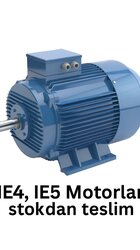
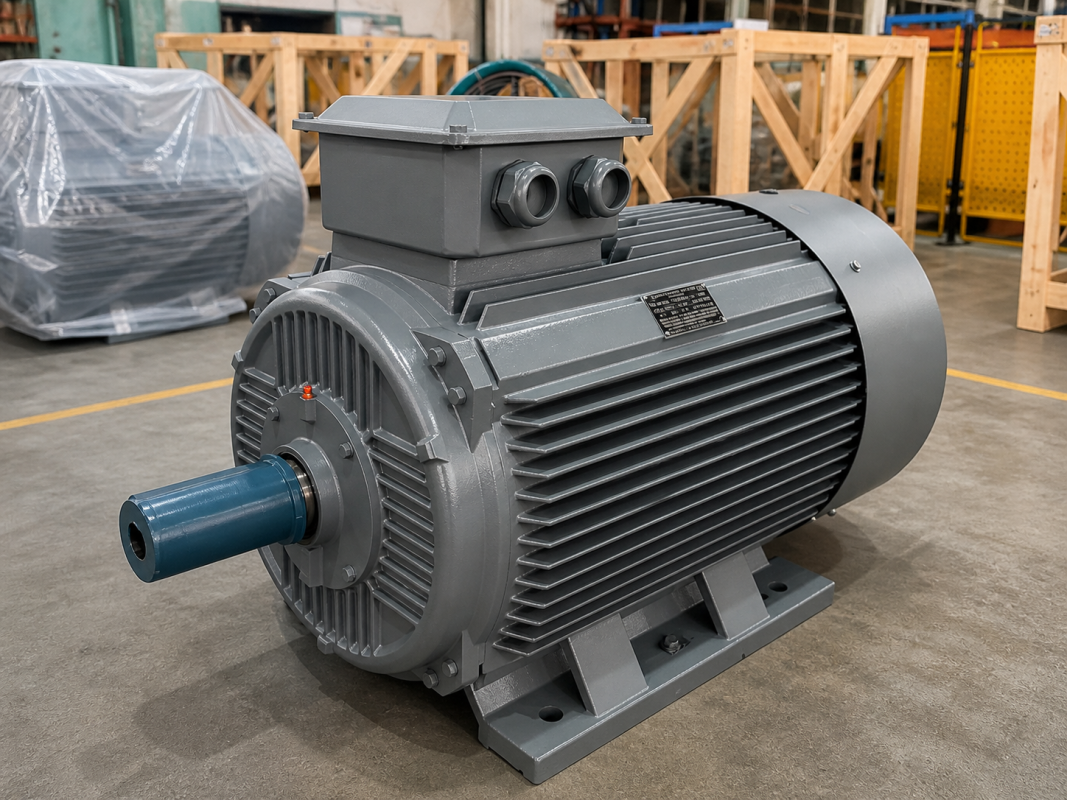

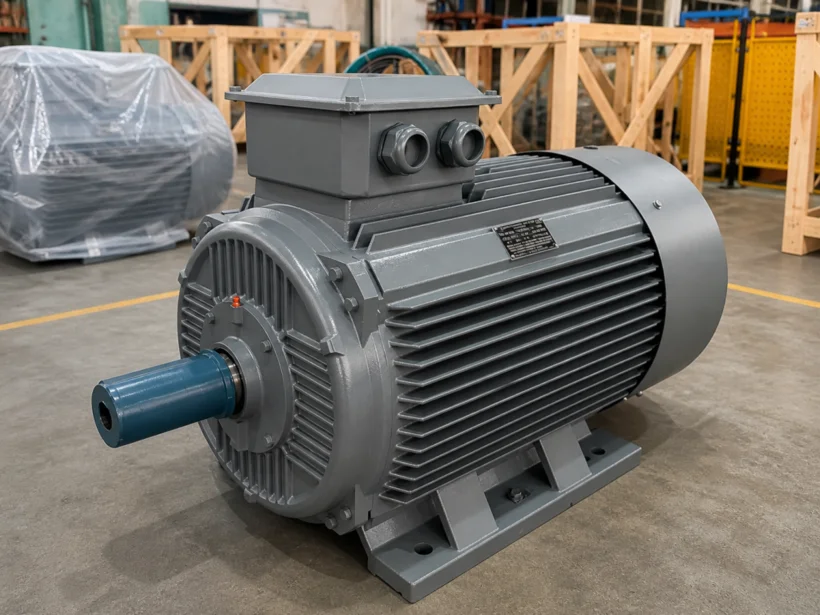
How much load an induction motor can carry, how long it will last and under which conditions it can operate safely are all tightly bound to a single physical phenomenon: the temperature rise that occurs in the windings. As the motor converts energy, part of the losses turn into heat, and this heat directly determines the condition of the winding copper, the insulation material and ultimately the service life of the machine. Temperature rise is expressed in engineering terms as delta T (ΔT), and when evaluated together with the insulation class it reveals the true thermal character of a motor. At DRG Motor, when we design our IE3, IE4 and IE5 efficiency-class AC induction motors, we treat the relationship between temperature rise and insulation class as the cornerstone of lifelong reliability. In this article we explain in detail what ΔT means, how it combines with ambient temperature, what the insulation classes signify, and why Class F insulation is so often used at a Class B temperature rise.
What Is Temperature Rise (ΔT)?
Temperature rise is the value that shows how much the hottest point of the motor exceeds the ambient temperature. In other words, it is the difference between the winding temperature and the temperature of the surrounding air once the motor has reached steady state at full load. This value is expressed in Kelvin (K), because it represents a difference, and for a difference the Kelvin and the degree Celsius are equal in magnitude. For example, an 80 K temperature rise means the winding is 80 degrees hotter than the surroundings.
ΔT arises from the balance between the heat losses the motor produces and its ability to reject that heat. The more efficient the motor, the fewer losses it generates; the more effective the cooling, the faster the heat is carried away. This is why high-efficiency motors generally have a lower temperature rise, which translates into longer life.
How Is the Winding Temperature Calculated?
The actual temperature reached by the winding is found by a simple sum: ambient temperature plus temperature rise plus a hot-spot allowance. Under standard conditions the ambient temperature is taken as 40 °C. To this we add the permitted temperature rise and a safety margin that accounts for the hottest point of the insulation system. Together these three components give the maximum temperature the insulation is exposed to.
Standard Ambient Temperature: Why 40 °C?
When rated values are stated, the ambient temperature is assumed to be 40 °C. This is a reasonable upper limit that covers most industrial environments. If the motor is to run in an environment above 40 °C, the permitted temperature rise decreases and the motor must be derated. The topic of voltage, frequency tolerance and derating comes directly into play at this point.
The Concept of Insulation Class
The insulation class defines the maximum continuous operating temperature that the enamel, insulation paper, varnish and impregnation materials surrounding the winding wires can withstand. Each class corresponds to a specific temperature limit. The most common classes are B, F and H. Our article on the electric motor insulation class covers this subject more broadly, but here we focus on its relationship with ΔT.
Temperature Limits of Classes B, F and H
The table below summarizes, with a 40 °C ambient temperature reference, the temperature rise permitted by each insulation class and the maximum winding temperature that can be reached.
| Insulation Class | Permitted Temperature Rise (K) | Hot-Spot Allowance (K) | Max. Winding Temperature (°C) |
|---|---|---|---|
| B | 80 | 10 | 130 |
| F | 105 | 10 | 155 |
| H | 125 | 15 | 180 |
As the table shows, when the 40 °C ambient temperature, the permitted temperature rise and the hot-spot allowance are added together, the maximum winding temperature of each class appears. For Class F this is 40 + 105 + 10 = 155 °C; for Class H it is 40 + 125 + 15 = 180 °C.
What Does the Hot-Spot Allowance Mean?
Winding temperature measurement is usually carried out by the resistance method, which gives an average value. The hottest point of the winding, however, is a few degrees higher than the average. This difference is added to the table as the hot-spot allowance and guarantees that the true hottest point of the insulation stays within the limit.
The Relationship Between Temperature and Insulation Life
The life of insulation materials decreases exponentially with temperature. According to a rule frequently cited in engineering, every 10 °C increase in continuous operating temperature roughly halves the insulation life. This is not a linear relationship but one that worsens by doubling.
The Practical Meaning of the 10 °C Rule
The insulation of a Class F motor is designed for 155 °C. If this motor continuously runs at 165 °C, its expected insulation life is halved. At 175 °C the life can drop to as little as a quarter. For this reason, running a motor at a temperature rise below its limit rather than near it can extend its life many times over.
Click to see current electric motor prices and order nowSEE PRICES →
Why Is Class F Insulation Used at a Class B Rise?
One of the most common practices in industry is to design a motor that uses Class F insulation material so that it is only allowed a Class B temperature rise (80 K). The reason for this is to create a safety margin. While Class F insulation withstands 155 °C, the motor is loaded so that it only reaches 130 °C (the Class B limit). The 25 °C difference between them gives the insulation an additional thermal reserve.
The Benefits of Thermal Reserve
This thermal reserve extends the motor's life and acts as a buffer against temporary increases in ambient temperature, voltage fluctuations and overload conditions. At DRG Motor we combine Class F insulation with a Class B temperature rise in many of our industrial ranges; this provides a long and reliable service life even under demanding operating conditions.
The Effect of Ambient Temperature
For every 1 °C increase in ambient temperature, the permitted temperature rise practically decreases by 1 K. The temperature-rise budget of a motor operating in a 50 °C environment is reduced by 10 K. In this case, either a higher insulation class is selected or the motor is derated.
Altitude and Cooling
Above 1000 meters from sea level, the air density decreases and the cooling efficiency drops. At these high altitudes the temperature-rise budget also narrows. When the airflow that is the backbone of cooling weakens, it is inevitable that the motor reaches a higher temperature with the same losses.
The Role of the Cooling Method
Two main factors determine the temperature rise: the amount of heat loss and the speed at which this heat is rejected. In externally fan-cooled (IC411) motors, the fan operates depending on the shaft speed. At low speed the cooling capacity of the fan decreases, which can raise the temperature rise at low revolutions.
Efficiency Class and Temperature Rise
As one moves from IE3 toward IE4 and IE5, the losses decrease, so less heat is produced under the same load. This means a lower temperature rise and a longer insulation life. A high-efficiency motor saves energy and runs thermally more comfortably.
Measuring Temperature Rise: The Resistance Method
Temperature rise is most reliably calculated from the change in winding resistance. The resistance of copper increases at a known rate with temperature; by measuring the cold and hot resistance, the average winding temperature and therefore ΔT are found. This method provides a verification independent of embedded temperature sensors.
Embedded Thermal Protection
To continuously monitor the winding temperature, thermistor or RTD-type sensors are embedded in motors. These sensors trigger the protection relay when the temperature approaches a dangerous limit. Our article on motor thermistor PTC and PT100 protection explains the working principle of these sensors in detail.
Temperature Control and Protection Strategy
The insulation class sets a limit; temperature control ensures that this limit is not exceeded. The subject of electric motor temperature control addresses how ΔT is managed in practice. When the passive design margin and active monitoring work together, the motor is kept in the safest zone.
The Effect of Overload on Temperature
When a motor is run above its rated load, the current increases, the losses rise with the square of the current, and the temperature rise climbs rapidly. A 15 percent overload can raise the temperature rise by a much larger proportion. For this reason, overload protection is critical to preserving the insulation life.
The Effect of Operating with a Frequency Inverter
In motors fed by a frequency inverter, switching harmonics create additional losses and therefore additional heating. Because fan cooling weakens at low speeds, the temperature rise becomes even more pronounced. While energy saving with a frequency inverter is achieved, the thermal behavior must also be carefully evaluated.
The Relationship Between Speed and Cooling
The pole count of the motor determines the speed, and the speed directly affects fan cooling. The relationship of pole count and speed explains why low-speed motors require more careful thermal design.
Continuous and Intermittent Duty Cycles
Depending on whether a motor will operate continuously or intermittently, the temperature rise is evaluated differently. In intermittent duty, the motor has the chance to cool down between operating periods and the average temperature stays low. In continuous duty, the steady-state temperature is the determining factor.
Thermal Time Constant
The heating and cooling of a motor are not instantaneous; they occur with a certain thermal time constant. A large motor must run for a long time to reach its steady-state temperature. For this reason, the temperature measured in short tests may remain below the true steady-state value.
The Effect of Starting Frequency
In motors that start frequently, a high current is drawn at each start and the winding takes on an additional heat load. When driving high-inertia loads, the starting times lengthen and the temperature rise accumulates. The thermal load that occurs during starting is a tiring, repeated stress for the insulation.
The Insulation System Is a Whole
The insulation class covers not only the wire enamel but the entire system: enamel, phase separators, slot papers, lacing strings and impregnation varnish. The weakest component of the system determines the true limit of the class. By selecting all components compatible with the same class, DRG Motor provides a holistic thermal endurance.
ΔT Management in Industrial Applications
In motors operating under heavy industrial conditions, thermal management directly affects production continuity. In our industrial electric motors range, the temperature-rise budget, the operating environment and the load profile are evaluated together to determine the correct insulation class.
Thermal Load in Crane and Lifting Applications
In lifting applications the motor starts and stops frequently and produces high torque. This means an intense thermal load. In the selection of a crane and lifting motor, the temperature rise must be carefully calculated together with the starting frequency.
Selecting the Correct Insulation Class
The choice of insulation class is made by evaluating the ambient temperature, the duty cycle, the starting frequency and the desired life together. For most industrial applications, Class F insulation combined with a Class B temperature rise offers the ideal balance between reliability and cost.
Design Margin and Reliability
The life of a motor is determined far more by its actual operating temperature than by the values written in catalogs. The thermal margin left during the design stage is the strongest insurance against unexpected conditions. By deliberately designing this margin, DRG Motor provides long life in the field.
Temperature Rise and Energy Efficiency Go Together
A low temperature rise means a long life, low losses and high efficiency. A thermally well-designed motor also lowers the energy bill. IE4 and IE5 motors offer these two advantages together.
Maintenance and Monitoring Recommendations
Regularly measuring the motor frame temperature, keeping the cooling fins clean and ensuring the fan cover is unobstructed are fundamental measures for thermal health. Dust accumulation blocks surface heat transfer and silently raises the temperature rise.
The Cost and Benefit of Stepping Up a Class
In some applications Class F, or even Class H, insulation is preferred instead of Class B. A higher class increases the cost because it requires materials that withstand higher temperatures; however, the reliability it provides in demanding environments more than offsets this cost. When deciding, the initial investment, the expected service life, the cost of failure and the downtime must be taken into account. In high-temperature foundry, cement or iron-and-steel plants, Class H insulation enables the motor to run for a long time despite the harsh thermal environment.
Temperature Rise Guarantee and Acceptance Tests
The declared temperature rise of a motor is verified by factory acceptance tests. The motor is run at full load until the winding temperature reaches steady state and is measured by the resistance method. The measured rise must stay within the limit of the declared class. In the motors we supply at DRG Motor, these tests ensure that thermal performance is guaranteed before the motor leaves for the field. A temperature rise that stays below the declared value comes back to the user as additional thermal reserve.
The Silent Damage of Incorrect Loading
Temperature-induced insulation wear is not visible instantly; it progresses silently over the years. A motor that continuously runs above its limit may appear trouble-free for a long time, yet the insulation becomes brittle step by step. The sudden winding failure that eventually arrives is actually the result of accumulated thermal fatigue. For this reason, managing the temperature rise with a healthy margin rather than at the limit prevents major failures down the line.
Environment and Load Must Be Evaluated Together
Correct thermal design requires considering the ambient temperature and the load profile together. The thermal behavior of a motor carrying a light load in a hot environment is completely different from that of a motor running at full load in a cool environment. For this reason, motor selection should be made by considering the whole of the operating conditions, not just the power value. The DRG Motor engineering team evaluates these two variables together in every application to recommend the most suitable insulation class.
Thermal Reliability with DRG Motor
Temperature rise and insulation class are two invisible yet decisive quantities that lie at the heart of an induction motor. At DRG Motor, we design our IE3, IE4 and IE5 class AC induction motors with the correct insulation system and a conscious thermal margin, offering long life and uninterrupted operation in every application. Determining the right balance between insulation class and temperature rise for your project can extend the life of your motor by years. For the most suitable motor solution from a thermal standpoint, you can contact the DRG Motor engineering team, and by also reviewing the basic operating principle of the electric motor you can make a more solid choice.
DRG Electric Motors Suited to This Topic
The models below are available in the DRG Motor online shop. Click a model code to see its technical data, dimensions and current price, and order right away.
- DRG-112M-4 – 4 kW – 1450 rpm – aluminium frame
- DRG-160M-4 – 11 kW – 1465 rpm – cast iron frame
- DRG-180L-4 – 22 kW – 1470 rpm – cast iron frame
- DRG-225S-4 – 37 kW – 1485 rpm – cast iron frame
Click to see current prices of all electric motors and order nowSEE PRICES →