 English
 Le français
 Türkçe

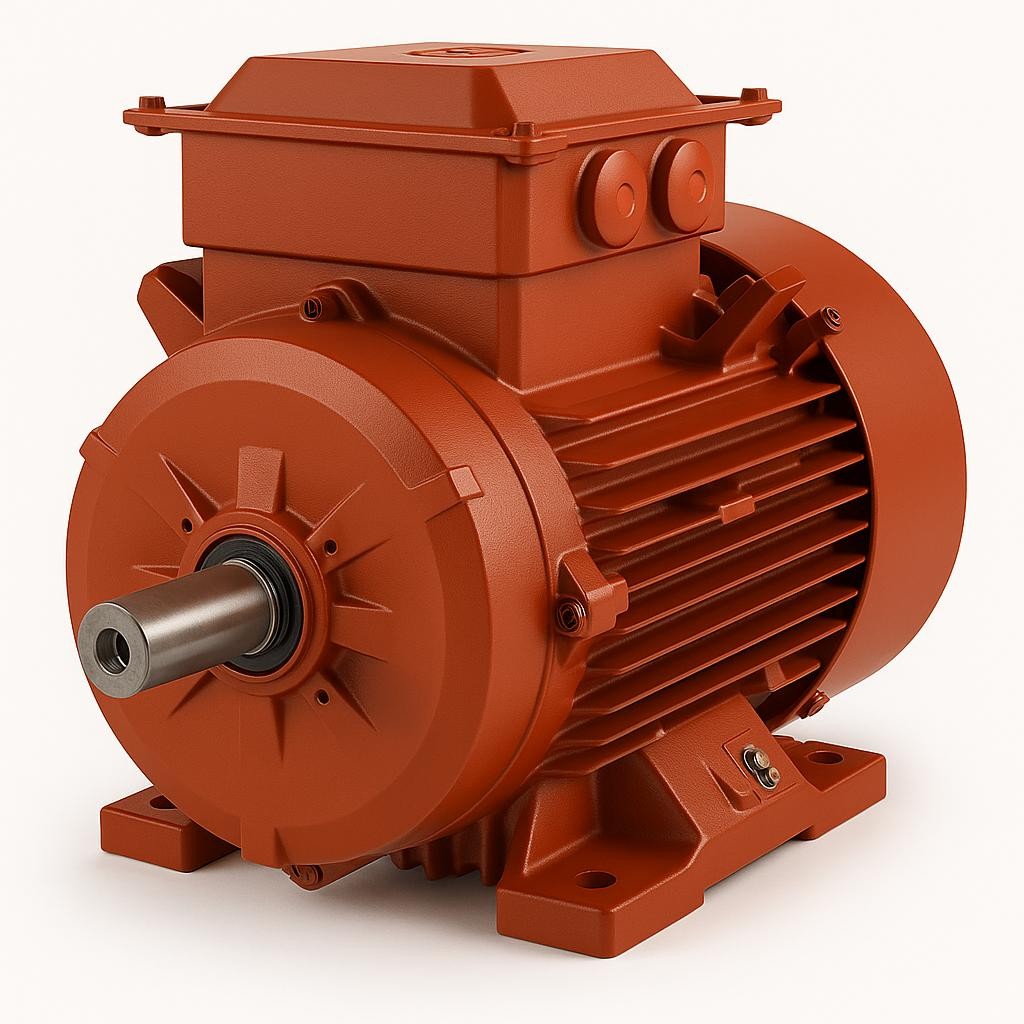

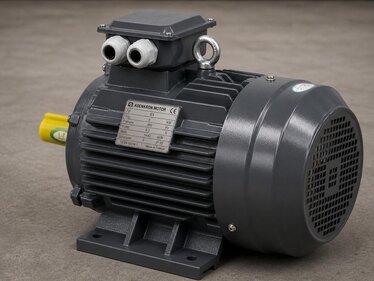
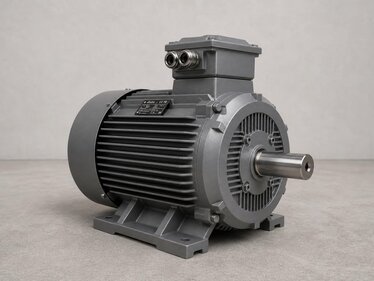
A quoted price for an IE3 or an IE4 motor means nothing until power, pole count, mounting and protection degree sit on the same line. Under IEC 60034-30-1 the IE4 class is labelled super premium efficiency and IE3 premium efficiency, and the gap between them is bought with material.
What the extra cost buys inside the frame
Raising efficiency raises copper and steel content. Heavier copper cross-section goes into the IE4 stator winding, thin silicon laminations with lower hysteresis loss form the magnetic circuit, and higher-conductivity material goes into the rotor bars. Under load the machine then runs cooler, and more of the supplied electricity ends up as shaft work. They also push the bill of materials up, which is why the IE4 label price sits above IE3 at identical output.
Power band and speed change the number
Price tracks a set of parameters rather than a single figure:
- Output: every step from 0.55 kW up to 355 kW needs a different frame size and winding volume
- Poles: 2-pole 3000 rpm, 4-pole 1500 rpm and 6-pole 1000 rpm machines differ in price at the same kW, because lower speed means a larger frame
- Supply: anything outside standard 400 V / 50 Hz moves the order into special production
- Ingress protection: IP55 covers most plants, but wash-down areas ask for a tighter degree and the cost follows
Two quotations are comparable only when all four match.
Click to see current electric motor prices and order nowSEE PRICES →
The efficiency gap in numbers
On a 4-pole 22 kW machine the IE3 efficiency is around 92.6 percent against roughly 93.6 percent for IE4. One percentage point sounds small. At full load it is about 0.25 kW of loss removed, and in a plant running 20 hours a day that becomes several thousand kilowatt-hours a year. Slip and cosφ also read better on the IE4 model.
How fast the difference pays back
Payback rests on three variables: the unit price of electricity, the annual running total the machine logs, and how heavily it is loaded. Brief daily duty leaves that gap open beyond any timeframe worth planning around. A circulation pump that never stops closes it within a few years.
Fitting the class to the duty
- Continuously loaded centrifugal pumps and fans: IE4 shows the clearest saving
- Booster sets, air handling units, chiller packages: long hours make IE4 sensible
- Intermittent crushers, cranes and standby units: IE3 and its lower first cost is often enough
Frame material and mounting
Mechanical configuration is the line item buyers forget. Foot-mounted B3 turns up most often and usually costs least; the B5 flange common on pumps and the smaller B14 flange carry extra casting and machining. Aluminium frames are light and easy to install. Cast iron takes heavy-industry vibration better.
Regulation pressure on pricing
EU Ecodesign rules keep raising the minimum efficiency class over defined power bands, pulling low-efficiency machines off the market and making IE3 and IE4 the default. Specifying one class higher on a new line is a compliance decision as much as an energy one.
Reading the nameplate before comparing
The efficiency printed on an IE3 or IE4 plate assumes rated output and one stated speed. Real plants often sit near 75 percent load, and IE4 machines hold efficiency better there. Power, speed, cosφ, current, protection degree, insulation class and efficiency class all sit on that plate. Compare on speed and load profile as well as kW, or the cheaper motor on paper writes the bigger electricity bill.
Fix the four values that make quotations comparable before asking for a price: kW, poles or rpm, mounting from B3, B5 or B14, and protection degree. With running hours beside them the IE3 versus IE4 call stops being opinion. Background on asynchronous construction sits under electric motors.
DRG Electric Motors Suited to This Topic
The models below are available in the DRG Motor online shop. Click a model code to see its technical data, dimensions and current price, and order right away.
- DRG-132S-4 – 5.5 kW – 1460 rpm – cast iron frame
- DRG-160L-4 – 15 kW – 1465 rpm – cast iron frame
- DRG-200L-4 – 30 kW – 1475 rpm – cast iron frame
- DRG-225M-4 – 45 kW – 1485 rpm – cast iron frame
Click to see current prices of all electric motors and order nowSEE PRICES →