 English
 Le français
 Türkçe


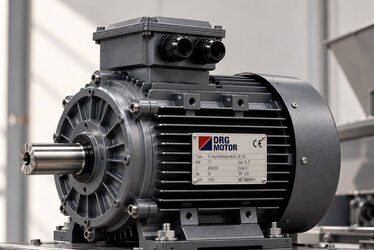
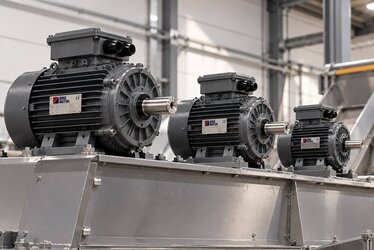
The asynchronous motor, the most widely used type of electric motor in the world, is the true workhorse of industry. Behind countless machines — from pumps to cranes, conveyors to crushers — stands this motor. But how exactly does it turn? In this article we explain, step by step and in plain language, the induction principle that forms the basis of the asynchronous motor, how the rotor sets in motion, and why it turns slightly slower than the rotating field.
To review the general operation of a motor, see the how an electric motor works article, and for the formation of the rotating field, the rotating magnetic field article; here, the focus is entirely on the rotation mechanism of the asynchronous motor.
What Is an Asynchronous Motor?
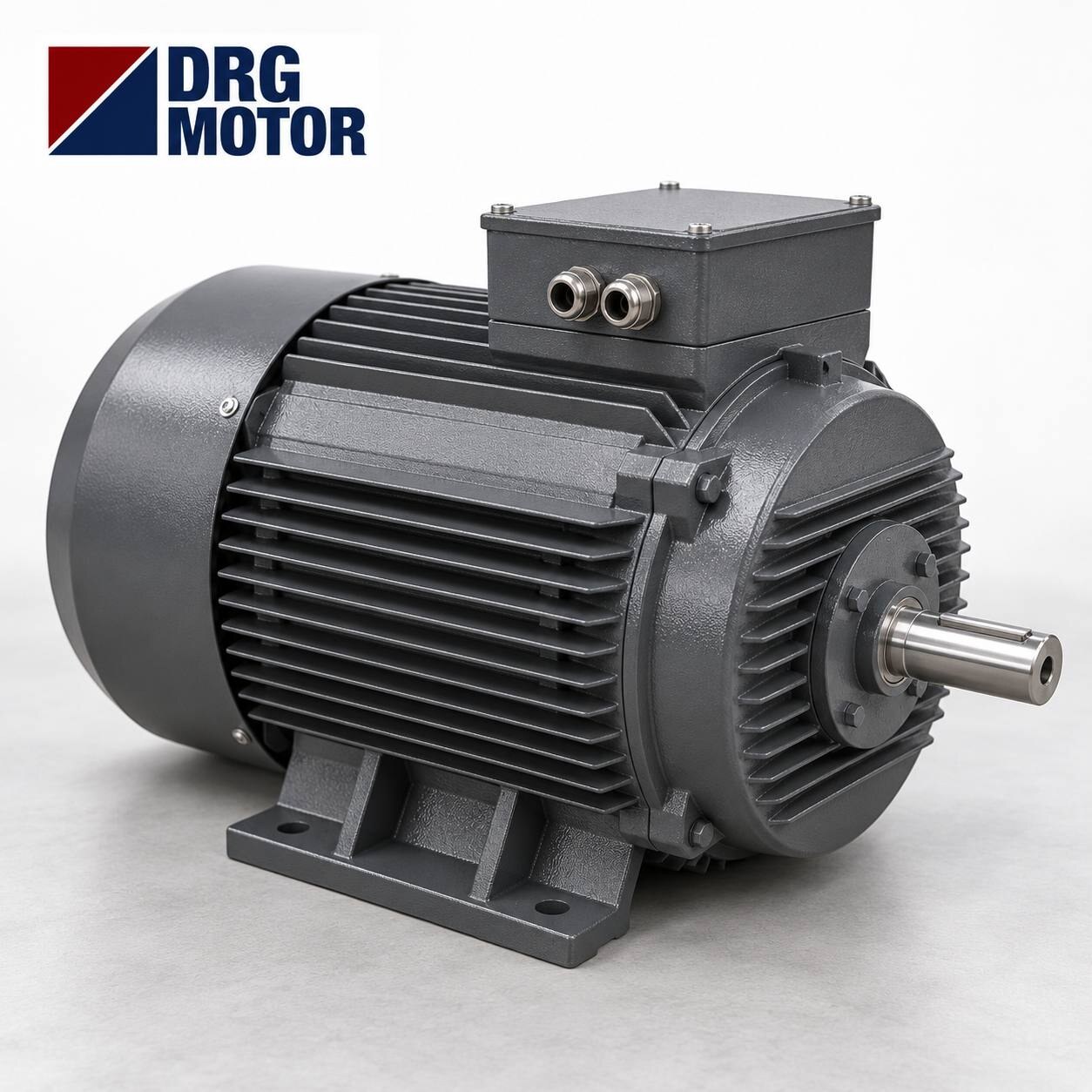
An asynchronous motor is a motor that runs on alternating current and whose rotor speed is always slightly lower than the speed of the stator's magnetic field. The word "asynchronous" expresses exactly this: not synchronous. The rotor does not turn at the same speed as the rotating field; there is a small speed difference between them, and the motor's operation relies on this very difference.
Because of its operating principle, the asynchronous motor is also called an induction motor. This is because the current in the rotor is produced not by an external connection but through magnetic effect, that is, by induction. This feature gives the motor both simplicity and remarkable durability.
The Induction Principle
At the heart of the asynchronous motor lies one of the most fundamental laws in physics: electromagnetic induction. According to this law, if there is a changing magnetic field near a conductor, a voltage is created in that conductor. If the conductor forms a closed circuit, this voltage produces a current.
In an asynchronous motor, the rotating magnetic field produced by the stator, because it is constantly moving, is a "changing field" from the point of view of the rotor bars. This changing field induces a voltage in the rotor bars. Because the rotor bars are short-circuited at both ends, this voltage immediately turns into a current. This is the first link in the chain that makes the motor turn.
Step by Step: How the Motor Starts
The moment energy is supplied to the motor, the stator windings create a rotating magnetic field. This field cuts the bars of the still-stationary rotor and induces a strong voltage in them. Because the rotor is stationary, the speed difference between it and the rotating field is at its maximum; this is why a very high current forms in the rotor at start-up.
This current causes the rotor bars to feel a force within the rotating field, and the rotor begins to turn. As the rotor speeds up, the difference between it and the rotating field decreases, the induced current drops, and the motor reaches a steady running speed. This whole process happens in less than a second.
How Current Is Induced in the Rotor
The most elegant aspect of the asynchronous motor is that energy is transferred to the rotor without any wire being connected to it. In a squirrel-cage rotor, aluminum or copper bars are joined at both ends by rings and form a closed circuit. As the rotating field passes over these bars, it induces a current in them, just as in the secondary winding of a transformer.
This current forms entirely through magnetic effect, not by direct contact. For more about the rotor structure, see the stator and rotor article. This contactless energy transfer explains why the asynchronous motor wears so little and lasts so long.
Lenz's Law and the Turning Force
The current induced in the rotor creates its own magnetic field. According to Lenz's law, this new field appears in a direction that opposes the change that created it. In practice, this means the rotor tries to "catch" the rotating field. The rotor begins to turn in the direction of the stator's rotating field, as if chasing it.
This interaction between the stator's field and the rotor's field creates a turning force on the shaft, that is, torque. To see in more detail how torque is produced, see the torque in electric motors article.
Why Does the Rotor Turn Slower Than the Field?
Here is a critical point: the rotor can never reach exactly the same speed as the rotating field. Because if it did, there would be no relative motion between the rotor bars and the field, no voltage would be induced, and no current would form. Without current there is no force, and the motor would not turn.
This is why the rotor always turns slightly behind the rotating field; this speed difference is called slip. Slip is a necessary condition for the motor to work. For the details, see the slip in induction motors article.
Squirrel-Cage and Slip-Ring Asynchronous Motors
Asynchronous motors are divided into two according to their rotor structure. The squirrel-cage type, with its simple and rugged structure in which the bars are short-circuited, is used in the vast majority of industry. It needs no maintenance, is inexpensive and durable. In the second type, the slip-ring rotor, the rotor has windings that are connected to the outside through slip rings.
The slip-ring motor allows high starting torque to be obtained by adding external resistance at start-up, which is why it is preferred in special applications that must start under very heavy load. Still, for most applications today, the squirrel-cage motor is the sufficient and most economical solution.
Start-Up and Starting Current
The most demanding moment for an asynchronous motor is start-up. While the rotor is still stationary, the induced current is very high; this is why the motor can draw several times its rated current at start-up. This is not a problem in small motors, but in large motors this high current stresses the grid.
For this reason, starting methods such as star-delta or soft starters are used in large asynchronous motors. We cover which method is suitable when in the star-delta starting comparison.
Advantages of the Asynchronous Motor
The reasons the asynchronous motor is so widespread are clear. Its structure is simple; it contains no brushes, commutator or complex electronics. It is easy to maintain and has almost no wearing parts. It is economical to manufacture, so it is affordable. It is durable and, used correctly, can run for decades.
It also runs at a stable speed even under load and balances itself. All these features make the asynchronous motor the indispensable workforce of industry. For three-phase options, see our three-phase asynchronous motor page.
Limitations of the Asynchronous Motor
Like every technology, the asynchronous motor has some limitations. When connected directly to a fixed-frequency grid, its speed is roughly constant and cannot be easily adjusted. An additional device such as a frequency drive is needed for speed control. In addition, the starting current is high, and the power factor can drop at low loads.
These limitations have been largely overcome with modern drive technologies. Today, with a frequency drive, an asynchronous motor can offer both precise speed control and high efficiency.
Behavior Under Load
One of the most useful features of the asynchronous motor is that it adjusts itself to the load. When the load increases, the rotor slows down a little, slip increases, the induced current rises, and the motor produces more torque to meet the load. When the load decreases, the opposite happens and the motor draws less current.
This self-balancing behavior makes the asynchronous motor ideal for many applications. However, running it continuously above the load stated on its nameplate leads to overheating and efficiency loss; this is why correct power sizing is important.
Areas of Application
Asynchronous motors appear in almost every sector. In industry they turn pumps, fans, compressors, conveyors and mixers. In agriculture they run irrigation pumps and feed machines. In construction and mining they turn concrete mixers and crushers. In home appliances, their low-power single-phase types are used.
The right motor should be chosen according to the application; for example, fan motors for ventilation and pump motors for water systems. For all asynchronous and AC motors, see the asynchronous and AC motors section.
Efficiency and Savings
Asynchronous motors are continually improving in efficiency. Modern IE3, IE4 and IE5 class asynchronous motors do the same job with much less energy. In a facility running 24/7, choosing a high-efficiency motor provides significant savings over the years.
Most of the money a motor costs over its lifetime is electricity consumption; this is why a high-efficiency asynchronous motor pays back the initial cost difference in a short time. For options, see the high efficiency motors section, and get support from the DRG Motor team for the right choice.
What Field Crews Check
One of the greatest advantages of the asynchronous motor is that it requires very little maintenance. In the squirrel-cage type, the only practically wearing part is the bearings. Regular bearing checks, greasing when needed and periodic measurement of the winding insulation extend the motor's life many times over.
An asynchronous motor that is correctly installed, run at the right load and regularly maintained serves trouble-free for decades. This reliability explains why the asynchronous motor has been a cornerstone of industry for over a century.
A Short History of the Asynchronous Motor
The foundation of the asynchronous motor was laid in the late 19th century with the discovery of the rotating magnetic field. Thanks to the work of Nikola Tesla and Galileo Ferraris, this brushless motor type running on alternating current emerged. It quickly became the most reliable power source in industry.
Since then, the basic operating principle of the asynchronous motor has not changed; but material quality, efficiency and control technologies have advanced greatly. Today, despite a history of more than a century, the asynchronous motor is still the most produced and used electrical machine in the world.
What Is the Power Factor (cosφ)?
In asynchronous motors, the power factor shows how much of the power drawn from the grid is converted into useful work. Part of the current is spent creating the magnetic field and does not directly turn into work; this affects the power factor. The power factor is high at full load and lower when idle or at low load.
A low power factor causes unnecessary excess current to be drawn from the grid. This is why compensation systems are used in large facilities. Running the motor at a load close to its nameplate value is the simplest way to keep the power factor high.
The Asynchronous Motor and the Frequency Drive
Although the speed of an asynchronous motor is roughly constant directly on the grid, this changes completely with a frequency drive (VFD). The drive adjusts the speed steplessly by changing the frequency applied to the motor. Thus, a single asynchronous motor can run over a wide speed range.
This feature provides large energy savings, especially in variable-load applications such as pumps and fans. You can find a detailed look at how speed changes with frequency in the motor speed article.
Heating and Cooling
While running, an asynchronous motor heats up due to winding resistance, rotor losses and magnetic losses. Removing this heat is critical for the motor's life. In most asynchronous motors, the fan on the shaft end cools the motor by passing air over the housing.
Overload, inadequate ventilation or a high ambient temperature cause the motor to overheat. Running continuously at a high temperature shortens the life of the winding insulation. This is why correct power sizing and good ventilation are essential for long life.
Protection Class and Operating Environment
Asynchronous motors are made in different protection classes. The IP code shows how well the motor is protected against dust and water. For example, an IP55 motor can run safely in dusty environments exposed to water jets. Choosing a protection class suited to the environment reduces the risk of failure from the start.
In dusty, humid or outdoor applications, motors with a high IP rating should be preferred. The right protection class directly affects both the safety and the life of the motor.
Choosing the Right Asynchronous Motor
Choosing the right asynchronous motor depends on the application's power, speed, load type and operating environment. For multi-purpose work, a general purpose motor is often the most practical solution. Oversizing increases both the initial cost and energy consumption.
When choosing, the motor's starting torque should also be compared with the torque demanded by the load. A wrongly chosen motor either cannot start or constantly strains and overheats. The right choice brings both efficiency and long life.
Stone crushing and mining: hours under high starting torque
Some applications demand exceptional durability and high starting torque from an asynchronous motor. Stone crushing, crushing-screening and mining plants are foremost among these. In these applications, the motor runs for hours under heavy load in a dusty, vibrating environment.
Specially reinforced motors are used for these harsh conditions. For heavy-duty applications, you can review the options on our stone crusher motors page.
Frequently Asked Questions
Why is the power factor (cosφ) important? It shows how much of the power drawn from the grid is converted into useful work; a low value causes unnecessary current to be drawn.
Does an asynchronous motor work with a frequency drive? Yes, a frequency drive adjusts the motor's speed steplessly and provides large savings, especially in pump and fan applications.
Why is it called an asynchronous motor? Because its rotor does not turn in sync (synchronously) with the stator's rotating field; it always turns slightly slower.
How is energy transferred to the rotor? Without any wire connected, by the rotating field inducing a current in the rotor bars, that is, magnetically.
Why does an asynchronous motor draw high current at start-up? While the rotor is stationary, the speed difference with the rotating field is at its maximum, which means the highest induced current.
Can the speed of an asynchronous motor be adjusted? Directly on the grid the speed is roughly constant; but with a frequency drive the speed can be adjusted steplessly.
Should I choose squirrel-cage or slip-ring? For most applications the squirrel-cage type is sufficient and economical; for special jobs requiring very high starting torque, the slip-ring type is preferred.
Industry's Quiet Workhorse
The asynchronous motor is one of the most successful designs in engineering thanks to its simplicity. The rotating magnetic field produced by the stator induces a current in the rotor bars; this current interacts with the rotating field to turn the rotor. The fact that the rotor always stays slightly behind the field, that is, slip, is the necessary condition for the motor to work. With its brushless, rugged and durable structure, the asynchronous motor continues to be the quiet workforce of industry for over a century.