 English
 Le français
 Türkçe

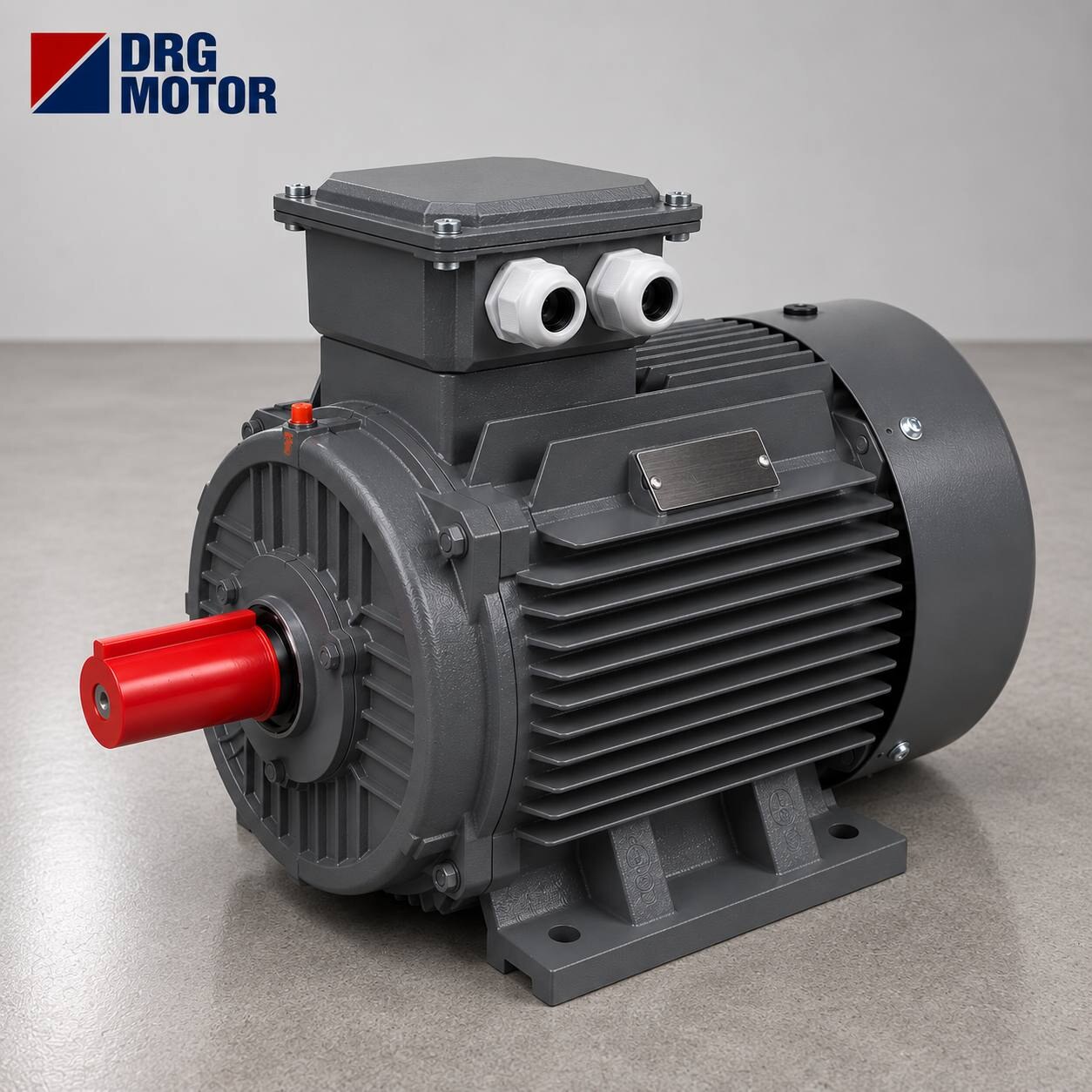

The key to understanding how asynchronous motors work lies in a single concept: slip. This phenomenon, which sounds like a flaw when first heard, is actually an absolute requirement for the asynchronous motor to turn. In this article we examine in detail what slip is, why it is necessary, how it is calculated, and its effects on the motor's torque, heating and efficiency.
For the general operating logic of the asynchronous motor, see the induction motor article, and for the motor as a whole, the how an electric motor works article.
What Is Slip?
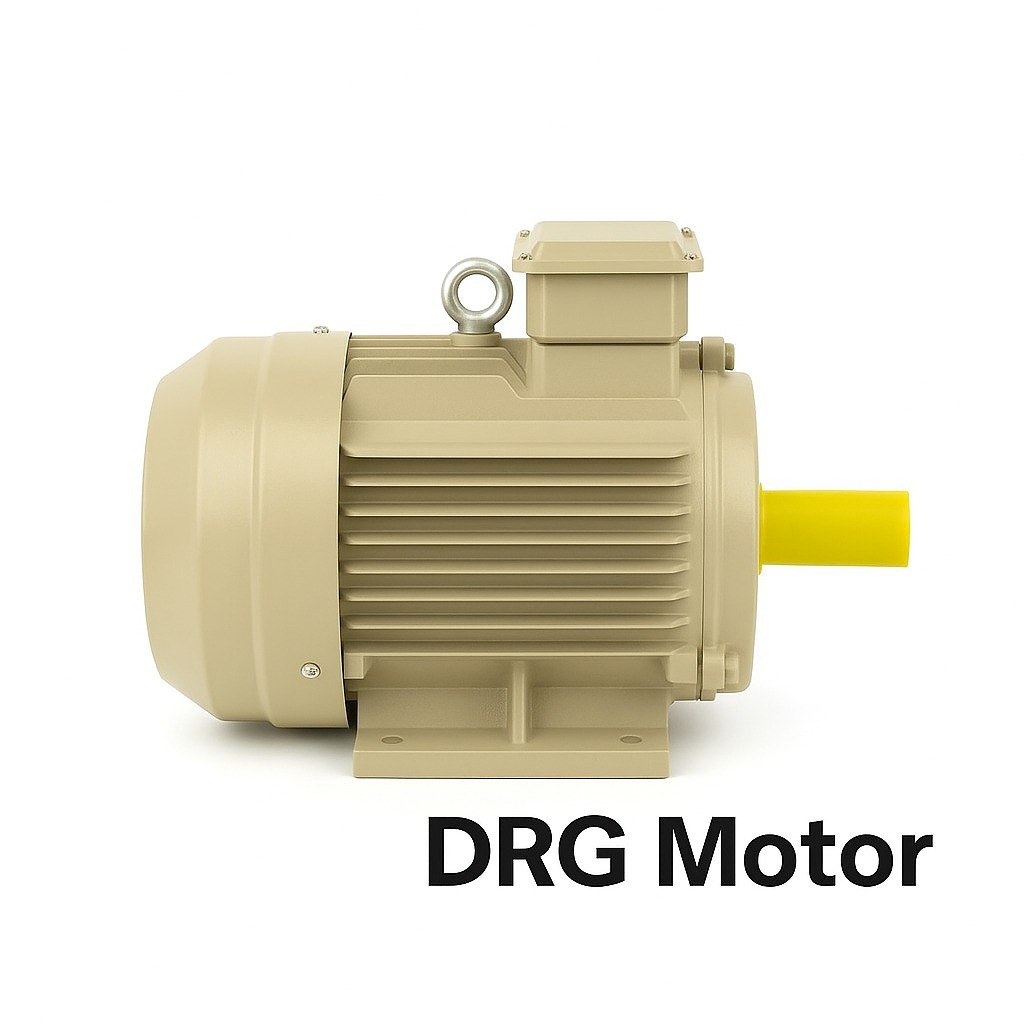
Slip is the difference between the speed of the stator's rotating magnetic field and the actual rotation speed of the rotor in an asynchronous motor. While the stator field rotates at a certain synchronous speed, the rotor always turns slightly slower. This difference between the two speeds is called slip and is usually expressed as a percentage.
In other words, slip shows how far behind the rotor "follows" the rotating field. The rotor slips more at full load and very little when idle. This simple concept is the fundamental key that explains the entire behavior of the asynchronous motor.
Why Is Slip Necessary?
Without slip, an asynchronous motor cannot work. Because for a current to be induced in the rotor bars, there must be relative motion between the rotor and the rotating field. If the rotor turned at exactly the same speed as the rotating field, there would be no changing field cutting the bars, no voltage would be induced, and therefore no torque would form.
This is why slip is not a flaw but a necessary condition for the motor to work. The rotor tries to catch the rotating field, but because it would stop producing torque the moment it caught it, it never fully catches it. This elegant balance lies at the heart of the asynchronous motor.
Synchronous Speed and Rotor Speed
Synchronous speed is the rotation speed of the rotating magnetic field and depends on the mains frequency and the number of poles. For example, on a 50 Hz supply, the synchronous speed of a 4-pole motor is 1500 rpm. However, this motor's rotor turns at around 1450-1480 rpm in practice; the difference is slip.
The rotor speed is never equal to the synchronous speed; it gets very close but always stays below it. To see in more detail what synchronous speed depends on, see the motor speed article.
How Is Slip Calculated?
Slip is calculated with a simple formula: the slip percentage is found by dividing the difference between the synchronous speed and the rotor speed by the synchronous speed and multiplying by one hundred. That is, slip (%) = [(Ns − Nr) / Ns] × 100. Here Ns is the synchronous speed and Nr is the actual rotor speed.
For example, if a motor with a synchronous speed of 1500 rpm runs at 1455 rpm at full load, the slip is (1500−1455)/1500 = 3%. This simple calculation is a practical way to understand how hard the motor is working under load.
Typical Slip Values
In a standard squirrel-cage asynchronous motor, full-load slip is usually between 1 and 5 percent. This value can be slightly higher in small motors and lower in large, efficient motors. High-efficiency motors are designed to run with lower slip.
Low slip means the rotor turns close to synchronous speed and losses are low. This is why the slip value gives an important clue about a motor's efficiency.
Slip When Idle, Loaded and Starting
Slip changes according to the motor's load condition. When the motor runs idle, because the load is very low, slip is almost zero and the rotor gets very close to synchronous speed. As the load increases, the rotor slows down, slip grows, and the motor produces more torque.
At start-up, the rotor is still stationary; in this case slip reaches its maximum value of one hundred percent. This is why the induced current, and therefore the current drawn, is very high at start-up. We covered the methods used to manage starting current in the star-delta starting article.
The Relationship Between Slip and Torque
There is a direct relationship between slip and torque. Up to a certain point, as slip increases, the torque the motor produces also increases. This explains how the motor balances itself when the load increases: as the load grows, the rotor slows, slip increases, and the motor produces more torque to meet the load.
However, this increase is not endless; after a certain slip value, the torque peaks and then begins to drop. This peak point is called the breakdown torque. To see in detail how torque is produced, see the torque in electric motors article.
Slip and Rotor Frequency
The frequency of the current induced in the rotor also depends on slip. At start-up, while slip is high, the rotor frequency is equal to the mains frequency. As the motor speeds up, slip decreases and the rotor frequency drops too. At full load, the rotor frequency is usually on the order of a few hertz.
This relationship is important for analyzing the motor's operating behavior. Rotor frequency is a direct indicator of slip and helps in understanding how the motor behaves under load.
Slip and Heating
As slip increases, the power dissipated in the rotor and therefore the heat produced also increase. The current circulating in the rotor bars converts some energy into heat; this loss is called slip loss. This loss is small at low slip, but when the motor is overloaded, slip grows and the rotor heats up significantly.
This is why running a motor continuously overloaded both lowers efficiency and shortens winding and bearing life. Running the motor at a load matching its nameplate value is the simplest way to keep slip and heating under control.
Slip and Efficiency
Slip is a direct indicator of motor efficiency. The power dissipated in the rotor due to slip is a loss that does not turn into useful work. This is why a motor running with low slip is more efficient. High-efficiency motors achieve low slip with higher-quality materials and better design for exactly this reason.
An efficient motor does the same job with less slip and fewer losses. For high-efficiency options, see the high efficiency motors section.
The Effect of Load Change on Slip
One of the most useful features of the asynchronous motor is that it automatically adjusts slip according to the load. When the load increases, slip grows and the motor produces more torque; when the load decreases, slip shrinks. This self-balancing behavior allows the motor to run stably under different load conditions.
This is why an asynchronous motor runs reliably even in variable-load applications. However, the load exceeding the motor's capacity raises slip to dangerous levels and strains the motor.
Signs of Excessive Slip
Excessive slip is often a sign of a problem. The motor turning slower than normal, overheating, losing power or drawing excessive current can be signs of excessive slip. The cause is usually overload, low voltage or a mechanical fault.
When these signs are noticed, the motor's load and supply voltage should be checked. Running continuously at high slip shortens the motor's life and wastes energy.
Factors Affecting Slip
The main factors affecting slip are the amount of load, the supply voltage, the rotor resistance and the motor's design. As the load increases, slip increases. When the supply voltage drops, the motor slips more to produce the same torque. Slip is also greater in motors with high rotor resistance.
These factors determine the motor's operating point. A well-designed motor is made to run at the most suitable slip value within the targeted load range.
Controlling Slip
In some applications, controlling slip is used to adjust the motor's speed. In slip-ring rotor motors, slip and therefore speed can be changed by adding resistance to the rotor circuit. In modern applications, however, a frequency drive does this job much more efficiently.
A frequency drive adjusts the motor's speed steplessly by changing the speed of the rotating field; this is far more efficient than speed control by slip. This is why speed control today is usually provided by a drive.
Slip and the Right Motor Choice
The slip value should also be considered when choosing the right motor. A low-slip, high-efficiency motor consumes less energy over the long term. In applications that must start under heavy load, high starting torque and suitable slip behavior are important.
To determine the motor suited to your application, you can review the three-phase asynchronous motor options and get support from the DRG Motor team for the right choice.
Misconceptions About Slip
One of the most common misconceptions is that slip is a fault. In fact, slip is a necessary and normal phenomenon for the asynchronous motor to work. Another false belief is that slip should always be low; yet a certain amount of slip is essential for the motor to produce torque under load.
What matters is that slip stays within the motor's design values. Very low slip can indicate that the motor is not loaded enough, while very high slip can indicate overload or a fault.
Motor Classification by Slip
Motors are divided into different design classes according to their slip and starting-torque behavior. Standard general-purpose motors run with low slip and suit most applications. However, some applications require very high torque at start-up or resistance to shock loads; in these cases, specially designed motors that run with higher slip are used. High-slip motors protect the system by allowing the rotor to slow down somewhat during sudden load changes and soften the shock energy.
For example, in machines carrying shock loads such as presses, crushers and cranes, high-slip motors offer an advantage. By contrast, in smoothly loaded applications such as pumps and fans, low-slip, high-efficiency motors are preferred. Choosing the right design class directly affects both the motor's life and the system's efficiency; this is why you must look at the power and at the slip behavior.
Measuring Slip
To determine slip, you first need to measure the actual speed of the rotor. This can be done by reading the shaft speed directly with a tachometer. Since the synchronous speed is already known from the frequency and pole count, slip is easily calculated by putting the measured rotor speed into the formula. For more precise measurements, devices such as a stroboscope or encoder are also used.
In practice, tracking a motor's slip provides valuable information about its health. A higher-than-normal slip can indicate that the motor is overloaded or that a fault is developing. This is why, in critical applications, slip is monitored as part of periodic maintenance, and unexpected changes are detected early.
Double-Cage Rotors and Slip
Some asynchronous motors use a double-cage rotor to improve starting behavior. These rotors have two sets of bars, one outer and one inner. At start-up, because of the high rotor frequency, the current flows mostly through the high-resistance outer cage, which provides high starting torque. As the motor speeds up, the current shifts to the low-resistance inner cage and efficiency increases.
This clever design makes it possible to achieve both high starting torque and low running slip. Double-cage rotors are preferred in applications that must start under heavy load but are also expected to run efficiently. In this way, a single motor can meet two different needs at once.
Slip and Power Flow
In an asynchronous motor, energy is transferred from the stator across the air gap to the rotor and from there to the shaft. Part of the power transferred to the rotor turns into heat due to slip; the rest is delivered to the shaft as useful mechanical power. Interestingly, the proportion of power turned into heat in the rotor is directly equal to the slip value.
That is, if slip is 3 percent, about 3 percent of the power entering the rotor is lost as heat. This simple relationship clearly shows why low slip means higher efficiency. Understanding power flow allows you to see where the motor loses energy and how it can be made more efficient.
Slip and the Frequency Drive
When a frequency drive is used, slip behavior takes on a new dimension. The drive adjusts the motor's speed by changing the frequency of the rotating field; yet the motor still runs with some slip. Modern vector-control drives continuously calculate slip to ensure the motor produces exactly the required torque.
In this way, an asynchronous motor can be precisely controlled over a wide speed range. You can find a detailed look at how speed changes with frequency in the motor speed article. The frequency drive turns slip from a disadvantage into a controllable parameter.
A Practical Example
Let's reinforce this with an example: a 4-pole motor connected to a 50 Hz supply has a synchronous speed of 1500 rpm. When idle, this motor turns at nearly 1498 rpm, so slip is very small. When full load is connected, the rotor slows to 1455 rpm; in this case slip is 3 percent. If the load increases further, the rotor slows down a little more and slip grows.
This example concretely shows how slip changes with load. The rated speed on the motor's nameplate (for example, 1455 rpm) is actually the real operating speed that already includes the full-load slip. This is why knowing the nameplate speed gives direct information about the motor's slip behavior.
Frequently Asked Questions
How does a double-cage rotor affect slip? At start-up the high-resistance outer cage provides high torque; once the motor speeds up, the current shifts to the inner cage, giving low running slip and high efficiency.
Does the rated speed on the nameplate include slip? Yes. The speed on the nameplate is the actual rotor speed at full load, which already includes slip.
Why is slip necessary? Relative motion between the rotor and the rotating field is needed for current to be induced in the rotor bars; slip provides this motion. Without slip there is no torque.
What is a typical slip value? In a standard asynchronous motor, full-load slip is usually between 1 and 5 percent.
How is slip calculated? The difference between synchronous speed and rotor speed is divided by the synchronous speed and multiplied by one hundred: slip (%) = [(Ns − Nr) / Ns] × 100.
What happens if slip increases? Up to a certain point torque increases; but excessive slip leads to heating, efficiency loss and excessive current.
Is there slip in a synchronous motor? No. In a synchronous motor the rotor turns at exactly the same speed as the rotating field, so there is no slip.
Understanding Slip Correctly
Slip is the most misunderstood but most fundamental concept of the asynchronous motor. It is not a flaw but a condition required for the motor to turn. This small speed difference between the stator field and the rotor induces the current in the rotor, creates torque, and allows the motor to balance itself according to the load. Understanding slip means understanding the behavior, efficiency and correct use of the asynchronous motor, which brings both energy savings and long life.