 English
 Le français
 Türkçe

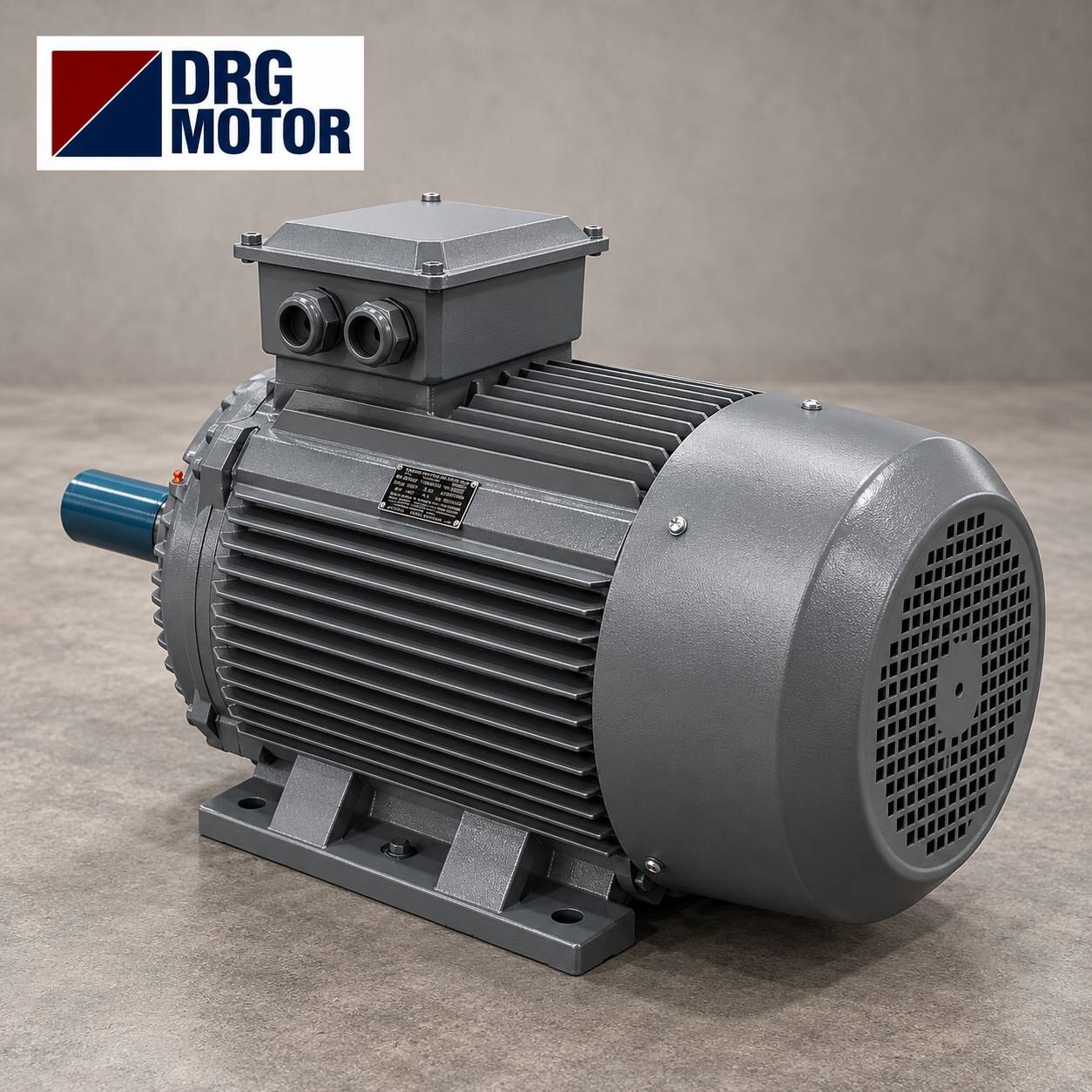

An electric motor's efficiency class is written on its nameplate; but how that figure is determined, and whether it is genuinely accurate, is an important matter. A motor's efficiency is measured and verified through standard test methods. These tests reveal how much energy the motor converts into work and how much it wastes as loss. So how are efficiency tests performed on electric motors, and why do they matter?
In this article, DRG Motor looks at how motor efficiency tests are performed and the importance of verifying efficiency. You can find the general logic of efficiency classes in our article on high-efficiency electric motors.
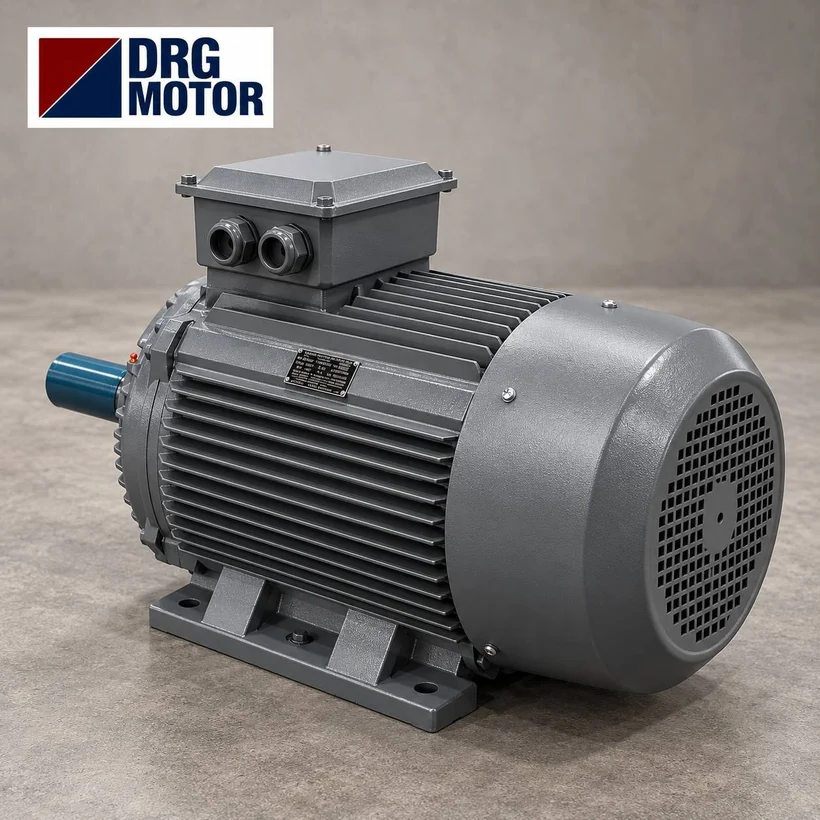
What Is Efficiency?
Motor efficiency is the ratio of the mechanical power taken from the shaft to the electrical power drawn from the supply. In other words, it shows how much of the energy the motor draws is converted into useful work. The remainder is lost as heat. The higher the efficiency, the less energy the motor wastes.
Efficiency is the fundamental measure of a motor's energy performance, which makes it a critical value in motor selection.
Why Is the Efficiency Test Important?
The efficiency test verifies whether a motor truly delivers the efficiency stated on its nameplate. This provides reliable information for motor selection and energy savings calculations. An untested efficiency figure rests on assumption. This is why an efficiency test is essential for a reliable efficiency value.
A verified efficiency shows the motor's real performance, which enables a deliberate selection.
The Direct Measurement Method
In the direct method, the mechanical power taken from the motor shaft is measured and divided by the electrical power drawn from the supply. Shaft torque and rotational speed are measured to calculate the mechanical power. This method provides the most direct efficiency measurement for every type of motor. Direct measurement gives a reliable result.
Measuring mechanical power directly allows efficiency to be calculated clearly, which is a reliable method.
The Indirect (Loss) Method
In the indirect method, the motor's losses are measured separately and added together. These losses are subtracted from the drawn power to calculate efficiency. This method is widely used, especially in large motors. The indirect method reveals the losses in detail.
We discuss efficiency losses in our article on efficiency losses. The indirect method measures these losses.
The No-Load Test
In the no-load test, the motor is run without load and the power drawn is measured. This test serves to determine the iron losses and mechanical losses. The no-load test reveals the motor's fixed losses, which is part of the efficiency calculation.
The power drawn at no load shows the fixed losses, which is the foundation of loss analysis.
The Locked-Rotor Test
In the locked-rotor (short-circuit) test, voltage is applied to the motor without the rotor turning and the power drawn is measured. This test serves to determine the winding losses. Together, the no-load and locked-rotor tests reveal the motor's equivalent circuit and its losses, which makes the efficiency calculation possible.
The locked-rotor test determines the load-related losses, which provides a comprehensive analysis.
The Loaded Operation Test
In the loaded operation test, the motor is run under real load and its performance is measured. This test shows the motor's actual efficiency under operating conditions. The loaded test reveals the motor's behaviour in practice, which gives the most realistic efficiency value.
Loaded operation shows the motor's efficiency under real conditions, which means a reliable result.
The Test Bench (Dynamometer)
Efficiency tests are generally carried out on a test bench using a dynamometer. The motor is connected to a load through a coupling, and both the electrical input and the mechanical output are measured. This system provides accurate measurement under controlled conditions. The test bench is the foundation of reliable efficiency measurement.
Controlled test conditions provide accurate, repeatable results, which means a reliable verification.
Standard Test Methods
Motor efficiency is determined according to international standards (such as IEC 60034). These standards define how the tests are to be performed and how efficiency is to be calculated. Standard methods allow different motors to be compared fairly, which means a reliable efficiency classification.
A test compliant with standards ensures the reliability of the efficiency value, which means a deliberate comparison.
Measuring Stray Losses
Some of a motor's losses are stray (additional) losses that are difficult to measure directly. Standard test methods also determine these stray losses. Correctly measuring the stray losses reflects the real efficiency, which improves the accuracy of the efficiency value.
Stray losses are an important part of the efficiency calculation, and correct measurement shows the real efficiency.
Determining the Efficiency Class
Based on the test results, the motor's efficiency is calculated and assigned to an IE class. Classes such as IE3, IE4 or IE5 are the outcome of these tests. The efficiency class summarizes how efficient the motor is, which is stated on the nameplate.
The efficiency class is a concrete expression of the test results. We also cover this in our article on IE5 ultra-premium motors.
Click to see current electric motor prices and order nowSEE PRICES →
The Efficiency Test and Trust
A correctly performed efficiency test gives the buyer confidence. Knowing that the motor truly delivers the stated efficiency makes the energy savings calculation reliable. A tested and certified efficiency is the foundation of a deliberate selection, which means a reliable motor.
A reliable efficiency value supports the right investment decision, which means a deliberate purchase.
Field Efficiency Checks
A motor's efficiency can also be checked approximately in the field with current and power measurements. This check shows whether the motor maintains its efficiency over time. A drop in efficiency can be a sign of a problem. Field checking is part of efficiency tracking.
We explain energy monitoring in our article on energy monitoring. Field checking tracks efficiency.
Efficiency and Total Cost
A verified efficiency value makes it possible to calculate the motor's lifetime energy cost. This calculation is critical for correct motor selection and the investment decision. The efficiency test forms the reliable basis of this calculation, which means a deliberate investment.
We discuss the return on switching to an efficient motor in our article on the payback period of an efficient motor. The efficiency test supports this calculation.
Testing and Quality Assurance
Efficiency tests are also part of a motor's quality assurance. A motor that is tested and verified as compliant with standards is of reliable quality. These tests also reflect production quality, which enables a deliberate selection.
Quality production shows itself through successful efficiency tests, which means a reliable motor.
The Efficiency Test and the Right Choice
When selecting a motor, it is important that the efficiency value has been verified with standard tests. This guarantees that you receive real efficiency in return for the money you pay. A verified efficiency is the foundation of a deliberate selection, which means a reliable investment.
We discuss nameplate details in our article on nameplate details. A verified efficiency ensures the right choice.
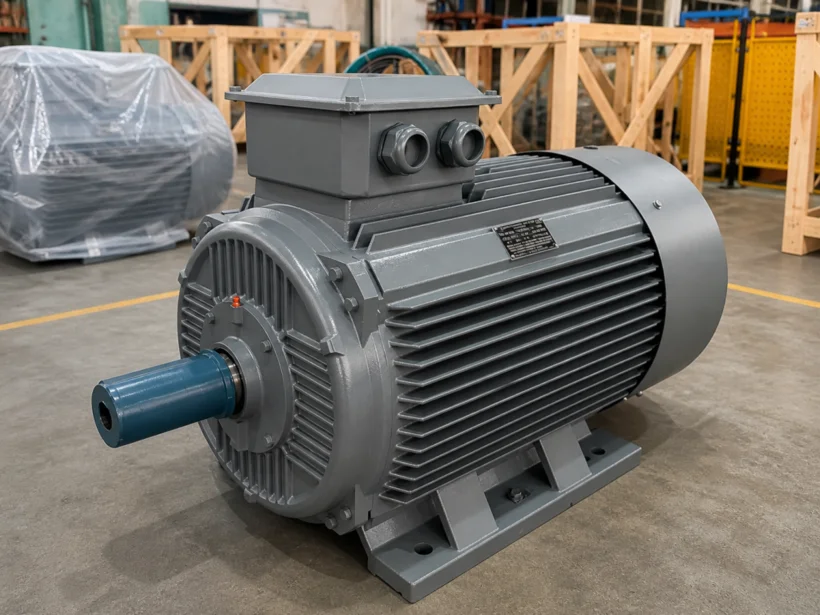
The Importance of Test Conditions
For efficiency tests to be reliable, they must be carried out under controlled, standard conditions. Factors such as temperature, voltage and load must comply with the standards during the test. Correct test conditions provide reliable results, which guarantees the accuracy of the efficiency value.
Standard test conditions ensure that results are repeatable, which means a reliable verification.
Voltage and the Efficiency Test
During an efficiency test, it is important that the voltage applied to the motor is at its rated value. The wrong voltage misleads the efficiency measurement. This is why the test must be performed under the correct voltage. The correct voltage shows the real efficiency.
Voltage conditions affect the accuracy of the efficiency test, which is important for a reliable measurement.
Temperature and the Efficiency Test
A motor's efficiency can change with its temperature. This is why efficiency tests are performed after the motor reaches its operating temperature. A test performed at the correct temperature reflects the real efficiency, which provides a reliable result.
We explain heat control in our article on electric motor temperature control. Temperature affects the efficiency test.
Measurement at Load Points
Efficiency is evaluated by measuring it at the motor's different load points. The motor is generally most efficient at its rated load; however, efficiency at other loads is also important. Measurement at various load points shows the motor's real behaviour, which means a comprehensive evaluation.
Efficiency at different loads shows the motor's suitability for the application, which supports the right choice.
The Efficiency Curve
A motor's efficiency at different loads can be shown with an efficiency curve. This curve reveals at which load the motor runs most efficiently. The efficiency curve helps with correct motor sizing, which ensures the most efficient operation.
We discuss correct power selection in our power (kW) and speed table. The efficiency curve supports correct sizing.
Together with Power Factor
During efficiency tests, the motor's power factor is also measured. Efficiency and power factor together show how effectively the motor uses energy. These two values provide a comprehensive picture of energy performance, which supports a deliberate selection.
We explain the importance of power factor in our article on power factor. Efficiency and power factor are evaluated together.
A Certified Efficiency Value
Efficiency values tested and certified by independent laboratories are the most reliable. These certificates document that the motor truly delivers the stated efficiency. A certified efficiency gives the buyer full confidence, which is the foundation of a deliberate selection.
A certified efficiency is the independent verification of the supplier's declaration, which means a reliable value.
The Efficiency Test and Supplier Trust
A supplier that tests and shares its efficiency values transparently inspires confidence. It is wise to avoid a supplier that hides or leaves its test results vague. Transparent efficiency information is the mark of a reliable supplier, which ensures a correct selection.
We explain how to choose the right supplier in our article on choosing an electric motor dealer. Transparent efficiency is an indicator of trust.
The Efficiency Test and Replacement
Measuring the real efficiency of an old motor supports the replacement decision. The efficiency test shows how inefficient the old motor has become. This makes it possible to calculate the savings replacement would bring. The test makes the replacement decision concrete.
We explain when to replace old motors in our article on when to replace an old motor. The efficiency test guides replacement.
Detecting a Drop in Efficiency
Periodic efficiency measurement shows whether a motor has lost efficiency over time. A drop in efficiency is a sign of wear or of a problem. This detection provides the opportunity for timely maintenance or replacement. Efficiency tracking is an indicator of motor health.
Efficiency loss is often the herald of a hidden problem, which is why efficiency tracking is important.
The Efficiency Test and Energy Management
Efficiency tests are part of a comprehensive energy management strategy. Knowing the real efficiency of motors shows which ones to replace and where to save. This supports deliberate energy management. The test is the foundation of this management.
Energy management is strengthened by verified efficiency data, which means sustainable efficiency.
Testing and Standard Compliance
Efficiency tests verify a motor's compliance with national and international efficiency standards. This compliance is important for both legal requirements and quality. An efficiency compliant with standards is the mark of a reliable motor, which enables a deliberate selection.
Standard compliance documents the reliability of the efficiency value, which supports the right motor selection.
The Total Value of the Efficiency Test
The efficiency test delivers a reliable efficiency value, a correct energy calculation, quality assurance and a deliberate selection. These benefits make the efficiency test important. A verified efficiency shows the motor's real value, which means a reliable investment.
The efficiency test is the proof of a motor's energy performance, which means a deliberate decision.
The Importance of an Efficient Motor
A tested and efficiency-verified motor delivers lifetime energy savings. In continuously running applications, this saving reaches a large sum. This is why a verified efficiency is an important criterion in motor selection. An efficient motor is a long-term gain.
We cover efficiency classes in our article on high-efficiency electric motors. A verified efficiency guarantees the savings.
The Right Evaluation with Expert Support
Correctly interpreting efficiency values and selecting the right motor requires expertise. Consulting an expert helps you identify the motor best suited to you based on verified efficiency values. The right support delivers both savings and a correct selection. Expert evaluation is the key to a correct decision.
At DRG Motor, we provide technical support in selecting efficiency-verified motors. The right choice ensures the highest energy efficiency.
Efficiency and Cost Calculation
A verified efficiency value makes it possible to correctly calculate a motor's annual energy cost. Combined with operating hours and energy price, this calculation reveals the motor's lifetime cost. The efficiency test provides the reliable data for this calculation, which means a deliberate investment decision.
A correct cost calculation makes it possible to select the most economical motor, which is a long-term gain.
The Efficiency Test and Transparency
Openly sharing efficiency test results establishes a transparent relationship between buyer and supplier. Transparent efficiency information enables the buyer to make the right decision. This means a transaction based on trust. Transparency is the foundation of the right motor selection.
A transparent efficiency value shows that the money paid has bought real value, which means a reliable selection.
DRG Motor for Tested, Efficient Motors
At DRG Motor, we offer reliable, tested motors whose efficiency values comply with standards. Our aim is to ensure you receive real efficiency in return for the money you pay and that your energy savings calculation is reliable. With verified efficiency values, we recommend the motor best suited to you.
To choose a tested, efficiency-verified motor and receive technical support, you can contact DRG Motor and review our range on our products page or our homepage. A verified efficiency is the guarantee of your energy savings.
DRG Electric Motors Suited to This Topic
The models below are available in the DRG Motor online shop. Click a model code to see its technical data, dimensions and current price, and order right away.
- DRG-802-4 – 0.75 kW – 1420 rpm – aluminium frame
- DRG-100L1-4 – 2.2 kW – 1450 rpm – aluminium frame
- DRG-132M-4 – 7.5 kW – 1460 rpm – cast iron frame
- DRG-180M-4 – 18.5 kW – 1470 rpm – cast iron frame
Click to see current prices of all electric motors and order nowSEE PRICES →