 English
 Le français
 Türkçe

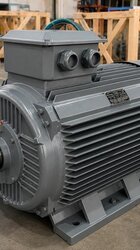
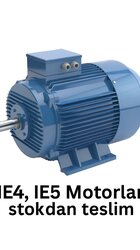
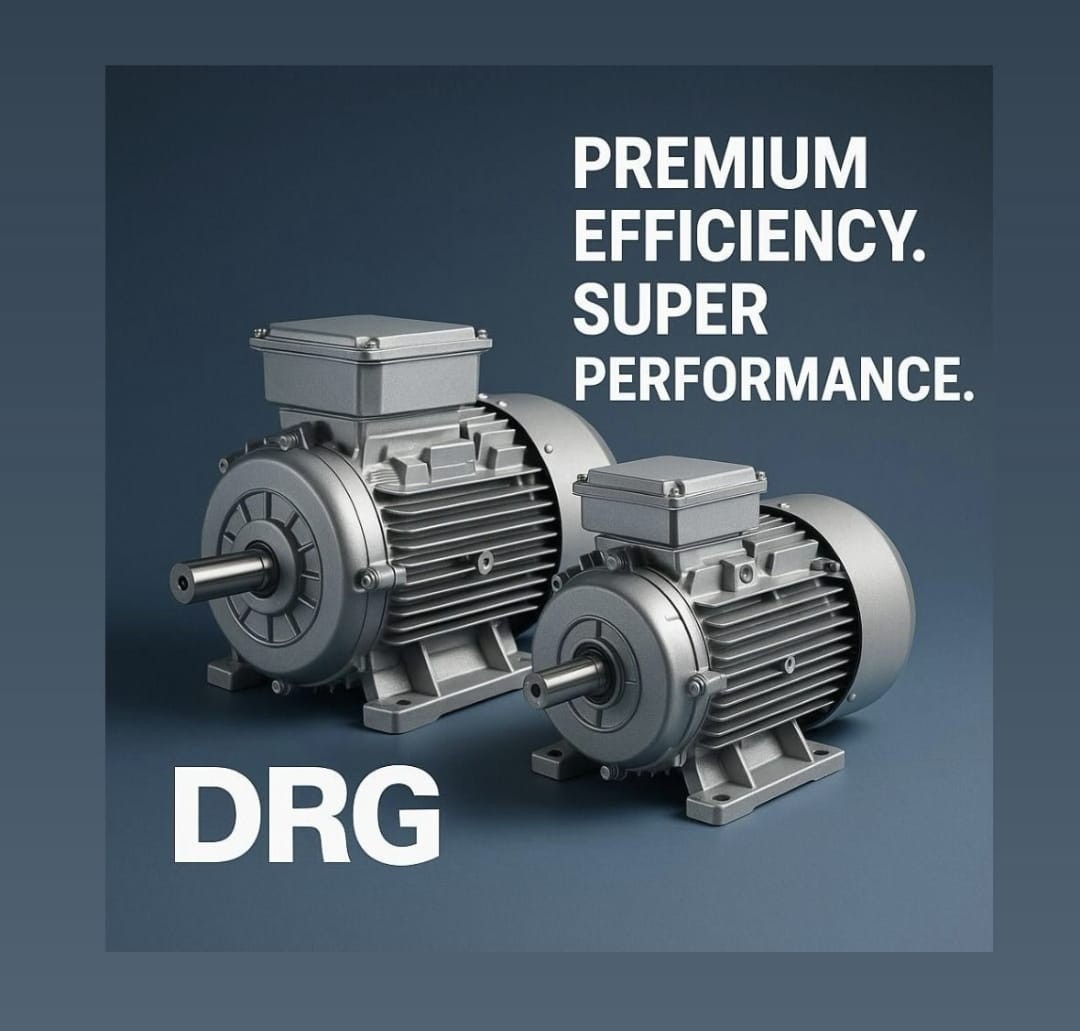

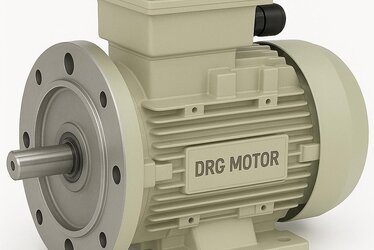
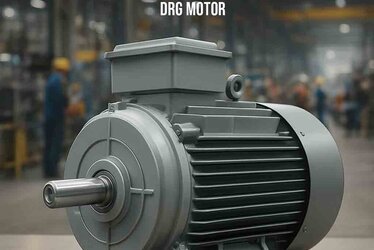
IE5 carries the label Ultra Premium Efficiency, the top rung of IEC 60034-30-1. Where a line turns for thousands of hours annually, what the plate says about class sets both the metered energy cost and the uninterrupted running time.
What the IE5 rating actually says
IEC 60034-30-1 sorts asynchronous machines from IE1 to IE5: standard, high, premium, super premium, then ultra premium at the top. For one and the same output, every step up trims the loss further. Against IE3, an IE5 machine cuts losses far enough to show in annual consumption on continuous duty. Better lamination steel, an optimised winding layout and improved cooling produce the gain.
Energy cost over the service life
Over a working life the energy bill for a motor dwarfs what was paid for it. On long-hour duty, a handful of efficiency points return thousands of kWh a year. Take a pump or fan group that runs without stopping: moving it from IE3 to IE5 shows on the invoice in proportion to running hours, so the price premium is recovered in demanding service.
Technical advantages worth naming
- Ultra-high efficiency: the same work done with less energy drawn
- Long service life: cast iron framing with quality bearings holds up under shift work and continuous duty
- Low vibration: a balanced rotor and optimised air paths keep noise and vibration down
- Rugged build: designed against heat, dust and impact
- Low maintenance: the squirrel cage layout leaves no brushes or commutator to service
Frame, protection and insulation
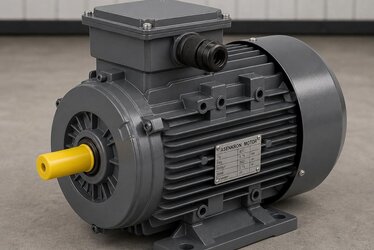
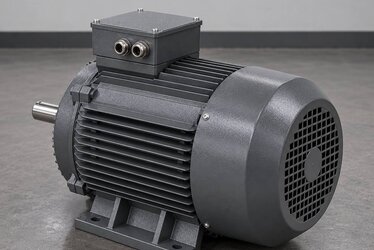
Cast iron is the usual IE5 frame, giving mechanical strength with good heat dissipation. IP55 shuts out airborne dust and hosing water alike, so a foundry bay or a damp washdown plant is fair ground for an IE5 frame. Windings on class F insulation work safely to 155°C, and S1 duty means rated load without a break — the baseline on a line running 24 hours.
Speed, output and mounting
On a 50 Hz supply the pole count fixes speed: 2 poles give roughly 3000 rpm, 4 poles 1500 rpm, 6 poles 1000 rpm. The range starts at 0.55 kW and climbs from there. B3 foot, B5 flange and B14 face mounting cover pumps, gearboxes and direct machine faces. Where an inverter will control speed, the low loss level of an IE5 design keeps the efficiency advantage across the speed range.
Where the saving lands
The advantage matters where hours are long and demand is heavy: production lines, pump stations, compressor packages, crushing and screening plants, ventilation and fan systems, automation lines, agricultural irrigation. Every one of them logs thousands of running hours in a year, so the efficiency difference lands directly on operating cost.
What separates IE5 from the classes below it
The gain between IE3 and IE5 is a set of design choices, not a nameplate figure. Lower-resistance windings with more copper, thin high-grade silicon laminations, better cooling channels and a balanced rotor together reduce the power drawn while shaft output stays the same. On a short-duty machine that is invisible; where a plant clocks up thousands of hours in a year it is money.
Selecting the right machine
Start with the real power and torque the driven load needs. Efficiency falls away at light load on an oversized motor, and an undersized one runs strained. Then settle pole count, duty cycle, ambient temperature and protection. If speed control is planned, inverter compatibility and the B3, B5 or B14 mounting belong in the specification from the start.
Maintenance and operating life
Since brushes and a commutator are absent, attention comes down to bearings and cooling surfaces. Dust-free fins and fan cover hold the machine at its design temperature. Periodic vibration and temperature readings catch bearing wear or misalignment before it becomes a stoppage.
Put the running hours of the application next to the price difference: above a few thousand hours a year, specifying IE5 rather than a lower class is arithmetic. Comparison across the range is set out under electric motors.