 English
 Le français
 Türkçe

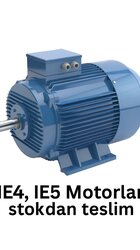
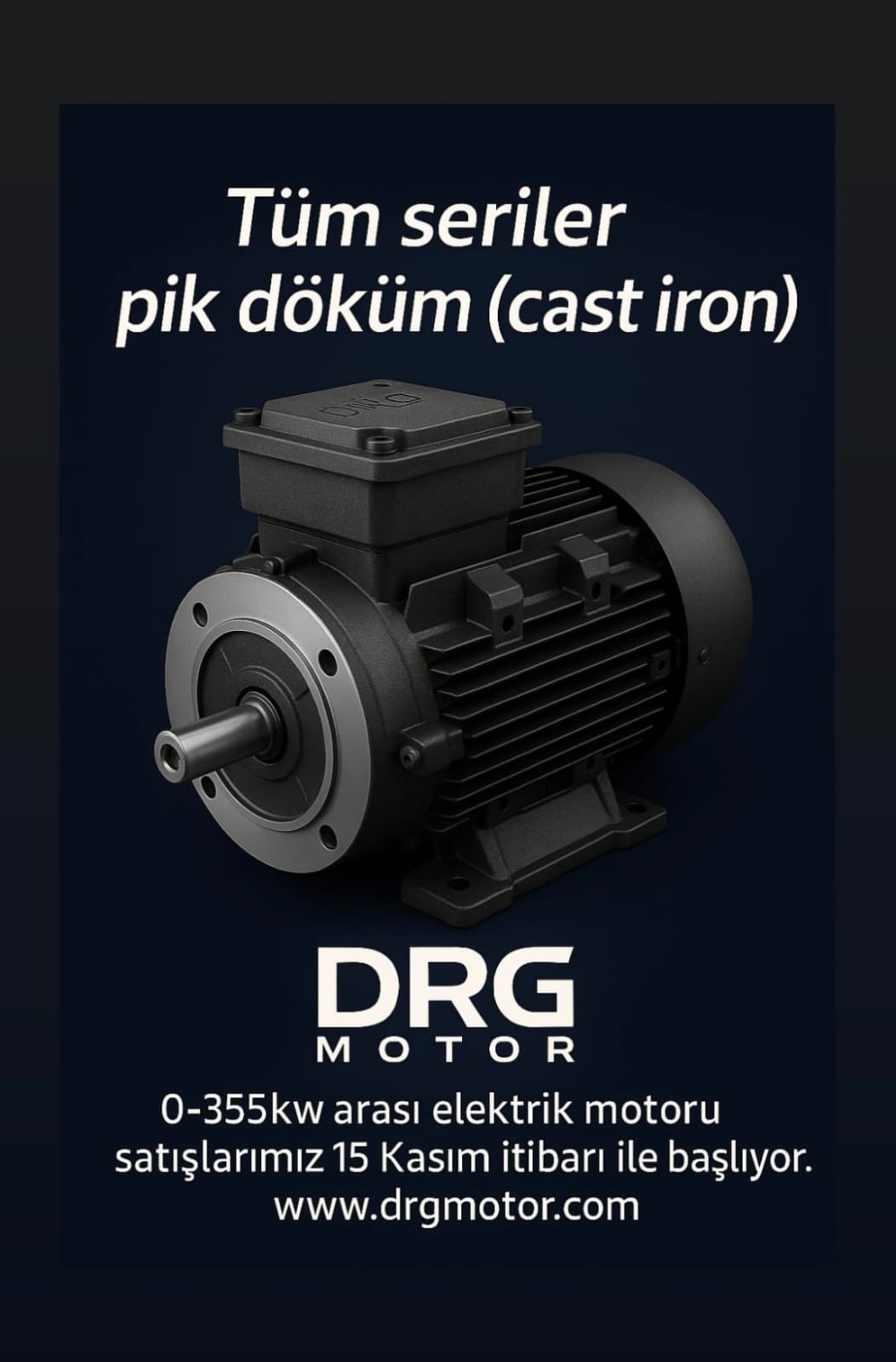

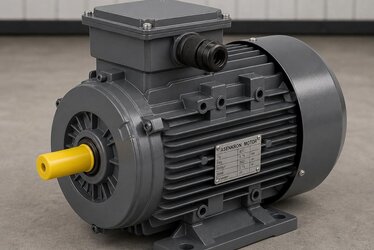
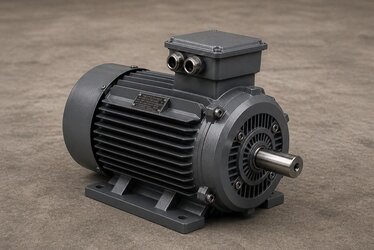
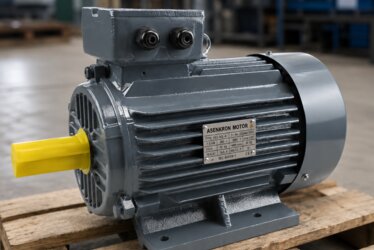
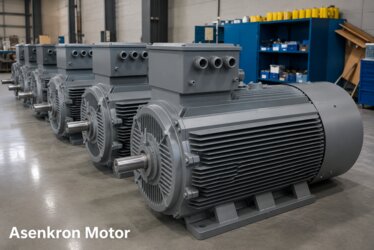
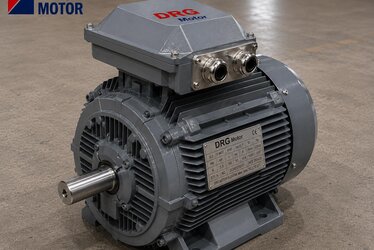
At 7.5 kW, roughly 10 HP, a motor sits exactly where most workshops actually work: above the small bench machine, below the heavy industrial drive. That is why conveyors, compressors, fans and pumps carry this rating more often than almost any other. The frame is usually a 132 size.
Nameplate Data for the Class
A typical three-phase configuration in this rating looks like this:
- Power: 7.5 kW (10 HP)
- Supply: 400 V / 50 Hz, three phase
- Speed options: 2-pole 3000 rpm, 4-pole 1500 rpm, 6-pole 1000 rpm
- Efficiency class: IE3 and IE4 to IEC 60034-30-1
- Frame: cast iron, for mechanical strength
- Protection: IP55, meaning no harmful dust ingress and protection against low-pressure water jets
- Insulation: class F, 155 °C
- Duty: S1, continuous
- Mounting: foot B3, flange B5, combined B35
How the Squirrel-Cage Rotor Works Here
Almost every machine at this size is three-phase induction with a squirrel-cage rotor. Voltage on the stator winding sets up a rotating field; that field drives current through the rotor bars and torque appears. Never quite catching the field, the rotor lags by an amount called slip. On a 4-pole 7.5 kW unit synchronous speed is 1500 rpm while the loaded shaft turns at 1440 to 1460 rpm.
Why Cast Iron in This Size
At 7.5 kW you can have the frame in either cast iron or aluminium. Cast iron is heavier. In return it damps vibration, takes impact and moves heat away better. Its thermal mass slows the winding temperature rise when the load steps suddenly. Crushers, compressors and pumps under continuous load are where that pays off.
Choosing the Pole Count
The same 7.5 kW splits into very different speed and torque combinations:
- 2-pole, 3000 rpm: high-pressure pumps and small fans. High speed, low torque.
- 4-pole, 1500 rpm: the common choice for general pumps, fans and conveyors.
- 6-pole, 1000 rpm: low-speed work that demands torque.
At constant power, lower speed means higher torque, so a load with a stiff breakaway moment belongs on more poles. Unless something specific argues otherwise, start at 1500 rpm.
What the Efficiency Class Is Worth
At this rating the bill records the class. Take a 7.5 kW machine on S1 duty running 16 hours a day, roughly 5000 hours a year. Lifting efficiency from 88 percent to 91 percent produces a difference of several hundred kilowatt-hours across the year. The rough calculation: divide shaft power by efficiency for the electrical input, then multiply by running hours. Long-hours drives justify IE3 or IE4; infrequent duty does not.
Where These Motors End Up
- Centrifugal and submersible pumps
- Extraction and ventilation fans
- Screw and piston compressor sets
- Conveyors and transfer lines
- Agitators, mixers and small crushers
- Gearbox-driven systems
Most of these couple straight to the load or run through a reducer. Where demand varies, partial-load energy is saved by a frequency inverter.
Mounting and Coupling
B3 feet bolt down onto a base frame or the floor itself. A B5 flange bolts the 132 frame face-first to the driven unit's own casing. B35 gives you both. Direct coupling to a reducer usually calls for the flanged type; belt and pulley drive usually calls for feet. Belt tension loads the shaft sideways, and that load belongs in the bearing selection.
Keeping It Running for Years
Follow the bearing regreasing intervals, keep the fan cowl clear of dust, check the terminal connections are tight. A sudden rise in temperature or vibration usually signals bearing wear starting; catch it early and you change a bearing instead of paying for a rewind. IP55 and class F insulation cover dusty and damp areas, provided ambient temperature and load profile stay inside the nameplate values.