 English
 Le français
 Türkçe

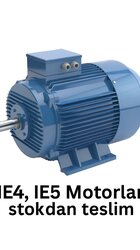
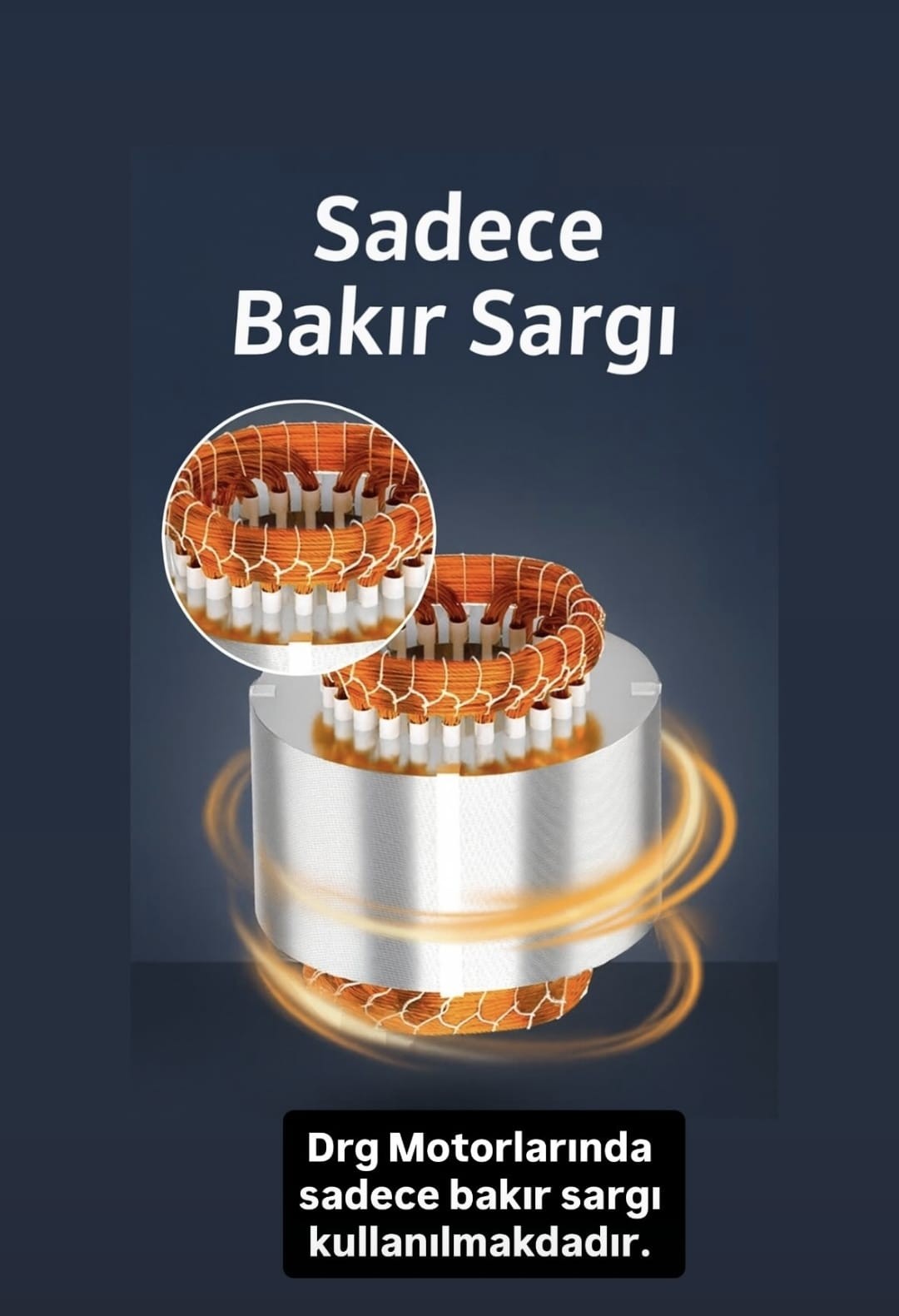

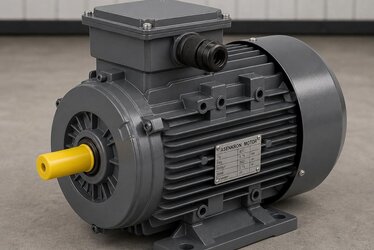
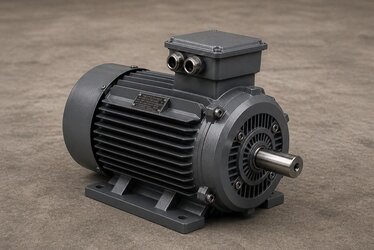
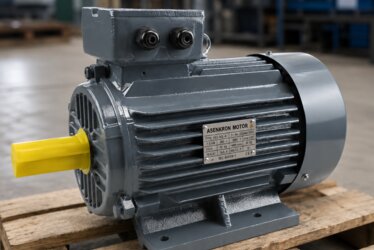
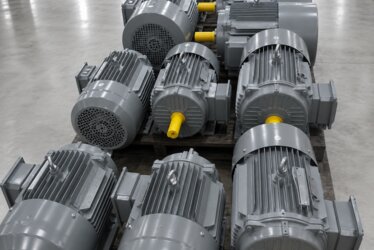
5.5 kW is one of the busiest power steps in small and medium industry, and the cast iron version of it is what buyers reach for when a drive vibrates, runs long hours or sits in a dusty corner.
What a 5.5 kW Motor Actually Drives
At roughly 7.5 HP, this rating covers everything from a workshop machine to a plant utility. Centrifugal pumps, medium fans, short conveyors, agitators and compressor drives cluster here. The three-phase squirrel-cage design keeps installation simple and maintenance cheap.
- Rated power: 5.5 kW, about 7.5 HP
- Supply: 400 V / 50 Hz, three phase
- Frame size: typically 132
- Protection: IP55
- Insulation and duty: class F, S1 continuous
Why the 5.5 kW Frame Is Cast Iron
The iron frame outweighs an aluminium casting, and what it hands back is stiffness under load plus a far better ability to soak up vibration. On pumps and compressors, which generate vibration continuously, that damping lowers noise and stretches bearing life. The same frame stands up better to knocks in dusty, impact-prone areas, and its thermal mass keeps winding temperature steadier when the load swings suddenly.
Speed Options by Pole Number
Three speeds are available at this rating. Two-pole models turn near 2900 rpm and suit high-speed pump and compressor duty. Four-pole models at around 1450 rpm are the general-purpose choice. Six-pole models at 950 rpm turn slowly but pull hard, which suits agitators and conveyors. Getting the pole count right decides whether a gearbox is needed at all.
How the Efficiency Class Reaches the Bill
Under IEC 60034-30-1 an IE3 premium motor at this rating and four poles offers around 89.2 percent nominal efficiency. Where the machine logs 4000 hours annually, two efficiency points on 5.5 kW cut enough loss that the price gap closes inside the first year of running. That makes IE3 the sensible starting point for any plant watching its operating cost.
Current, Power Factor and Commissioning
A four-pole 5.5 kW motor draws roughly 11 A at full load on 400 V, with a power factor usually between 0.82 and 0.85. Inrush at start-up sits between six and seven times the rated value. Most installations of this size start fine direct-on-line; where a surge of that size would upset the supply, star-delta switching or a ramped soft start goes in instead. The six-terminal box allows delta connection at 400 V and star connection at 690 V, so the wiring diagram has to match the supply voltage before the first run.
Mounting Arrangements
B3 foot, B5 flange and B14 face-flange versions all exist at 5.5 kW. Pumps usually take a direct flange connection, conveyors and fans take feet, and B14 saves space inside compact machine builds. The choice also determines how easily the motor comes off the machine at service time.
Adjusting Speed Through a Drive
Where flow or line speed changes often, driving the motor through a VFD pays. Throttling a valve wastes what slowing the pump saves: power tracks the speed ratio cubed. The inverter also softens starting and lowers the inrush. One caution: at very low speed the shaft-mounted fan cools poorly, so continuous slow running calls for a separate forced-cooling fan or a derating.
Environment and the Details That Decide Life
IP55 handles most damp and dusty rooms. Washdown lines with a real water jet need IP56 or IP65, and outdoor mounting benefits from a drip cover. Above 40 °C ambient, in a boiler room or beside a furnace, the rated output has to be reduced or the winding will push against the class F limit.
What Keeps the Price Honest
The affordable price at this step comes from volume: 5.5 kW is a standard rating, stock is deep and delivery is short. The saving stays real only if bearings, fan cover and insulation quality are not the parts being cut. Before you set two quotations side by side, verify mounting, pole count and frame size against the machine; a 2900 rpm unit bought where 1450 rpm was wanted wipes out the whole saving within twelve months.