 English
 Le français
 Türkçe

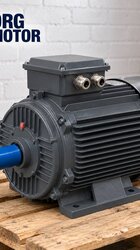
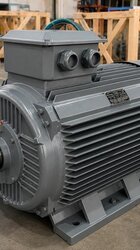
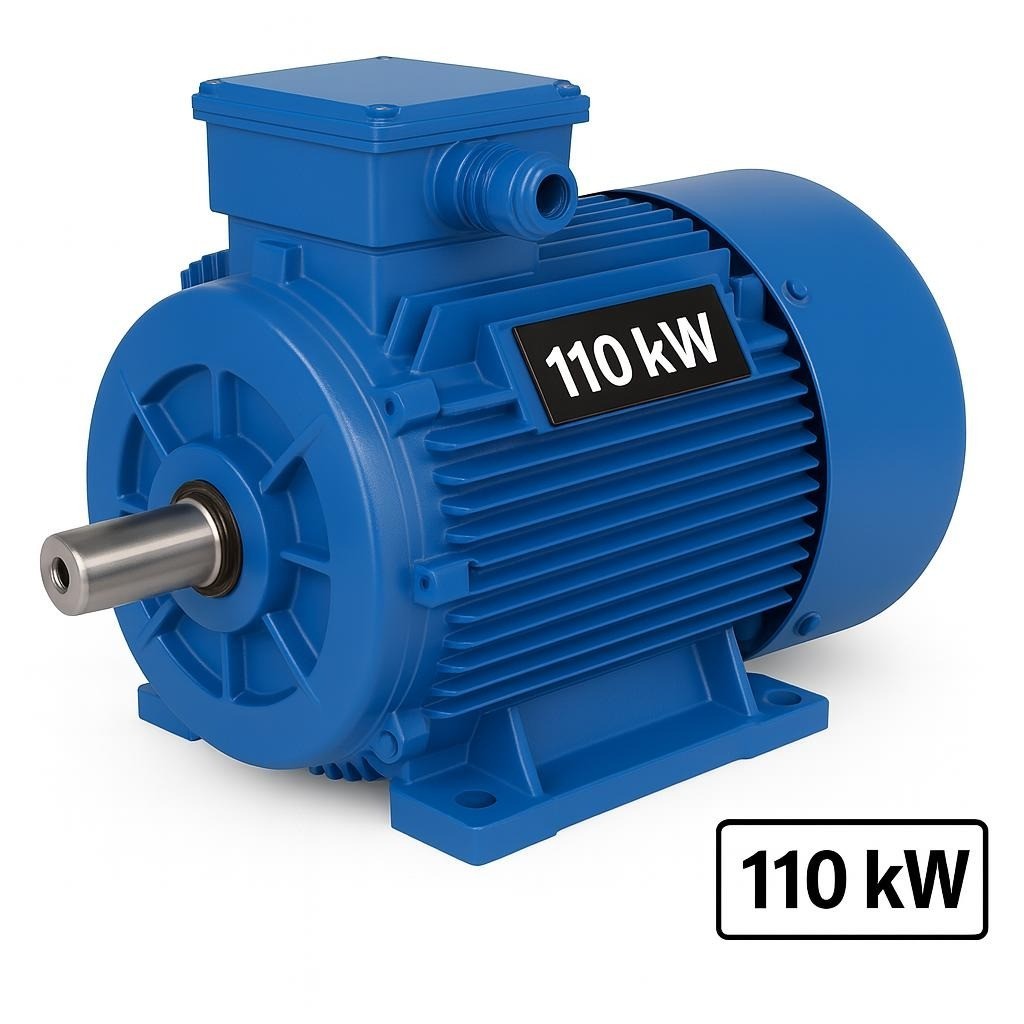

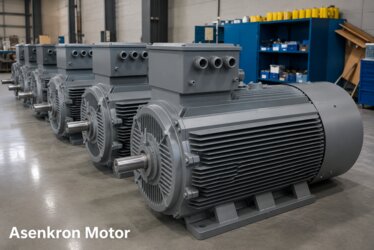
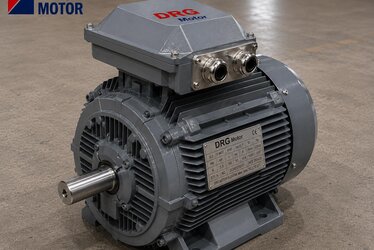
At 110 kW the motor choice stops being a drive detail and starts setting the reliability of the line. Crusher circuits, large pump groups, compressors and process plants all sit in this band, and all punish a frame that cannot take vibration.
Technical data
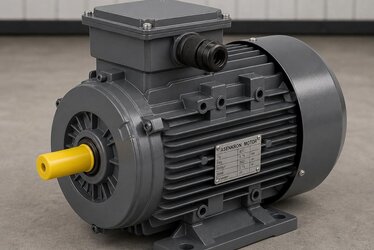
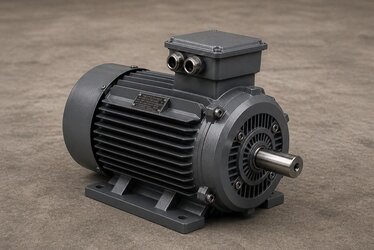
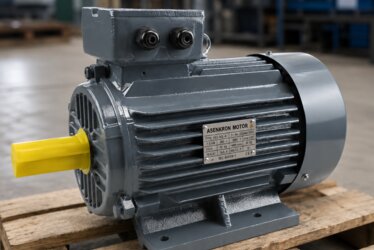
The 110 kW class, roughly 150 HP, is the backbone of medium-to-large industrial drives. A machine this heavy is craned by its lifting lugs. A typical configuration reads:
- Output: 110 kW (150 HP)
- Voltage: 400/690 V three phase, suitable for star-delta starting
- Speed: 2-pole 3000 rpm or 4-pole 1500 rpm
- Efficiency class: IE3 and IE4 to IEC 60034-30-1
- Frame: cast iron, heavy duty
- Protection: IP55 as standard
- Insulation: class F, to 155°C
- Duty: S1 continuous
- Mounting: B3 foot, B5 flange, B35 combined
The cast iron frame earns its weight
Cast iron resists deformation under impact, sustained vibration and heat. Its large surface area and high thermal mass spread winding heat away, which drops winding temperature and stretches insulation life. Rigidity holds shaft and rotor aligned when conditions are rough, so the air gap stays even — the argument against aluminium wherever a crusher feeds shock loads back into the shaft.
Starting torque and how to get there
Heavy industry usually starts the motor already loaded — a full crusher jaw, a large fan rotor at standstill. Squirrel cage machines in this class are selected for high breakaway torque. Direct-on-line starting at 110 kW can draw six to seven times rated current, so star-delta switching, an inverter-ramped start or a soft starter brings that inrush inside what the plant supply can take. A soft starter ramps voltage up and takes the mechanical shock out of the start.
Efficiency and running cost
Where the line never stops, half a percentage point of efficiency is worth thousands of kilowatt-hours a year. For S1 duty, IE4 over IE3 normally pays back its price premium in a handful of years. On pumps and fans with variable demand, inverter speed control adds more: absorbed power scales with speed cubed, so even a small reduction cuts consumption sharply.
Where these machines run
- Crushing and screening plants
- Large centrifugal pump and fan systems
- Screw and piston compressor packages
- Concrete batching plants and quarry equipment
- Gearbox-driven transmission systems
- Process plants and continuous production lines
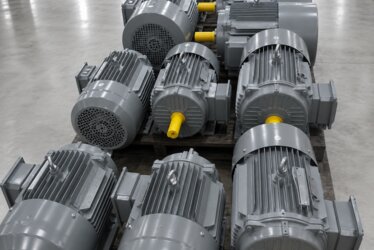
All of them load the motor all day in a dirty environment. Heavy-duty frames are covered further under electric motors.
Installation, cooling and commissioning
Weight demands a solid foundation and a properly aligned coupling. Misalignment at this power wears bearings fast, so check the coupling with a dial gauge or laser alignment before the first run. The standard IC411 surface-cooled arrangement pulls air through the rear cowl over the frame fins, so the fan cover must stay clear. Insulation resistance, rotation direction and terminal tightness are checked before energising.
Protection and monitoring
Fuses and a thermal relay are not the whole story. PTC thermistors or PT100 sensors embedded in the windings read temperature in real time and trip on overheating; a phase failure relay opens the circuit on loss or imbalance before a winding burns.
Service life and maintenance
A failure at this size stops the line, so scheduled maintenance repays itself fast. Keep to the bearing regreasing interval, log vibration and temperature, keep the cooling path clean. Class F insulation with IP55 handles dust and damp while ambient temperature and load stay inside nameplate values.
Before ordering, settle two things against the driven machine: the speed the process needs at 3000 or 1500 rpm, and the starting method the incoming supply can absorb.