 English
 Türkçe
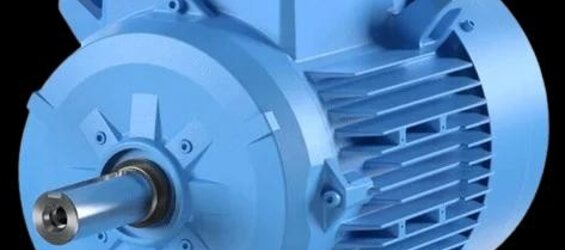
Electric Motor Bearing Types and Selection
If the heart of an electric motor is the rotating rotor, then the hero that allows that rotor to turn quietly and trouble-free is the bearing. This small part, often overlooked, di... More Details

If the heart of an electric motor is the rotating rotor, then the hero that allows that rotor to turn quietly and trouble-free is the bearing. This small part, often overlooked, di... More Details
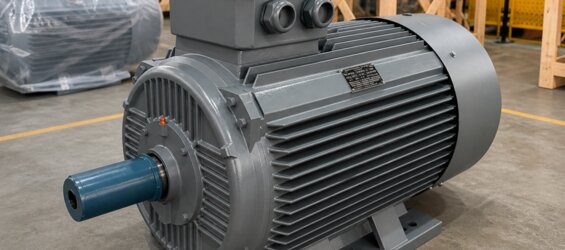
An induction motor stopping suddenly or failing unexpectedly rarely comes without warning. Before they break down, motors usually give signs: the temperature rises, the noise chang... More Details
One of the most confusing topics you encounter when buying an electric motor is the two different standards that define the motor's frame size: IEC and NEMA. IEC is widespread in E... More Details
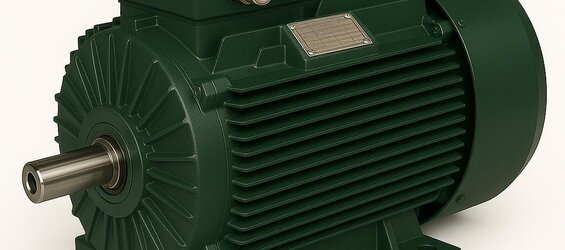
For workshops, small businesses, household appliances, and agricultural facilities where a three-phase grid is not available, single-phase induction motors are indispensable. Howev... More Details
Flange-mounted electric motors bolt directly to machines such as pumps, gearboxes and fans, offering a far more compact mounting solution than foot-mounted bodies. The flange face ... More Details
One of the most fundamental questions when designing a drive system is this: AC motor or DC motor? This choice is not merely a technical preference; it shapes the entire life cycle... More Details
At the heart of an induction motor there is a part that often goes unnoticed but directly determines efficiency: the squirrel-cage rotor. The rotating magnetic field produced by th... More Details
When you manufacture or purchase an electric motor, it is not enough for the motor to work technically; in many markets the motor must also meet a certain minimum efficiency level.... More Details
When you connect a motor directly to the grid, the windings meet a smooth, gentle sinusoidal voltage. But when you connect the motor behind a frequency inverter, the situation chan... More Details
Compressed air is often called the "fourth utility" in industry; an infrastructure that sits alongside electricity, natural gas, and water and is found in almost every facility. It... More Details
When a crane lowers its load, when an elevator descends, or when a high-inertia centrifuge slows down, the motor does not actually stop; it begins to convert mechanical energy back... More Details
The most honest information about an electric motor's health usually comes from its vibration. When bearings begin to wear, when rotor imbalance develops, or when fasteners loosen,... More Details
When buying an electric motor, many businesses reach for a slightly larger frame "just to be safe." On the surface this feels prudent, but it quietly turns into a trap that drains ... More Details
The correct operation of an electric motor depends not only on its power, speed and efficiency, but also on how it is mounted. The way the motor connects to the machine, that is th... More Details
The small metal plate on an electric motor is, in effect, that motor's identity card. Among the codes printed on this nameplate, perhaps the most asked about and the most critical ... More Details
Power plants, although they are facilities that generate electricity, also consume a large amount of electricity internally. Most of this consumption comes from the electric motors... More Details
Recycling plants process plastic, metal, paper, glass and waste to make them reusable, making them facilities of vital importance for the environment. In these plants, shredders, c... More Details
The textile sector is a broad industry that runs on machines at many stages, from spinning yarn to weaving fabric and from dyeing to finishing. At the heart of each of these machin... More Details
Some industrial environments carry a risk of explosion because of the flammable gas, vapour or dust they contain. Petrochemical plants, refineries, paint factories, flour and sugar... More Details
From furniture to construction, from joinery to packaging, wood is processed with a wide range of machines. Saws, planers, milling and sanding machines, CNC routers; all of them ru... More Details