 English
 Le français
 Türkçe

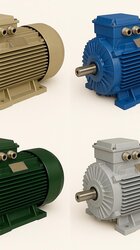
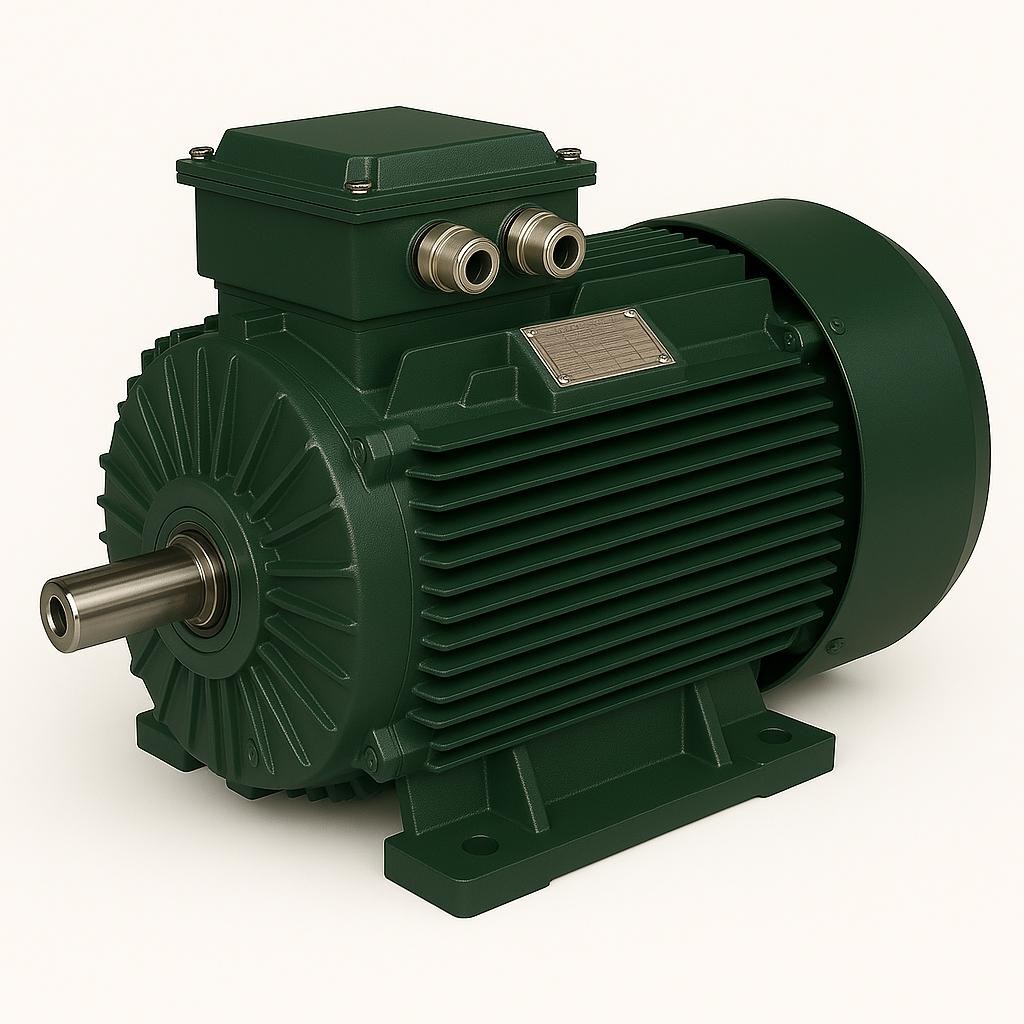

Power plants, although they are facilities that generate electricity, also consume a large amount of electricity internally. Most of this consumption comes from the electric motors that drive the auxiliary systems making the plant's operation possible. From boiler feedwater pumps to cooling fans, from coal mills to ash handling systems, hundreds of motors in a plant run uninterrupted day and night. The reliability of these motors directly determines the continuity and efficiency of the plant's production.
In a power plant, even a single motor failure can, depending on the circumstances, cause the unit to be partially or completely taken out of service. For this reason, power plant motors are selected according to the highest standards of reliability, durability and efficiency. In this article we examine which systems electric motors are used in across thermal, hydroelectric and other plant types, which criteria they are selected by, and how these critical applications are addressed with the DRG Motor engineering approach.
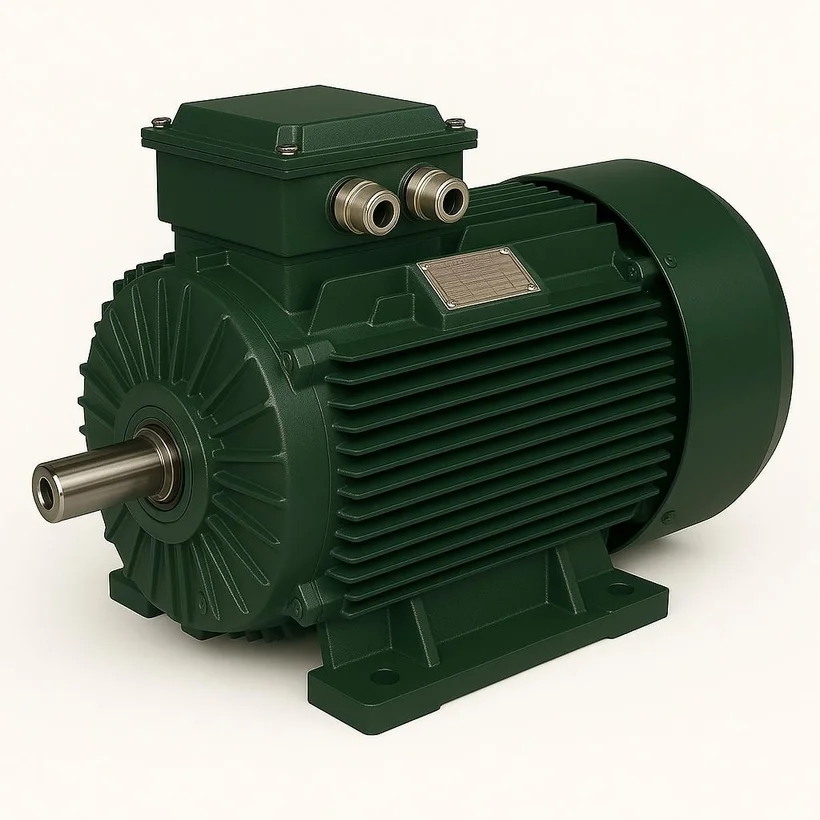
Plant Auxiliary Systems and Motor Load
Part of the electricity generated by a power plant is used to feed its own auxiliary systems; this is called "internal consumption" or "auxiliary power". In a thermal plant, this internal consumption can reach 5 to 10 percent of the installed capacity, and almost all of it is spent by electric motors. For this reason, the efficiency of plant motors is an economic factor that directly affects the net production capacity of the plant.
Motors in the plant are classified as critical and auxiliary according to the responsibility they carry. Critical motors such as the boiler feedwater pump are indispensable for the operation of the unit and are usually designed redundantly. Among industrial electric motors, those suitable for plant applications are models with the highest reliability and efficiency class.
Matching Plant Equipment with Motors
The table below summarises the main motor applications in a typical thermal power plant, their operating profiles and the key selection criteria. This table is a reference for quickly seeing which motor feature is critical for which equipment.
| Plant Equipment | Operating Profile | Key Motor Criterion |
|---|---|---|
| Boiler feedwater pump | Continuous (S1), high power | High efficiency, high reliability |
| Cooling water pump | Continuous (S1) | Efficiency, corrosion resistance |
| Forced/induced draft fan | Continuous, variable speed | High power, inverter compatibility |
| Coal mill drive | Continuous, high torque | High starting torque, durability |
| Ash / slag handling | Intermittent, heavy duty | High protection class, rigid frame |
| Lubrication and auxiliary pumps | Continuous/redundant | Reliability, quiet operation |
Boiler Feedwater Pump Motors
The boiler feedwater pump is one of the most critical pieces of equipment in a thermal plant; it continuously feeds the boiler with high-pressure water. The motors driving these pumps are among the highest-power motors in the plant and mostly operate at high voltage (for example 6 kV). The uninterrupted, high-efficiency operation of these motors is indispensable for the continuity of the plant's thermal cycle.
Boiler feedwater pump motors operate in continuous duty (S1) and rotate at a steady temperature, reaching thermal equilibrium. For this reason, efficiency and thermal durability stand out in their selection. The principles of water pump motor selection are applied at plant scale with much higher power and reliability requirements.
Cooling Fans and Forced Draft Systems
Thermal plants have large fans that supply the air needed for combustion and exhaust the flue gas. These are called forced draft and induced draft fans. These fans are driven by high-power motors and their speed is usually adjusted as the plant load changes; for this reason they are very well suited to being driven by frequency inverters.
Variable speed drive provides significant energy savings in fan motors, because fan power varies in proportion to the cube of the speed. Even a small reduction in speed creates a large power saving. The principles of fan and blower motor selection directly translate into energy efficiency in plant fans. Energy saving with frequency inverters is one of the most effective ways to lower a plant's internal consumption.
Coal Mill Drive Motors
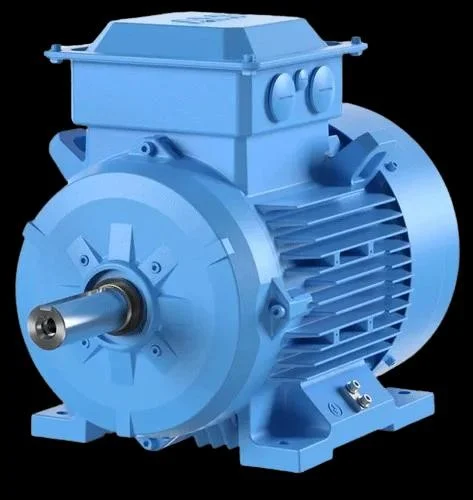
In coal-fired thermal plants, coal is ground into fine powder in mills before being burnt; this ensures more efficient and complete combustion. The motors driving coal mills are high-power, high-torque motors resistant to heavy-duty conditions. Setting the mill's heavy rotor and the material inside it in motion requires a high starting torque.
These motors run continuously and must have a high protection class against coal dust that can seep inside. As in mill and grinding motor applications, a cast iron frame and a rigid bearing system are preferred in coal mills as well. The reliability of the mill motor directly affects the continuous fuel flow to the boiler and therefore the plant's production.
Continuous Duty (S1) and Reliability
The vast majority of plant motors operate in continuous duty (S1); that is, they rotate 24 hours a day, often for months without interruption. This continuous operation places the highest demand on the motor's thermal design and durability. A motor operating in continuous S1 duty reaches thermal equilibrium and must be sized to approach the temperature limit permitted by its insulation class with a safe margin.
Reliability in continuous operation starts with material quality. High-quality winding copper, class F insulation and a low temperature rise (class B utilisation) carry the motor's life into decades. The electric motor service factor is usually kept high in plant motors, so that the motor can safely withstand short-term overloads.
High-Power and High-Voltage Motors
The large pump, fan and mill motors in the plant are mostly high-power and fed at high voltage (3.3 kV, 6 kV or higher). High voltage allows the same power to be transmitted at a lower current, which reduces cable cross-sections and losses. High-voltage motors require thicker insulation, special winding techniques and a higher-strength mechanical structure.
In the selection of these motors, power and the starting characteristic is critical. The direct-on-line starting of a large motor can cause a voltage drop in the grid with its high starting current; for this reason, a soft starter or frequency inverter is often used. The choice between high and low kW motors is made according to the real power demand of each piece of equipment in the plant.
Motors in Hydroelectric and Other Plant Types
Electric motors are not unique to thermal plants; they also play critical roles in hydroelectric, natural gas combined cycle and renewable energy plants. In hydroelectric plants there are motors driving turbine blade adjustment mechanisms, sluice gates and cooling systems. These motors usually operate in a humid environment, so a high protection class and corrosion resistance stand out.
In natural gas combined cycle plants, fuel feed pumps, cooling systems and flue gas fans are driven by motors. Each plant type has its own operating conditions, but the common point is the same in all of them: motors must operate continuously and reliably. Whatever the plant type, selecting the motor to suit its operating conditions and duty profile is the foundation of production continuity.
Auxiliary and Redundant Pump Systems
In a plant, alongside large equipment such as the boiler feedwater pump, there are also many small auxiliary pumps: lubrication pumps, seal water pumps, chemical dosing pumps and fire pumps. Most of these auxiliary systems are designed redundantly because of their critical importance; when one fails, its backup automatically comes into service.
In redundant systems, the ability to come into service automatically is as important as the reliability of the motors. The ability of the backup motor to start smoothly when needed after a long standby depends on the correct maintenance of the motor and its bearings. For this reason, periodic test runs and a regular lubrication programme are carefully applied to redundant pump motors. The quiet but reliable operation of auxiliary systems makes the uninterrupted operation of the main equipment possible.
Ash, Slag and Material Handling Motors
In coal-fired thermal plants, the ash and slag produced by combustion are removed from the plant by handling systems. The motors driving these systems operate in an abrasive and dusty environment, mostly under intermittent heavy-duty conditions. For this reason, a high protection class, a rigid frame and a wear-resistant design are critically important.
Ash handling conveyors and redlers need sufficient starting torque to start from a loaded condition. The harsh conditions created by abrasive material can cause these motors to require frequent maintenance; for this reason, durability and ease of maintenance are priority criteria in their selection. These applications require engineering approaches similar to the other material handling systems of heavy industry.
Starting Strategies and Grid Effect
The starting of large motors in the plant is a matter that must be carefully planned. The direct-on-line starting of a high-power motor produces starting currents reaching six to seven times the rated current, which can cause serious voltage drops in the internal grid and affect other sensitive equipment. For this reason, soft starters, autotransformer starters or frequency inverters are widely used in plants.
The right starting strategy protects both the motor and the grid. Soft starting reduces mechanical shocks, extending the life of connected components such as the coupling, gearbox and bearings. In addition, a sequencing logic that prevents several large motors from starting at the same time preserves grid stability during the plant's commissioning. This planning is an important part of the safe and smooth commissioning of the plant.
Monitoring and Predictive Maintenance
Since the uninterrupted operation of plant motors is critical, these motors are usually monitored continuously. Temperature sensors (PT100), vibration sensors and bearing temperature measurement allow the motor's condition to be tracked in real time. This data enables symptoms to be detected before a failure occurs, that is, predictive maintenance.
Predictive maintenance increases the availability of the plant by preventing unplanned stoppages. For example, a gradual increase in the vibration level may be an early sign of bearing wear, and a major failure is prevented by replacing the bearing in a planned maintenance window. Among the challenges of electric motors in heavy industry, the monitoring of continuously operating critical motors has a special importance.
Grid Quality and Harmonic Management
The operation of many large motors and frequency inverters together in plants can cause harmonic distortions in the internal grid. Inverter-driven motors feed harmonic currents back to the grid; if these harmonics are not kept under control, they can cause overheating of other equipment, measurement errors and efficiency loss. For this reason, harmonic filtering and power quality management are an important engineering topic in plant design.
In motor selection, inverter-compatible models with a harmonic-resistant insulation structure should be preferred. Motors that provide a balanced three-phase load distribution and operate with low vibration both extend their own life and protect the overall health of the plant grid. Well-managed power quality increases both the reliability and the efficiency of the plant.
Environmental Conditions and Motor Durability
Plant motors face very different environmental conditions depending on their location. While motors in the boiler house operate at high ambient temperature, fan motors in the outdoor area are exposed to rain, snow and dust. Motors near the cooling tower are under high humidity. Each motor must be selected with a protection class and durability features appropriate to the conditions of its environment.
Motors that will operate at high ambient temperature should be derated or have a higher insulation class applied; in humid environments, additional protective varnish (tropical protection) and suitable seal systems should be provided for the windings. These details are critical engineering elements that ensure the power value in the motor's catalogue is safely achieved in the field.
Efficiency: The Hidden Face of Plant Economics
The efficiency of plant motors is a topic that is often overlooked but has a great economic impact. Since motors make up most of the internal consumption, even a small improvement in motor efficiency means a significant saving in annual energy consumption. Motors with a high efficiency class (IE3, IE4) quickly repay the initial investment difference in continuously operating plant applications.
Efficient motors also heat up less and last longer, which lowers maintenance costs. The selection of high-efficiency electric motors directly improves the plant's net production capacity and profitability. Balanced, low-harmonic operation that complies with three-phase motor in industry standards is also important for the health of the plant grid.
The Effect of Correct Motor Selection on Total Life Cost
The cost of a plant motor is not only its purchase price. The energy it consumes over its lifetime, maintenance expenses and the production losses caused by possible downtime make up a much larger portion of the total cost of ownership. In a continuously operating plant motor, the energy cost can reach many times the initial investment.
For this reason, looking only at the price in motor selection is misleading; efficiency, reliability and ease of maintenance must be evaluated together. A slightly more expensive but high-efficiency and durable motor offers a much lower total cost over its lifetime. In plant operation, correct motor selection is not a short-term expense but a long-term investment decision.
DRG Motor for Power Plant Solutions
A power plant consumes while it produces; and at the heart of this consumption are hundreds of electric motors running day and night. From the boiler feedwater pump to the cooling fan, from the coal mill to the auxiliary systems, the reliability of every motor is the foundation of the plant's uninterrupted and efficient operation. In these critical applications, the right motor selection requires bringing together high power, high efficiency and the utmost reliability.
At DRG Motor, we offer high-efficiency, durable and reliable motors suited to the demanding and critical conditions of power plants. To determine the most suitable solution for every point of your plant, from continuously operating pumps to variable speed fans, from heavy-duty mill drives to redundant auxiliary systems, you can review our DRG Motor products and contact our engineering team. Visit the DRG Motor home page to explore our full range. A plant equipped with the right motors produces reliably for years.