 English
 Le français
 Türkçe


When you connect a motor directly to the grid, the windings meet a smooth, gentle sinusoidal voltage. But when you connect the motor behind a frequency inverter, the situation changes fundamentally: the windings are now bombarded with very steep-edged voltage pulses that repeat thousands of times per second. These pulses are a stress that the insulation of an ordinary motor was never designed to withstand. This is exactly why the insulation system in inverter-fed motors must be reinforced. In this article we look at how the inverter voltage pulses stress the winding insulation, what partial discharge is, its relationship with dv/dt, and what to look for in an inverter-duty motor for long life.
Why is the inverter output different from grid voltage?
The grid delivers a smooth sine wave to the motor. The frequency inverter, on the other hand, produces the voltage with semiconductor switches that turn on and off very quickly. The result is a voltage whose average resembles a sine wave but which in reality consists of sharp-cornered pulses. What the windings see is the steep rising edge of each of these pulses.
What is dv/dt and why does it matter?
dv/dt expresses how fast a voltage pulse rises; that is, the rate of change of voltage with time. In modern drives this rise happens in an extremely short time. The steeper the rise, the higher the voltage difference the first few turns of the winding encounter. In our article on dv/dt and reflected waves in long motor cables we covered the cable-side effects of this phenomenon in detail.
The critical point to grasp here is this: what stresses the insulation is not only how high the voltage is, but how quickly that voltage is reached. A voltage that reaches a peak value slowly and a voltage that jumps to the same value instantly produce very different results for the insulation. The fast-rising edge leaves no time for the voltage to distribute evenly along the winding; instead almost the entire pulse concentrates on the first turns. This concentration is the stress that ordinary insulation cannot cope with.
How does the reflected wave double the voltage?
When the cable between drive and motor is long, the incoming pulse reflects at the motor terminal and, superimposed with the returning wave, can raise the terminal voltage by up to a factor of two. In other words, the winding is exposed to a peak voltage far higher than what the drive produces. This is one of the most demanding scenarios for the insulation.
What is partial discharge?
Partial discharge is the electrical breakdown that occurs in tiny voids within or on the surface of the insulation material, in the form of small sparks that do not pierce the insulation completely. Each discharge erodes the insulation a little. Over time this erosion accumulates and eventually the insulation collapses.
The insidious side of this phenomenon is that a single discharge does not immediately ruin the motor. The motor appears to keep running without trouble; yet inside, the insulation thins a little with every pulse. In a winding receiving thousands of pulses per second, these microscopic erosions accumulate over weeks and months and lead to a failure far earlier than expected. That is why partial discharge is one of the most important mechanisms determining insulation life in drive-fed motors, and it must be prevented from the outset.
Why is the partial discharge threshold critical?
Every insulation system has a partial discharge inception threshold; as long as the voltage stays below this threshold, no discharge begins. Inverter pulses, especially when combined with the reflected wave, can exceed the threshold of an ordinary insulation. Reinforced insulation aims to raise this threshold so that the discharge never starts at all.
What is spike-resistant winding wire?
In inverter-fed motors, the enamel coating of the winding wire is specially developed. These wires are far more resistant to repeated high-voltage pulses and partial discharge than ordinary wires. Called spike-resistant or inverter-duty, these wires form the foundation of the reinforced insulation system.
The difference of these wires lies in the structure and thickness of the enamel layer. In some solutions, fine mineral particles that resist the abrasive effect of partial discharge are added to the coating; in others the number of layers and the thickness are increased. The aim is to raise the inception threshold of the discharge and, even if the discharge does start, to make the insulation resist erosion for a long time. Although the wire used in an ordinary motor may look cheap and adequate, it fatigues far sooner behind a drive. The choice of inverter-duty wire is therefore not a luxury but a basic requirement of a motor that will run with a drive.
The importance of turn-to-turn insulation
The harshest effect of the inverter pulse appears between the first turns of the winding. The steep-edged pulse distributes disproportionately to the first turns and pushes the turn-to-turn voltage to a dangerous level. For this reason, turn-to-turn insulation is especially reinforced in inverter-duty motors.
Its relationship with insulation class
The insulation system must withstand voltage pulses and temperature. In our article on electric motor insulation class we explained which class withstands which operating temperature. In an inverter-fed motor, a high thermal class and reinforced pulse endurance must be sought together.
Click to see current electric motor prices and order nowSEE PRICES →
The cooling problem at low speed
In a motor running at low speed through a drive, the shaft-mounted cooling fan also slows and cooling weakens. At the same time the insulation is exposed to both high temperature and pulses. The combination of these two stresses makes the insulation choice even more critical. In applications expected to run over a wide speed range, adding an independent forced-cooling fan so the motor can cool even at low speed is a commonly used solution. Because this fan runs independently of shaft speed, it keeps cooling going even when the motor slows down and keeps the thermal load on the insulation within a safe limit.
Shaft voltage and bearing currents
Inverter pulses affect the winding and the shaft. Voltage building up on the shaft can cause currents to pass through the bearings and, over time, lead to bearing damage. In our article on VFD shaft voltage and bearing currents we addressed this in depth. A reinforced motor must consider bearing protection together with insulation.
The effect of carrier frequency
As the drive's switching frequency rises, the winding sees more pulses per second. This increases the rate at which partial discharge accumulates. In a system running at a high carrier frequency, the endurance of the insulation becomes even more important, because the erosion accelerates with more frequently repeated pulses.
Limiting cable length
The reflected wave effect is directly related to cable length. Keeping the cable as short as possible is the simplest way to keep the terminal voltage low. If the cable is unavoidably long, filter solutions can come into play; but reinforced insulation on the motor side is the most solid defense in any case.
Do filters reduce the insulation need?
dv/dt filters and sine filters soften the steep edge of the pulse, smoothing the voltage that reaches the motor. These solutions ease the burden on the insulation. But the filter does not replace the reinforced insulation on the motor side; the two complement each other. The safest approach is both correct filtering and an inverter-duty motor.
Impregnation and varnish quality
The impregnation varnish applied after the winding is complete locks the turns together, keeps moisture out and dissipates heat better. A good impregnation extends the insulation's life by filling the tiny voids that lead to partial discharge. The reinforced insulation system also covers varnish quality.
The relationship between efficiency and insulation
Strong insulation enables the motor to run for many years while preserving its efficiency. In our article on where efficiency losses come from we covered the origin of the losses. A motor with degraded insulation loses its efficiency through leakage currents and increased losses.
High efficiency class and drive compatibility
Motors of IE4 efficiency class and above are often used with a drive. In our article on what is a high-efficiency motor we discussed the differences between these classes. To fully benefit from high efficiency, the motor must have insulation suited to drive feeding.
The integrity of rotor and winding design
Insulation is an inseparable part of winding design. In our article on rotor copper-wound electric motors we explained how conductor choice contributes to efficiency. As much as the quality of the conductor, the quality of the insulation surrounding it determines the motor's life.
Lamination quality and thermal behavior
Low-loss lamination makes the motor heat up less, easing the thermal load on the insulation. In our article on the effect of low-loss electrical steel on motor efficiency we addressed this subject. A motor that runs cooler preserves its insulation for longer.
Frame material and heat dissipation
The motor frame's ability to dissipate heat affects winding temperature and therefore the life of the insulation. In our article on the cast iron electric motor we explained the heat-dissipation advantages of a cast frame. In a well-cooling motor the insulation is stressed less.
Considering it together with soft starting
Controlled starting softens the voltage and current pulses at start-up, reducing the sudden load on the insulation. In our article on the advantages of soft starting we explained this gain. Soft starting and reinforced insulation extend the motor's life together.
Correct sizing and thermal safety
A correctly sized motor runs within the expected temperature range, preserving the insulation. In our article on the oversized motor partial-load trap we covered the effects of wrong sizing. Thermal safety is a direct determinant of insulation life.
Insulation requirements in industrial applications
As drive use becomes widespread in different sectors, reinforced insulation is becoming a standard requirement too. In our article on industrial electric motors we covered the requirements of different applications. Every application running with a drive must consider insulation from the outset.
Reading insulation suitability from the nameplate
To understand whether a motor is suitable for running with a drive, its nameplate and technical data must be examined. Our article on reading the IE class from the motor nameplate shows how to interpret the values on the nameplate.
Early warning through energy monitoring
The point at which insulation begins to degrade can be detected from leakage-current and temperature trends. In our article on energy monitoring in electric motors we described monitoring strategies. Early warning allows intervention before the insulation collapses entirely.
Insulation thickness and heat-conduction balance
Thickening the insulation without limit may at first seem safer; but thick insulation makes it harder for the heat generated in the winding to be removed. This raises the winding temperature and accelerates the thermal aging of the insulation. A good reinforced insulation system strikes a balance that increases pulse endurance without unduly impairing heat conduction. The aim is not the thickest insulation but the most balanced one in both electrical and thermal terms. This balance is achieved through material selection and manufacturing quality.
Phase-to-phase and phase-to-ground stress
Inverter pulses create a voltage difference between turns, between phases and between phase and frame. A reinforced insulation system must watch over all three of these stress paths at once. If the phase-to-ground insulation is weak, even the most solid turn insulation is not enough to protect the motor. For this reason the insulation must be designed as a whole, for all voltage paths.
Slot insulation and mechanical protection
In the region where the winding sits in the stator slots, there is a slot insulation between the copper and the lamination stack. This insulation is both an electrical barrier and a mechanical buffer protecting the winding from the sharp lamination edges. Because inverter pulses stress the voltage in this region too, the material and placement of the slot insulation are a quiet but important part of the reinforced system.
Test and verification
That the reinforced insulation is genuinely durable is verified by tests applied during manufacturing. Insulation endurance and partial discharge tests make a motor's inverter-duty claim concrete. An untested claim inspires no confidence in the field.
Compliance with standards
The insulation requirements of inverter-fed motors are defined by international standards. An insulation system that complies with these standards offers both comparable endurance and an assurance of long life. Adherence to standards is the measurable foundation of reinforced insulation. Standards also describe which insulation level is required at which supply voltage and cable-length condition; thus the choice rests not on guesswork but on a defined framework. A motor conforming to this framework shows predictable performance across different sites.
Moisture and environmental conditions
Humid, dusty or chemically laden environments stress the insulation independently of voltage pulses too. In an inverter-fed motor, both pulse endurance and environmental protection must be considered together; otherwise even the strongest insulation ages early under environmental factors. Moisture can form a thin conductive film on the insulation surface, causing partial discharge to begin at a lower voltage. For this reason, in drive-fed motors that will run in high-humidity environments, good impregnation and an appropriate protection class become as important as pulse endurance.
Maintenance and long life
Reinforced insulation, combined with correct maintenance, extends the motor's life considerably. Regular cleaning, moisture control and thermal monitoring help the insulation reach its designed lifespan. Insulation is the component whose maintenance is most easily neglected but whose failure costs the most.
Making the right investment decision
An inverter-duty motor may have a slightly higher initial cost than a standard motor. But in an application running with a drive, if a standard motor's insulation collapses early, the resulting downtime and repair cost far exceed this difference. The right investment is to choose a drive-suitable motor from the start.
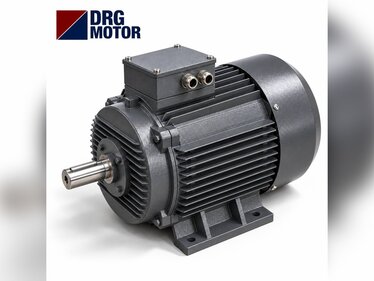
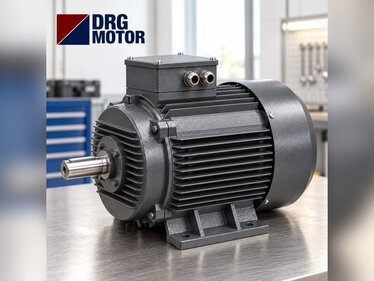
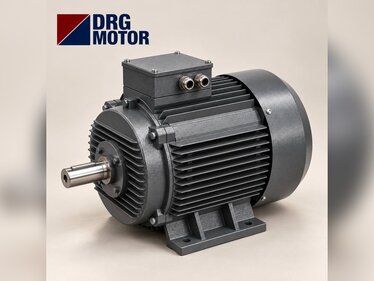
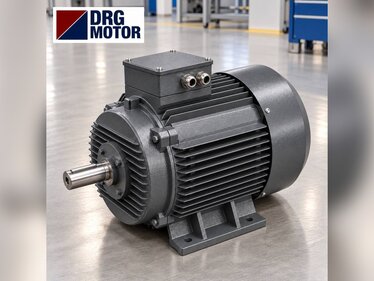
DRG Motor for drive-suitable insulation
Frequency inverters offer an invaluable gain in efficiency and control; but the price of this gain is an invisible burden placed on the motor's insulation. A motor not designed to carry this burden quickly turns the advantages offered by the drive into failure cost. That is why, in every motor that will run with a drive, insulation must be a feature decided at the start, not an afterthought. At DRG Motor we stand by you to help you select our IE3, IE4 and IE5 efficiency-class induction motors with an insulation system suited to your applications running with a frequency inverter; for a drive-suitable motor solution, get in touch with us.
DRG Electric Motors Suited to This Topic
The models below are available in the DRG Motor online shop. Click a model code to see its technical data, dimensions and current price, and order right away.
- DRG-100L-6 – 1.5 kW – 949 rpm – aluminium frame
- DRG-132M1-6 – 4 kW – 968 rpm – aluminium frame
- DRG-160M-6 – 7.5 kW – 970 rpm – cast iron frame
- DRG-180L-6 – 15 kW – 978 rpm – cast iron frame
Click to see current prices of all electric motors and order nowSEE PRICES →