 English
 Le français
 Türkçe

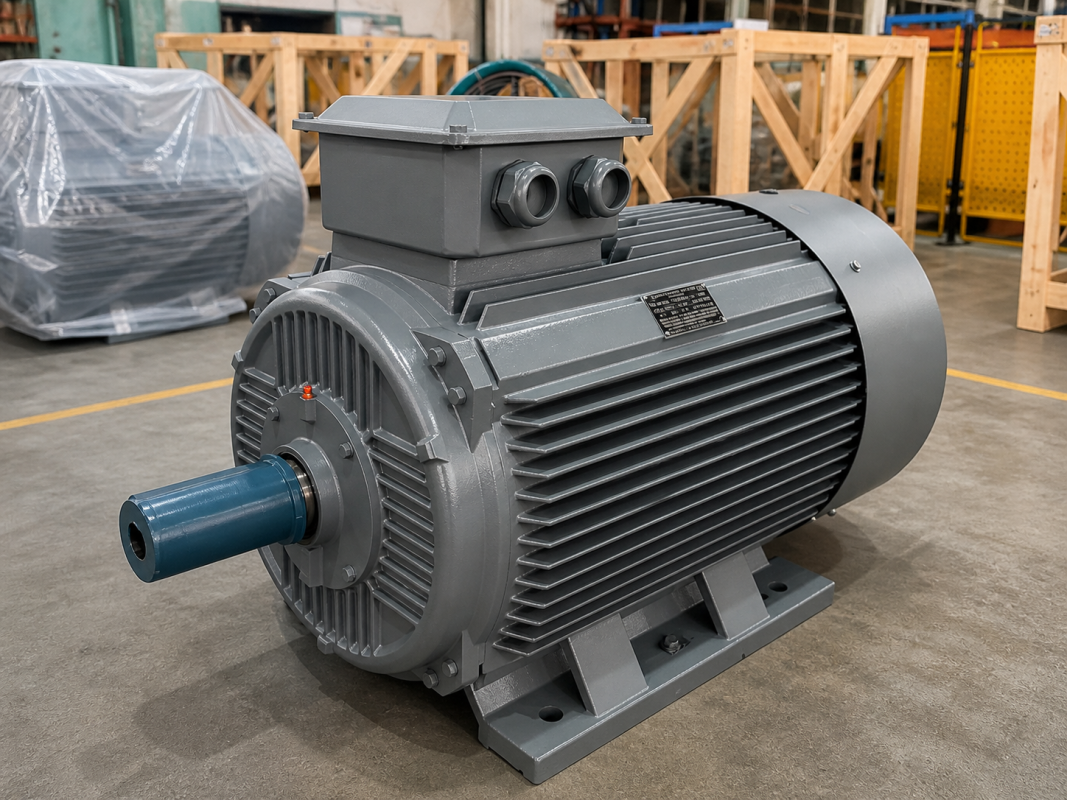

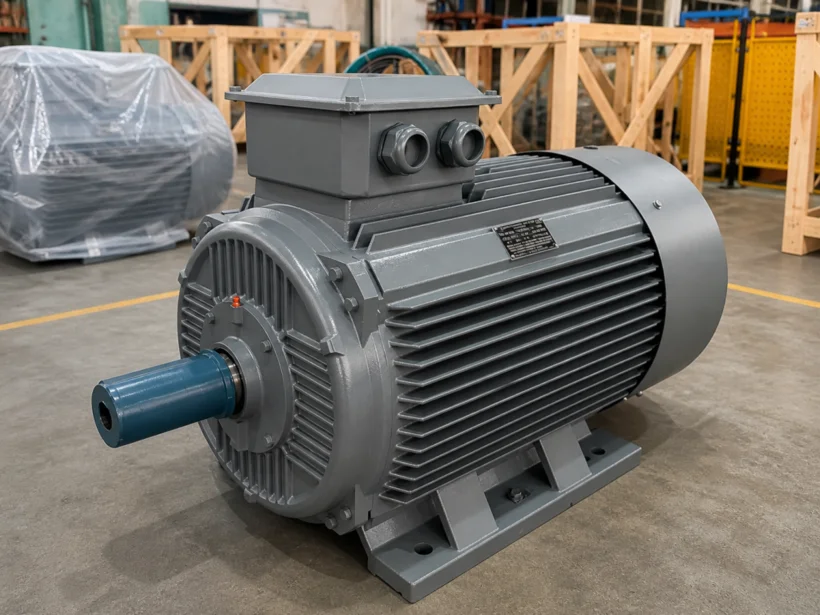
When you manufacture or purchase an electric motor, it is not enough for the motor to work technically; in many markets the motor must also meet a certain minimum efficiency level. Different regions of the world have developed rules defining how efficient the motors placed on sale must at least be. This approach, generally referred to as a "minimum efficiency requirement," aims to gradually withdraw low-efficiency motors from the market and reduce energy consumption. For a supplier that exports or supplies products to international markets, understanding these requirements is a commercial necessity. At DRG Motor, we design our IE3, IE4 and IE5 class asynchronous motors to meet the efficiency expectations of different markets, and we want to help make this topic properly understood.
What is a minimum efficiency requirement?
A minimum efficiency requirement is a rule that sets the lowest acceptable efficiency level for motors that may be placed on sale in a market. Motors falling below this threshold cannot be sold in that market. The aim is to ensure that energy-inefficient products are withdrawn from the market and to reduce total energy consumption. This approach matters because electric motors are responsible for a very large share of the electricity consumed in industry; even small efficiency improvements create serious savings at scale.
This rule steers the supplier toward designing more efficient motors and the buyer toward choosing more efficient products. In the end, operating costs fall and energy resources are used more efficiently.
What do the IE efficiency classes mean?
The efficiency of electric motors is expressed with the internationally accepted IE (International Efficiency) classes. These classes are ranked in increasing order of efficiency as IE2, IE3, IE4 and IE5. IE2 represents standard efficiency, IE3 high efficiency, IE4 premium efficiency, and IE5 ultra-premium efficiency. As the number grows, the energy the motor draws to do the same work decreases, meaning losses fall.
This classification lets different suppliers and different markets speak a common language. When a motor's IE class is known, an objective sense of its efficiency level can be obtained. We address in detail how to read the IE classes on the nameplate under reading the IE efficiency class from the motor nameplate.
How are markets' minimum class expectations rising?
Over time, the minimum efficiency expectation of many markets has steadily risen. Where years ago IE2 was considered acceptable in many places, today in many markets the minimum expectation has moved up to the IE3 level, and in some applications and power ranges to the IE4 level. This rise is a direct result of the growing importance placed on energy efficiency.
This trend carries a clear message for suppliers: a class accepted as minimum today may become insufficient tomorrow. For this reason, thinking ahead and investing in higher efficiency classes is a wise strategy for both regulatory compliance and competitiveness.
The importance of compliance in exports
When a supplier ships products to different markets, it faces each market's own efficiency requirements. A motor accepted in one market may not be sellable in another with stricter rules. Therefore, an export-oriented supplier must know the minimum efficiency expectations of target markets in advance and plan its product range accordingly.
The risk of a non-compliant product being unable to enter a market creates both a commercial loss and a reputational problem. That is why the efficiency class is not just a technical feature but also the key to market access. Having a wide efficiency range lets the supplier supply products to different markets with flexibility.
The place of the IE class on the nameplate
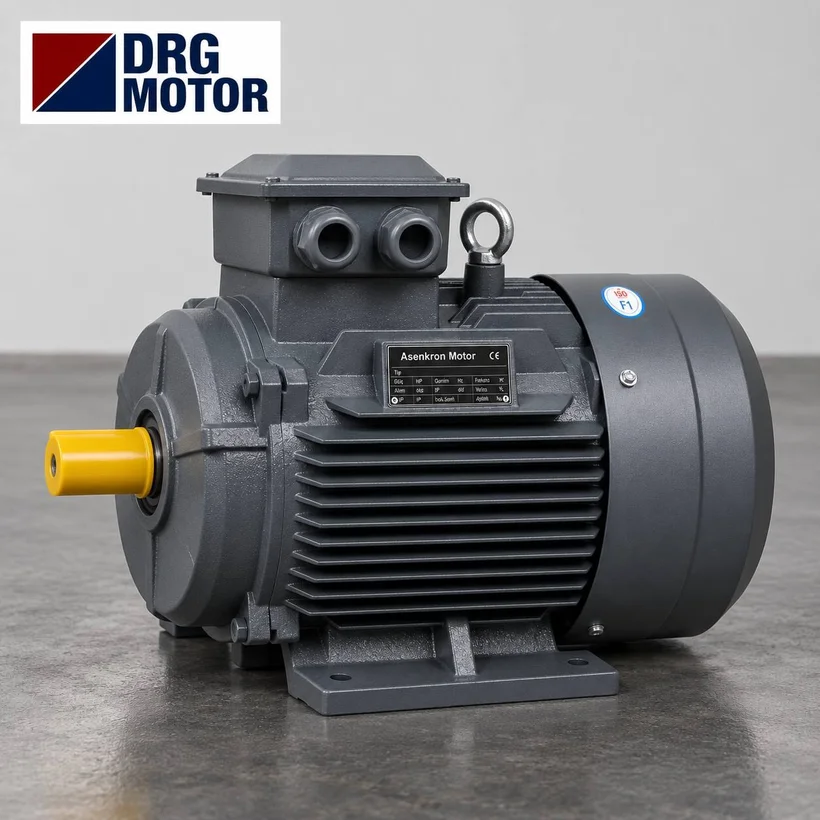
A motor's efficiency class is clearly stated on its nameplate. This information is critical both for the buyer to choose the right product and for market entry checks to be carried out. The nameplate, besides the motor's efficiency class, also contains power, speed, voltage, and other basic technical information. Reading the nameplate correctly is the first step in understanding whether the motor is suited to an application and to a market's requirements.
Having the efficiency class on the nameplate provides transparency; the buyer can directly see how efficient the product is at what level and use this information when deciding.
Why does the efficiency class matter so much?
The importance of the efficiency class is directly related to the motor's lifetime cost. The cost of the energy an electric motor consumes over its life is often far above the purchase price. For this reason, a motor with a higher efficiency class, even if a little more expensive at the outset, more than repays this difference through the energy savings it provides over its life.
Especially in applications with high running hours, the efficiency class becomes decisive. We address the payback logic of efficient motors under high-efficiency motor payback period.
Click to see current electric motor prices and order nowSEE PRICES →
The meaning of moving from IE3 to IE4 and IE5
Moving from the IE3 class to the IE4 and IE5 class means a gradual reduction of losses. With each class step up, the motor's losses fall noticeably; this means less energy consumption and less waste heat. The IE5 class represents one of the highest efficiency levels achievable today and meets the goal of doing the same work with the least loss.
This transition is not just a regulatory requirement but also a smart choice from an operational standpoint. We detail the advantages high-efficiency motors offer on our high-efficiency electric motors page.
Expectations that vary by power range
Efficiency requirements often differ according to the motor's power range. While higher efficiency classes are expected in certain power bands, motors in very small or very special applications may be subject to different rules. Therefore, to understand which efficiency requirement a motor is subject to, one must consider its type together with its power and application.
This distinction requires the supplier to offer the correct efficiency class for different power ranges. Having a wide power and efficiency matrix lets the supplier address every corner of the market.
The efficiency class in asynchronous motors
The asynchronous (induction) motors we focus on in this article are the most widely used motor type in industry and are at the very center of efficiency requirements. The efficiency of asynchronous motors is raised through material quality, design optimization, and manufacturing precision. IE3, IE4 and IE5 class asynchronous motors are the result of this engineering effort and are developed to meet the rising expectations of different markets.
The sturdiness, simplicity, and reliability of asynchronous motors make them the indispensable drive element of industry; high efficiency classes take this reliable technology to the top in energy terms as well.
How efficiency is measured and compared
For a motor's efficiency class to be meaningful, efficiency must be measured by a standard and repeatable method. Internationally accepted test methods allow different motors to be compared fairly. Without this standardization, one supplier's claim of being "efficient" could not be compared with another's. The IE classification is built on exactly this common measurement ground and makes it possible for a motor's efficiency class to carry the same meaning from market to market.
This objective measurement gives the supplier a way to prove its claim and the buyer a reliable comparison. The efficiency value is measured at a certain load point, under defined conditions, and declared on the nameplate.
Transition periods and the compliance process
When markets raise the minimum efficiency expectation, they usually allow a transition period. This period lets suppliers adapt their product ranges to the new expectations and manage products in stock. Suppliers that manage the transition period well are ready when the new threshold takes effect; those who are late may face market access problems. For this reason, following the trend in efficiency expectations is a continuous task for suppliers.
The link between efficiency and energy consumption
As a motor's efficiency class rises, the energy it draws to do the same work decreases. This simple relationship forms the basic logic behind minimum efficiency requirements. Considering that millions of motors run in industry, a small improvement in each motor's efficiency class turns, in total, into an enormous energy saving. That is exactly why markets steadily raise efficiency thresholds.
Monitoring energy consumption makes the impact of efficiency improvements visible. We address this topic under electric motor energy monitoring.
Efficiency together with speed control
A motor with a high efficiency class gives the best result when combined with the right control strategy. In applications running under variable load, speed control with a frequency inverter lets the motor match the actual demand and stay efficient even at partial load. When a high efficiency class meets intelligent control, energy savings increase with a multiplier effect. We examine this topic under frequency inverter energy saving.
Correct sizing and the efficiency class
Even a motor with a high efficiency class cannot fully show its potential when incorrectly sized. A motor running at low load relative to its rating falls outside the ideal point of the efficiency curve. For this reason, when choosing the efficiency class, the motor should also be sized to suit its real operating load. We address this topic under oversized motor and partial load.
The engineering side of raising the efficiency class
Raising a motor's efficiency class is possible not with a magic touch but through meticulous engineering decisions. Higher-quality magnetic materials, optimized winding design, lower-resistance conductors, and precise manufacturing tolerances reduce losses and move the motor up to a higher efficiency class. These improvements require addressing each loss component of the motor, namely copper losses, iron losses, and mechanical losses, separately. IE4 and IE5 class motors are the product of this multifaceted optimization and reflect the sum of small gains obtained in each loss item.
A forward-looking strategy for suppliers
Given the upward trend of efficiency requirements, suppliers must think past today's minimum class to tomorrow's expectations. Investing in IE4 and IE5 class motors today means being prepared for future requirements and securing market access. The forward-thinking supplier does not wait until regulation catches up; it anticipates it.
Not one type but a varied product range is needed
The differing efficiency expectations of different markets force the supplier to be ready not with a single product but with a varied product range. While IE3 may be enough in one market, IE4 or IE5 may be required in another; while one class is expected in one power range, a different class may be wanted in another. This variety requires the supplier to have a flexible production approach and a wide efficiency-power matrix. Such a range is the foundation of being able to offer the right solution to every customer and every market.
A decision guide for buyers
For a business buying motors, efficiency class carries a regulatory obligation and, in parallel, an economic consequence. A higher efficiency class means a lower operating cost. The buyer should choose the right efficiency class by considering the motor's running hours, load profile, and energy cost. In industrial applications, this choice directly affects the total cost of ownership. We address the topic more broadly on our industrial electric motors page.
The lifetime cost perspective
The best way to understand the economic logic of efficiency requirements is to evaluate a motor not by the moment of purchase but by its entire life. A motor's lifetime cost consists of three parts: the purchase price, installation and maintenance costs, and energy consumption. In a continuously running motor, energy is often overwhelmingly the largest item among these three. When this reality is understood, it becomes clear why the extra cost paid for a higher efficiency class is a wise investment; because this difference is recovered in a short time through the savings from the energy item.
Maintenance and preserving efficiency
A motor's declared efficiency class reflects its condition at the factory exit; but the motor must be able to preserve this efficiency throughout its field life. In a neglected motor, clogging of cooling paths, bearing wear, and alignment problems can lower efficiency. For this reason, getting full benefit from a high efficiency class is possible through regular maintenance. We address the basic steps of maintenance under electric motor maintenance steps.
The efficiency class and environmental impact
High-efficiency motors, because they consume less energy, indirectly have a lower environmental impact. Considering the environmental cost of energy production, the spread of efficient motors contributes to reducing industry's environmental footprint. This is another motivation for minimum efficiency requirements: limiting environmental impact through energy saving. An efficient motor produces less loss for every kilowatt-hour it consumes over its life; this gain, when spread across millions of motors at industrial scale, visibly eases both the load on the energy infrastructure and the related environmental impact.
DRG Motor: efficiency ready for different markets
Electric motor efficiency requirements present a framework that is steadily tightening worldwide and bringing energy efficiency to the fore. The path to success within this framework runs through motors that have a wide efficiency range and can meet the expectations of different markets. The IE3, IE4 and IE5 class asynchronous motors we supply at DRG Motor are designed to meet both today's and tomorrow's efficiency expectations; so whether you are targeting the domestic market or exports, you can find the right efficiency class. You can explore our DRG electric motors and contact us for a motor selection suited to the efficiency requirements of your target markets. The right efficiency class is the key both to market access and to long-term saving.
DRG Electric Motors Suited to This Topic
The models below are available in the DRG Motor online shop. Click a model code to see its technical data, dimensions and current price, and order right away.
- DRG-132S-6 – 3 kW – 968 rpm – aluminium frame
- DRG-160M-6 – 7.5 kW – 970 rpm – cast iron frame
- DRG-200L1-6 – 18.5 kW – 980 rpm – cast iron frame
- DRG-225M-6 – 30 kW – 980 rpm – cast iron frame
Click to see current prices of all electric motors and order nowSEE PRICES →