 English
 Türkçe
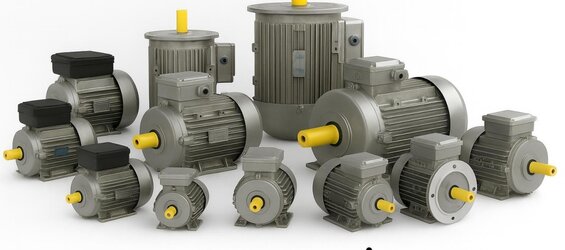
LOW kW ELECTRIC MOTOR SUITABLE FOR YOUR NEEDS
A low kW electric motor is a compact, economical solution covering power needs between 0.12 kW and 7.5 kW. In low-torque applications such as small pumps, fans, conveyors, automati... More Details

A low kW electric motor is a compact, economical solution covering power needs between 0.12 kW and 7.5 kW. In low-torque applications such as small pumps, fans, conveyors, automati... More Details
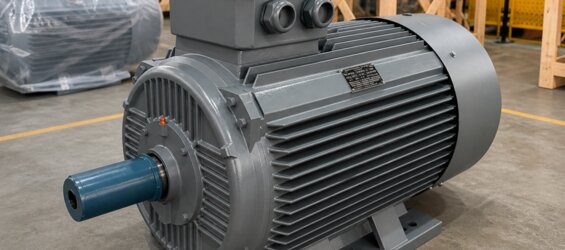
When you manufacture or purchase an electric motor, it is not enough for the motor to work technically; in many markets the motor must also meet a certain minimum efficiency level.... More Details
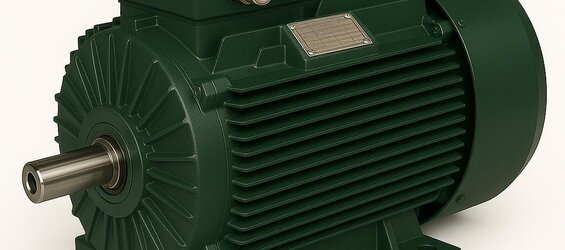
When you connect a motor directly to the grid, the windings meet a smooth, gentle sinusoidal voltage. But when you connect the motor behind a frequency inverter, the situation chan... More Details
Compressed air is often called the "fourth utility" in industry; an infrastructure that sits alongside electricity, natural gas, and water and is found in almost every facility. It... More Details
When a crane lowers its load, when an elevator descends, or when a high-inertia centrifuge slows down, the motor does not actually stop; it begins to convert mechanical energy back... More Details
When you run an electric motor for years, you come to know its behavior intuitively: which sound is normal, what temperature to expect, how it responds under a given load. The conc... More Details
When an electricity bill comes in higher than expected, the first remedy that comes to mind is usually to swap a single component, the motor, for a more efficient model. Yet an ele... More Details
The most honest information about an electric motor's health usually comes from its vibration. When bearings begin to wear, when rotor imbalance develops, or when fasteners loosen,... More Details
When an electric motor fails or its efficiency drops, the first question that usually comes to mind is "should I buy a new one?" Yet a motor's life does not end with its first faul... More Details
How Low-Loss Electrical Steel Laminations Improve Motor Efficiency When we list the factors that determine an electric motor's efficiency, the first things that usually come to min... More Details
For many years, industry produced heat by burning fuel. Today this equation is changing: industrial heat pumps take low-temperature waste heat and lift it to the higher temperature... More Details
Diagnosing Broken Rotor Bars with Motor Current Signature Analysis (MCSA) One of the most critical yet hardest-to-reach parts of an asynchronous motor is its rotor. The rotor forms... More Details
At the heart of a data center sit the servers, but the infrastructure that keeps those servers running without interruption is the cooling system. If the heat produced by thousands... More Details
dv/dt and Reflected-Wave Overvoltage on Long Motor Cables The cable between a frequency inverter (VFD) and an asynchronous motor is a component that is often overlooked, yet it is ... More Details
When buying an electric motor, many businesses reach for a slightly larger frame "just to be safe." On the surface this feels prudent, but it quietly turns into a trap that drains ... More Details
Shaft Voltage and Bearing Currents in VFD-Driven Motors Driving an asynchronous motor with a frequency inverter (VFD) brings major advantages in energy savings and flexible speed c... More Details
The correct operation of an electric motor depends not only on its power, speed and efficiency, but also on how it is mounted. The way the motor connects to the machine, that is th... More Details
When you look at the nameplate of an electric motor, you see that the power is sometimes written in kilowatts (kW) and sometimes in horsepower (HP). The speed is given as revolutio... More Details
The small metal plate on an electric motor is, in effect, that motor's identity card. Among the codes printed on this nameplate, perhaps the most asked about and the most critical ... More Details
Power plants, although they are facilities that generate electricity, also consume a large amount of electricity internally. Most of this consumption comes from the electric motors... More Details