 English
 Le français
 Türkçe

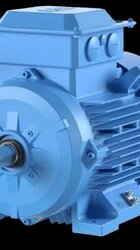
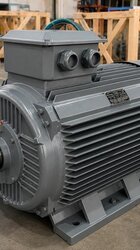
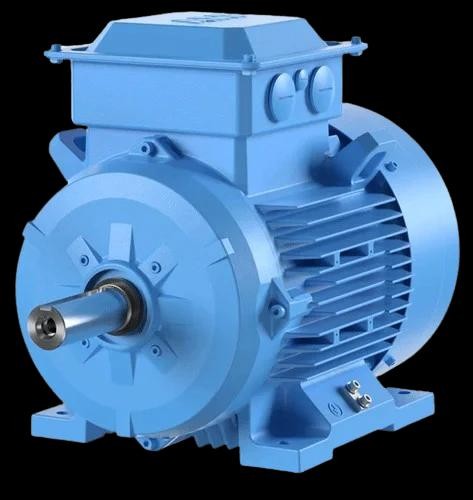

The power and efficiency values printed on an electric motor's nameplate do not, on their own, tell you how the motor will behave in the real world. A motor heats up while running under load, and keeping that heating below a certain limit directly determines the motor's lifespan. The most reliable way to verify this behavior is the heat-run test, also known as the temperature rise test. This test is based on running the motor at its rated load until its temperature reaches equilibrium and then measuring the winding temperature rise at that point. The result shows whether the motor stays within the limits of its insulation class. At DRG Motor, this article explains in detail the heat-run test, one of the cornerstones of AC asynchronous motor reliability, from its purpose to its measurement method and result interpretation.
What Is the Heat-Run Test?
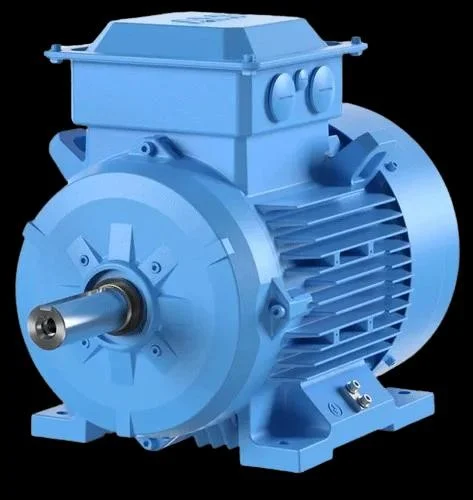
The heat-run test is a performance test in which an electric motor is run under a specific load, its temperature is allowed to stabilize, and the temperature rise at that point is measured. The aim is to determine numerically how much the motor heats up under real operating conditions and to compare this value with the limit allowed by the insulation class.
The Core Purpose of the Test
One of a motor's weakest links is the winding insulation. The insulation is designed to withstand temperatures up to a certain point, and once this limit is exceeded its life shortens rapidly. The core purpose of the heat-run test is to prove that the motor does not exceed this limit under rated conditions. This verifies that the motor will operate safely throughout its expected life.
Why Is Measuring Current Alone Not Enough?
Measuring a motor's current gives an idea of how heavily it is loaded but does not show how hot the winding actually gets. Two motors may draw the same current yet reach different temperatures because cooling, insulation quality, and ambient conditions differ. The heat-run test eliminates this uncertainty by directly measuring the temperature rise.
Running at Rated Load
For the heat-run test to be valid, the motor must be run at its rated power, that is, the full load stated on its nameplate. A test performed at partial load does not reflect the motor's heating at full load. Throughout the test, keeping the load, voltage, and frequency at their rated values is essential.
Reaching Thermal Equilibrium
When the motor starts running, its temperature gradually rises, and after a certain time the heat generated balances the heat dissipated. This point is called thermal equilibrium or steady state. In the heat-run test, the measurement is meaningful only after this equilibrium is reached. Typically, the temperature change remaining very small over a certain period is an indication that equilibrium has been reached.
Time to Reach Thermal Equilibrium
The time to reach equilibrium depends on the motor's size, cooling type, and thermal mass. Small motors reach equilibrium faster, while large motors may reach steady state only after running for hours. For this reason, the heat-run test is a process that requires patience, and a measurement taken in haste is misleading.
The Concept of Temperature Rise (Delta T)
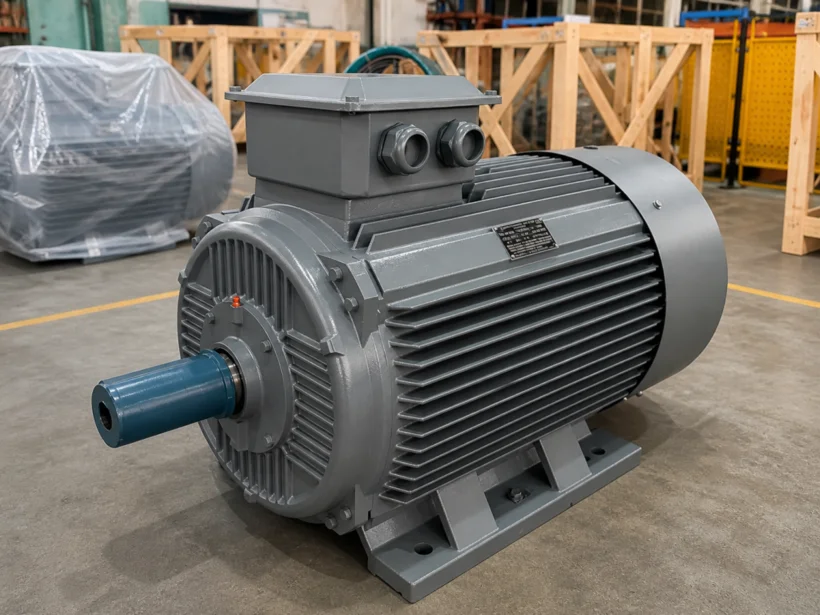
The result of the heat-run test is most often expressed as temperature rise, that is, delta T. This value is the difference between the temperature reached by the winding and the ambient temperature. What matters is not the absolute temperature but the rise the motor adds above the ambient, because insulation class limits are defined in terms of this rise. We addressed this in depth in our article on motor temperature rise and insulation class.
Measurement by the Resistance Method
The most reliable way to measure the average temperature of the winding is the resistance method. Since the electrical resistance of a copper winding changes in proportion to temperature, the average temperature rise of the winding is calculated by comparing the cold-state resistance with the hot resistance at the end of the test. This method is preferred because it reflects the internal temperature of the winding rather than its surface.
The Logic of the Resistance Method
The resistance of copper increases predictably as temperature rises. Before the test, the cold winding resistance and winding temperature are recorded. At the end of the test, the motor is stopped and the resistance is measured again. Based on the ratio between the two resistance values, the average temperature of the winding, and therefore its rise, is calculated. This approach gives a far more representative result than a sensor placed at a single point.
The Limit of Measurement with a Surface Sensor
Temperature sensors placed on the motor show only the temperature of the point where they are placed. The hottest point of the winding, however, is usually somewhere the sensor cannot reach. For this reason, while surface sensors are valuable for monitoring, the primary measurement of the heat-run test is made with the resistance method.
Acting Quickly After the Measurement
In the resistance method, the motor begins to cool the moment it is stopped. For this reason, the hot resistance measurement must be made quickly, immediately after the motor is stopped. A delay causes the winding to cool and the true temperature rise to be measured lower than it actually is.
Verifying the Insulation Class Limit
Each insulation class corresponds to a specific maximum temperature the winding can withstand. The temperature rise measured in the heat-run test, when added to the ambient temperature, must not exceed this limit. The test proves that the motor operates in accordance with the selected insulation class. For details on insulation classes, see our article on electric motor insulation class.
Insulation Class and Temperature Limit Table
The table below summarizes common insulation classes and their corresponding approximate temperature limits. The values are for general reference.
| Insulation Class | Approx. Max. Allowed Winding Temp. | Typical Allowed Temperature Rise |
|---|---|---|
| Class B | 130 °C | about 80 K |
| Class F | 155 °C | about 105 K |
| Class H | 180 °C | about 125 K |
The temperature rise values in the table are given on the basis of a standard ambient temperature and a certain safety margin.
The Effect of Ambient Temperature on the Test
The heat-run test is performed at a specific ambient temperature, and the result is corrected for this temperature. Since the heating margin of a motor that will run at a high ambient temperature narrows, the test result must be interpreted accordingly. For ambient conditions, our content on ambient temperature and altitude in motor selection is complementary.
The Effect of Cooling Type on the Result
The motor's cooling method directly affects the temperature it will reach. Motors cooled by a fan on the housing and motors with different cooling arrangements may show different temperature rises at the same load. The heat-run test also verifies that the chosen cooling solution is adequate.
Why Is This Test Important?
The heat-run test is a critical step that proves a motor's on-paper values also hold true in the field. Without passing this test, it is not possible to say that the motor will operate safely throughout its expected life. Especially for motors that will run under heavy and continuous load, verifying the heating behavior is indispensable.
Its Relationship with Temperature Control
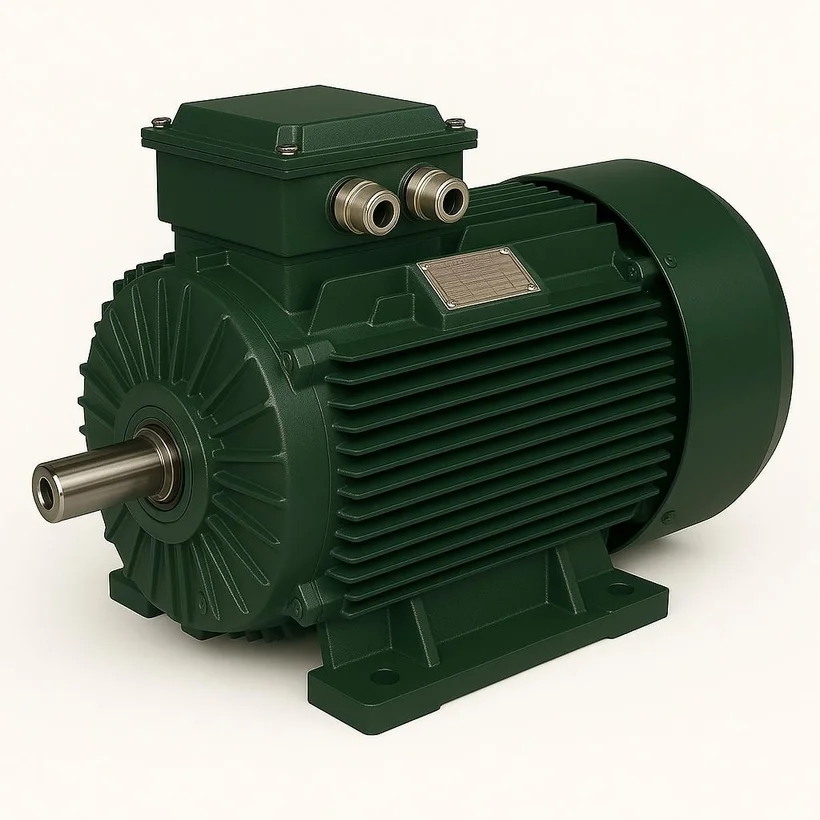
Although the heat-run test is a one-time verification, keeping the motor's temperature continuously under control in the field is also important. Thermal protection devices and temperature sensors protect against unexpected heating throughout the motor's operating life. Our article on electric motor temperature control is helpful on this topic.
Evaluating Together with Insulation Resistance
While the heat-run test measures the temperature behavior of the winding, the insulation resistance test measures the electrical health of the winding insulation. These two tests complement each other; in a motor with good heating behavior, the insulation resistance is also expected to be adequate. For the subject, see our content on motor insulation resistance megger test.
Interpreting the Results
If the measured temperature rise is clearly below the insulation class limit, the motor is considered safe. If it comes very close to the limit, it is understood that the motor may be strained under harsh conditions, and the application is reviewed. Exceeding the limit indicates a problem in design, load, or cooling.
Translating the Test Result into the Application
A good heat-run test result shows that the motor can be used safely in the chosen application. However, if the field conditions differ from the test environment, for example a higher ambient temperature or poor ventilation, these differences must be included in the margin calculation. The test result must be evaluated together with the actual installation conditions.
Repetitive Operation and Heating
In motors that start and stop frequently or operate at variable load, the heating behavior differs from continuously running motors. In such applications, the motor's heating characteristic is evaluated according to the duty cycle. The heat-run test also guides motor selection suited to these operating modes.
The Effect of Operating with a Frequency Inverter
When a motor is driven by a frequency inverter, heating may increase at low speeds because fan cooling decreases. In this case, the motor's heating behavior must be evaluated by considering the speed range in which it will operate. The result of the heat-run test is interpreted with an additional margin in drive applications.
The Role of Maintenance and Periodic Inspection
Dust and dirt accumulating on the motor's cooling surfaces hinder heat dissipation and raise the temperature. Regular cleaning and maintenance ensure that the motor maintains its heat-run test performance throughout the field. Clogged cooling channels can cause overheating even in the best-designed motor.
An Overview in Industrial Applications
The heat-run test is one of the quiet quality assurances behind reliable industrial motors. For general industrial motor solutions, see our articles on industrial electric motors, and for fundamental concepts, what is an electric motor.
What Does Each Temperature Class Mean?
The insulation class letters represent the maximum temperature the winding can withstand. A higher class means the winding can withstand higher temperatures. However, a higher-class insulation does not necessarily mean the motor will run hotter; it is often chosen to provide an additional safety margin. The heat-run test shows that the motor's actual rise stays within this margin.
The Importance of Leaving a Margin
If a motor's temperature rise comes very close to the insulation class limit, even small adverse conditions in the field can cause the limit to be exceeded. For this reason, a good design leaves a clear margin between the measured rise and the class limit. This margin is the motor's buffer against unexpected conditions.
The Effect of Overloading on Heating
When a motor exceeds its rated load, the current it draws increases, and the heat losses in the winding rise with the square of the current. For this reason, even a small overload can raise the temperature significantly. While the heat-run test shows the motor's behavior at rated load, it also reminds us that continuous overload quickly consumes insulation life.
The Role of Voltage Imbalance
In a three-phase motor, voltage imbalance between the phases causes the windings to heat at different rates. Even a small imbalance can cause a noticeable temperature rise in the hottest phase. For this reason, the quality of the supply must also be considered when evaluating heating behavior.
Monitoring Bearing Temperature
Bearing temperature is as important to the motor's health as winding temperature. An overheated bearing both degrades lubrication and raises the overall temperature by carrying heat to the housing. Observing bearing temperature during the heat-run test enables early detection of mechanical problems.
The Effect of Altitude on Cooling
At high altitudes, air density decreases, so the effectiveness of fan-provided cooling is reduced. This means the same motor heats up more at high altitude. Although the heat-run test is performed under standard conditions, if the motor will run at high altitude this effect must be added to the margin calculation.
The Difference Between Continuous and Transient Load
In some applications, the motor draws high load briefly and then runs at a lower load. With such transient loads, the winding may find an opportunity to cool before reaching a permanent temperature rise. The heat-run test provides fundamental data for evaluating both continuous load and this cyclic behavior.
Recording the Test Data
The results of the heat-run test form a reference throughout the motor's life cycle. When the initial temperature rise value is recorded, it can later be compared with temperatures measured in the field. A higher-than-expected temperature can be an early sign that something has changed in the motor or the application.
The Place of Cooling in the Design
A motor's heating behavior is largely determined at the design stage. The winding cross-section, slot fill, thermal conduction paths, and fan design shape how much the motor will heat up. A good heat-run test result is in fact an indication that these design decisions were successful.
The Link Between Efficiency and Heating
A higher-efficiency motor does the same work with fewer losses; since most of these losses are converted to heat, high efficiency generally means lower heating. For this reason, the heat-run test indirectly also provides information about the motor's efficiency quality.
Completing with Field Verification
Although the heat-run test performed under factory conditions is valuable, the motor's real behavior in the field depends on installation quality. Monitoring the motor's temperature during commissioning verifies that the test result also holds under field conditions and reveals possible installation errors. Poor alignment, inadequate ventilation, or a heavier-than-expected load can cause the temperature measured in the field to deviate from the test value. For this reason, temperature tracking in the first weeks after commissioning is a valuable habit for the motor's long-term reliability and allows possible problems to be resolved before they grow.
Numerical Proof of Quality
The heat-run test is the step that translates a motor's quality story into concrete numbers. It proves that the promises on the nameplate are real, that the winding runs at a safe temperature, and that the selected insulation is suitable for the application. This numerical proof is a common ground of trust for both manufacturer and user; it is one of the most concrete indicators that the motor will run trouble-free for years.
The Quiet Story Temperature Tells
The heat-run test is a test that reveals not a motor's power or speed, but its durability. The temperature the winding reaches foretells how the motor will age over the years. For this reason, a motor whose heating behavior is measured correctly and stays within the insulation class limits safely completes its expected life in the field. At DRG Motor, the importance we place on the heating behavior and insulation quality of our AC asynchronous motors is the foundation of long-lasting and reliable operation. To select the motor best suited to your application's load and temperature conditions, you can contact the DRG Motor expert team.