English
 Le français
 Türkçe


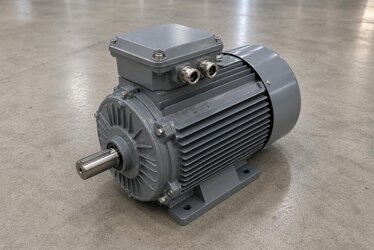
Single-phase 220V low-power motors are the backbone of countless applications that run on a standard household or workshop supply, from pumps and compressors to fans, conveyors and small machinery. Yet picking the right unit at the right price is never just about reading a single list figure; power rating, speed, mounting style and lead time all shape the final cost. In this guide we explain, from a B2B supplier's perspective, what really drives the price of a single-phase motor, how our quoting process works, and how you can secure fast delivery while protecting your budget.
The Technical Factors Behind the Price
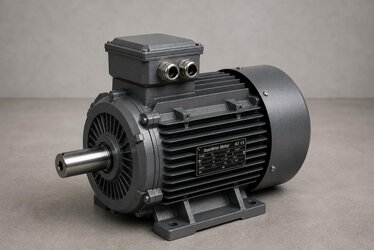
The cost of a single-phase 220V motor depends on far more than the headline rating. Two motors with the same kW value can differ significantly in price because of frame material, winding quality and efficiency class. In the low-power range, which typically spans 0.18 kW to around 3 kW, these are the variables we see influence the figure most:
- Power (kW/HP): Demand between 0.25 kW and 2.2 kW is the busiest part of the low-power class, and strong stock availability here keeps pricing competitive.
- Speed (poles): 2-pole (2800 rpm), 4-pole (1400 rpm) and 6-pole options offer different torque and price profiles.
- Capacitor type: Whether a unit uses only a start capacitor or both a run and start capacitor changes both starting torque and cost.
- Mounting style: Foot-mounted (B3), flange-mounted (B5/B14) or combined arrangements lead to different frame prices.
- Protection class (IP): IP55 is the common baseline, while higher protection requirements add to the cost.
Once these points are clarified, the price we offer reflects your real requirement, so you never overpay for a motor that is over-specified for the job. On top of these, details such as shaft diameter, pulley or coupling connection, terminal box orientation and, where needed, thermal protection also shape the final figure. Many buyers overlook these points at the outset and run into compatibility issues later; we ask about each of them at the quoting stage to eliminate the risk of both the wrong product and a delivery delay. As a result, the motor you receive starts working without trouble from the very first day it reaches your site.
What to Watch for in the Low-Power Class
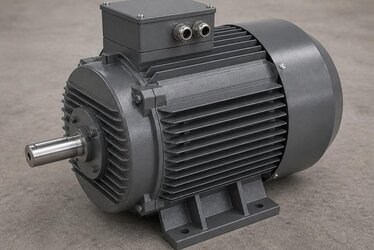
The most common mistake in single-phase applications is selecting a motor on power rating alone. In reality, pumps, fans, conveyors and small machines each demand a different starting behaviour. Loads requiring high starting torque run more efficiently on dual-capacitor models, while continuous light-load applications are well served by more economical single-capacitor solutions. Working through our broad range of single-phase asynchronous motors together, we help you pinpoint the model that fits your application precisely, optimising both your initial investment and your running costs. Questions such as how many hours a day your application runs, the ambient temperature, whether the environment is dusty or humid, and whether the direction of rotation reverses may seem minor at first, yet they are the key to specifying the right motor and therefore the right price. A poorly chosen motor soon reveals itself through overheating, capacitor failure or bearing wear, all of which return as repair and downtime costs. In pump duty, for instance, an undersized capacitor or the wrong pole count can leave the motor struggling to reach speed under load, drawing excess current and shortening winding life. We also check whether the application demands frequent stop-start cycles, since a duty profile like that calls for a motor and capacitor combination sized for repeated inrush rather than steady running. By matching the unit to the real duty cycle up front, we make sure the price you pay buys reliable service rather than an early replacement. To reduce these risks from the start, we take an application-focused, advisory approach rather than simply quoting a part number.
How Our Quote Process Works
At DRG Motor we prioritise keeping pricing transparent and fast. There are no complicated forms to complete to get a quote; a few headline details about your need are enough. Our typical quoting flow follows these steps:
- Requirement brief: You share the power, speed, mounting style and quantity. If you are unsure, simply describe the application and we will define the correct specification with you.
- Stock and availability check: We verify the stock status and lead time of your requested configuration the same day.
- Written quotation: We provide a clear, itemised offer covering price, tax status, lead time and shipping conditions.
- Approval and dispatch: Once approved, items in stock are usually shipped the same day or the next business day.
You can run this entire process by email or phone, one to one with your sales representative. We work at every scale, from one-off purchases to recurring supply agreements. For urgent needs, we steer you toward in-stock models to protect the speed of the process and, where helpful, present alternative units with equivalent technical specifications for you to consider. Our aim is not to tie you to a single product but to let you see the option that best matches your budget and lead time. If you wish to change any line item after receiving our offer, we revise it quickly and share the updated figure without delay.
How Quantity and Supply Volume Affect Price
In low-power motors, the unit price is closely tied to order quantity. A single-motor purchase sits near the list figure, while serial machine builders and project-based buyers can benefit from tiered discounts. For businesses with a regular need, we offer annual framework agreements or dealer terms that make budgets predictable. If a single project requires different power and speed combinations, we consolidate them into one quotation to lower both your shipping and administrative costs. For machine builders in particular, continuous supply against a fixed technical specification means both price stability and consistent quality. If you prefer staggered deliveries in batches rather than committing to a single large order, we can also build a delivery schedule that reduces your storage costs. That way we keep your production line supplied without interruption and without straining your cash flow.
Choosing Between 220 Volt and 380 Volt
Many businesses hesitate between single-phase 220V and three-phase 380V for low-power applications. If you have a single-phase supply and a limited power requirement, the 220V solution is advantageous in both installation and price. As power rises or for applications with frequent starts, however, the three-phase option can be more efficient. When making this decision, reviewing the ordering details of a 220 volt elektrik motoru and the comparison of a monofaze trifaze motor will help you make the right long-term investment.
Total Cost of Ownership
Focusing only on the purchase price is often misleading. A cheap, low-efficiency motor quickly closes the gap on your electricity bill and pushes you toward a more expensive investment overall. That is why our quotes include information on efficiency class and expected service life, so you can evaluate the full picture. A correctly chosen single-phase motor pays for itself over the years through low failure rates and low energy consumption. Thanks to our stock availability, replacement supply in the event of a breakdown is fast too, which keeps your unplanned downtime costs to a minimum. Over its lifetime, the electricity a motor consumes often reaches several times its purchase price, so investing in a slightly higher efficiency class at the outset can pay off within the first year alone. In continuously running pump and fan applications this gap becomes even more pronounced. When you assess our offer, we encourage you to look not only at the sticker figure but at the total cost based on the motor's annual running hours; that is where the real saving lies.
Get in Touch for a Fast Quote
If you want a clear, competitive offer on your single-phase motor price as quickly as possible, simply send us your requirement. Once you share the power, speed and mounting details, we confirm stock status and lead time the same day and prepare your written quotation. By delivering the right product at the right price and on time, we keep your production running without interruption. If you are looking for a reliable supply partner for your low-power single-phase motor needs, our sales team is with you at every step of the quoting process. Get in touch today and let us plan the best solution for your requirement together.