 English
 Le français
 Türkçe

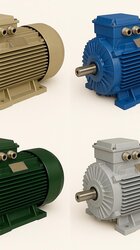
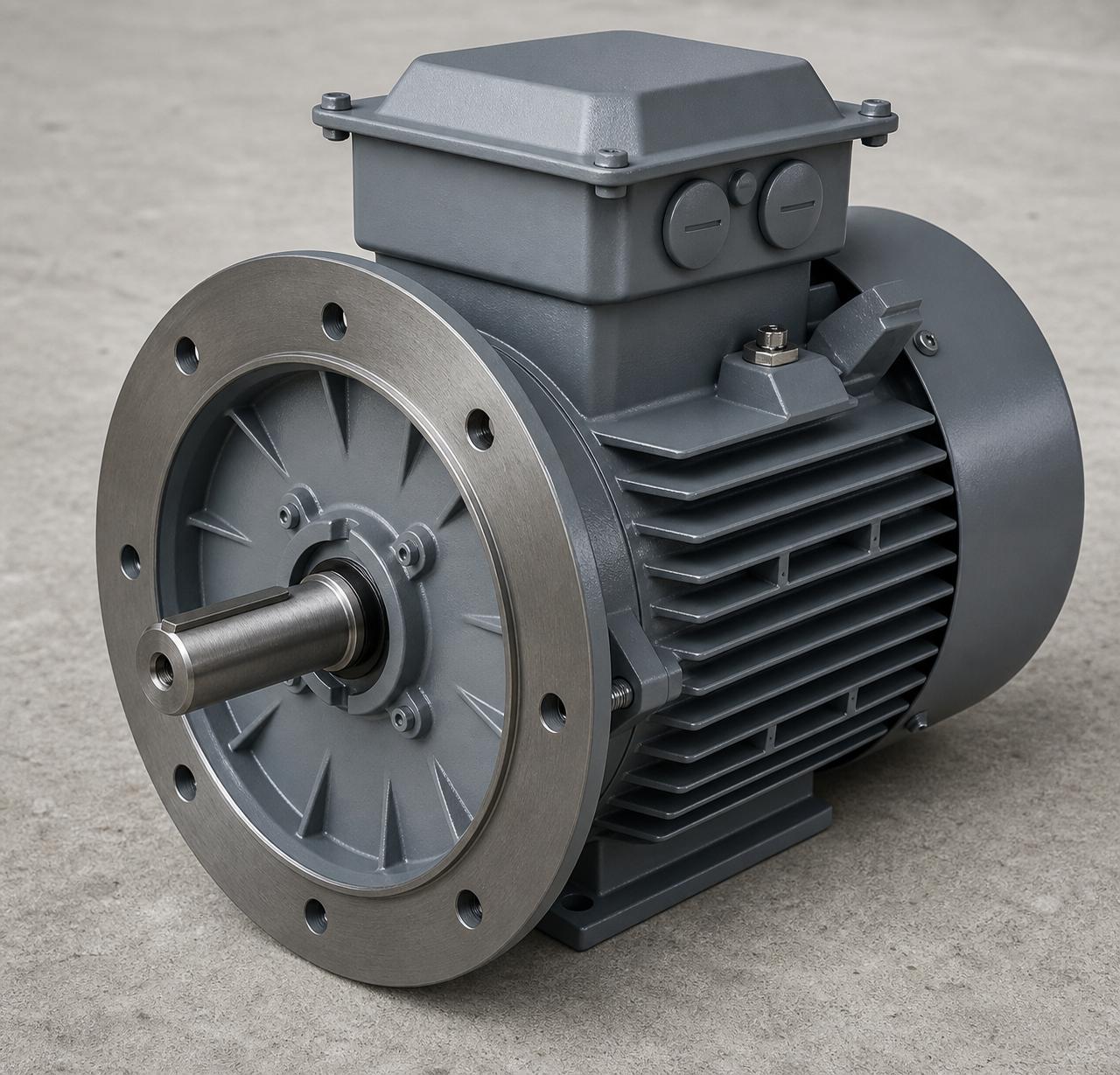

There is far more behind an electric motor's price tag than meets the eye. Two motors sharing the same housing do not necessarily share the same budget, because rated power and pole count are the two engineering parameters that drive the bulk of the cost. When you make a sourcing decision, reading the impact of these two variables correctly protects your budget and helps you select the right product for your application.
Why Price Climbs Sharply as Power Grows
The relationship between motor power and price is not linear; cost rises along a steeper curve as power increases. The gap between a 1.5 kW motor and a 7.5 kW motor is more than just fivefold. Higher power demands more copper winding, a larger rotor mass, a thicker lamination stack and more durable bearings. All of this increases both raw material weight and manufacturing complexity.
Thermal management also comes into play in high-power motors. A motor that generates more heat needs proportionally larger cooling fins, a bigger fan and a sturdier frame design. That is why, when planning your supply, choosing more power than you need flows straight through to your budget. Calculating the real load profile of the application removes the cost that comes from an unnecessary power margin.
Another point worth noting is that as power rises, so do the costs of cable cross-section, fuses, contactors and drives. In other words, while the motor's own price climbs, the price of the panel equipment that feeds it climbs along with it. This is why it is healthier to base your investment calculation not on the motor alone but on the entire drive system. The right power selection reduces the total investment line by saving on both the motor and the surrounding equipment. When you evaluate the real current draw and running hours of your application together with our team, they can recommend the most accurate power range and keep you from spending on an unnecessary upper class.
Pole Count Shifts Cost Together With Speed
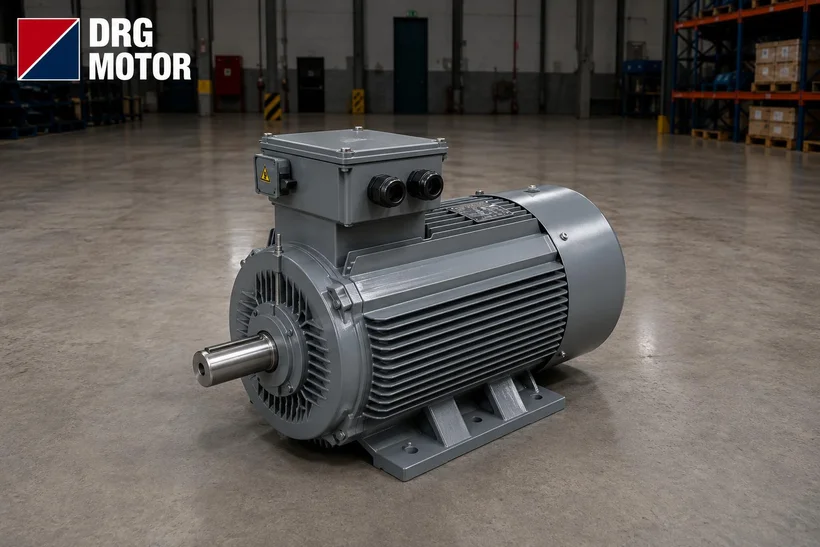
Pole count determines the motor's synchronous speed. A 2-pole motor runs at roughly 3000 rpm, a 4-pole at about 1500 rpm, a 6-pole near 1000 rpm and an 8-pole around 750 rpm. To build a lower-speed motor at the same power, you need more torque, and torque is directly tied to physical size.
As a result, at the same kW rating a 6- or 8-pole motor is often built on a larger frame and contains more material than its 2- or 4-pole counterpart. Low speed means high torque, and high torque means a bulkier design and therefore higher cost. In many facilities, 4-pole motors remain the most preferred choice for fans, pumps and conveyors thanks to their balance of price and performance.
Pinning down your speed requirement correctly is the lifeblood of your supply budget. If you needlessly select a high-pole motor for an application that calls for high speed, you both pay extra and end up dealing with an additional gearbox or belt-and-pulley arrangement. Conversely, choosing a high-speed motor for a shaft that must turn slowly and powerfully increases mechanical transmission costs and the risk of failure. That is why, before settling on a pole count, you should clearly establish the target speed and torque demand of the application. The correct pole count often eliminates the need for extra mechanical equipment, cutting the total cost considerably.
Same Power, Different Poles, Different Budget
As a buyer, the comparison you make most often is between different pole counts at the same power. For example, the choice between a 2-pole and a 6-pole motor rated at 5.5 kW affects both the price and the efficiency of the application. Faster-spinning 2-pole models are generally more compact and more economical, but that choice would be wrong on a line that demands slow, high-torque operation.
The right pick depends not only on price but on the operating point of the application. Evaluating power, speed and torque together with our team optimizes both the investment cost and the long-term energy bill. Our article on elektrik motoru fiyatları, where we cover this topic more broadly, helps you clarify your decision.
Efficiency Class Lifts the Price, Lowers the Bill
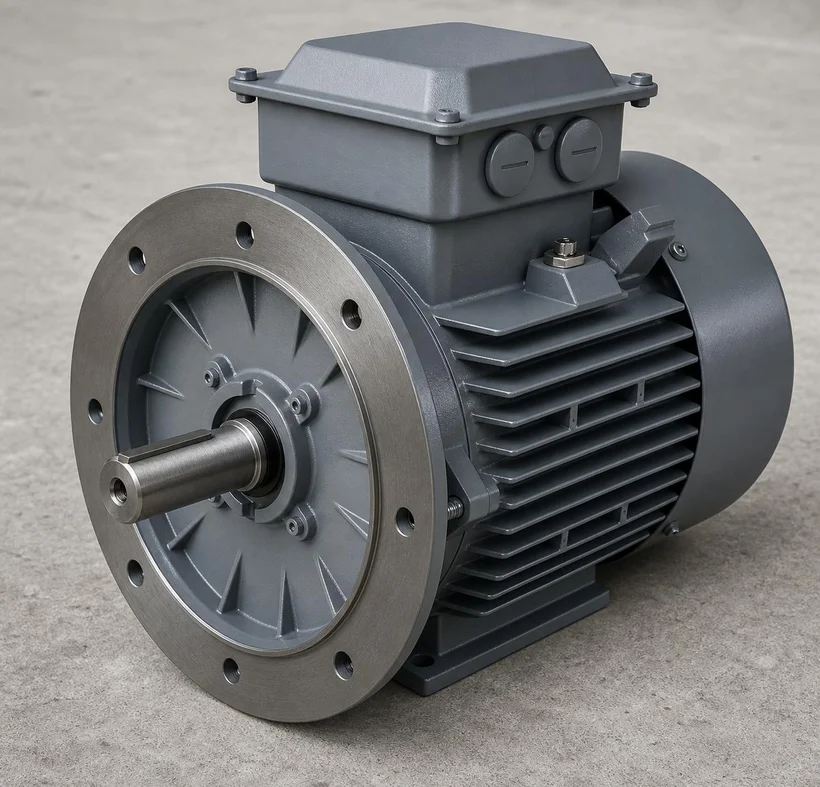
Alongside power and pole count, the efficiency class is a critical factor that affects price. IE3 and IE4 class motors use more copper and a higher-grade lamination stack than IE2, which raises the purchase price. Yet in high-power, continuously running applications that difference pays itself back through energy savings within a few months.
The importance of efficiency class grows exponentially at high kW ratings in particular. On a 22 kW motor running continuously, stepping up from IE3 to IE4 delivers a meaningful gain on the annual electricity bill. That is why, when evaluating price, you should account not just for the label but for the total cost of ownership.
The relationship between efficiency class and running time is the backbone of your purchasing decision. On a motor that runs only a few hours a day, the payback on a high efficiency class takes longer, whereas on a line running three shifts without interruption the same choice amortizes itself very quickly. For low-power, lightly used applications a more economical class may be enough; on high-power, continuously running lines, the highest efficiency class is usually the most profitable investment. When striking this balance, considering the motor's power, pole count and daily operating hours together brings both the initial investment and the long-term energy cost to their optimal point.
Frame Size Changes With Power and Poles
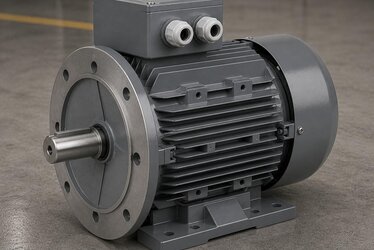
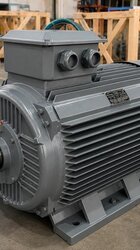
As power and pole count rise, the physical frame of the motor grows as well. This directly concerns both the price and your installation space. The wrong frame choice can lead to mounting problems and unnecessary cost. To determine the right dimensions, you can make use of our motor gövde boyu guide.
- Low-speed, high-torque motors arrive on larger frames and pull the price up.
- At the same power, 2-pole models are generally smaller and more economical.
- As the frame grows, bearing, fan and terminal box costs increase too.
- The right frame lowers both the supply cost and the maintenance expense.
Choosing the Right Motor Protects Your Budget
As a supplier, our job is not to offer you the most expensive motor but the one best suited to your application. Selecting more power than needed or the wrong pole count inflates both the initial investment and the running cost. The general-purpose industrial motors in our broad product range answer most industrial needs with different power and pole combinations.
With fast delivery from stock, a wide power range and a competitive price advantage, we can determine together the solution that meets your project's requirements. When the right power and pole combination is chosen, you both protect your budget and own a motor that runs trouble-free for many years.
As a supplier, our advantage is that we can place different power, pole and efficiency combinations side by side without being tied to a single brand. This lets us select the motor that genuinely meets your need, with neither too many nor too few features. The price advantage we offer on large batches and repeat orders visibly lowers the total cost of your project. We also let you compare several power and pole options for the same application, so you can see in concrete figures which configuration makes the most sense in terms of investment and operation. That way, when you decide, you rely not on guesswork but on a solid cost comparison.
Get a Quote Tailored to Your Need
Once your motor's power, pole count, efficiency class and frame type are clear, we are ready to offer you the most suitable price. Share the load profile of your application with us, and we will prepare the most economical solution for your project, striking the right balance of motor power and price. Contact our sales team for a detailed, up-to-date quote, and let us supply the motor that fits your need exactly on the most advantageous terms.