 English
 Le français
 Türkçe

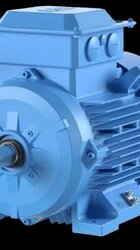
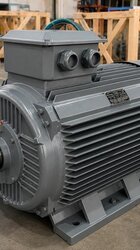

For any manufacturer, the electricity bill creeping higher every quarter has stopped being an exception and become the baseline. Against that backdrop, old and low-efficiency motors quietly turn into one of the line items that erode the budget, because a motor's real expense is hidden not in its shelf price but in the energy it draws over years of service. The encouraging part is straightforward: switching to efficient motors pays for itself faster as energy prices rise. An investment that made sense a year ago now returns its cost in an even shorter window. At DRG Motor we make that calculation concrete for your plant and supply the right class at the right power rating. Our aim is not to hand you a slogan but a payback table built from your own numbers.
Why the Payback Window Keeps Getting Shorter
To see the real account behind a high-efficiency motor, you have to look past the price tag and at the total cost of ownership it will run up over its service life. Across a typical ten-year run, the purchase price paid up front rarely amounts to even five percent of that total; almost all of the rest goes to electricity. In other words, on the day you buy the motor you have only seen a small slice of what you will actually pay, because the real invoice is spread across the years that follow. That distribution alone explains why motor selection should be treated as a purely financial decision. When the amount paid per kilowatt-hour goes up, the monetary value of the savings from an efficient motor grows with it. The same percentage of efficiency gain translates into more money on costlier energy, and the payback of an efficient motor naturally gets shorter. Rising energy prices are therefore a reason to accelerate the switch, not to delay it.
Understanding this mechanism turns the decision from an emotional one into a purely financial equation. The question stops being "when should we replace the motor" and shifts to "what is the hidden cost of keeping this one running." In most plants that hidden cost is noticeably higher than managers assume, because the bill shows up as a single total and the share consumed by each motor is rarely separated out. Before any supply, we perform that separation to surface the motors doing the most damage.
Three Factors That Set the Payback
Rather than quoting a single number, it is healthier to look at the factors that shape the payback, because every plant has a different profile. The same motor can pay back in a few months at a continuously running site and take far longer at a seasonal one. Three variables are decisive:
- Annual running hours: the more a motor runs, the faster the efficiency gap converts into money. Two- or three-shift lines see the quickest payback.
- Power and load profile: on high-power motors running close to their rated load the absolute saving is large, while small, rarely used motors are lower priority.
- Unit energy price: as your kWh tariff climbs, the same efficiency gain covers the investment sooner.
When we combine these three factors with your plant's real data, the result is not an abstract promise but a payback table built from your own figures. That is exactly what we put in front of you at the quotation stage; you see the estimated payback period for each motor separately and decide which investment comes first by looking at the data.
Not Just the Bill, the Whole Picture
Measuring payback only by the monthly bill difference leaves the picture incomplete. Efficient motors generally run cooler, vibrate less and give longer bearing life, which pulls down maintenance and downtime costs. To see the true return of the investment you need to view it through a motor toplam maliyet lens. Once energy, maintenance and unplanned downtime are combined, the payback often arrives earlier than expected.
Especially in plants where an unplanned failure stops a production line, the loss per minute alone can dwarf the price of the motor. A line standing idle for hours also drags in indirect costs such as delayed orders and overtime. A reliable and efficient motor therefore means you are buying not just energy savings but continuity. Once you fold these indirect gains into the payback calculation, the picture tilts even further in your favor.
Which Motors to Prioritize
You rarely need to replace the entire motor fleet at once; the smart approach is prioritization. The hardest-working, highest-power and oldest motors go to the top of the list, because that is where the biggest savings hide. For these motors, moving up to high-efficiency motors usually pays back faster than any other line item. In most plants a small number of motors are responsible for the bulk of total energy consumption; identifying them means finding the single highest-return step.
Prioritization is also a way to protect cash flow. Replacing the fastest-paying motors first and using the resulting savings to fund the next step lets the investment carry itself. This way you carry out a staged, controlled transition without setting aside a large lump of capital at once. We present this staged transition as a sequenced roadmap in our quotation; which motor changes, when and in what order is clear from the start.
How Energy Savings Show Up on the Bill
The efficiency gap may look like a small percentage at first glance, but on a continuously running motor that percentage accumulates every hour. The small daily saving that goes unnoticed adds up by year-end to a total that surprises most managers. For those who want to see this accumulation concretely, we show the annual impact of choosing an enerji tasarruflu motor through example scenarios. An annual saving figure calculated with your own running hours, instead of abstract percentages, makes the decision far clearer.
The critical point here is that the saving is recurring, not one-off. As long as the motor stays in place it keeps producing the same saving every year. As energy prices rise, that annual gain grows, meaning the investment becomes even more profitable over time. Once the payback period is complete, the saving turns directly into profit and continues for the rest of the motor's service life.
How Correct Sizing Affects the Payback
Another element that speeds up payback is correct sizing. A motor chosen too large for its load both wastes energy and runs outside its efficient operating point; even with a high efficiency class printed on its label, it cannot deliver that performance in the field. When, at the supply stage, we read your application's load profile correctly and match the motor to it, the efficiency class on paper delivers its full value in the field. When the right power, the right speed and the right operating point come together, the saving reaches its maximum.
Replacing a badly sized motor with an "efficient" one does not deliver the expected saving and needlessly stretches the payback period. That is why our approach considers not only the label class but the real point at which the motor will operate. Where it helps, we evaluate the motor together with a variable speed drive, bringing extra saving opportunities to the table for applications that run at partial load. Correct matching brings the payback period down noticeably.
A Clear Calculation That Starts With a Quote
The cost of postponing the switch to efficient motors grows with every month of rising energy prices. Waiting is not a saving; it is a saving missed. Our job is to take this decision out of guesswork and tie it to numbers: we assess your running hours, power needs and existing motors, then build a payback table tailored to you. We handle the stock, the class and the competitive dealer price; you focus only on seeing the saving. Share your plant's data and let us build a quote and transition plan together, starting with the motors that pay back the fastest. The first step is simply to share a short list; we will run the rest of the calculation with your numbers.