 English
 Le français
 Türkçe

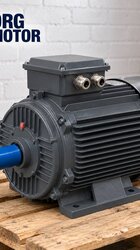
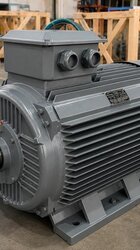
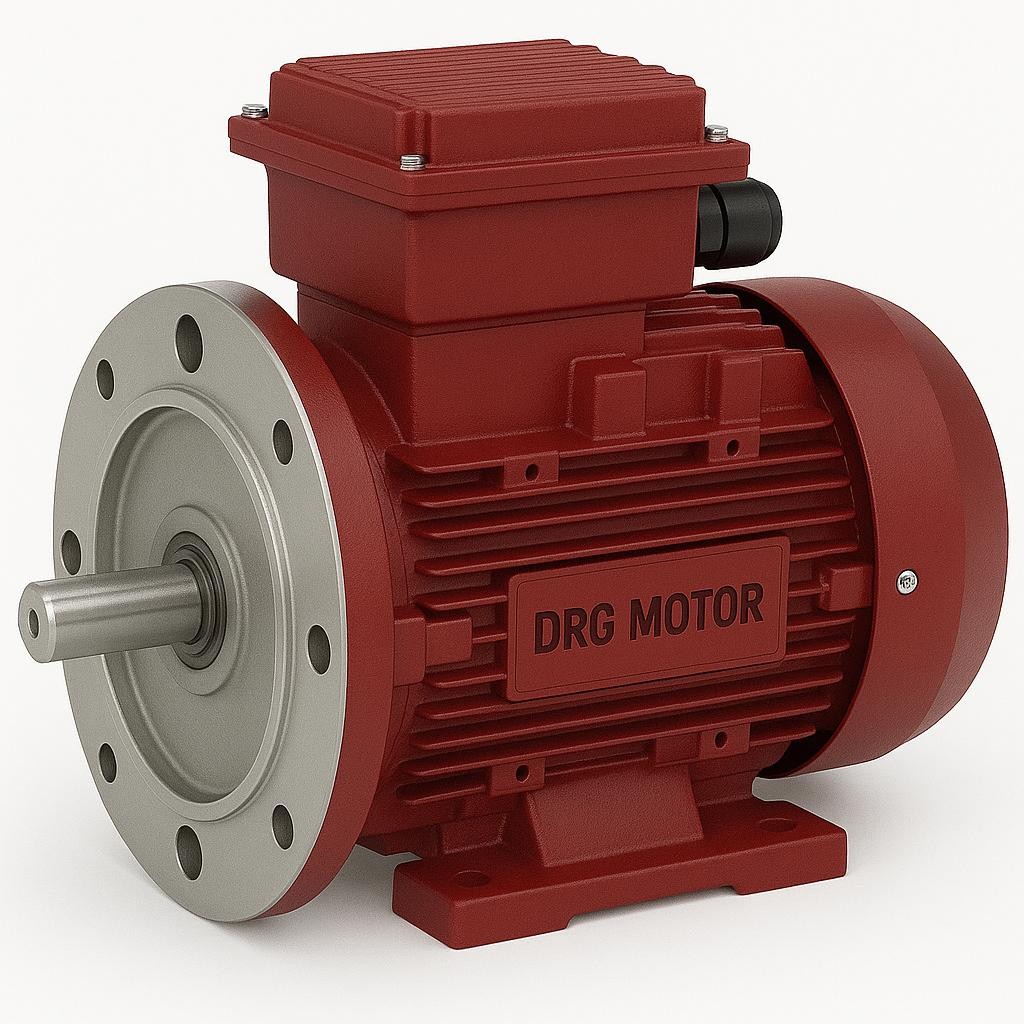

One question reaches us in the same form again and again: “The pump needs 7.5 kW, but shall we take 11 kW just to be safe?” The opposite version is just as common: “I have a 5.5 kW motor on the shelf; it will struggle a little, but will it do?” Both decisions show up on the invoice and in the breakdown log. This article explains how to find motor power by calculation rather than guesswork, how much service margin to add to the calculated value, and how to decide when the result falls between two ratings. By placing the shop prices of two neighbouring ratings side by side, we also show in concrete figures what the next size up gives you and what it costs.
First, Calculate the Power the Machine Draws at the Shaft
Motor selection starts with the shaft power of the driven machine. The three formulas below give a sufficiently accurate starting point for the loads most often met in the field. If you want to work with more variables, use the calculators on the electric motor calculators page.
Centrifugal pump: P = ρ · g · Q · H / ηp
Here ρ is fluid density (1000 kg/m³ for water), g is gravitational acceleration (9.81 m/s²), Q is flow (m³/s), H is total head (m) and ηp is the pump factor read from the pump curve. Example: for 50 m³/h flow and 30 m head, Q = 50 / 3600 = 0.0139 m³/s. Hydraulic power is 1000 × 9.81 × 0.0139 × 30 ≈ 4.09 kW. If the pump curve gives ηp = 0.70, shaft power is 4.09 / 0.70 ≈ 5.84 kW.
Belt conveyor: P = F · v / ηr
F is the pulling force needed to move the belt (N), v is belt speed (m/s) and ηr is the factor representing gearbox and pulley losses. On inclined belts, the component needed to lift the load (m · g · sin α) is added to F. Example: 2,400 N pulling force at 1.2 m/s gives 2,400 × 1.2 = 2.88 kW; with a gearbox factor of 0.90, 3.2 kW of shaft power is required.
Fan: P = Q · Δp / ηf
Q is air flow (m³/s), Δp is total pressure difference (Pa) and ηf is the factor given by the fan manufacturer. For 18,000 m³/h (5 m³/s) and 800 Pa, 5 × 800 = 4.0 kW; with ηf = 0.65, shaft power is about 6.15 kW. In fans, power changes with the cube of speed: if you change the pulley and raise speed by 10%, the required power rises to roughly 1.1³ ≈ 1.33 times. Re-check the motor with this in mind before touching the pulley ratio.
Service Margin: How Much Is Added to the Calculation?
The formula result describes ideal conditions. In reality flow changes with the season, belt load arrives unevenly and filters clog. That is why the calculated shaft power is scaled up by a factor. Ranges often used in practice are:
- Evenly loaded pumps and fans: 1.10–1.15 times the calculated power.
- Variable loads such as belt conveyors and mixers: 1.20–1.25 times.
- Shock loads (crushers, mills, presses): 1.30 and above; starting torque is checked separately as well.
Applied to our examples: pump 5.84 × 1.10 ≈ 6.42 kW, conveyor 3.2 × 1.25 = 4.0 kW, fan 6.15 × 1.15 ≈ 7.07 kW. The service margin is added once; adding an extra “safety” at every step of the calculation is the most common cause of the oversized-motor problem described below.
If the Result Falls Between Two Ratings, Which One?
Motors are sold in standard ratings: 4 – 5.5 – 7.5 – 11 – 15 kW and so on. The value with margin usually falls between two ratings and the rule is simple: choose the first standard rating above it and do not skip to the next. In the pump example 7.5 kW is correct for 6.42 kW; in the fan example 7.5 kW is correct for 7.07 kW. The conveyor example sits exactly on the line: for a 4.0 kW result, the 4 kW rating is sufficient on paper. In that case the decision depends on these questions:
| Question | If the answer is “yes” |
|---|---|
| Does the belt stop loaded and restart loaded? | Consider the next rating (5.5 kW) for starting torque. |
| Is a capacity increase (speed or load) planned? | The next rating makes sense; without a plan it is not needed. |
| Is the ambient hot or the altitude high? | Motor power is evaluated with derating; the next rating may be needed. |
| None of the above applies? | 4 kW is enough; the difference stays in the budget. |
Shop Prices of Neighbouring Ratings
The answer to “how much does one rating up cost?” can be read from the shop list. In the table below, the correct rating and the one above it are shown side by side for each scenario, all in cast iron frames. The rated current column was added to show how it affects the thermal relay setting and cable selection.
| Scenario | Power | Speed | IEC frame | Model (cast iron) | Rated current (400 V) | excl. VAT | incl. VAT (20%) |
|---|---|---|---|---|---|---|---|
| Pump example | 7.5 kW | 3000 rpm | 132S | DRG-132S2-2 | 13.7 A | 16,676.00 TRY | 20,011.20 TRY |
| Pump example | 11 kW | 3000 rpm | 160M | DRG-160M1-2 | 19.6 A | 23,831.50 TRY | 28,597.80 TRY |
| Conveyor example | 4 kW | 1500 rpm | 112M | DRG-112M-4 | 7.95 A | 11,482.90 TRY | 13,779.48 TRY |
| Conveyor example | 5.5 kW | 1500 rpm | 132S | DRG-132S-4 | 10.7 A | 15,438.50 TRY | 18,526.20 TRY |
| Fan example | 7.5 kW | 1500 rpm | 132M | DRG-132M-4 | 14.3 A | 17,825.50 TRY | 21,390.60 TRY |
| Fan example | 11 kW | 1500 rpm | 160M | DRG-160M-4 | 20.4 A | 25,674.00 TRY | 30,808.80 TRY |
Prices are taken from the DRG Motor online shop list dated 24.09.2026; a 3% discount applies to bank transfer/EFT payments, shipping is not included in the price and is paid by the buyer. For current prices please see the shop page.
In the pump example, choosing 11 kW instead of 7.5 kW means paying 7,155.50 TRY more excl. VAT and 8,586.60 TRY more incl. VAT. On the conveyor, moving from 4 kW to 5.5 kW makes a difference of 3,955.60 TRY excl. VAT. And this is only the motor part of the difference; the surprising items come in the next section.
The Hidden Bill of an Oversized Motor
Look at the frame column in the table: in the pump example the frame grows from 132 to 160 when moving from 7.5 kW to 11 kW, and on the conveyor from 112 to 132 when moving from 4 kW to 5.5 kW. When the frame changes, these items change in a chain as well:
- Shaft diameter and coupling: A thicker shaft needs a different coupling hub or pulley bush. The existing pump coupling is often re-machined or replaced.
- Base and shaft axis: Because shaft height increases, the base is rebuilt or shims are added to align the motor with the pump axis.
- Cable, breaker and contactor: Rated current rises from 13.7 A to 19.6 A; protection devices and cable cross-section are selected for this current.
- Starting current: A larger motor also has a larger starting current; on weak supplies, voltage drops and fuse trips may occur.
Undersized Motor: Thermal Trips, Heating and Winding Failure
The opposite mistake shows its effect faster. If a 5.5 kW motor is connected to the 6.42 kW load in the pump example, the motor runs above its nameplate current. If the thermal relay is set correctly (to rated current), it shuts the motor down again and again; production stops and the operator often “opens the thermal a little” to get past the problem. From that point on the motor is unprotected: winding temperature exceeds the limit allowed by the insulation class, the varnish ages, and finally the winding burns and the job goes to the rewinding shop.
Other signs of an undersized motor are a long start or a motor that cannot start at all on a loaded belt, a frame too hot to touch, bearing grease drying out early and a clear drop in speed under the same load. If any of these is seen, the first step is to measure current.
Verify by Measuring the Existing Motor
If there is no data to calculate with, or you want to know whether the motor to be replaced is really the right size, a clamp meter is the quickest low-cost source of information:
- Measure the current of each of the three phases while the machine is at normal load.
- Compare the measured average with the rated current on the motor nameplate.
- If the reading is consistently above rated current, the motor is too small; the next rating is considered.
- If the reading is below roughly half of rated current, the motor may be oversized; on replacement, one rating down is checked by calculation.
- If there is a clear difference between phases, the problem is not motor size but the supply or the winding.
Pre-Order Checklist
| Check | Note |
|---|---|
| Was shaft power calculated with a formula? | Using pump/conveyor/fan data |
| Was the service margin added only once? | 1.10–1.30 range depending on load type |
| Was the first standard rating above selected? | No rating was skipped |
| Does the speed suit the machine? | Pump/fan speed matches motor speed |
| Do frame and shaft size fit the existing coupling/base? | If the rating changed, the frame may change too |
| Are thermal relay and cable sized for the new rated current? | Nameplate current is the reference |
Once the checklist is complete you can choose the model in the online shop; for payment methods see the payment options page.
Frequently Asked Questions
The calculation gave 7.6 kW; can a 7.5 kW motor be used?
When a value that already includes the service margin exceeds 7.5 kW only slightly, the decision depends on the nature of the load. If the load is steady and the ambient normal, it can stay at the limit; with loaded starts or a hot ambient, the 11 kW rating is safer. If in doubt, verify with a current measurement.
How do I find kW for a pump rated in HP?
1 HP is about 0.746 kW. A 10 HP pump needs about 7.46 kW of shaft power; this corresponds to the 7.5 kW rating.
If I use a frequency inverter, can I choose a smaller motor?
An inverter adjusts speed but does not reduce the power the load demands. On pumps and fans, power demand can be reduced by lowering speed, but the motor must be selected for the machine’s highest operating point.
If you would like us to check your calculation, call +90 (542) 666 11 11, write to [email protected] or use our contact page.