 English
 Le français
 Türkçe

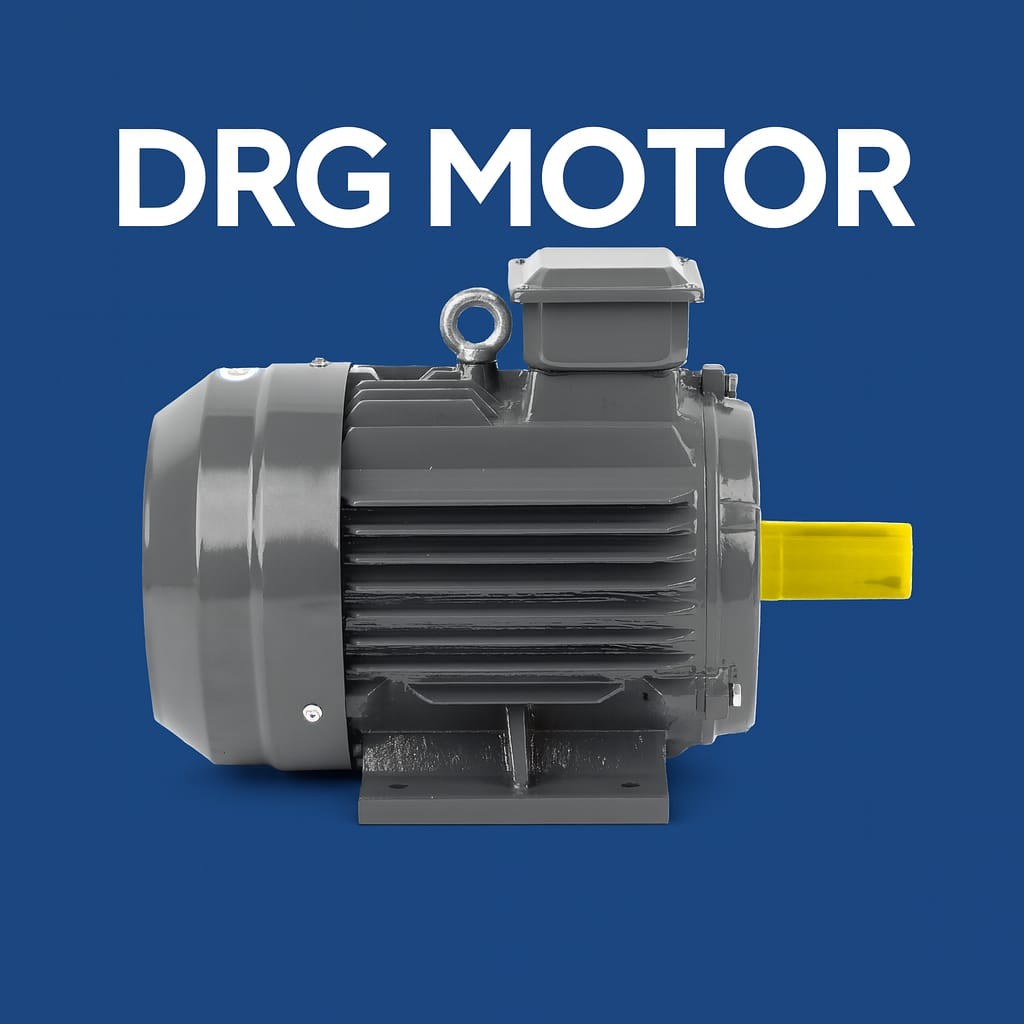

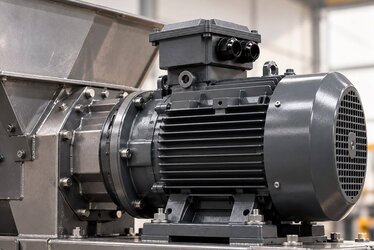
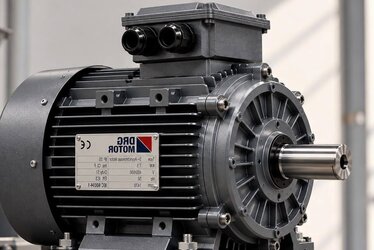
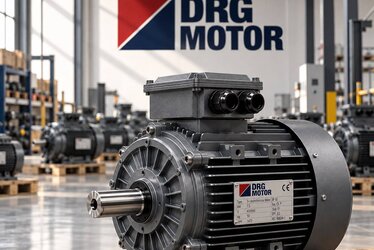
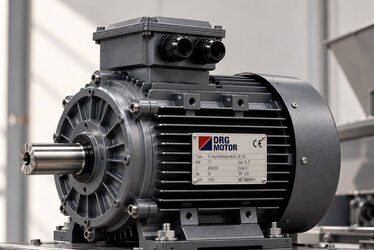
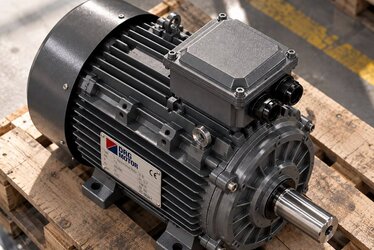
An alternating current (AC) electric motor turns the alternating supply current into a rotating magnetic field and converts that into mechanical motion. Its constant-speed, reliable and low-maintenance operation makes it the first motor type that comes to mind for industrial drives. DRG Motor builds these motors to connect directly to a 400 V / 50 Hz supply.
Synchronous Speed and Slip
In an AC induction motor the rotor turns slightly behind the speed of the rotating field; this difference, called slip, is what lets the motor produce torque. On a 50 Hz supply the synchronous speed is set by pole count: 2 poles 3000 rpm, 4 poles 1500 rpm, 6 poles 1000 rpm. As load rises, slip increases and the motor draws more current.
Single-Phase Versus Three-Phase
Single-phase AC motors are used in small household and workshop applications and need an auxiliary winding or capacitor to start. Three-phase motors start on their own, run more efficiently at higher power and form the backbone of industry. The DRG range is built mainly around three-phase models.
DRG Motor AC Solutions
With IP55 protection, Class F insulation, an aluminium or cast iron frame and a 0.55-355 kW power span, DRG AC motors suit pump, fan, compressor and conveyor drives. IE3 and IE4 efficiency options make it possible to optimise energy use to the operating profile.
The Maintenance and Life Advantage of AC Motors
With no brushes or commutator, an AC induction motor has few wearing parts; regular lubrication and cleaning are enough in most applications. With correct installation and a suitable protection rating, these motors run for years with low maintenance.