 English
 Le français
 Türkçe

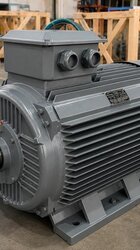
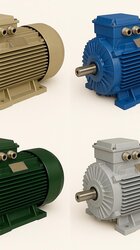
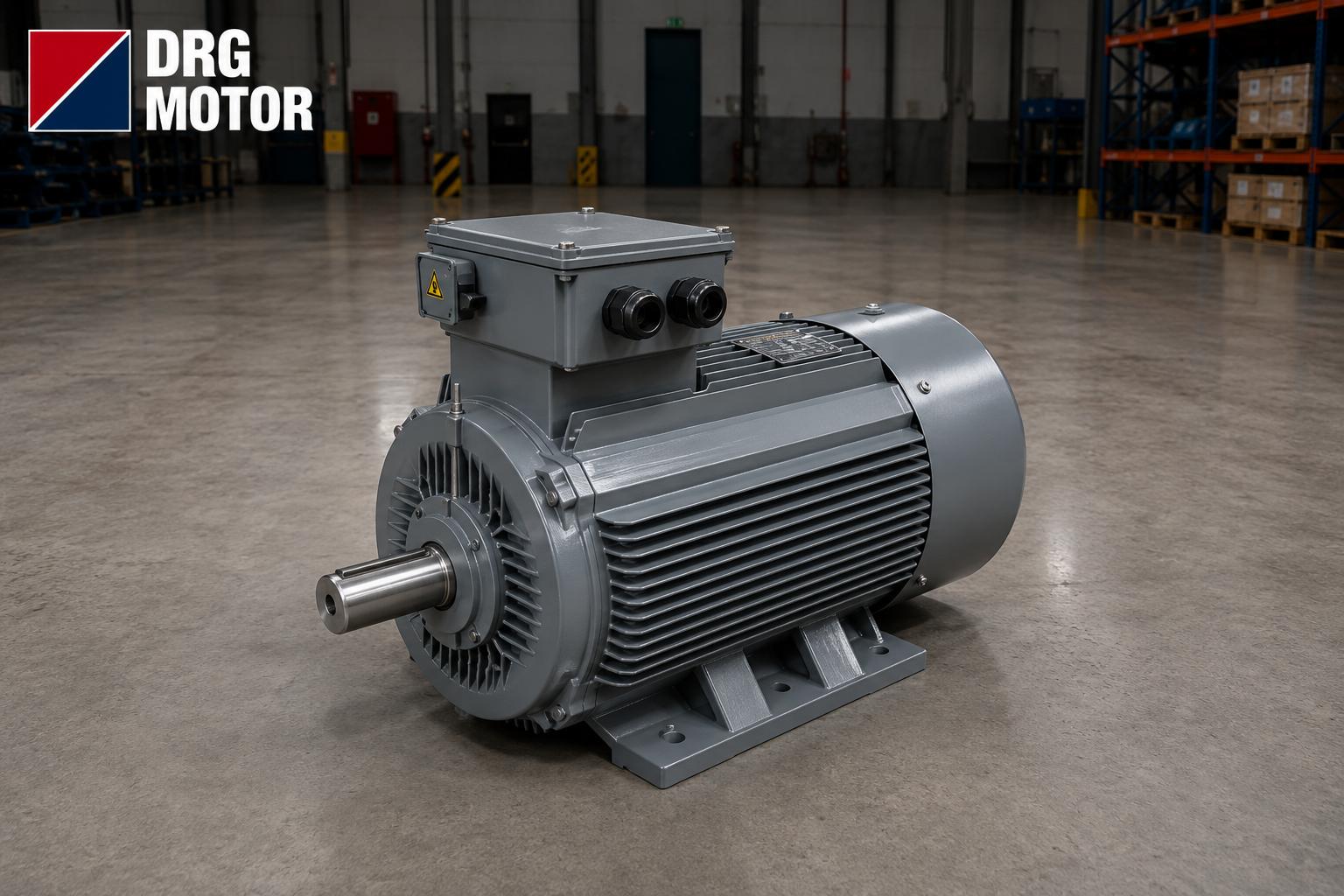

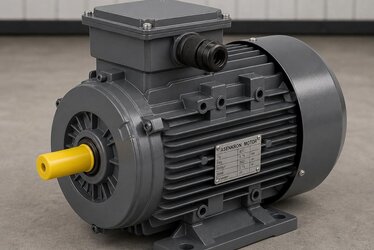
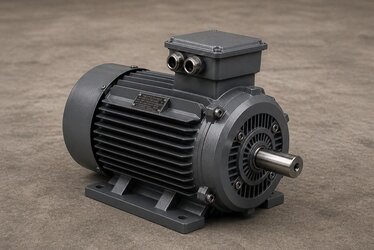
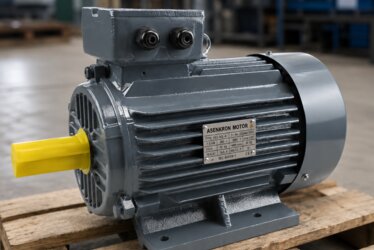
The fine dust hanging beside a cement mill, the condensation in a wastewater pumping station, or the abrasive grit of a mining site - in every one of these environments the service life of a motor depends on how correctly the frame material and the protection class are engineered together. Simply quoting a high IP figure or choosing only a thick frame is not enough on its own. A large share of field failures comes from mismatches where the frame material and the protection class fail to support each other. At DRG Motor we supply heavy-duty facilities with cast iron framed three-phase motors rated IP55 and above according to the site's real load, and we finalize the right combination at the quotation stage. That way the motor is selected for the plant's actual exposure rather than for a catalogue line.
How dust and moisture wear a motor down
In a dusty environment the risk is twofold: first, fine particles pack between the cooling fins and inside the fan cowl, choking heat rejection; second, conductive or hygroscopic dust seeps into the bearings and winding slots. Moisture, in turn, means corrosion, falling insulation resistance and emulsification of the bearing grease. When the two combine - a scenario common in cement, wastewater and food plants - a mud-like layer forms that both raises the thermal load and stresses the seals and lip rings.
This wear usually advances slowly and quietly. First efficiency drops a few points and goes unnoticed; then the winding temperature rises, and insulation life halves with every ten-degree increase. Because a damp dust layer enlarges surface leakage currents, insulation resistance is pulled down silently until one day the motor trips on thermal overload with no visible cause. The correct answer is to account simultaneously for the IP rating that closes the outer shell and the cast iron mass that carries the heat away, because if one is lacking the other cannot protect on its own.
The type of dust also changes the risk profile. Cement and calcium dust, when combined with moisture, set almost like concrete and clog the gaps between fins; conductive metallic dust creates a short-circuit risk in the terminal box. Organic dusts (flour, sugar, feed) accelerate fungus and corrosion together with moisture. For that reason the same IP55 motor needs different additional measures in a cement plant and in a flour mill. A selection made without knowing the chemical character of the dust is correct on paper but incomplete in the field.
Why a cast iron frame stands out in these conditions
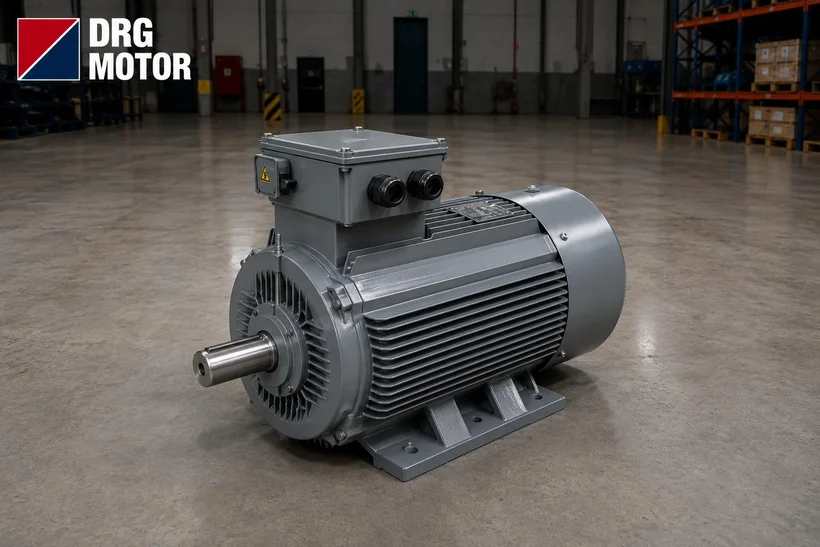
A grey cast iron frame offers a clear advantage over aluminium and sheet-steel housings in mechanical fatigue, impact and chemical attack. The thick wall delays any surface corrosion point from reaching the windings; the high mass preserves dimensional stability through daily temperature swings and keeps gasket surfaces true. That, in turn, sustains the sealing of gasketed joints over the long term.
In crusher and mill drives running under abrasive dust, this durability of the cast shell is exactly what turns the promise of the protection class into reality on site. An aluminium frame may carry the same IP figure in the laboratory; yet under constant impact and vibration the gasket seats open by microns and protection is lost step by step. The rigidity of the cast iron frame is decisive here: because the shell resists deformation, the sealing elements hold their original position.
The cast iron frame also acts as a buffer against external impact. In mining and aggregate sites, falling material, knocks and forklift contact are inevitable; a thin sheet shell is crushed by such impacts and the gasket line is disturbed, while a thick cast shell takes nothing beyond a surface mark. When corrosion begins, the thick wall also leaves years of margin before it reaches the windings, which is valuable time for early intervention during planned maintenance. If you want the broader picture, our cast iron three-phase electric motor hub covers material and application selection holistically.
Reading the IP protection class correctly
In an IP code the first digit defines solid-object and dust ingress, the second defines water and moisture ingress. In IP55, the most common industrial rating, the first 5 is not a total dust barrier but protection against dust ingress to a degree that does not affect operation; the second 5 means resistance to low-pressure water jets from any direction. Where conductive or very fine dust is intense, IP65 (fully dust-tight) is preferred, and on wash-down lines IP66.
The point is to match the site's real exposure without overstating or understating it. An excessive class wastes cost and sometimes complicates cooling, while an inadequate class invites early failure. Beyond the number, the details matter: the rating of the cable gland, the terminal box gasket, the type of shaft lip seal and the seating quality of the fan cowl. If one of these points is weak, protection is breached there no matter how good the rest of the frame is. At the quotation stage we discuss these details one by one and reinforce the motor's weakest link against the site's harshest condition.
Protection combinations by sector
- Cement and aggregate: Highly abrasive dust; cast iron frame and a minimum of IP55, with IP65 and reinforced lip seals at critical points.
- Mining and quarry: Impact, vibration and dust together; priority on a heavy-duty cast shell and a sealed fan cowl.
- Food and beverage: Intensive wash-down and condensation; an IP66 orientation, stainless fasteners and a suitable paint system.
- Wastewater and treatment: Constant moisture, corrosive gas and erosion; a corrosion-resistant coating with IP55/IP65 and managed drain plugs.
- Textile and paper: Fibre dust and high relative humidity; a smooth-surfaced cast shell that resists dust build-up plus periodic cleaning.
None of these pairings ends with the IP figure alone; frame material, seal selection and surface protection must be considered within the same package. Even within one plant a belt drive and a filter-fan motor can face different conditions; that is why a line-by-line assessment always gives a sounder result than a single uniform choice.
Another dimension that clarifies the sector choice is the duty cycle. A continuously running (S1) conveyor motor and a frequently starting and stopping (S4) crusher motor experience different thermal and mechanical loads under the same dust. Frequent starting causes both thermal stress and a condensation-drying cycle, which directly affects the protection and insulation choice. When you share your site's duty cycle, the number of daily stops and the ambient temperature, we can size the cast iron frame and IP class to this real profile.
Balancing temperature, protection and heat rejection
A sealed, dust-resistant motor can become a prisoner of its own heat if it is poorly designed. Keeping cooling performance while raising the protection class is possible thanks to the large surface area of the cast iron frame and the smart placement of cast fins. When dust accumulates between the fins, efficiency drops quickly; that is why both the frame design and a periodic cleaning routine must be planned.
The balance between protection and cooling must be evaluated together with the insulation class (usually F) and the temperature rise class (usually B). If the ambient temperature is high or a dust layer is inevitable, selecting one power step up (derating) is the most practical way to prevent silent failures. To see the thermal behaviour and cooling strategies in detail, our study on heat dissipation and cooling in cast iron frames explains the protection-temperature balance with field examples.
The link between vibration, sealing and long life
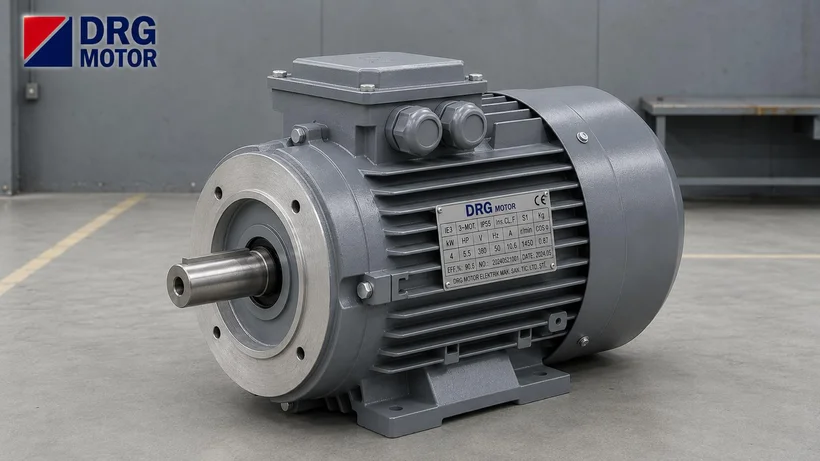
Whether seals keep doing their job in a dusty, humid environment also depends on the motor's vibration level. Excessive vibration fatigues seal faces and lip rings, weakening even the most robust IP protection over time. Because the high mass of cast iron damps mechanical vibration, the sealing elements are stressed less and the protection class is held in the field for far longer.
Vibration is also decisive for bearing life; as a bearing develops play, the shaft lip seal no longer seats fully and the first dust ingress begins exactly there. In other words vibration affects the protection class in an indirect but powerful way. We expand on the effect of this mechanical stability on protection life in our piece on vibration damping and quiet operation; the difference is especially clear in crusher and mill drives.
Corrosion protection and surface systems
The advantage of the cast iron frame reaches its full value together with the corrosion protection system applied to it. In wastewater environments with corrosive gas and constant moisture, C4/C5 class paint systems, stainless fasteners and correct drain-plug management turn the protection promised by the IP class into reality.
A high IP figure alone is misleading if the surface protection is weak, because corrosion is a process that advances from the outside inward and the paint system is the first line of defence. The correct positioning of the drain plugs is also critical: condensation forming inside the motor must be able to drain from the lowest plug, otherwise water collects at the bottom of the windings. That is why our quotations also ask for the corrosion category of the environment, sizing the frame-protection-surface triangle as a whole.
Winding insulation and moisture management
While the protection class holds the threat outside, the winding insulation is the last line of defence inside. The most common problem in humid environments is condensation forming on the first start after a long stop; moisture condensing on cooled windings can pull insulation resistance down to a dangerous level. For that reason, in humid sites anti-condensation heater solutions or keeping the motor dry by running it for short periods are recommended.
Standard class F insulation is sufficient for most applications; however, where high humidity and dust occur together, additional vacuum pressure impregnation and tropicalized insulation are preferred. These choices combine with the mechanical protection provided by the cast iron frame to determine the motor's total durability. This is exactly why we ask about the site's relative humidity and stop-start profile at the quotation stage.
Bearings, grease and shaft-exit protection
In a dusty, humid environment the most frequently breached protection point is the shaft exit; the seal between the rotating shaft and the stationary frame constantly battles both dust and wash-down water. Here V-rings, labyrinth seals or reinforced lip-seal solutions are selected according to the severity of the site. The bearing grease must also be of a water-repellent type that withstands these conditions; otherwise the grease emulsifies and the bearing soon begins to run noisily.
The rigid bearing housings of the cast iron frame ensure the bearing seats fully and the shaft stays centred. That extends seal life and therefore keeps the protection class alive in the field. On large powers and heavy drives, maintenance with re-greasing points and drainage channels helps sustain day-one protection.
Mounting, site placement and drainage details
The same motor shows a different life depending on how it is placed on site. Pointing the terminal box downward prevents water and dust from filling the box; positioning the drain plugs at the lowest point stops condensation from collecting. Connecting the cable glands at the correct diameter and tightness is the most neglected yet most critical point of the IP class.
The mounting type (B3 foot, B5 flange, B14 face) settles the mechanical connection, and it also decides water drainage and dust accumulation. In a vertical mount with the fan on top, an additional rain canopy may be recommended. These small details decide whether the protection class actually works in the field; we share mounting recommendations along with the quotation.
Commissioning and periodic maintenance
Even a correctly selected motor should not be started at commissioning without measuring insulation resistance and checking the connections. Measuring the winding resistance with a megger before the first start is important, especially after the motor has sat in storage humidity. In periodic maintenance the fan cowl and the gaps between fins should be cleaned, the drain plugs opened, and the condition of the gaskets and seals observed.
These simple routines keep the protection class at its day-one level. Most early field failures stem not from the motor's weakness but from these small, neglected maintenance steps; the right frame and protection choice, in turn, makes those routines infrequent and easy.
Product family by application
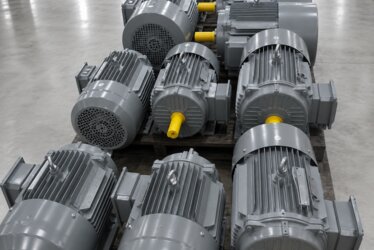
For general processes, three-phase asynchronous motors are the most common solution; with a cast shell and a suitable IP class they adapt to most heavy-duty conditions. On crushing and screening lines where abrasive dust and impact are intense, the stone crushing plant motors range stands out with its heavy-duty design. For standard factory and line drives, general-purpose industrial motors offer an economical and quickly sourced alternative.
Whichever family is chosen, the kW power, the number of poles and the required protection class are determined by the site data. With models available quickly from stock, it is usually possible to close the project's delivery schedule without slipping.
Supply, stock and technical support
As a wholesale supplier rather than a manufacturer, our strength is offering a wide range of power, speed and protection classes with the advantage of stock and fast delivery. A motor's price depends on factors such as power (kW), poles and speed, protection class (IP55/65/66), mounting type (B3/B5/B14), frame size and any requested additional corrosion protection. For that reason, instead of a single list price we provide a clear quotation based on your site's load.
The cost of a wrongly chosen protection class returns as unplanned downtime that can far exceed the initial investment. A single unexpected day of downtime on a line often costs many times the price of the right motor. Investing in the correct combination at the first selection is therefore the most economical decision.
Technical support is also an inseparable part of supply. When you share the existing motor's nameplate data, the connection dimensions (frame size, shaft diameter, mounting type) and the site conditions, we recommend a model that is compatible with your equipment and properly protected. Finding a fast equivalent in case of failure shortens the line's downtime. In this way supply becomes not just a purchase but a technical partnership that looks after the continuity of your site.
Let us define the right combination together
The type of dust, the level of moisture and corrosion, whether wash-down is involved and the mechanical load - all of these decide the correct match between frame material and IP class. Share your site data and we will size the cast iron frame and protection class together, then present our quotation with a suitable stock model and lead time. Working with a durable, properly protected cast iron three-phase motor supplier extends maintenance intervals and turns line continuity in favour of your daily production. Reach us with your measurement data and we will quickly clarify the right frame-protection combination together with a clear quotation and delivery time.
In short, a durable solution in dusty and humid environments rests on two pillars: a cast iron frame that carries heat and resists impact and corrosion, and the right IP protection class selected for the site's real exposure. When these two complete each other, the motor runs according to the plant's conditions rather than a catalogue line; failures become rare, maintenance becomes predictable and the total cost of ownership goes down. Tell us your need with the kW, poles, protection class and mounting details; we will present the most suitable stock model with its alternatives and produce a delivery plan that commissions your project on time.