 English
 Le français
 Türkçe

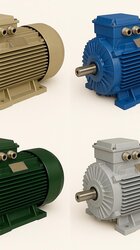
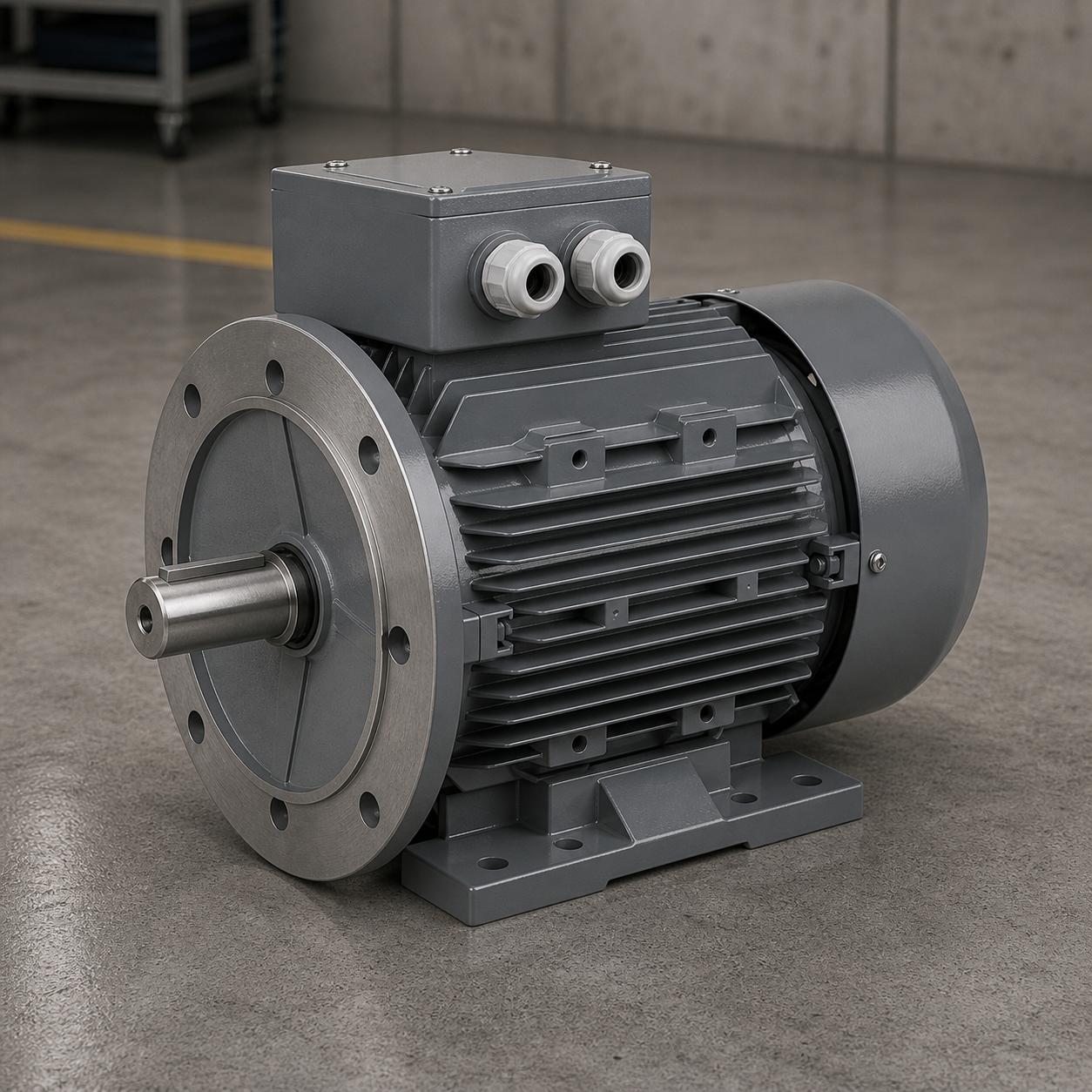

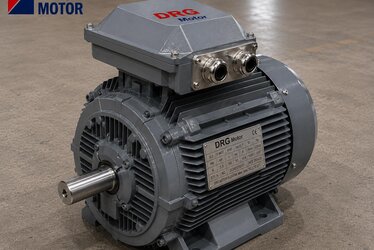
On a heavy-industry line that runs around the clock, the purchase price of a motor is only a small slice of what you will actually pay over its lifetime. The real burden hides in the electricity bill that the continuously turning shaft draws year after year. In a cast iron three-phase motor, the gap between IE3 and IE4 efficiency classes looks like a few small percentage points at first glance; yet on a line running 16 to 24 hours a day, those few points turn into six-figure numbers by year end. At DRG Motor, this article treats the housing material and the efficiency class together, because the cast iron body is the mechanical guarantee that lets an IE3-IE4 motor actually deliver its promised savings in the field. When you choose the right class and the right body together, the payback period drops below two years in most heavy-industry scenarios.
Why efficiency class cannot be considered apart from the body
The IE3 and IE4 labels tell you how little loss a motor incurs when converting electrical energy into mechanical energy at rated load. But that label is measured under laboratory conditions; whether the motor can preserve that efficiency in the field depends entirely on thermal and mechanical stability. As temperature rises, winding resistance increases, copper losses grow, and the efficiency printed on the nameplate melts away. This is exactly where the cast iron body matters: with its high thermal mass and broad finned surface, it keeps the winding cool, making the low loss promised by the IE4 class sustainable throughout operation. Even if a sheet-metal or aluminum-bodied motor reads IE3 on its label, its actual efficiency can fall below its class once it heats up under heavy load.
For this reason, efficiency in cast iron motors is not a static figure but a performance preserved throughout operation. For readers who want to examine the body's thermal behavior in detail, our study on heat dissipation and cooling in cast iron motors explains the relationship between fin geometry and winding temperature with field data.
A purchase decision that ignores this link between efficiency class and body can look right on paper and turn out wrong in the field. Two motors may carry the same label; but if one stays cool under heavy load while the other heats up and loses its efficiency, a clear gap forms between them by the time the bill arrives. That is why the purchase decision should be evaluated not by the label alone but together with the ambient temperature in which the motor will run, its load profile, and its daily operating time. The cast iron body is the option with the highest capacity to preserve efficiency under all three of these demanding conditions.
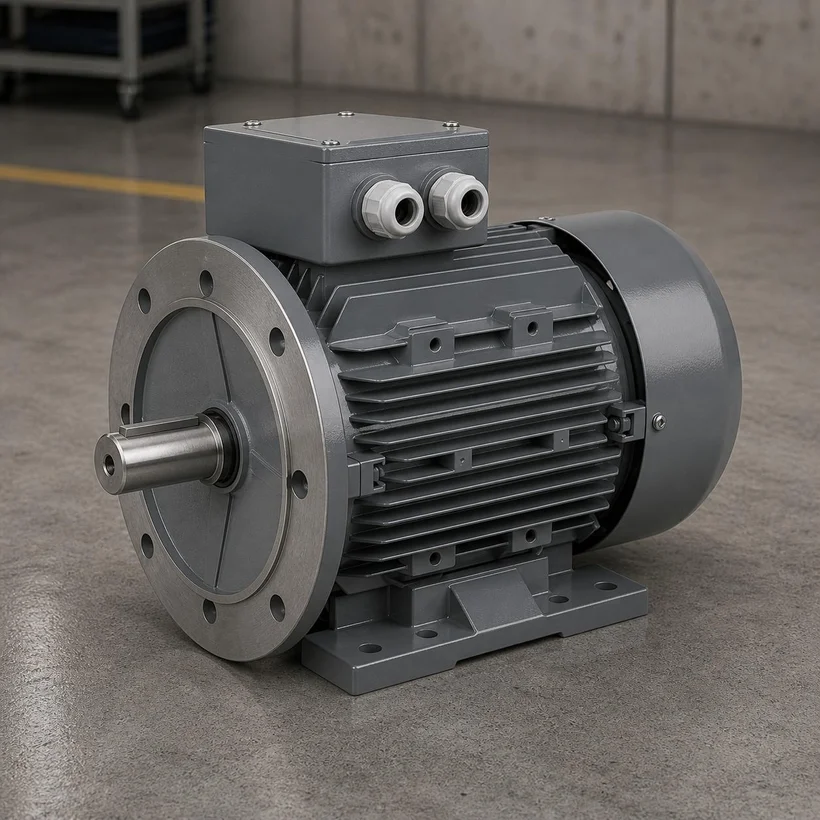
How big the real IE3 to IE4 difference is in the field
The gap between efficiency classes varies with the power range. At small powers (1.1-7.5 kW) the move from IE3 to IE4 cuts losses by roughly a fifth, while at medium and large powers (30-200 kW) the absolute saving is far more pronounced because the magnitude of the losses in kilowatts increases. On a continuously running line, what matters is not the percentage but the annual kilowatt-hour value of the losses. On a 90 kW motor, even a half-to-one point efficiency difference between IE3 and IE4 means thousands of kilowatt-hours per year.
- Low power (≤7.5 kW): Large percentage difference, small absolute saving; medium-term payback.
- Medium power (11-45 kW): Both percentage and absolute saving meaningful; most B2B purchases are optimal in this band.
- High power (55 kW and above): Percentage gap narrows but absolute saving is highest; fastest payback under continuous load.
Framing total cost of ownership correctly
A motor's total cost of ownership (TCO) consists of three main items: purchase, energy, and maintenance. In continuously running heavy-industry motors, the energy item typically makes up more than ninety percent of the lifetime cost. This share is so dominant that the entire premium in the purchase price of an IE4 motor is often recovered by the first year's energy savings. Buying a "cheap motor," therefore, is an expensive decision spread over double-digit years.
When setting up the calculation, you should focus on four variables: the motor's rated power, annual running hours, average load ratio, and the unit electricity tariff. These four inputs turn the choice of body and class directly into an economic decision. During the DRG Motor quotation process we clarify these four variables together with you and recommend the class-body combination according to your operating profile; instead of a net price, we produce a cost-benefit table specific to your operation.
Load profile: how hard the motor is actually pushed
Efficiency is highest when the motor runs close to its rated load. Most lines, however, run the motor not at full load but in the seventy-to-eighty percent band. Because IE4 motors are designed to keep the efficiency curve flatter at partial load, they retain their advantage over IE3 in real-world load profiles. If your line runs with frequently changing loads, the partial-load efficiency of a cast iron IE4 motor influences your average energy cost far more than the single label point.
In applications requiring heavy starting torque, the importance of the body grows further. For instance, the stone crushing plant motors used on aggregate and mining lines run with sudden load shocks and continuous high torque; here the cast iron body absorbs both heat and vibration to preserve efficiency. A light-bodied motor heats up under the same conditions, loses efficiency, and increases maintenance frequency.
The link between winding temperature and efficiency loss
The resistance of the copper winding increases linearly with temperature. When the winding heats up by 40 degrees Celsius, resistance rises visibly and copper losses grow. This means a motor labeled IE4 can, due to poor cooling, actually behave like an IE3. The value of the cast iron body is measured precisely here: high thermal conductivity that rapidly carries heat from the winding to the outer surface keeps the winding temperature low and holds efficiency close to the nameplate value.
Moreover, low winding temperature extends not only efficiency but insulation life. Insulation life roughly halves with every ten-degree rise in operating temperature. In other words, a cool-running cast iron motor both consumes less electricity and, years later, still runs close to its first-day efficiency. This double gain is the most decisive yet most often overlooked item in the TCO calculation.
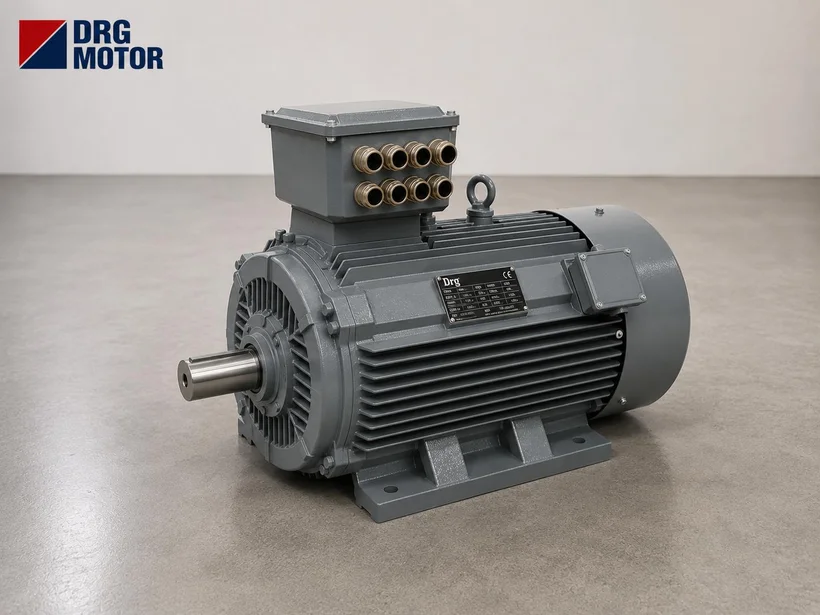
The levers that determine payback time
How quickly you recover the premium of an IE4 motor depends on four levers. Considering them together, you see why payback is six months on some lines and three years on others:
- Running hours: The more hours, the shorter the payback. On a three-shift line the IE4 premium melts fastest.
- Electricity tariff: The higher the tariff climbs, the greater the monetary worth of each efficiency point the cast iron body sustains; in other words, the return of the class-body pairing compounds under expensive energy.
- Power band: At high power the absolute saving grows and the premium returns faster.
- Load ratio: The efficiency advantage shows most clearly in motors running close to rated load.
Among these levers the strongest is running hours. On a motor turning more than 8000 hours a year, it is common for the premium of the cast iron IE4 option to be recovered within a single operating year. If you share your line's actual hour and load data, we produce a payback period specific to you, on a kilowatt-hour basis, together with our quote.
The effect of body material on maintenance cost
The third pillar of TCO is maintenance, and here the body material quietly makes a difference. The cast iron body keeps the bearing seats rigid, reducing alignment drift and the early bearing wear that follows. Its vibration-absorbing mass both extends bearing life and lowers the mechanical fatigue borne by the winding. Our content on vibration damping and quiet operation in cast iron motors, where we examine the effect of vibration on efficiency and lifespan in depth, shows why this mechanical stability lowers long-term cost.
Less vibration means fewer failures and less unplanned downtime. On a continuously running line, the cost of an unplanned stop is often many times that of the motor itself. The cast iron body is therefore an investment that lowers not only energy but downtime cost.
Correct power selection: a bigger motor is not always better
A common mistake is to choose an oversized motor "just in case." An oversized motor constantly runs below the peak of its efficiency curve, in the low-load region, and both efficiency and power factor drop. As a result, even if you bought IE4, you waste the saving by running the motor in the wrong band. The correct approach is to measure your load profile realistically and seat the motor in its rated efficiency region.
If you are looking for a flexible power band in general industrial applications, our general-purpose industrial motors range, with its different kW and speed options, helps you find the configuration that fits your line exactly. Correct sizing often brings as much saving as moving up to the next efficiency class.
The invisible gains of moving to IE4
While the bill-facing side of efficiency gets the attention, several gains born from an IE4 cast iron motor carrying its class and its body together often go unnoticed. The cast mass that keeps the winding cool also holds the motor's outer shell at a lower temperature; this reduces the heat it radiates to its surroundings and indirectly eases the load on plant ventilation. A more stable efficiency curve makes harmonic losses more predictable when working with a frequency inverter. And long insulation life helps the motor retain value even on the second-hand market.
At the foundation of these motors lies proven asynchronous technology. Our three-phase asynchronous motors category, with its IE3 and IE4 cast iron options, is the most widely preferred solution for continuously running lines; its simplicity, durability, and low maintenance requirement make it the backbone of heavy industry.
How the number of shifts changes payback
The same motor sits in a completely different economic equation depending on the number of shifts it runs. In a single-shift workshop the motor turns eight hours a day and the energy item has a smaller share in total cost; here recovering the IE4 premium can take longer. On two shifts this period shortens markedly. On three-shift, uninterrupted heavy-industry lines the premium often melts within a single operating year. So the answer to "is IE4 always sensible" depends directly on the line's daily operating time.
This shows that the purchase decision should be tied not to a standard rule but to the operating profile. A line that runs seasonally and stops during certain months of the year, and a line that turns uninterrupted all year, get different returns from the same motor. The DRG Motor quote takes your number of shifts and annual effective running time as inputs; this way the payback estimate rests not on a general assumption but on your actual operation.
The hidden cost of stock, delivery, and standardization
A frequently overlooked dimension of lifetime cost is the motor's availability. When a motor fails on a continuously running line, how quickly the spare arrives directly determines the production loss. Cast iron motors with standard frame sizes and common mounting types both make finding a spare easier and increase interchangeability between different lines. Moving the whole fleet to a standard cast iron IE4 family reduces inventory burden and lets a single spare motor rescue multiple lines in an emergency.
As a supplier, DRG Motor offers cast iron three-phase motors in common frame and flange standards, letting operations benefit from this standardization advantage. A well-planned stock strategy minimizes the invisible cost of unplanned downtime; this is a gain as important as energy and maintenance in the TCO table, yet one rarely taken into account.
The silent effect of power factor on the bill
Although it is discussed less than efficiency class, the power factor is an item that directly affects the heavy-industry bill. A low power factor increases the reactive power the motor draws from the grid, and in many industrial tariffs this reactive consumption is separately penalized. Thanks to their better magnetic design, IE4-class cast iron motors keep the power factor high around rated load and reduce the risk of reactive penalties. Moreover, when you size the motor at the correct power, you avoid the problem of a power factor that drops at low load.
This is an item often left out of the TCO calculation but one that makes a difference at year end. Reactive power penalties accumulate silently in a poorly sized or low-class motor fleet. A line built with cast iron IE4 motors draws a cleaner profile on both the active and reactive sides, improving two items of the bill at once.
The annual accumulation of efficiency loss in continuous operation
The energy difference of a single day may sound trivial; but in continuous operation the loss accumulates hour by hour. If a motor turns twenty hours a day, it runs more than seven thousand hours over a year. In each of these hours, the small efficiency difference between IE3 and IE4 draws extra current from the grid without interruption. This accumulation shows up not in the month-end bill but across the entire year. That is why savings should be evaluated not on a daily basis but with an annual and lifetime perspective. Over a ten-year operating life, the cumulative energy saving of a cast iron IE4 motor often reaches a figure several times larger than the motor itself.
What makes this accumulation meaningful is the motor's ability to preserve its efficiency throughout its life. Even if a sheet-metal motor runs close to its label value in the first year, it slowly loses efficiency over the years due to thermal fatigue and insulation ageing. The cast iron body delays this ageing; because it keeps the winding cool, the efficiency curve stays flatter for years. Therefore, in the cumulative saving calculation, the cast iron body improves not only the starting efficiency but how long that efficiency is preserved.
Efficiency when running together with a frequency inverter
Many heavy-industry lines run the motor not at fixed speed but at variable speed through a frequency inverter. The inverter applies a voltage to the motor that deviates from a sine wave, and this deviation creates harmonic losses. Because IE4-class motors start with a lower base loss against these harmonic losses, they keep the total loss at a lower level in inverter applications. The cast iron body, in turn, dissipates the extra heat created by the harmonics, balancing the additional thermal load that inverter operation imposes on the winding.
In variable-speed applications, the real saving comes from the motor running at the speed the job requires rather than always at full speed. Loads such as pumps and fans draw markedly less power at low speed. Here the flat efficiency curve of the IE4 motor keeps efficiency high over a wide speed range, complementing the saving the inverter provides. When these two gains combine, the cast iron IE4 motor and inverter combination offers the lowest lifetime cost on continuously running variable-load lines.
Settle the supply decision with a quote
Evaluating efficiency class and body material together is one of the highest-return decisions in heavy-industry procurement. The figure on the label is the starting point; the real saving emerges when that efficiency is combined with a body that can preserve it for years. As a reliable supplier of cast iron IE3 and IE4 three-phase motors, DRG Motor recommends the most suitable class-body combination according to your operation's hour, load, and tariff profile.
On our pillar page about the cast iron three-phase electric motor you can find the full technical framework of the product family; for a payback analysis specific to your line and for stock-delivery terms, you can request a quote by contacting our team as your cast iron three-phase motor supplier. Share your line's data, and we will produce a provable cost-benefit table for you on a kilowatt-hour basis.