 English
 Le français
 Türkçe

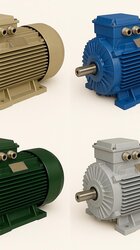
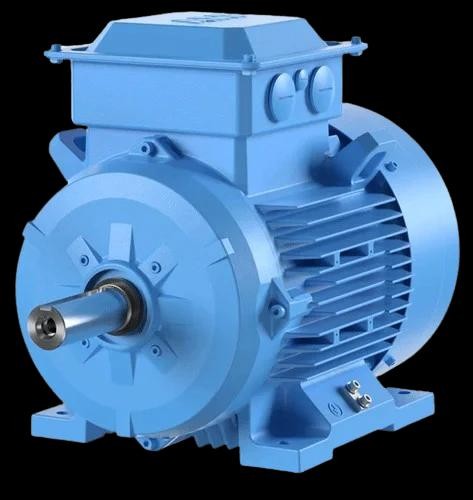

Packaging, the final stage a product passes through from the production line to the consumer, is one of the areas where the speed and precision of modern manufacturing are tested most intensely. Dozens of consecutive operations such as filling, wrapping, labeling, boxing and palletizing process hundreds of products within minutes. At every station of this fast-paced line there are electric motors that provide motion and make synchronization possible. Motor selection in packaging lines brings together multidimensional criteria: not only power, but precise speed control, endurance against frequent start-stop cycles, synchronization capability, and in many sectors a hygiene requirement. At DRG Motor, we examine the special needs of packaging lines and the impact of the right motor selection on efficiency and continuity.
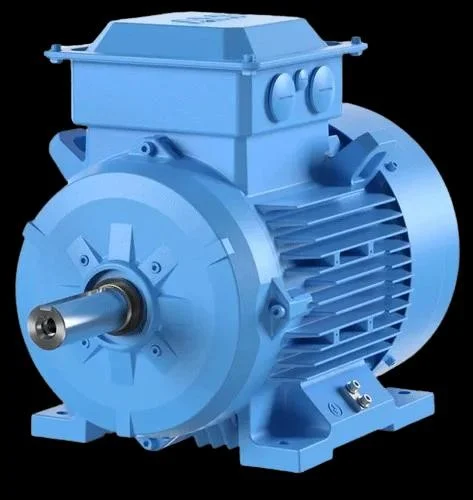
The basic tasks of the motor in a packaging line
A packaging line consists of many subsystems that work independently yet in harmony. The conveyors carrying the product, the pumps performing filling, the wrappers applying film, the units affixing labels and the mechanisms closing boxes are all driven by electric motors. The speed, torque and response time of each motor determine the overall rhythm of the line. Since a delay at one station can slow the entire line, harmony and reliability come to the fore in motor selection.
Conveyor drive and continuous flow
The backbone of a packaging line is its conveyors. Conveyor motors that carry products between stations smoothly and at a constant speed must be suitable for both continuous operation and speed stability under variable load. Our content on conveyor belt electric motor selection explains in detail how to determine the right motor for this fundamental station.
Precision at filling stations
At stations where liquid, powder or granular products are filled into packaging, precision directly affects product quality. Motors driving filling pumps or dosing mechanisms must be able to stop and start quickly and repeatably, delivering the same quantity in every cycle. Here the speed-control capability of the motor is decisive. Overfilling leads to product waste, while underfilling causes legal and customer-satisfaction problems; therefore the consistent behavior of the filling motor in every cycle is one of the cornerstones of the line's quality assurance. A motor supported by a frequency inverter raises both production quality and raw-material efficiency by preserving dosing precision.
Wrapping and labeling: the need for synchronization
Film-wrapping and labeling stations must work in full harmony with the movement of the product. A label affixed in the wrong position or film wound loosely means both a visual defect and a functional error. The motors at these stations must be controlled with millisecond-level precision, synchronized with the main line speed. The rollers in labeling machines turning at the correct peripheral speed ensure the label adheres without stretching or wrinkling. At wrapping stations, keeping the film tension constant is critical so the package looks both durable and neat. This precision can only be achieved with a motor whose speed is fully controllable and which responds correctly to sudden commands.
Why AC induction motors are preferred
The most common solution in packaging lines is the squirrel-cage AC induction motor. Its robust construction, low maintenance requirement and the wide speed-control range it offers when combined with a frequency inverter make this motor ideal for packaging applications. In our content on what an electric motor is, you can find the operating logic of induction motors.
Precise speed control with the frequency inverter
At the heart of modern packaging lines is frequency-inverter motor control. The inverter makes it possible to adjust the motor's speed steplessly according to production need, slow down and speed up the line, and provide synchronization between stations. At the same time, thanks to soft start, it reduces mechanical stress. The topic of energy saving with a frequency inverter shows both the precision and the savings aspect of this control method.
Endurance against frequent start-stop conditions
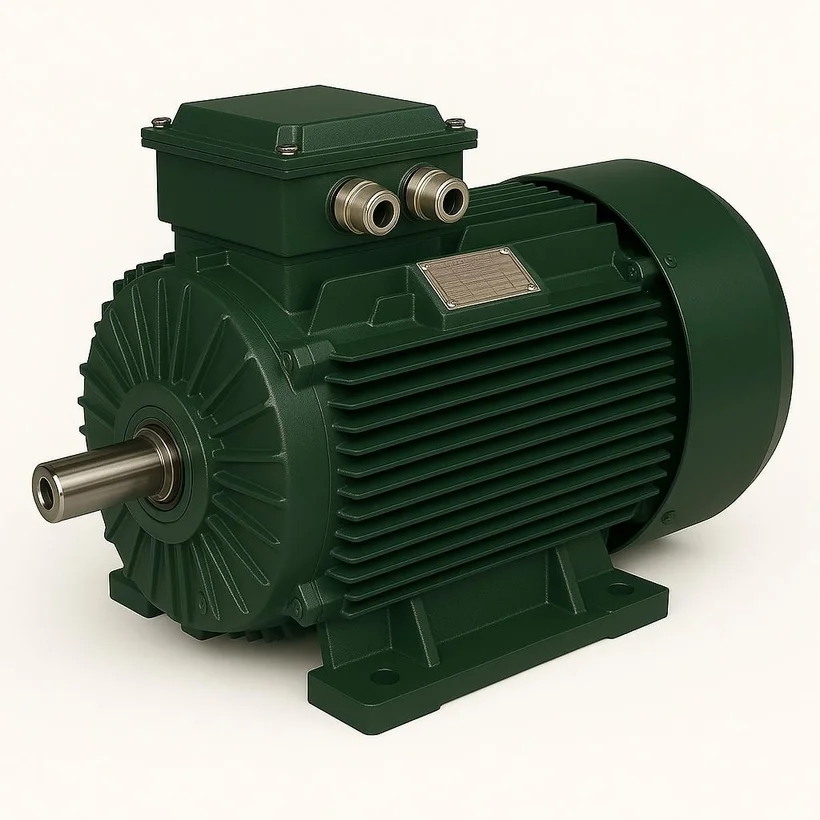
Packaging lines stop and start continuously according to product flow. This frequent start-stop cycle creates heating and mechanical stress on the motor. A motor suited to these conditions must have an insulation class that withstands a high starting frequency and a balanced torque curve. A wrongly selected motor overheats in frequent cycles and fails early. At a filling station performing hundreds of starts per hour, the heat the motor generates in each cycle must not turn into a permanent temperature rise. For this reason, motors suited to high starting frequency are selected to have a wider thermal margin and durable insulation.
The importance of efficiency class: IE3, IE4 and IE5
Packaging lines usually run in shifts for long hours. In this continuous operation, the total energy consumed by dozens of motors is a serious cost item. While IE3 premium efficiency is the baseline expectation, IE4 and IE5 class motors provide significant savings over the long term. DRG's high-efficiency electric motors reduce the total energy cost on lines where many motors operate.
Hygiene and washability in food lines
In food and beverage packaging lines, hygiene is a legal obligation. The motors used on these lines must withstand regular washing, detergent and water spray. A smooth-surfaced housing structure closed to water and dust ingress prevents bacterial buildup and makes cleaning easier. In food-safety audits, the cleanability of the motor and its compliance with hygiene standards are scrutinized; therefore packaging-machine manufacturers consider the appropriate housing structure during the design stage. Wash-resistant motor housings with reduced corners and protrusions both shorten cleaning time and lower corrosion risk by reducing residual moisture.
Selecting the IP protection class
On washable lines and in humid environments, the protection class of the motor is critical. A motor exposed to high-pressure water spray fails quickly if it is in an inadequate protection class. Our content on electric motor IP protection class selection explains how to determine the correct class according to the packaging line's ambient conditions.
Protection against humidity and corrosion
On cold-chain, beverage and wet-food lines, motors are continuously exposed to moisture. To reduce corrosion risk in these environments, additional protective measures such as tropicalization come into play. By reviewing the topic of motor humidity, corrosion and tropicalization, you can see how to extend motor life in humid packaging environments.
Boxing and palletizing stations
At the end of the line, products are boxed and stacked on pallets. The drive motors of palletizing robots and lifting mechanisms require both precise positioning and the ability to stop safely under load. At these stations, the use of a brake motor sometimes comes onto the agenda.
The place of the brake motor in the packaging line
In vertically moving lifters, palletizers and mechanisms that must stop suddenly, a brake motor provides safe and precise positioning. The topic of when a brake electric motor is needed helps you evaluate at which stations the brake feature is required.
Synchronization and line balance
The efficiency of a packaging line is directly related to the synchronization between stations. If one station runs faster or slower than another, product accumulation or gaps occur. Managing the motors with a common control logic ensures the line flows in a balanced and uninterrupted way. Buffer conveyors and intermediate accumulation zones smooth out speed differences between stations and contribute to the line working fluidly as a whole. The precise speed control of the motors in these zones is an important balancing element that prevents the line from bottlenecking.
Compact design and ease of mounting
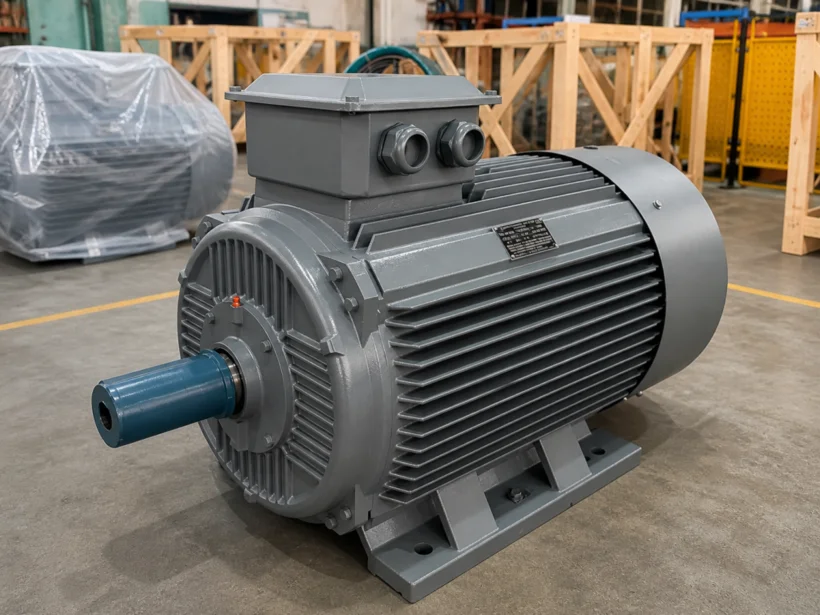
Packaging machines are often placed in a limited space. For this reason, compact-housing motors that integrate easily with a gearbox are preferred. Standard mounting dimensions ease the design and assembly process for machine manufacturers.
Low vibration and delicate products
On lines processing fragile or delicate products, motor-induced vibration can damage the product. A balanced rotor and precise balancing support low-vibration operation and protect product integrity.
Compatibility with industrial infrastructure
Packaging lines are part of a wider industrial production infrastructure. The line's motors must be selected to be compatible with the facility's overall electrical and automation system. The general criteria for industrial electric motors shed light on the correct positioning of packaging-line motors.
Maintenance plan and downtime cost
An unexpected failure of a motor on a packaging line stops the entire line, leading to high production loss. For this reason, regular maintenance and reliable motor selection minimize unplanned downtime. Motors with long maintenance intervals that are easy to service are advantageous in this respect.
Thermal protection and sensor compatibility
Under frequent start-stop conditions, monitoring the motor temperature is important. Thermal sensors placed inside the winding put the system into protection when the motor overheats. This protection is especially valuable at filling and labeling stations with a high cycle frequency.
Energy efficiency and operating cost
On a packaging line, even small efficiency differences across dozens of motors turn into large figures in the annual energy cost. The choice of high-efficiency motors lowers operating cost by reducing both the energy bill and the cooling load.
Flexible production and fast product changeover
Modern packaging lines must be able to switch quickly between different product and packaging sizes. Frequency-inverter motors support this flexibility by allowing speed and motion profiles to be easily readjusted through software.
Noise control and the working environment
In packaging facilities, many machines working together can lead to high noise. The choice of low-noise motors both increases worker comfort and makes it easier to notice mechanical problems early.
Automation and future-ready lines
With the smart manufacturing approach, packaging lines increasingly collect data and monitor their own performance. Motors compatible with sensors that integrate easily with the control system are among the basic building blocks of this automation transformation.
Correct sizing and power selection
Each station's motor must be correctly sized according to the load it will carry and the speed required. An oversized motor runs inefficiently, while an undersized motor is constantly strained. The ideal choice captures the operating point most suited to the station's real load profile. When sizing, take the instantaneous peak load into account together with the line's daily operating time, cycle frequency and ambient temperature. Evaluating these parameters together makes it possible to select a motor that is both efficient and long-lived. A correctly sized motor reduces the line's energy consumption while also lowering the risk of failure.
Rotor quality and long service life
In packaging motors that run continuously and in frequent cycles, the quality of the rotor and winding directly determines service life. Quality copper winding is more resistant to the heating created by frequent starts and limits efficiency loss over many years. A robust rotor structure provides protection against mechanical stress at high cycle frequencies.
Different motor needs in primary and secondary packaging
Primary packaging, where the product is in direct contact, and secondary packaging at the level of the outer box and case, call for different motor characteristics. While precision and hygiene come to the fore in primary packaging, higher torque and durability are required in secondary packaging. The right approach is to evaluate these two parts of the line not by a single standard but according to the real need of each part.
Response time on high-speed lines
On high-speed lines processing hundreds of products per minute, the response time of the motor to commands becomes critical. Short and controlled acceleration and deceleration ramps ensure products are correctly positioned. On these lines, the harmony of motor and drive is one of the most important factors determining the real capacity of the line.
Cold environment and frozen-product lines
Frozen-food packaging lines require motors that operate at low temperature. In a cold environment the behavior of lubrication and insulation changes; a motor not selected for these conditions suffers efficiency loss. A motor design that runs stably across a wide temperature range supports reliability on cold-chain lines.
Multi-motor coordination and line control
The dozens of motors working on a packaging line are coordinated by a central control system. The motors being able to join this coordination easily makes it easier to manage the line as a whole. A compatible motor and drive selection makes multi-station coordination trouble-free.
The advantage of spare parts and standard housings
To minimize production loss, fast access to spare parts is of great importance. Motors with standard housing dimensions offer the possibility of quick replacement in case of failure, shortening downtime. The common spare-part structure of DRG motors provides an advantage to operations in this respect.
Electrical protection and phase safety
In packaging facilities where many motors are fed from the same grid, the risk of phase loss and voltage fluctuation increases. Overcurrent, phase-loss and overload protections ensure each motor operates within safe limits. These protection layers secure both the motor and the continuity of the line.
Lubrication and ease of maintenance
The bearings of frequently running motors require regular lubrication. Motors that are easy to maintain with comfortable access to lubrication points shorten service time and reduce unplanned downtime. On hygienic lines, the lubricant may also need to be food-grade.
Recyclable and sustainable packaging lines
Sustainability goals encourage more production with less energy on packaging lines. High-efficiency motors work in line with these goals by lowering both energy consumption and carbon footprint. The choice of an efficient motor is a concrete step toward sustainable production.
DRG Motor for packaging line solutions
Packaging lines demand from an electric motor precise speed control, endurance against frequent start-stop cycles, synchronization capability and, in most cases, a hygienic housing structure. DRG Motor responds strongly to the needs of these lines with AC induction motors in IE3, IE4 and IE5 efficiency classes, a wide speed-control range compatible with a frequency inverter, suitable IP protection options and the possibility of tropicalization for humid environments. According to your line's station structure, product type and operating tempo, we can determine together the most appropriate motor combination. For motor solutions that will increase efficiency and continuity on your packaging line, you can contact the DRG Motor expert team.