 English
 Le français
 Türkçe

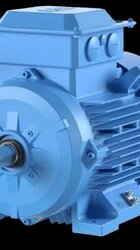
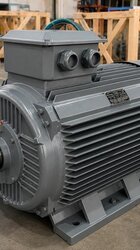
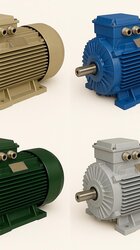
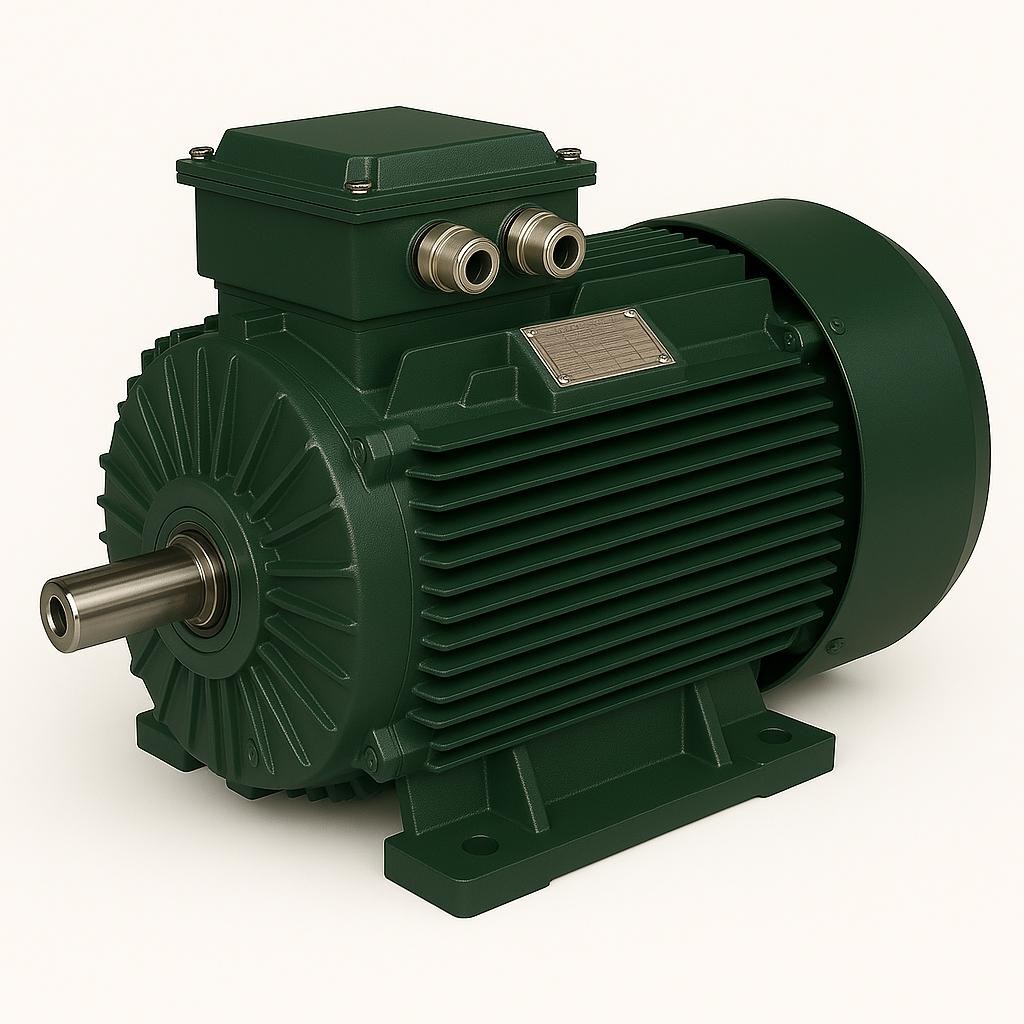

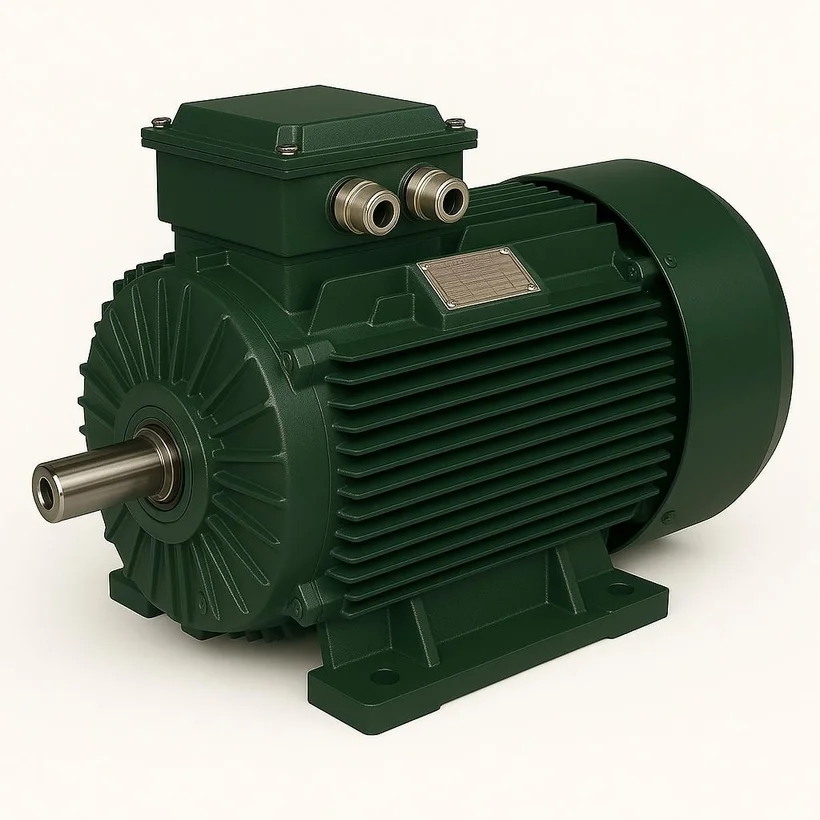
An electric motor produces a certain amount of vibration while running; this is unavoidable. However, the severity of the vibration says a great deal about the motor's health. Low and stable vibration is a sign of healthy operation, while rising vibration is often a harbinger of a fault. What makes vibration meaningful is being able to evaluate it with objective criteria. This is where the ISO 10816 approach comes in; it measures vibration velocity and divides it into good, acceptable, tolerance, and danger zones according to the machine class. This classification clearly shows what the measured value means and when intervention is required. At DRG Motor, this article addresses in detail the vibration severity classes, the measurement method, the acceptance limits, and the relationship with predictive maintenance for AC asynchronous motors.
Why Is Vibration Measured?
Vibration is one of the most powerful signals that reflect the internal condition of a rotating machine to the outside. Imbalance, misalignment, looseness, or bearing damage produces its own distinctive vibration signature. Measuring vibration is a practical and effective way to evaluate a motor's internal condition without disassembling it.
Why Is Vibration Velocity the Main Criterion?
Vibration can be expressed in terms of displacement, velocity, or acceleration. The most commonly used quantity in evaluating overall machine condition is vibration velocity, usually given as mm/s RMS. Velocity is preferred for assessing machine health because it well represents the energy acting on the machine over a broad frequency range.
The Meaning of the RMS Value
RMS expresses the effective value of the vibration signal and is directly related to the energy the vibration carries. While a single peak value can be misleading, the RMS value steadily represents the machine's overall vibration level. For this reason, the evaluation limits are defined in terms of RMS.
The Logic of Machine Classes
Not every machine tolerates the same vibration level in the same way. A small motor and a large machine group carry different risks at the same vibration velocity. For this reason, the ISO 10816 approach divides machines into classes according to characteristics such as size, power, and mounting stiffness. The same vibration value may be acceptable for a small machine but a sign of danger for a large one.
The Difference Between Rigid and Flexible Mounting
Mounting style changes what a vibration reading means. Machines attached to a rigid, solid foundation and machines placed on a flexible base are subject to different limits. While flexible mounting can dampen part of the vibration, rigid mounting reflects the vibration as it is. The limit values take this difference into account.
Vibration Severity Zones: A, B, C, and D
The ISO 10816 approach divides the measured vibration velocity into four zones. Zone A represents a healthy machine newly commissioned, zone B an acceptable condition suitable for unlimited operation, zone C a condition unsatisfactory for continuous operation but tolerable for a limited time, and zone D a dangerous level that can lead to damage.
Vibration Velocity Zone Table
The table below approximately summarizes the vibration velocity zones by machine class. The values are in mm/s RMS and are for general reference.
| Zone | Small Machines (approx.) | Medium Machines (approx.) | Meaning |
|---|---|---|---|
| A (Good) | up to 0.71 mm/s | up to 1.12 mm/s | New/healthy machine |
| B (Acceptable) | up to 1.8 mm/s | up to 2.8 mm/s | Suitable for unlimited operation |
| C (Tolerance) | up to 4.5 mm/s | up to 7.1 mm/s | Tolerated for a limited time |
| D (Danger) | above 4.5 mm/s | above 7.1 mm/s | Risk of damage, intervention required |
The values in the table vary by machine class; the exact limits are determined according to the characteristics of each machine.
Zone A: Good Condition
A vibration value in zone A indicates that the machine is newly commissioned or in very good condition. At this level, vibration does not place a significant load on mechanical components and supports a long life. This is the ideal target zone.
Zone B: Acceptable Condition
Zone B represents an acceptable vibration level at which the machine can run safely for an unlimited time. A machine in this zone is considered healthy; although the vibration has risen slightly, it requires no concern.
Zone C: Condition Requiring Attention
A value in zone C indicates that the machine is not ideal for continuous operation but can be tolerated for a limited time. Maintenance planning should be done for a machine that falls into this zone, and the source of the vibration should be investigated.
Zone D: Dangerous Condition
Vibration in zone D is high enough to damage the machine. Continuing to run at this level can lead to bearing, shaft, or foundation damage. When zone D is reached, intervention is required without losing time.
The Effect of Imbalance on Vibration
Irregularity in the rotor's mass distribution, that is, imbalance, is one of the most common causes of vibration. Imbalance produces a distinct vibration at the same frequency as the rotation speed. Balancing the rotor effectively reduces this vibration and lowers the overall level. Dirt accumulation, corrosion, or blade wear over time can also disturb the rotor's balance and raise vibration; for this reason, imbalance is a phenomenon to be monitored not only at the manufacturing stage but throughout the operating life.
The Effect of Misalignment
Shaft misalignment between the motor and the driven equipment is another major cause of vibration. Misalignment creates additional load on both the bearings and the coupling and produces characteristic vibration signatures. For correct alignment, our article on motor shaft and coupling alignment contains important information.
The Traces of Looseness and Bearing Damage
Mechanical looseness and bearing damage also raise the vibration level. While looseness produces irregular and broadband vibration, bearing damage shows itself at certain high frequencies. An increase in the vibration level enables these problems to be noticed at an early stage.
Making the Measurement Correctly
For the vibration measurement to be meaningful, the sensor must be placed at the correct point, in the correct direction, and with solid contact. Measurements are usually taken on the bearing housings in the horizontal, vertical, and axial directions. An incorrectly positioned sensor can produce values that do not reflect the real condition.
The Role of Frequency Analysis
The overall vibration level gives summary information about the machine's condition; however, frequency analysis is needed to understand the source of the problem. Separating the vibration signal into its frequency components shows which fault appears at which frequency. For the subject, see our article on motor vibration analysis FFT spectrum.
The Relationship Between Noise and Vibration
High vibration often goes hand in hand with high noise. Reducing vibration both protects mechanical health and lowers the noise level of the working environment. On this topic, our content on reducing electric motor noise and vibration is complementary.
Trend Tracking with Continuous Monitoring
A single measurement shows the instantaneous condition, but the real value lies in the trend of vibration over time. A trend chart created with regular measurements reveals a slowly developing fault before it reaches the danger zone. This approach is the foundation of predictive maintenance.
Monitoring with Wireless Sensors
In modern facilities, vibration monitoring has become continuous and automatic with wireless sensors. These sensors provide early warning by regularly measuring vibration values. For the subject, see our article on condition monitoring with a wireless vibration sensor.
The Heart of Predictive Maintenance
Vibration severity classes are one of the most powerful tools of predictive maintenance. Knowing which zone a machine is in allows maintenance to be planned according to condition rather than failure. This approach reduces unplanned downtime and optimizes maintenance costs.
The Effect of Environment and Installation
Vibration values are also affected by the solidity of the foundation on which the machine sits. A weak foundation can amplify the machine's own vibration. For this reason, the goal of low vibration concerns not only the motor but the entire installation. A solid concrete base, a base plate of the correct thickness, and suitable vibration-damping connection elements provide a stability the motor cannot achieve on its own.
An Overview in Industrial Applications
Vibration severity evaluation is the invisible quality assurance of reliable industrial motors. For general industrial motor solutions, see our articles on industrial electric motors, and for fundamental concepts, what is an electric motor.
Reading Temperature and Vibration Together
Vibration and temperature are two complementary indicators that together describe a motor's health. Rising vibration is often associated with increasing friction and therefore heating. Monitoring these two quantities together provides a more complete condition assessment.
Determining the Measurement Frequency
How often the vibration measurement is taken depends on the importance of the machine and its operating conditions. While a motor on a critical production line is continuously monitored, a less critical motor may be measured periodically. The right frequency both avoids unnecessary workload and ensures that a developing fault is not missed.
The First Measurement During Commissioning
The first vibration measurement taken when a motor is installed in the field establishes a baseline reference for that machine. This initial value is the anchor against which future measurements will be compared. A low vibration value during commissioning is a sign of both a good motor and a correct installation.
The Effect of Load Conditions on Vibration
A motor's vibration level can change according to the load conditions under which it operates. The values measured at no load, partial load, and full load may differ. For this reason, when evaluating vibration, the load condition under which the motor was measured should be recorded and comparisons should be made under similar conditions.
The Danger of Resonance
When the natural frequency of the machine or foundation coincides with the motor's operating frequency, resonance occurs and vibration grows unexpectedly. Resonance can carry even a small excitation to dangerous levels. Noticing this condition requires structural corrections in the installation. Stiffening the foundation, adding mass, or shifting the operating speed are common solutions that reduce the effect of resonance and, when correctly diagnosed, provide a lasting improvement.
Vibration in Drive Operation
In motors running at variable speed with a frequency inverter, different vibration levels can be seen at different speeds. Some speeds may be close to resonance and it may be necessary to avoid these speeds. In drive applications, vibration should be evaluated across the operating speed range.
Data Recording and Reporting
Recording regular vibration measurements creates the machine's health history. These records are also valuable for root cause analysis after a fault. Well-kept vibration data bases maintenance decisions on concrete evidence rather than intuition.
Horizontal, Vertical, and Axial Direction
Vibration is measured in three separate directions, and each direction carries different information. While high vibration in the horizontal direction often points to imbalance, high vibration in the axial direction is a strong indicator of misalignment. Evaluating the three directions together shows the source of the problem more precisely.
The Soft Foot Problem
One of the motor's feet not sitting fully on the foundation is an installation error called soft foot. This condition creates stress in the housing, raising vibration and disturbing alignment. During installation, all feet making proper contact is a fundamental condition for low vibration.
Bolt Tightening and Foundation Connection
Loose foundation bolts are one of the most common causes that amplify a machine's vibration. Properly tightened and regularly checked connections allow the vibration to be damped by the foundation. A simple bolt check often eliminates the source of an unexpected increase in vibration.
The Role of Bearing Lubrication
Insufficient or excessive lubrication leads to an increase in vibration in the bearings. The right oil type and the right amount allow the bearing to run quietly and with low vibration. Regularly following the lubrication program is the most practical way to prevent vibration-related bearing failures. Excess lubricant creates resistance and heating in the bearing, while insufficient lubricant leads to metal contact and rapid wear; both conditions show themselves in the vibration spectrum. For this reason, lubrication should be treated as an inseparable complement to vibration monitoring.
The Cost Advantage of Early Warning
Thanks to vibration monitoring, noticing a fault early prevents a problem that could be solved with a small maintenance intervention from turning into major damage. The cost of an unplanned shutdown is often far higher than the cost of the monitoring system. For this reason, vibration monitoring is not an expense but an investment.
A Holistic Maintenance Strategy
Vibration severity classification gives the most powerful result when used not alone but together with temperature, current, and lubrication tracking. The combination of these indicators forms a holistic picture of the machine's health and places maintenance decisions on a solid foundation. For example, if a slow increase in vibration is accompanied by a rise in bearing temperature, these two signs confirm each other and clearly show that a bearing failure is approaching. In cases where a single indicator can mislead, evaluating multiple measurements together increases the reliability of the decision and prevents unnecessary intervention. In this way, the maintenance team acts at the right time and in the right place.
The Importance of Consistency in Evaluation
For vibration values to offer a meaningful comparison, each measurement must be made under the same conditions, from the same points, and with the same method. Different sensor positions or different load conditions can make it appear that there is a change that does not actually exist. A consistent measurement discipline is a precondition for reliable trend tracking and, in the long run, reveals the machine's true health picture.
Listening to What Vibration Tells
A motor's vibration is in fact a silent language it speaks. Reading this language with the ISO 10816 approach allows us to understand when the machine is healthy, when it requires attention, and when it is in danger. A vibration value measured and interpreted correctly offers the chance to intervene before an unplanned failure. At DRG Motor, the importance we place on the balanced and low-vibration operation of our AC asynchronous motors is the foundation of long life and reliability. For a motor selection that is healthy, balanced, and long-lasting in terms of vibration, you can contact the DRG Motor expert team.