 English
 Le français
 Türkçe


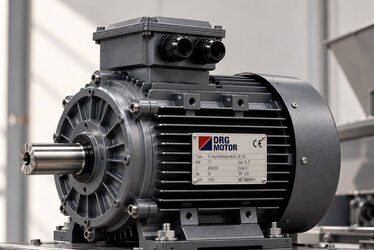
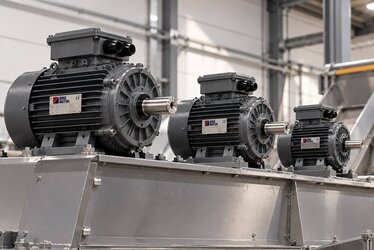
The peak of efficiency in electric motors is represented by the IE5 class. Called "Ultra Premium Efficiency", this class covers motors that run with the lowest losses among current technologies. One of the most important innovations behind IE5 is synchronous reluctance (SynRM) motor technology. In this article we examine in detail what the IE5 class is, how synchronous reluctance technology works, and in which situations these motors provide an advantage.
For a general comparison of all efficiency classes, see the electric motor efficiency classes article; here the focus is entirely on IE5 and synchronous reluctance technology.
What Is IE5 Ultra Premium Efficiency?
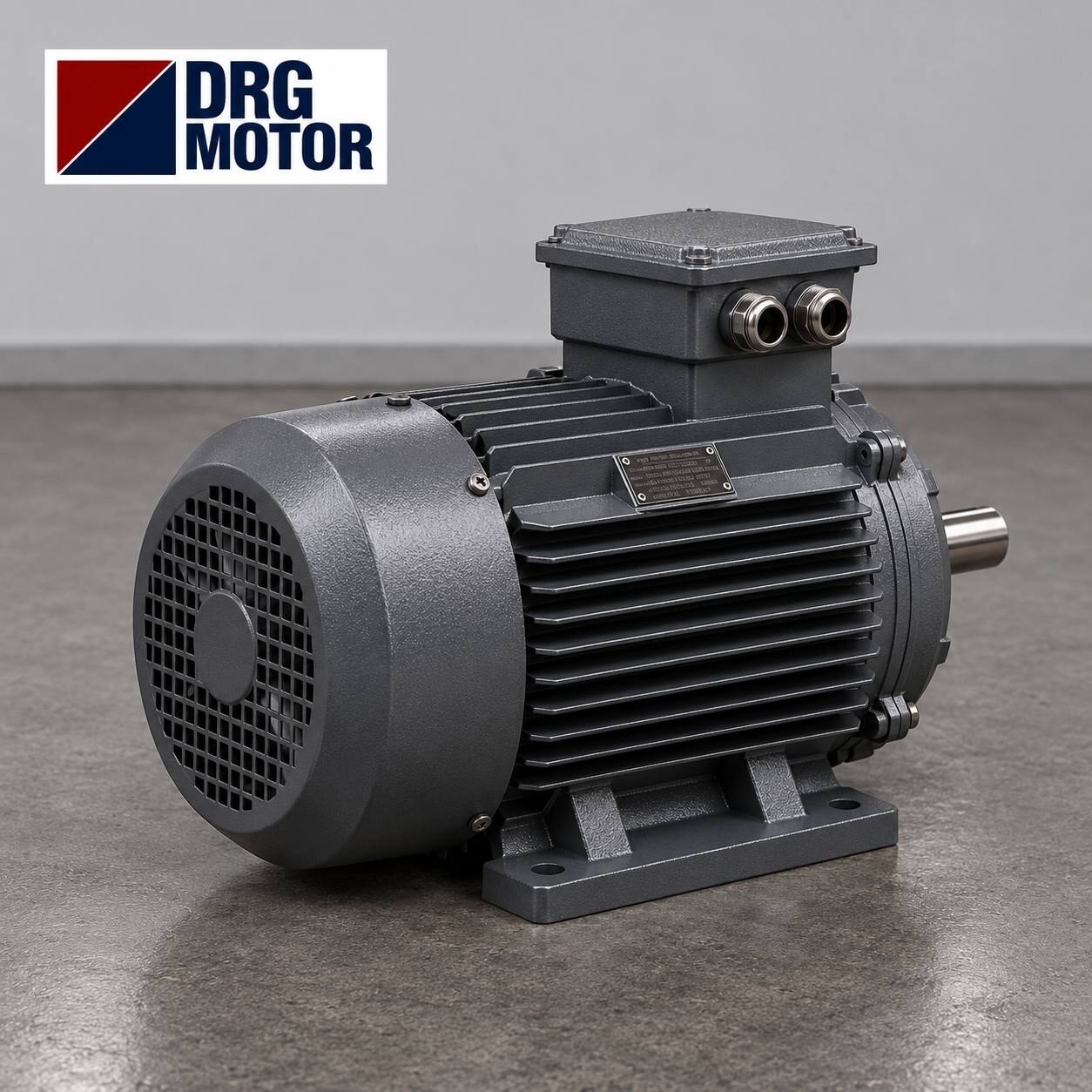
IE5 is the highest efficiency class defined in international standards. Motors in this class, called "Ultra Premium Efficiency", run with even lower losses than IE4. By minimizing magnetic losses and using advanced design techniques, IE5 motors do the same job with the least possible energy.
The IE5 class has been developed especially for applications where energy cost is very high and motors run continuously. Although it is not yet widespread in every power range, it is expected to spread rapidly in the coming years due to rising energy prices and tightening efficiency standards.
What Is a Synchronous Reluctance (SynRM) Motor?
One of the most common ways to reach IE5 efficiency is synchronous reluctance motor technology. In classic asynchronous motors, current is induced in the rotor, and this current produces losses in the rotor. In a synchronous reluctance motor, the rotor is designed with a special geometry that guides the magnetic field so that no current is induced. Because there is almost no loss in the rotor, efficiency rises to the ultra premium level.
In these motors, the rotor turns at synchronous speed by "locking" onto the stator's rotating field. The elimination of rotor losses both increases efficiency and makes the rotor heat up less. This means longer life and more reliable operation.
Why Are Rotor Losses Low in IE5?
One of the most important factors determining a motor's efficiency is rotor losses. In an asynchronous motor, the rotor constantly induces current to catch the rotating field, and this current produces heat in the rotor. In IE5 synchronous reluctance motors, because no current is induced in the rotor, this loss is largely eliminated.
The reduction of rotor losses is the main reason IE5 motors are a step ahead of even IE4. You can find a detailed look at where losses come from and how they are reduced in the motor efficiency calculation article.
The Difference Between IE5 and IE4
IE5 offers lower losses than IE4; it does the same job with slightly less energy. But the difference is not only efficiency. While IE4 motors can usually be produced with a classic asynchronous design, IE5 often requires synchronous reluctance or permanent-magnet technology and almost always runs with a frequency drive.
This means IE5 is a higher-cost but more advanced solution. For the details of the IE4 class, see the IE4 electric motor article. Which one is suitable depends on the application's efficiency and control needs.
Why Does IE5 Require a Frequency Drive?
Synchronous reluctance motors cannot start by themselves; a controlled start is needed for the rotor to lock onto the rotating field. This is why IE5 synchronous reluctance motors almost always run together with a frequency drive (VFD). The drive accelerates the motor in a controlled manner and adjusts its speed throughout operation.
Although this may seem like a disadvantage, it is actually an additional advantage: an IE5 motor running with a drive offers both ultra premium efficiency and precise speed control. Especially in variable-load applications, this combination provides the lowest energy consumption.
IE5 and Speed Control
Because IE5 motors run with a frequency drive, they naturally offer precise control over a wide speed range. In applications such as pumps and fans, adjusting the speed to demand provides large savings, because in these loads power is proportional to the cube of speed. Lowering the speed a little reduces energy consumption much more.
For this reason, IE5 motors are far more advantageous than classic fixed-speed motors in variable-load applications. The combination of ultra premium efficiency and precise control places IE5 at the peak of modern energy-efficiency solutions.
Advantages of IE5 Motors
The most distinctive advantage of IE5 motors is that they offer the highest efficiency level currently available. This means the lowest energy cost in continuously running facilities. Thanks to the absence of rotor losses, the motor heats up less, which means longer life and lower maintenance.
In addition, IE5 motors can usually be designed more compact and lighter; they can deliver the same power from a smaller frame. The precise control they offer together with a drive increases both performance and efficiency. All these features make IE5 ideal for energy-intensive applications.
Where Is an IE5 Motor Used?
IE5 motors provide the most advantage in applications where energy cost is critical and motors run continuously. Large pump stations, ventilation and air-conditioning systems, compressors and continuously running production lines are the places best suited to this class.
In these applications, the extra savings IE5 provides cover the higher initial cost over time. For product options, see our IE5 electric motors page, and for all high-efficiency alternatives, the high efficiency motors section.
IE5 and Cost
IE5 motors have a higher initial cost than IE4, because the advanced rotor design and the frequency drive usually required increase the cost. However, the ultra premium efficiency they provide pays back this difference over time in continuously running applications. The cost decision should be made on the total cost of ownership, not the purchase price.
Most of the money a motor costs over its lifetime comes from energy consumption; this is why in an application that runs a lot, the savings provided by IE5 justify the extra cost. For the payback logic, see the replacing old motors article.
Is IE5 the Right Choice?
IE5 is not necessary for every application. While IE3 or IE4 may be enough for a motor that runs little, IE5 becomes the most profitable option in an application that runs 24/7 with high energy cost. When deciding, the motor's annual running hours, electricity price and need for speed control should be evaluated together.
To determine the right class by running hours, see the efficiency class selection article. A correct analysis clearly reveals whether IE5 makes sense for your application.
IE5 and Environmental Sustainability
IE5 motors, with their lowest energy consumption, also represent the most sustainable option environmentally. Less energy means less fossil fuel and lower carbon emissions. Synchronous reluctance motors are also considered advantageous in terms of supply, because they do not require critical raw materials for magnets.
For businesses aiming to reduce their carbon footprint, IE5 is a solution that serves both economic and environmental goals at the same time. In this respect, IE5 is an important step toward the efficiency standard of the future.
IE5 and the Operating Principle
To understand the efficiency advantage of IE5, it is useful to know the motor's basic operation. The rotating magnetic field produced by the stator induces current in the rotor in a classic motor. In a synchronous reluctance IE5 motor, the rotor locks onto this field and no current is induced; this is where the efficiency difference arises.
You can find a detailed look at how the rotating magnetic field forms and turns the motor in the how an electric motor works article. Knowing the operating principle makes it easier to understand why IE5 is so efficient.
Is IE5 the Standard of the Future?
Efficiency standards rise over time. IE3, once considered top-tier, has become the minimum standard today; IE4 is spreading and IE5 is rapidly coming to the fore. Rising energy prices and tightening regulations support IE5 becoming much more widespread in the future.
For this reason, investing in IE5 today means immediate savings and preparation for the future. Businesses that switch to a high efficiency class early gain both a cost and a regulatory advantage.
Maintenance and Reliability in IE5 Motors
In IE5 synchronous reluctance motors, because no current is induced in the rotor, the rotor barely heats up. This low thermal stress extends the life of the winding insulation and bearings. A motor that heats up less requires less frequent maintenance and the risk of unexpected failure decreases. This is an important advantage for operational continuity.
The simple and durable structure of the rotor also provides mechanical reliability. With basic maintenance steps such as regular bearing checks and cleaning, an IE5 motor runs for many years while maintaining its high efficiency. The low maintenance cost is a gain added to the total return of IE5.
IE5 and Compact Size
Another advantage of IE5 motors is that they can deliver the same power from a smaller and lighter body. Low losses and efficient design cause the motor to produce less heat, which allows a more compact structure. In applications where space is limited, this compactness can be an important reason for preference.
A lighter and smaller motor also means ease of installation and less material use. In this respect, IE5 saves energy, floor space and material at the same time.
Limitations of IE5
Like every technology, IE5 has aspects to consider. Its initial investment cost is high and it almost always requires a frequency drive, which increases the total system cost and installation complexity. In addition, an IE5 option is not yet widespread in every power range and for every type.
For this reason, IE5 may not always be the most sensible choice for low-use or simple, fixed-speed applications. The right decision should be made according to the application's real needs and operating profile; in places that run a lot and need speed control, IE5 is the most profitable option despite its limitations.
IE5 in Pumps, Fans and Compressors
The applications where IE5 motors shine most are continuously running, variable-load pump, fan and compressor systems. Because speed control with a frequency drive is already needed in these loads, IE5's need for a drive ceases to be a disadvantage. The combination of ultra premium efficiency and speed control minimizes the energy bill in these systems.
For example, when fan motors for a ventilation system and pump motors for a water system are chosen in the IE5 class, the savings provided are very clear. In these applications, IE5 is the solution offering the highest return.
Reading the IE5 Nameplate
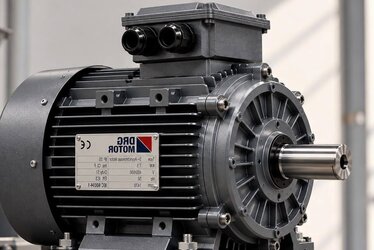
You can tell that a motor is IE5 from the nameplate on it; the efficiency class is clearly written there. The plate also includes the rated power, voltage, current, speed and efficiency values. In IE5 synchronous reluctance motors, it should also be considered that the motor runs with a drive; this is why the nameplate information also affects drive selection.
The efficiency value on the plate shows the motor's real performance at a given load and forms the basis of the right decision. When comparing two motors of the same power, the class and efficiency values on the plate are the most reliable criteria.
IE5 and the Other Efficiency Classes
To position IE5 correctly, all efficiency classes must be evaluated together. IE3 is a sufficient and economical minimum standard in many applications; IE4 requires higher efficiency; IE5 represents the peak. Which one is suitable depends on the application's running time, energy cost and control needs.
You can find all the differences between the classes and the selection logic in the electric motor efficiency classes article, and the details specific to IE4 in the IE4 electric motor article.
Frequently Asked Questions
What does IE5 mean? IE5 stands for the "Ultra Premium Efficiency" class in the international standard; it is the highest motor efficiency level currently available.
What is a synchronous reluctance motor? It is a modern motor type in which no current is induced in the rotor, working with a special geometry to reach ultra premium efficiency, usually running with a frequency drive.
What is the difference between IE5 and IE4? IE5 runs with lower losses; it also usually requires synchronous reluctance technology and a frequency drive.
Why does an IE5 motor need a drive? Synchronous reluctance motors cannot start by themselves; a controlled start with a frequency drive is needed for the rotor to lock onto the rotating field.
Is IE5 necessary for every application? No; IE3/IE4 may be enough for motors that run little, while IE5 is profitable especially in applications running 24/7 with high energy cost.
Is an IE5 motor more expensive? Its initial cost is higher; but in continuously running applications the savings it provides cover this difference over time.
Is IE5 Worth Switching To?
IE5 is the highest level efficiency has reached in electric motors. Thanks to synchronous reluctance technology, these motors almost eliminate rotor losses and, together with a frequency drive, offer both ultra premium efficiency and precise control. Although the initial cost is high, IE5 is the most profitable and most sustainable solution in continuously running applications where energy cost is critical. Rising energy prices and tightening standards are carrying IE5 toward becoming the efficiency standard of the future.