 English
 Le français
 Türkçe


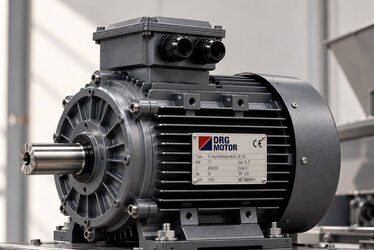
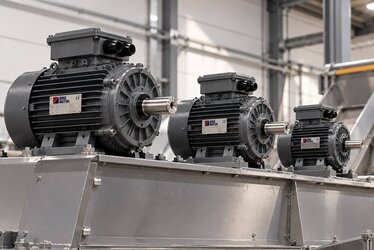
We often hear the sentence "this motor is 92 percent efficient", but what exactly does this number mean and how is it calculated? Motor efficiency is a measurable value showing how much of the power a motor takes from the grid it converts into useful work. In this article we examine how efficiency is calculated, where the losses in a motor come from, and how efficiency is measured, in a technical but understandable way.
To learn what efficiency classes are, see the electric motor efficiency classes article; here the focus is entirely on calculation, losses and measurement.
How Is Efficiency Defined?
Efficiency, in its simplest form, is the ratio of the mechanical power the motor delivers to the shaft to the electrical power it draws from the grid. This ratio is expressed as a percentage. For example, a motor that draws 10 kW of electricity and delivers 9.2 kW to the shaft is 92 percent efficient; the remaining 0.8 kW is spent as loss.
This simple definition also shows why efficiency is so important. Power spent as loss means both money lost and heat. Improving efficiency essentially means reducing these losses.
The Efficiency Formula
Efficiency is found by dividing the output power by the input power: efficiency (%) = (mechanical output power / electrical input power) × 100. In other words, when the losses are subtracted from the input power, the output power is obtained; efficiency is the ratio of output to input.
Although this formula looks simple, accurate measurement requires the input and output power to be determined precisely. While input power is easily measured electrically, measuring the output (shaft) power requires more specialized equipment. This is where different measurement methods come in.
Loss 1: Copper Losses
The first of the losses in a motor are copper losses. As current flows through the windings, some energy turns into heat due to the resistance of the wire. This loss is called copper loss or resistance loss. Copper losses depend on the load; as the load increases, the current increases and this loss grows.
To reduce copper losses, more and higher-quality copper is used, which lowers the winding resistance. This is the main reason high-efficiency motors contain more copper from IE3 to IE5. Lower resistance means fewer losses and higher efficiency.
Loss 2: Iron (Magnetic) Losses
The second important loss group is iron losses. Because the magnetic field in the core constantly changes direction, hysteresis and eddy-current losses occur in the steel. These losses are independent of load; even if the motor runs idle, iron losses continue.
To reduce iron losses, thin, mutually insulated, low-loss silicon steel is used. The thinness of the steel reduces eddy currents, while its quality reduces hysteresis losses. Choosing quality steel is one of the most important factors that moves a motor into a higher efficiency class.
Loss 3: Mechanical Losses
The third loss group is mechanical losses. These consist of bearing friction and the air resistance of the cooling fan (windage loss). These losses exist as long as the motor turns and vary with speed. In high-speed motors, mechanical losses are more pronounced.
Quality bearings and an optimized fan design reduce mechanical losses. Although these losses make up a small share of the total, every small improvement matters in motors aiming for high efficiency.
Loss 4: Load (Stray) Losses
The fourth loss group is called load losses or stray losses. These are extra losses caused by uneven current distribution within the motor and high-frequency magnetic effects. They are the most difficult loss type to measure but affect the total efficiency.
Load losses depend on the motor's design quality and manufacturing precision. In a well-designed motor, these losses are minimized. The sum of the four loss types determines the motor's total loss and therefore its efficiency.
The Effect of Losses on Efficiency
A motor's efficiency depends on the sum of these four loss groups. Moving from one class to another — for example from IE3 to IE4 — is essentially achieved by reducing these losses all together. More copper lowers copper loss, better steel lowers iron loss, and better bearings and fans lower mechanical loss.
This is why a high-efficiency motor produces fewer losses and heats up less while doing the same job. Understanding how losses are reduced also explains where the difference between efficiency classes comes from.
How Is Efficiency Measured?
There are two basic approaches to measuring efficiency. The first is the direct method: input power and output power are measured separately and ratioed. Input power is determined with a power analyzer, and output power with a torque sensor connected to the shaft and a speed measurement.
The second is the indirect method: the individual losses in the motor are measured or calculated, summed, and subtracted from the input power to find the efficiency. Especially in large motors, because measuring output power directly is difficult, the indirect method is widely used.
IEC Test Standards
For efficiency measurement to be fair and comparable, international test standards are used. The IEC 60034-2-1 standard defines how motor efficiency is to be measured and how losses are to be determined. Thanks to this standard, motors from different suppliers are tested with the same method, and the efficiency values on the plate become reliable.
If there were no standard test method, suppliers would measure efficiency in different ways and comparison would become meaningless. IEC standards are the assurance that the efficiency value you see on the plate reflects reality.
Full-Load and Part-Load Efficiency
A motor's efficiency is not constant; it changes with the load. Motors usually deliver their highest efficiency close to full load, between about three-quarter and full load. At very low loads, efficiency drops noticeably, because the load-independent iron losses remain large relative to the small amount of useful work.
This is why efficiency values are usually given for both full load and partial load. Sizing a motor correctly means running it in the most efficient load region, which ensures the calculated efficiency is also achieved in practice.
The Difference Between Power Factor and Efficiency
When calculating efficiency, it is important not to confuse it with power factor (cosφ). Efficiency shows how much of the power drawn turns into useful work. Power factor expresses how much of the current drawn is spent on real work and how much on setting up the magnetic field. They are different concepts but together determine how efficiently the motor uses the grid.
A high-efficiency motor usually also has a good power factor, but these two are measured and reported separately. For a correct evaluation, both must be looked at.
Why Can't Efficiency Be 100 Percent?
No motor can run at 100 percent efficiency, because losses are physically unavoidable. There is resistance in every current-carrying conductor, hysteresis in every magnetic field and friction in every rotating part. This is why some of the energy always turns into heat. The goal of engineering is not to make efficiency 100 percent but to reduce losses as much as possible.
Today, efficiency can rise above 95 percent in large motors; this is an indicator of how well losses are managed. The IE5 class represents the most advanced point reached in this struggle.
Ways to Improve Efficiency
A motor's efficiency is determined at the design stage, but preserving it in use is also important. The main ways to improve or preserve efficiency are: choosing a high efficiency-class motor, sizing the motor at the right power, running it in the most efficient load region, using a frequency drive at variable load, and performing regular maintenance.
Each of these steps reduces some of the losses. When the right class, the right size and the right operation come together, the calculated efficiency is also achieved in the field. For the role of running hours in choosing an efficiency class, see the efficiency class selection article.
The Relationship Between Efficiency and Heat
Because losses turn into heat, there is a direct relationship between efficiency and the motor's heating. An inefficient motor heats up more; overheating shortens the life of the winding insulation. This is why high efficiency means energy savings and longer life.
How much a motor heats up while running is indirectly an indicator of its efficiency. A motor that overheats is either inefficient, overloaded or experiencing a problem. In this respect, heat is a practical way to monitor efficiency.
Is the Calculated Efficiency Preserved in the Field?
The efficiency on the plate is the value the motor delivers under ideal conditions, at the right load and in a healthy state. Preserving this efficiency in the field depends on correct sizing and good maintenance. A wrongly sized or poorly maintained motor delivers lower performance in practice even if its plate shows high efficiency.
This is why efficiency is a value that must be preserved not only at the moment of purchase but throughout the motor's life. Regular maintenance and correct use ensure the calculated efficiency lasts for years. You can find the relationship of efficiency with the motor's operation in the how an electric motor works article.
Efficiency and the Right Motor Choice
Understanding efficiency is the basis of choosing the right motor. Even if two motors have the same power, if their efficiency values and loss structures differ, their long-term costs will be very different. This is why, when choosing a motor, you must always check the efficiency value and class on the plate.
You can evaluate high-efficiency options in the high efficiency motors section and get support from the DRG Motor team to determine the motor suited to your application. The right efficiency value is the most reliable criterion of the right choice.
The Efficiency Curve: Variation with Load
Expressing a motor's efficiency with a single number is actually incomplete; the correct picture is seen in the efficiency curve. This curve shows the efficiency the motor delivers at different load levels. In a typical curve, efficiency rises rapidly from about 50 percent load, peaks between three-quarter and full load, and drops sharply at very low loads.
Knowing this curve shows why running the motor in the right load region is important. A motor constantly running at 30 percent load runs inefficiently in practice even if its plate shows high efficiency. The efficiency curve is a critical but often overlooked tool in motor selection.
The Effect of the Frequency Drive on Efficiency
When calculating efficiency, often only the motor is considered; but if a frequency drive is used, the drive's own losses also enter the equation. The drive spends a small amount of energy during conversion; this is why the system efficiency is the product of the motor efficiency and the drive efficiency.
However, in variable-load applications, the savings provided by the drive are far greater than its own loss. So the drive's small loss is negligible next to the large savings achieved through speed control. For a correct evaluation, the system must be considered as a whole.
Common Mistakes in Measurement
A few common mistakes in efficiency measurement can mislead the result. Foremost among them is measuring the motor at low load rather than full load and comparing with the plate; this gives an unrealistic "low efficiency" result. Another mistake is uncalibrated measuring instruments or not accounting for the power factor when measuring input power.
Correct measurement requires a standard test method, calibrated instruments and appropriate load conditions. This is why reliable efficiency values are obtained from tests performed under laboratory conditions according to IEC standards. Field measurements are more of a monitoring and comparison tool.
Converting Efficiency into Annual Cost
Converting the efficiency value into a concrete cost clarifies the decision. A motor's annual energy cost is calculated from its power, running hours and electricity unit price. The difference between two motors' efficiency directly determines the difference in this annual cost. For example, a few-point efficiency difference corresponds to a serious annual amount in a large motor that runs a lot.
This calculation shows why efficiency is not an abstract percentage but directly means money. Converting efficiency into annual cost is the most practical way to see which motor is truly economical.
Plate Efficiency vs Real Efficiency
The efficiency on the plate is a value measured under ideal conditions; the real efficiency in the field depends on operating conditions. Low voltage, unbalanced phases, overload or poor maintenance can pull the real efficiency below the plate value. This is why the plate efficiency is a reference, but preserving it in the field is a separate effort.
The way to keep the real efficiency close to the plate is correct supply, the right load and regular maintenance. While it is correct to rely on the plate efficiency, it is not possible to achieve this value in practice without running the motor under the right conditions.
Frequently Asked Questions
How is motor efficiency calculated? The mechanical output power delivered to the shaft is divided by the electrical input power drawn from the grid and multiplied by one hundred: efficiency (%) = (output / input) × 100.
What are the losses in a motor? Copper (resistance), iron (magnetic), mechanical (friction and windage) and load (stray) losses; their sum determines the motor's efficiency.
Why can't efficiency be 100 percent? Because resistance, hysteresis and friction are physically unavoidable, some of the energy always turns into heat.
Which loss depends on load? Copper losses increase with load; iron losses are independent of load and continue even when the motor is idle.
How is efficiency measured? By measuring input and output power with the direct method, or by determining losses and subtracting them from input power with the indirect method; done according to the IEC 60034-2-1 standard.
Is the plate efficiency preserved in the field? Yes with correct sizing and good maintenance; a wrongly sized or poorly maintained motor cannot deliver the plate efficiency in practice.
Understanding Efficiency
Motor efficiency is not an abstract percentage; it is the measure of the useful work left over from the sum of copper, iron, mechanical and load losses. Calculating efficiency is as simple as ratioing output power to input power; but behind this number lies careful engineering that tries to reduce every loss. Knowing where losses come from and how they are reduced makes it easier to understand the difference between efficiency classes, to choose the right motor and to run it in the most efficient way in the field.