 English
 Le français
 Türkçe

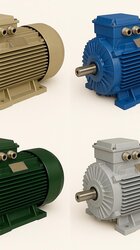
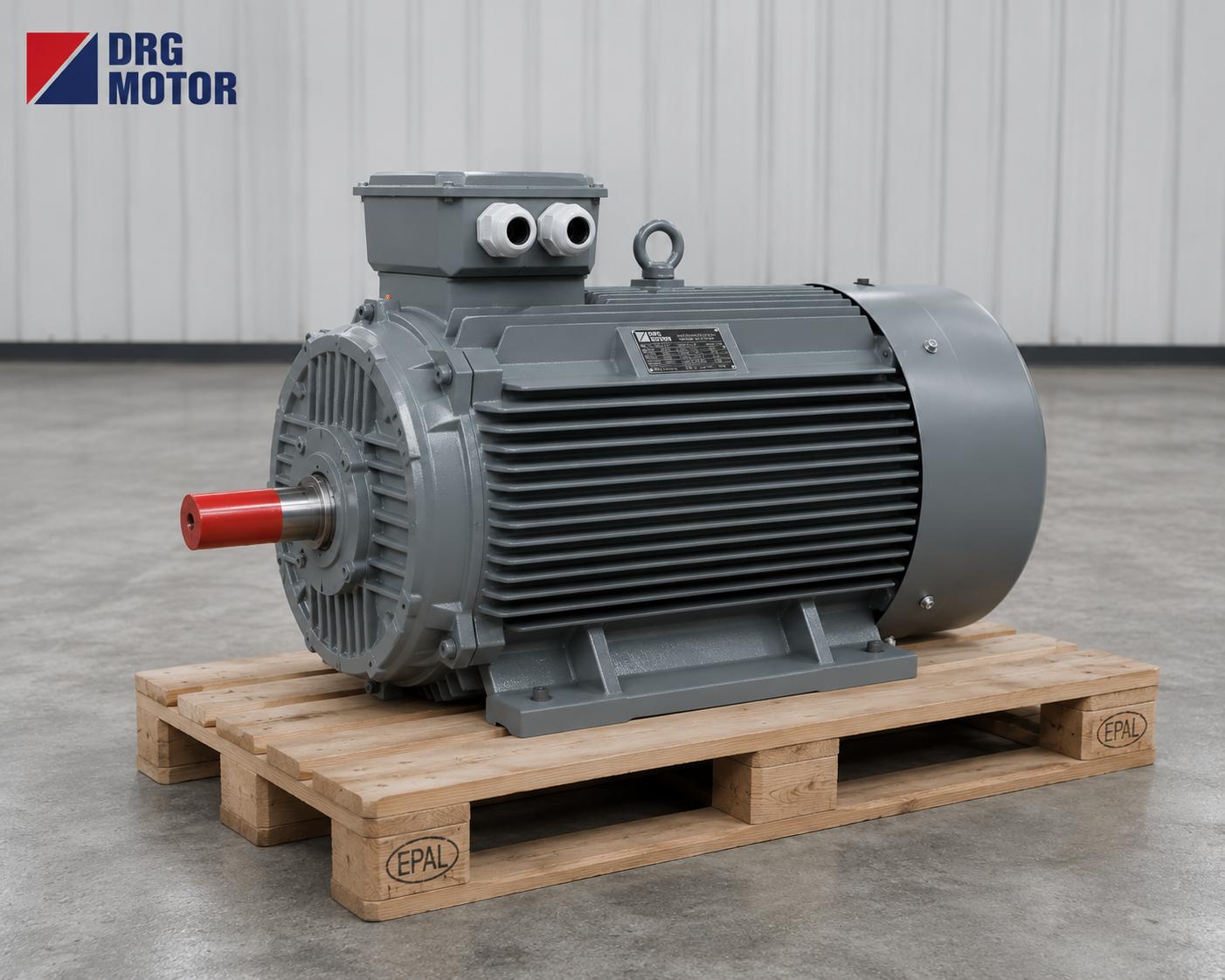

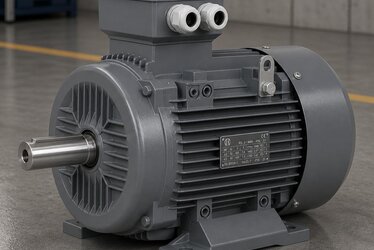
Electric motors account for the largest share of electricity consumed in industrial facilities, so the motor you choose directly shapes your operating costs. A low-efficiency motor may look cheaper at the moment of purchase, yet it quietly becomes far more expensive through the energy bill you pay year after year. The right way to judge a motor investment is not by its label price but by the total cost it generates across its entire working life. At DRG Motor we help you source a motor in the correct efficiency class for your real load profile.
Why the efficiency class shows up on your bill
A motor's efficiency tells you how much of the electricity it draws reaches the shaft and how much is lost as heat. The few-point gap between IE2, IE3 and IE4 classes can look trivial on a small motor, but on a fan, pump or compressor that runs 16 to 24 hours a day it grows into thousands of kilowatt-hours every year. Every extra kilowatt-hour drawn comes back to you twice: once as direct energy cost and again as added cooling and maintenance load. Choosing an energy efficient motor is the most lasting way to cut that loss at the source. Part of the loss comes from friction and ventilation, part from winding resistance and part from core losses; a higher-class motor improves on all of these fronts at once.
Another point worth keeping in mind is that efficiency is not limited to the single nameplate figure. A motor often runs below its rated load, and its efficiency curve changes with the load ratio. Higher efficiency classes hold their efficiency across a wider band of that curve, which means they keep their advantage even at partial load. As a result, real consumption in the field frequently differs from catalogue numbers, and a sound choice depends far more on understanding the application than on reading a label.
How to calculate the payback period
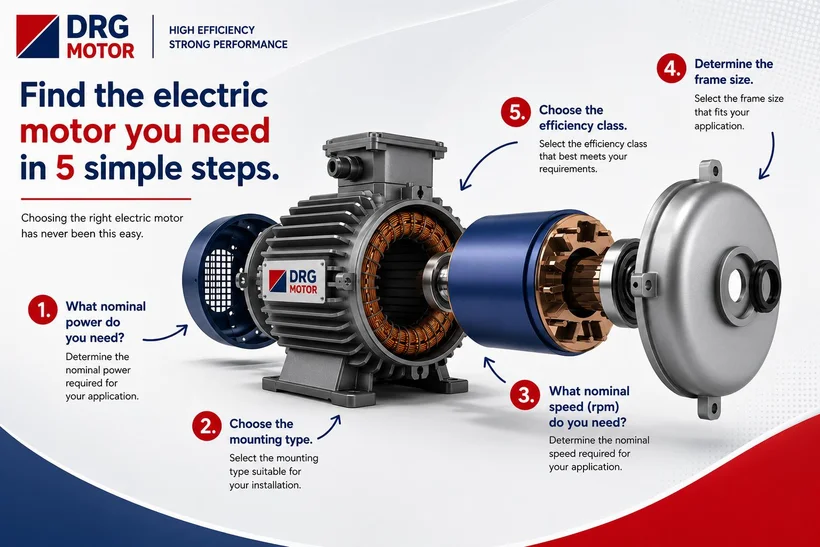
Working out the return on this investment does not require a complex formula. You multiply the annual energy that a high-efficiency motor saves over a standard model by your unit electricity price; the resulting yearly saving shows how quickly it offsets the price difference between the two motors. In hard-working applications this period usually falls somewhere between a few months and two years. To set the calculation up correctly you only need to have the following data on hand:
- The motor rating and its actual load ratio
- Annual running hours and shift pattern
- The current kilowatt-hour price your plant pays
- The efficiency values of the two motors being compared
Share these details with us and we will produce a concrete saving and payback table for you, then recommend the right model to match it. In practice, many operators change their decision the moment they realise a motor can consume many times its own purchase price in electricity within a single year. In a three-shift plant, replacing even one mid-range motor with a more efficient equivalent leaves a meaningful gain across the year; when you remember that the same plant holds dozens of motors, the scale of the total effect becomes far clearer.
When you build the payback case, it pays to count not only electricity but the secondary gains as well. A more efficient motor produces less heat, so it lowers the cooling load; it runs at a lower temperature, so it extends insulation life; and it fails less often, so it reduces the cost of unplanned downtime. Once these items are added to the table, the apparent payback period often turns out to be even shorter than the first estimate.
The load profile changes everything
Two motors of the same rating can deliver completely different results when they are used differently. In an application that runs continuously at full load, the highest efficiency class pays for itself quickly; in a system that operates at partial load or stops frequently throughout the day, it is wiser to evaluate the motor together with a drive. A choice that is exactly right for one system can mean over-investment in another. That is why, instead of recommending a motor in isolation, we base our advice on your running hours and load curve.
Reading the load profile correctly also prevents two common mistakes that are often made without realising it. The first is choosing a motor far larger than the real need; an oversized motor runs constantly at a low load ratio, and both its efficiency and power factor drop. The second is leaving a heavily worked motor on a borderline rating just to save money up front, which leads to overheating and early failure. When the right class and the right rating are chosen together, the motor runs both economically and for a long service life.
Bigger savings with a variable frequency drive
In variable-flow systems such as pumps and fans, running the motor through a frequency drive multiplies the efficiency gain. Throttling a valve or damper simply wastes energy, whereas speed control lets the motor draw only as much power as the process actually needs. When you pair a high-efficiency motor with a properly sized drive, instant consumption drops and mechanical stress eases, which extends motor life. We covered how to select the right frame and class for pumping duties in detail in our guide on pompa elektrik motoru supply.
Which class stands out for which application
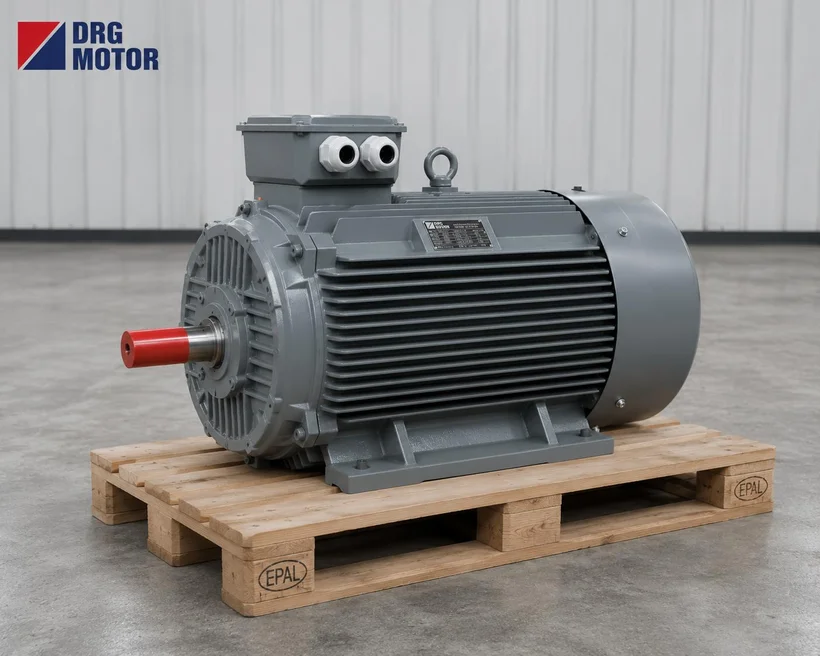
The size of the saving is directly proportional to where and how long the motor runs. On systems that operate continuously, stepping up to the highest class almost always makes sense; on motors that run rarely and briefly, the balance shifts a little. As a general guide, typical cases can be summarised like this:
- Continuously running pumps, fans and compressors: the highest efficiency class amortises quickly
- Variable-flow systems: a high-efficiency motor plus a frequency drive delivers the biggest gain
- Machine tools running in short bursts through the day: the efficiency gap matters but payback is longer
- Standby or rarely engaged motors: reliability and fast supply take priority
This framework is a starting point; we always firm up the final recommendation with the real data from your own facility.
Winding quality, the hidden side of efficiency
Whether a motor holds the efficiency printed in the catalogue out in the field depends on build quality. The cross-section and grade of the conductor used in the winding directly affect heating and losses. A better-wound motor runs cooler at the same load, behaves more steadily and keeps its efficiency for years. So when you invest, you should look beyond the efficiency class to the structural quality of the motor as well; we expand on this in our article on the bakır sargı motor choice.
Look at it through total cost of ownership
It helps to picture an industrial motor the way you would a refrigerator: you settle the shelf price once, but the real expense keeps ticking through the meter for as long as the appliance stays plugged in. On a typical motor that turns continuously for seven or eight years, of every 100 units you spend in total only two or three go to the purchase, while the large remaining slice is swallowed by the electricity it draws. Once that ratio is in front of you, it becomes obvious why the savings we worked out in the payback section weigh so heavily; what you are really buying is not a piece of hardware but a multi-year energy subscription. That is why the comparison should never rest on the figure at the checkout but on the total bill the motor will run up before it is retired; the smartest pick is not the one that costs least on day one but the one that has cost you least by the end of its eighth year.
Preparing your business for what is ahead
With energy prices trending upward and efficiency regulations tightening, the right motor investment made today is an insurance policy against tomorrow's cost pressure. A high efficiency class motor lowers your bill and, by reducing your facility's carbon footprint, also supports your sustainability targets. For businesses that think long term, this is a decision to bring forward rather than postpone.
Let us choose the right motor together
Send us the ratings, running hours and current efficiency classes of the motors in your plant; we will prepare a tailored saving and payback analysis and present the suitable stock options. From the wide range of high-efficiency motors we carry, let us pinpoint the model that fits your application best, backed by a clear quotation and fast supply. Request a quote now and let us see together, in real numbers, when the savings start flowing back to you.