 English
 Le français
 Türkçe

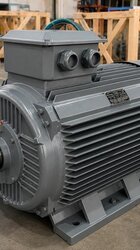
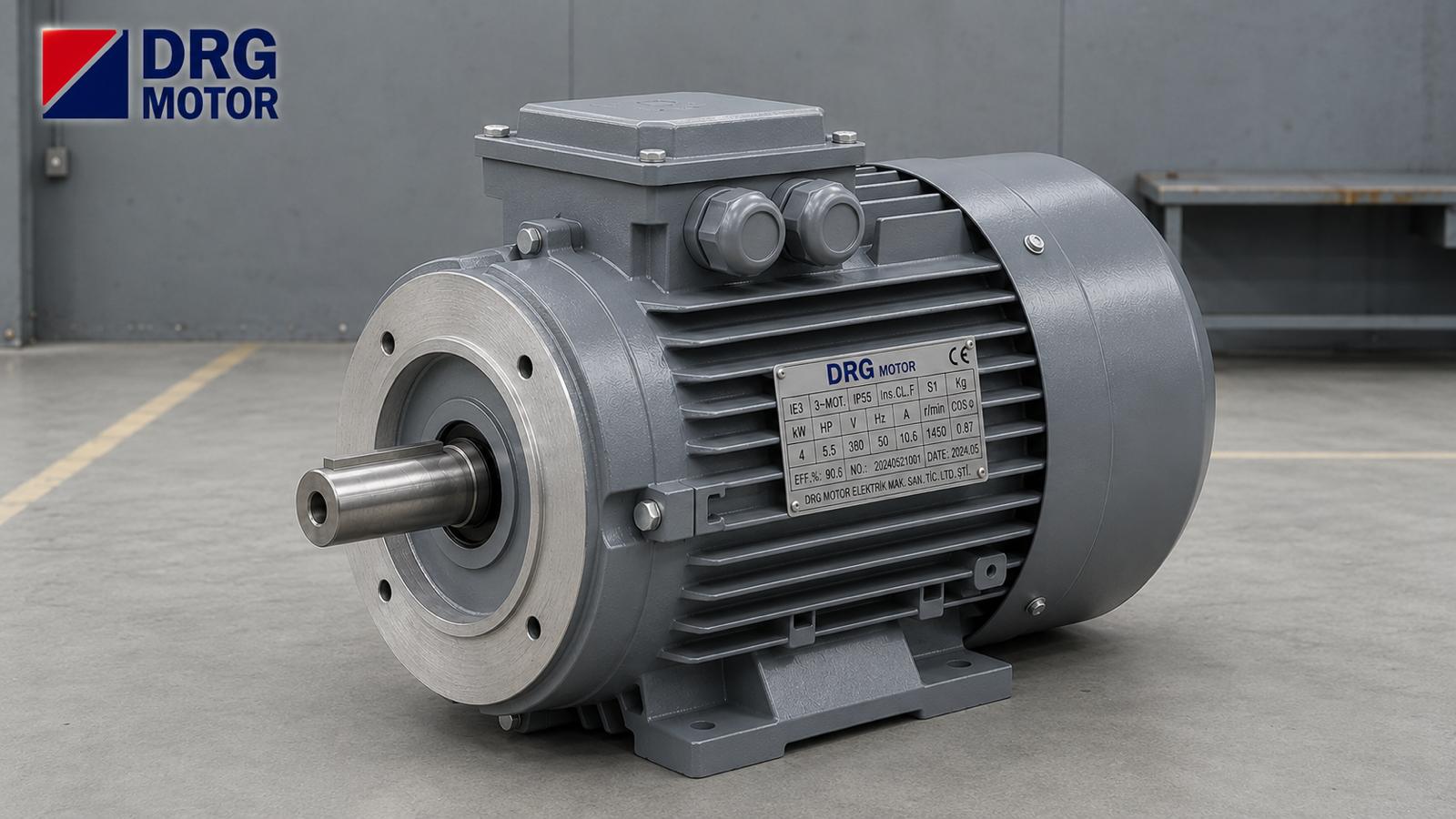

In centrifugal pump systems, most of the efficiency and durability depends on choosing the right motor to drive the pump. A wrong kW rating, mismatched speed, or an unsuitable protection class quickly turns into overheating, premature failure, and wasted energy. At DRG Motor, our goal is to supply the centrifugal pump electric motor that fits your project precisely, from stock and with a fast quotation, so your plant keeps running without interruption.
kW Selection Follows the Pump's Operating Point
When selecting a centrifugal pump electric motor, the first criterion is the shaft power that corresponds to the pump's head (H) and flow rate (Q). The motor's rated power must be sufficiently higher than the demand at the operating point, yet it should not be oversized. An undersized motor is constantly overloaded and burns its windings; an oversized motor runs inefficiently at low load and a poor power factor. To get the kW right, the pump curve and the motor power must be evaluated together.
A key point with centrifugal pumps is that shaft power rises as the flow increases. The maximum power draw that can occur with the valve fully open must therefore be considered, and the motor should be chosen with a power reserve that prevents strain at that point. Once you share your pump data, the DRG team helps you pin down the correct power range.
Speed and Pole Configuration Directly Shape Pump Performance
In centrifugal pumps, head and flow are directly linked to the impeller's peripheral speed, which depends on the motor's rotational speed. Two-pole motors at roughly 2900 rpm suit applications requiring high head, while four-pole motors at roughly 1450 rpm are preferred for higher flow and lower head. Matching the rated speed specified by the pump manufacturer with the motor speed is what guarantees the expected performance.
A speed mismatch can shift the pump away from its design point and cause cavitation, vibration, or loss of efficiency. If you plan variable-speed operation with a frequency inverter, the motor must be suitable for that duty and have winding insulation that withstands inverter supply. Our pump motors range carries broad stock across different pole configurations.
- 2-pole (~2900 rpm): high head, medium-low flow
- 4-pole (~1450 rpm): balanced flow/head, common centrifugal applications
- 6-pole (~960 rpm): high flow, low head, and quieter operation
Mounting Form Must Match the Pump Connection
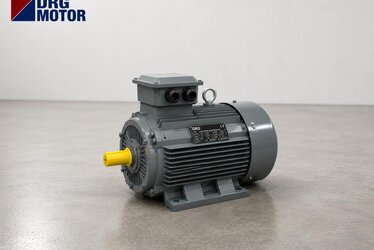
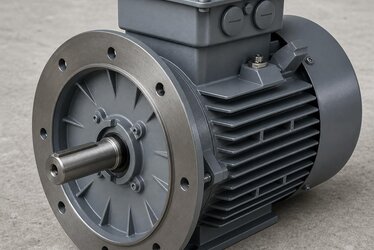
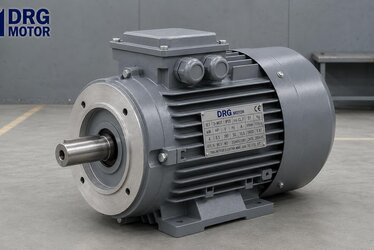
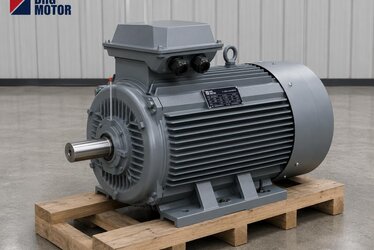
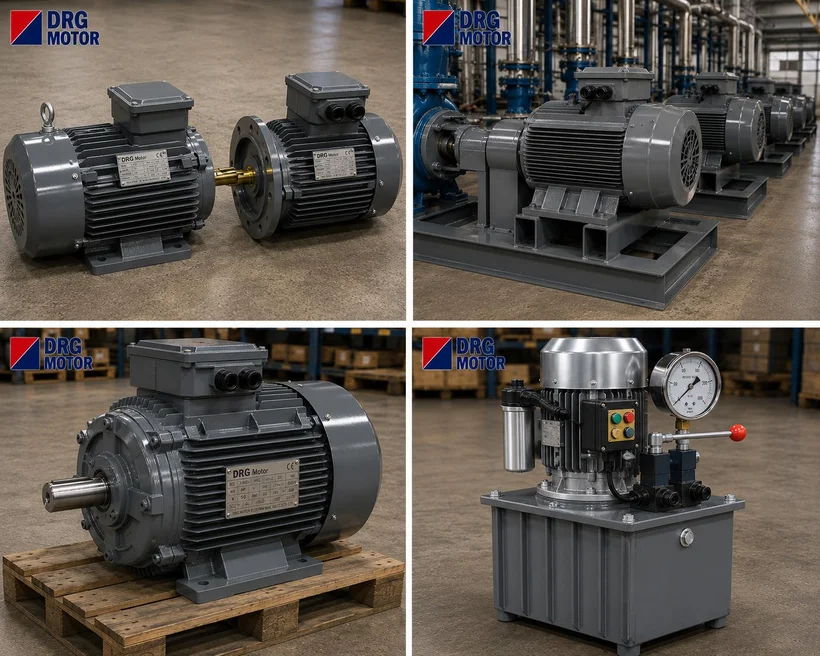
An often overlooked but critical aspect of choosing a pump electric motor is the mounting form. Foot-mounted (B3), flange-mounted (B5, B14), or foot-and-flange (B35) frames are determined by how the pump connects. Monobloc centrifugal pumps usually call for a flange design, while coupled systems often use a foot-mounted frame. The wrong mounting form means field incompatibility and extra cost.
Shaft diameter, key size, and flange hole pattern must also match the pump coupling or impeller exactly. That is why sharing your pump's connection dimensions at the quotation stage lets us supply the correct frame type the first time.
Protection Class and Environmental Conditions
Pump motors frequently operate in humid, wet, or dusty environments, so the IP protection class directly affects motor life. IP55 is a common standard for general industrial settings, while areas with heavy water splash or wash-down call for IP56 or higher. Outdoor installations and applications with direct water contact bring even higher protection classes into play.
Ambient temperature and altitude also influence the motor's usable power. High ambient temperature or high altitude can cause derating of the rated output. Once we receive details about your operating environment, DRG recommends a motor with the correct protection and insulation class.
Duty Cycle and Efficiency Class
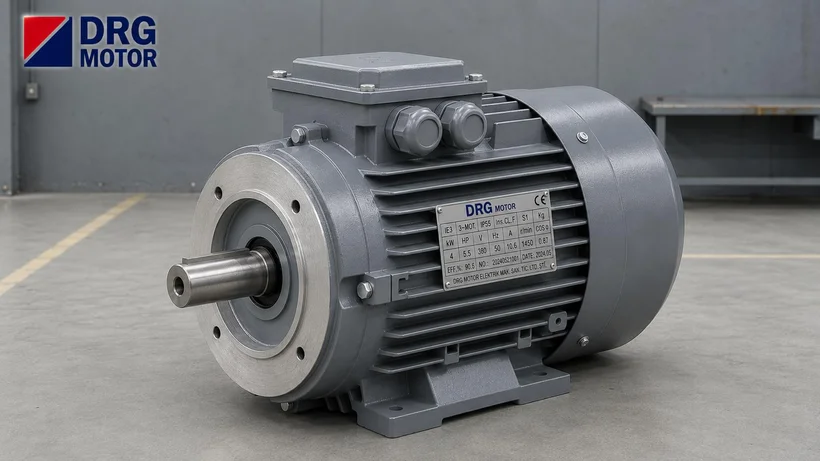
Centrifugal pumps mostly run in continuous (S1) duty. In a continuously running system, the motor's efficiency class is one of the largest items in operating cost. IE3 and IE4 efficiency motors carry a slightly higher upfront price, but the energy they save over a year closes that gap quickly. For applications with frequent stop-start or staged operation, the motor must be selected to suit that duty.
An efficient motor choice lowers the energy bill and, thanks to reduced heating, extends bearing and winding life. When you share your pump's daily running hours, we recommend the most suitable efficiency class while factoring in the payback period.
Single-Phase or Three-Phase
The supply available to the pump application also shapes the motor choice. Single-phase motors are preferred for low-power domestic or small commercial centrifugal pumps, while three-phase motors are the standard in industrial plants and at higher powers. At the same power, three-phase motors are more efficient, run with less vibration, and last longer; they are also easily controlled with a soft starter or inverter. In single-phase systems, the start capacitor and starting torque must be selected so the pump can start under full load.
When you share details such as your grid structure, existing panel infrastructure, and starting frequency, we determine the most suitable phase configuration and control method together. This directly affects both the initial investment and operational reliability.
Main Factors That Affect Pump Electric Motor Pricing
Instead of quoting a flat price, we prefer to share transparently what drives the cost. The price of a centrifugal pump electric motor varies with power (kW), pole count, mounting form, efficiency class (IE2/IE3/IE4), protection class, frame material (aluminium or cast iron), and added equipment such as thermal protection, anti-condensation heaters, or encoders. Quantity and delivery time also influence the figure.
- Power and pole configuration
- Efficiency class (IE2/IE3/IE4)
- Mounting form and frame material
- Protection class (IP55/IP56...)
- Added equipment and accessories
- Quantity and delivery time
By weighing these criteria together, we present the most cost-effective option that can be supplied fastest. Our from-stock delivery advantage shortens the lead times in your projects.
Evaluate NPSH and Cavitation Risk Together With Motor Speed
In centrifugal pumps, motor speed sets flow and head, and it moves the cavitation risk on the suction side too. A pump driven by a high-speed motor increases the required net positive suction head (NPSH); if the suction line is inadequate, cavitation, noise, and wear begin at the impeller. Motor selection must therefore be handled together with the pump's suction conditions. With hot fluids, high altitude, or long suction lines, a lower-speed motor can be a smart choice that protects the system.
When you share details such as fluid temperature, suction lift, and line length with the DRG team, we determine the speed and power combination that prevents cavitation. Correct matching extends the life of both the pump and the motor.
Winding Insulation, Bearings, and Accessory Choices
In continuously running pump systems, the motor's insulation class (usually class F) and bearing type are important details that determine durability. In high ambient temperatures or heavy duties, targeting a class B temperature rise with limited heating extends service life. For motors that will run on a frequency inverter, measures such as insulated bearings or a grounding brush against bearing currents should be considered.
- Thermal protection (PTC/PT100) to monitor winding temperature
- Anti-condensation heaters for systems with long idle periods
- Insulated bearing option for inverter-driven applications
- Reinforced bearings and grease type for heavy duties
Choosing these accessories correctly reduces unexpected downtime and extends maintenance intervals. We clarify which protection and accessories add value to your application at the quotation stage.
Why Supply From DRG
DRG Motor is a B2B electric motor supplier that delivers a broad product range quickly from stock. For your pump applications, we provide technical support to determine the right combination of power, speed, and mounting, preventing the losses that come from an unsuitable choice. We offer flexible solutions at every scale, from a single motor to serial orders.
Share your pump data with us (flow, head, running hours, mounting form) and we will send you the right motor and a clear quotation as soon as possible. For a correctly matched pump motors solution, get in touch now and request a quote.
The Right Motor Means Uninterrupted Pump Performance
Trouble-free operation of your centrifugal pump for many years starts with the right motor choice at the very first step. By evaluating kW, speed, mounting form, protection, and efficiency class together, we supply the best-fitting solution from stock. To receive your quotation and benefit from our technical support, contact us today and let us determine the right motor for your pump together.