 English
 Le français
 Türkçe

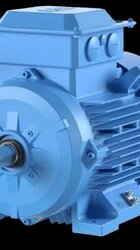
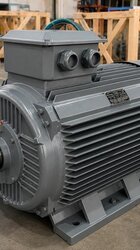
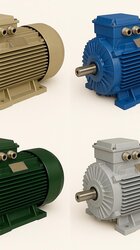
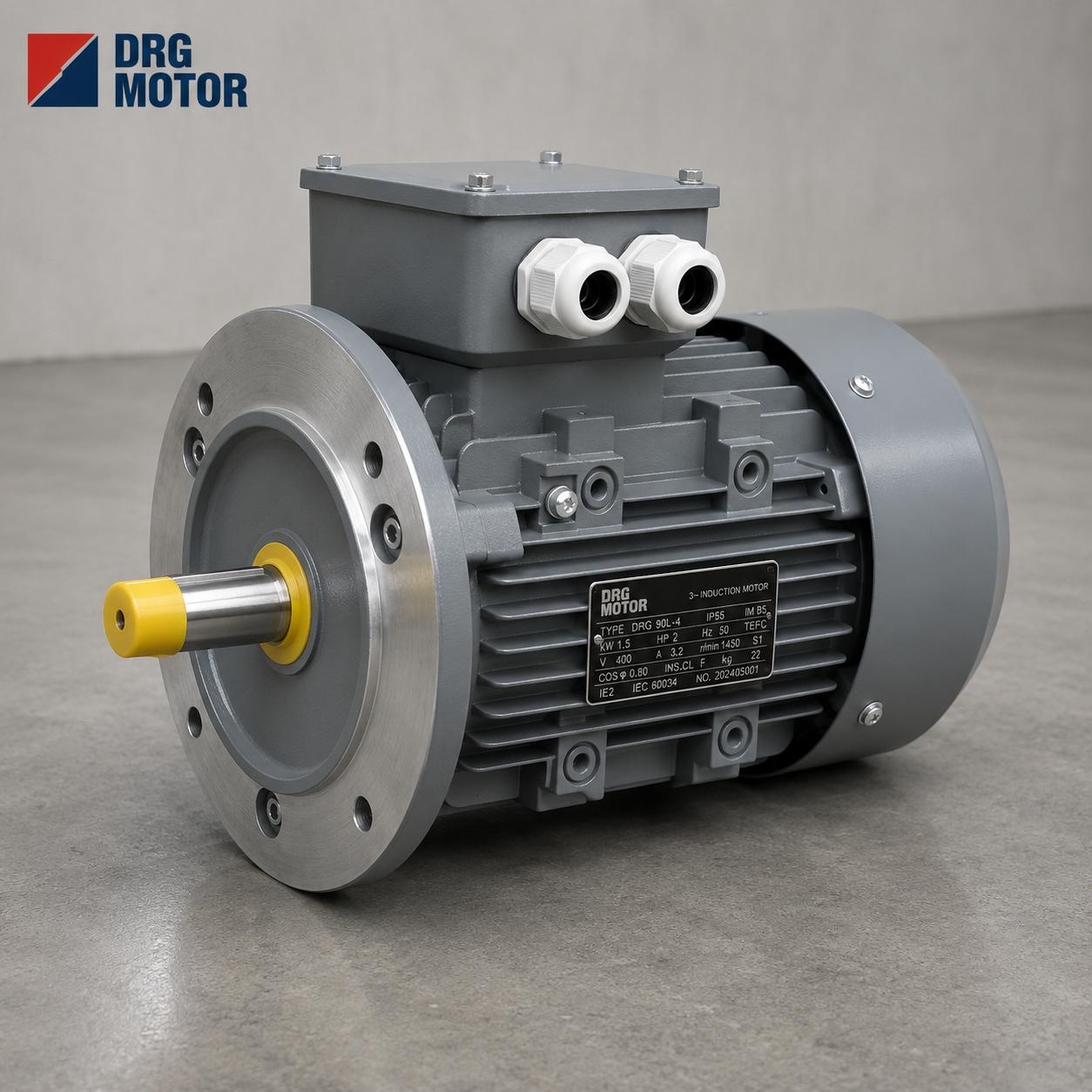

A motor delivers its full nameplate rating in a cool workshop at sea level, yet the very same motor is forced to run below that label on a high mountain plateau or in the hot bay of a foundry. This loss is what we call motor derating: reducing the load power a motor can safely carry as the ambient conditions grow harsher. High altitude and high temperature both lower a motor's ability to cool itself, so the winding runs hotter, which affects both instant performance and long-term life. If you simply copy a power figure calculated for the lowlands and carry it up the mountain, the motor will constantly operate on the edge, overheat and fail far sooner than expected. In this article we look concretely at how to select the right motor for demanding conditions and how to obtain a quote shaped around your real need.
Why Cooling Weakens as Altitude Rises
As you climb higher the air thins; the mass of air per cubic metre drops. An asynchronous motor cools itself with the air its fan pushes across the frame, and as that air becomes less dense it carries away less heat. Up to roughly 1000 metres this effect is negligible, but above that threshold every 100 metres takes a small slice out of the cooling capacity. In plants between 2000 and 3000 metres this loss can no longer be ignored. The same motor runs hotter on a mountain than it does in the valley, simply because shedding its own heat has become harder. For this reason, motor selection on a high-altitude project must be based on a power calculation and on how much the environment actually allows the motor to cool.
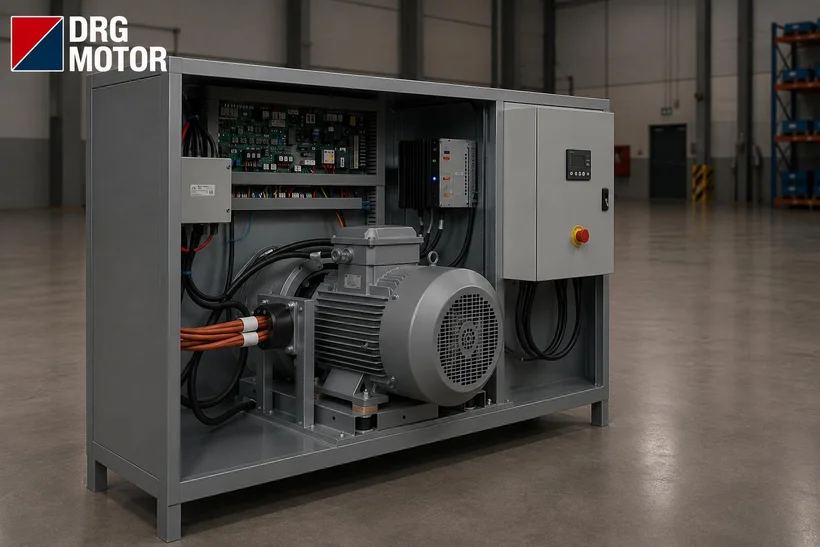
How a Hot Environment Affects the Winding
The nameplate power of a motor is usually defined on the assumption of a 40 degrees Celsius ambient. Foundries, glassworks, cement plants, furnace lines and roof spaces hit directly by the sun easily exceed that figure. Every time the ambient temperature rises, the cooling air the motor draws in starts out hotter, so the heat it can pull away from the winding falls. The maximum temperature allowed by the insulation class is reached more quickly. A motor with Class F insulation can withstand up to 155 degrees Celsius, but the closer it runs to that limit, the shorter the insulation life becomes; as a practical rule, every 10-degree rise in winding temperature roughly halves the insulation life. In hot environments, if motor derating is not applied, the motor wears out internally even while it appears to deliver its rated power.
Factoring In the Derating Coefficient
In practice, derating is done using the correction coefficients in the motor manufacturer's tables. These coefficients depend on two main variables: altitude and ambient temperature. When both are present their effects collide and accumulate. The rough approach can be summarised as follows:
- Below 1000 metres and up to 40 degrees: the motor delivers its full nameplate power, no correction needed.
- Each step above 1000 metres: a few points of loss in usable power; at 3000 metres this loss becomes pronounced.
- Every 5 degrees above 40: a further reduction in the load that can be carried.
- Both high altitude and high temperature: total derating equal to the product of the two factors.
That is why, for a line running at 3000 metres and 55 degrees, directly copying the power figure used in lowland conditions is a serious mistake. The correct method is to share the real ambient data and determine the corrected power together.
The Right Solution: Step Up One Power Class
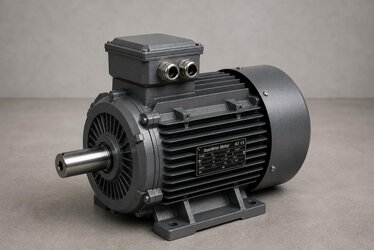
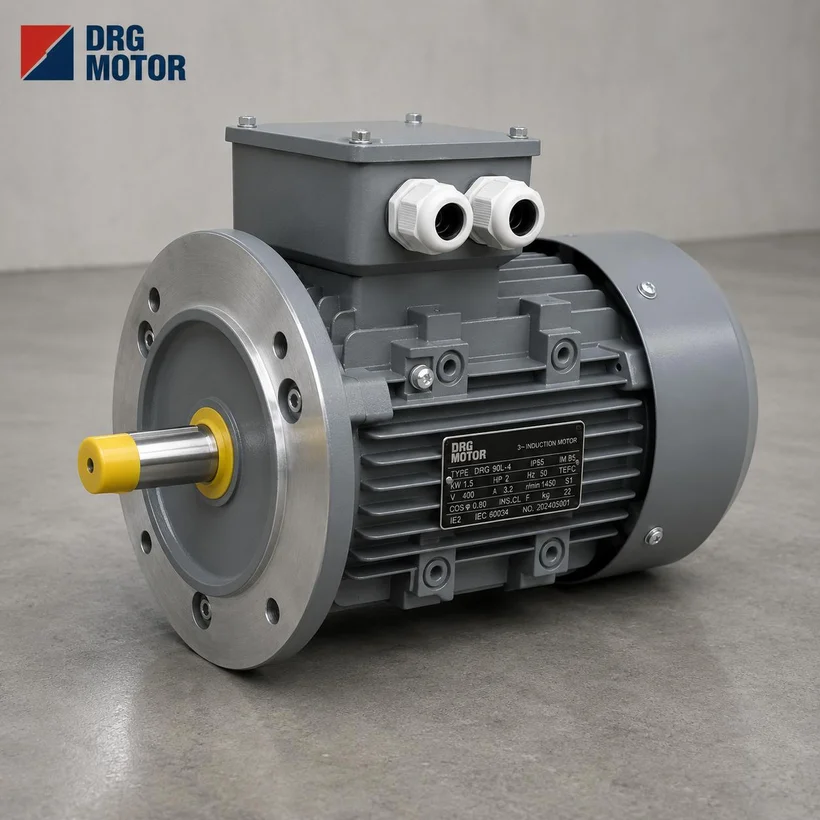
The most practical response to derating is to step up one power class so that the shaft power needed in the harsh environment is guaranteed. For example, where 15 kW is enough in the valley, you may need to select 18.5 kW to do the same job safely at 2500 metres in a hot bay. The motor then never sits at its limit but stays in a comfortable operating band; it runs cooler, vibrates less and its bearing life is extended. While this approach raises the initial outlay slightly, it is a tiny difference next to the early failure of a motor constantly strained at its edge and the production stoppage that follows. The most common solution in industry, three-phase asynchronous motors, offer a wide range through these stepped power options and make moving up to the right class straightforward.
Building Margin with Cooling and Insulation Class
Beyond raising the power class, extra safety margin can be gained through the motor's thermal design. A motor with Class H insulation withstands a higher winding temperature than Class F and forms a natural buffer in hot environments. A motor designed for a lower temperature rise, that is to a Class B rise, runs cooler while still delivering its rated power. In very hot environments, adding an external forced-cooling fan (a separately powered blower) is also an effective solution; this fan keeps cooling constant even when the motor turns at low speed, reducing the derating. At high altitude the right combination is often to bring together a high insulation class with a low temperature rise.
Caution on Lines Driven by a Frequency Inverter
When motors fed by a drive run at low speed, the frame fan slows down too and cooling weakens further. With high altitude and a hot environment already restricting cooling, adding low speed puts the motor under pressure from two sides at once. On these lines either a force-cooled motor should be chosen, or the derating should be calculated more conservatively. In drive-fed applications the motor's heating behaviour differs from a motor supplied directly from the grid; accounting for that difference from the start prevents overheating problems later on. If you are already experiencing overheating complaints on an existing line, reviewing the right motor isinma cozum approaches to correctly diagnose the root cause delivers a more lasting result than repeatedly swapping in the wrong motor.
Assessing the Ambient Conditions Together
High altitude and temperature never arrive alone; they usually come hand in hand with dust, humidity or chemical vapour. Cement and mining plants sit high and dusty, foundry bays are hot and particle-laden. For this reason the protection class must also be reviewed when calculating derating. Dust clogging the motor fan and cooling fins can completely paralyse an already weakened cooling system; in that case a suitable protection class directly affects the thermal performance. To set the right protection class in dusty, particle-laden environments, assessing it together with the selection criteria of an tozlu ortam motoru keeps the motor both clean and running cool.
Data to Clarify Before the Quote
An accurate derating calculation and a well-judged motor selection are only possible with real field data. Sharing the following points at the quotation stage prevents a wrong purchase from the outset and brings you the most economical correct solution:
- The altitude of the plant (the real value in metres).
- The maximum ambient temperature across the year and the temperature of the space the motor sits in.
- The power and speed genuinely required at the shaft end.
- Will it be fed through a drive (inverter) or directly from the grid?
As much as these basic figures, the way the motor runs through the day shapes the derating calculation directly. A motor turning uninterrupted for hours in a hot bay carries a different thermal load from one that is repeatedly stopped and restarted all day, or one working under a stepped, changing load, even at the same altitude and temperature; each fresh start drives an extra pulse of heat into the winding, and the already weakened cooling has to make up for it. Telling us the line's working tempo from the outset, that is whether it runs continuously or intermittently and whether the load is steady or variable, therefore noticeably sharpens the accuracy of the corrected power.
In addition to this, it helps to spell out which other harsh factors are present in the field alongside high altitude and heat. Is cement or mineral dust hanging in your plant's air, is there a particle and fume load like that of a foundry bay, is humidity or chemical vapour the thing that determines the protection class, or is there even a risk of an explosive atmosphere? Because these details shape the protection and frame design added on top of the thermal derating, describing the environment, even in words, strengthens the accuracy of the quote. A quote prepared with this data protects you both from oversizing the motor and inflating the budget, and from undersizing it and inviting failure.
The Factors That Set the Price and the Right Investment
The price of a motor for a demanding environment cannot be expressed as a single figure, because the power class selected to cover the derating, the insulation class, the protection class and any forced-cooling solution together determine the cost. Stepping up one power class or choosing Class H insulation raises the starting cost a little; yet that difference is recovered quickly next to the failure, spare-part and downtime cost a cheap motor constantly strained at altitude and in heat would cause. For this reason, rather than a flat list price, the soundest approach is to obtain a quote corrected for your ambient conditions and tailored to your application. A correctly configured quote serves both the initial investment and the operating cost over the years at the same time.
Let Us Define the Right Motor for Your Harsh Environment
High altitude and a hot environment lift motor selection out of a routine power calculation and turn it into a thermal engineering decision. Motor derating done well becomes the guarantee of uninterrupted production at the most critical point of your plant; done badly it shows up as constant faults and unexpected stoppages. At DRG Motor we listen to your altitude, ambient temperature, duty cycle and field conditions, then price the motor at the corrected power and in the right insulation and protection class with a clear delivery time. To build the right solution for your line on the high plateau or in the hot bay, send us your ambient data; we will prepare a quote tailored to your application quickly and help secure the uninterrupted flow of your production even in demanding conditions, together.