English
 Le français
 Türkçe

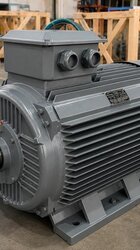

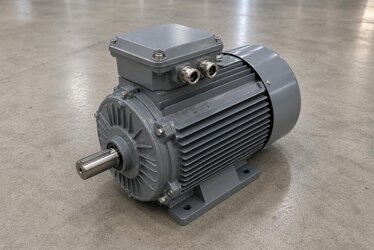
When an electric motor runs hotter than it should, it is a symptom most plants overlook, yet it carries a serious warning behind it. If you cannot keep your hand on the motor housing, if the protection relay keeps tripping, or if you notice the smell of scorched windings, the motor is being pushed in the wrong power rating, the wrong protection class or the wrong duty cycle. Overheating is not merely a comfort issue; every extra 10 degrees roughly halves the insulation life. That is why replacing an overheating motor with an identical model usually brings the problem back within a few months. A lasting approach to an overheating motor means reselecting it with the right power and a protection class suited to the application. In this article we walk step by step through why and how to replace an overheating motor correctly, and which technical decisions protect both your costs and your production continuity.
Understanding Why a Motor Overheats
A motor running hot is not always a sign of poor quality; more often the cause is a mismatch between the conditions it works in and its nameplate values. A motor selected with too little power draws continuously high current to carry the load, and as copper losses rise the windings heat up. In a dusty or enclosed space, blocked cooling fins prevent the heat from escaping. An unbalanced supply voltage, a lost phase or undervoltage also strain the motor and generate heat. Add frequent start-stop cycles, a high ambient temperature and incorrect belt tension, and the picture becomes clear. Before making a replacement decision it is essential to diagnose the real cause of the overheating; otherwise the new motor will share the same fate.
The Role of Wrong Power Selection in Overheating
The most common cause of overheating is a motor that was sized too small for the application. As the load grows, the motor is forced to run above its rated power; current climbs, winding temperature rises and efficiency drops. Many businesses renew an overheating motor with the same rating rather than stepping up a class, and the problem soon returns. The correct approach is to resize the motor by accounting for the machine's actual shaft power, moment of inertia and starting characteristics. In some cases the motor was oversized, so it runs at a low power factor under light load, creating a separate efficiency loss. The goal is neither small nor large, but a power class that fits the application exactly. For a heavily loaded line, for example, stepping up to a class such as the 37 kw elektrik motoru can relieve a constantly strained smaller motor and solve the overheating at its root.
Why the IP Protection Class Is Decisive
Another hidden source of the heat problem is a protection class unsuited to the motor's environment. The IP rating states how sealed the motor is against dust and water; but that sealing also affects how heat is rejected. In a dusty environment, dust collecting between the fins of a low-protection motor blocks cooling and overheats it. A totally enclosed motor, by contrast, relies on surface cooling, and a dirty surface weakens that cooling. Choosing the right IP class both protects the motor from ambient conditions and balances the cooling. While IP55 is a common choice for standard industrial applications, washdown lines exposed to water jets or heavily dusty plants may require a higher protection class. Matching the IP class to the environment in the replacement decision is a direct part of preventing overheating.
The Link Between Efficiency Class and Cooling
A motor's efficiency class affects not only the energy bill but its heating behaviour as well. A high-efficiency motor of IE3 or above does the same work with fewer losses, so it naturally runs cooler. An older IE1 motor, or a rewound one, produces higher losses because of degraded winding quality, and that loss turns into heat. When replacing a motor that suffers from overheating, choosing a high-efficiency model both lowers the temperature and reduces the annual energy cost. The point to watch here is that the cooling fan and housing design are matched to the efficiency class. A high-efficiency motor offers longer maintenance intervals, runs at a lower temperature and noticeably extends insulation life. For this reason, the replacement often turns into a saving opportunity.
The Effect of Duty Cycle and Ambient Temperature
The power figure on a motor nameplate is given on the assumption of a specific ambient temperature and duty cycle; the standard assumption is usually 40 degrees ambient and S1 continuous running. If your plant falls outside these conditions, the motor cannot meet its nameplate value. A motor working in a boiler room that climbs to 50 degrees in summer, or near a furnace, heats up faster even at the same power. Likewise, a press or crane motor that switches on frequently produces far more heat than a continuously running pump. That is why duty cycle, not just power, must be reassessed during replacement. Choosing a motor designed for high ambient temperatures or with a suitable service factor prevents overheating from the start. The right supplier asks about these conditions at the quotation stage and recommends a suitable solution.
Rewinding or a New Motor
When faced with an overheating motor, one of the first options that comes to mind is rewinding. But rewinding is often a temporary and risky solution. During the rewind, the original wire cross-section, the number of turns and the insulation quality are rarely preserved exactly, which leads to efficiency loss and more heat. Especially for low and medium power motors, buying a new motor is usually more sensible than the cost and risk of rewinding. A new motor comes with a warranty, a test report and known efficiency values; a rewound motor has none of these guarantees. The motor's age, power class and the criticality of the application should be weighed together in the decision. On lines where production continuity is critical, a new motor is a far safer investment that removes the risk of downtime.
What to Clarify for the Right Replacement
To select the right product that will permanently solve an overheating motor, a few points need to be clarified before the quotation. This information both prevents a wrong purchase and secures the life of the new motor:
- The nameplate values of the existing motor: power, speed, voltage and current IP class.
- When the overheating began and at what load it increases.
- Ambient conditions: temperature, dust, humidity and any water contact.
- Mounting type: foot-mounted (B3), flange-mounted (B5) or combination (B35).
Beyond these headings, two points are especially decisive when diagnosing where the heat comes from. The first is the rhythm at which the motor works: a pump turning without interruption all day and a press or crane motor that switches on and off dozens of times an hour produce completely different heat loads even at the same power, because every restart draws an inrush current several times the rated value, and those sudden current surges scorch the windings afresh each time. For this reason, selecting the replacement motor according to your real switching frequency and daily running time matters just as much as fixing the right power. The second is the way the motor drives the load: whether the shaft is directly coupled, runs through a belt-and-pulley arrangement, or transmits power through a gearbox changes the reflected load the motor sees and therefore its heating behaviour. An over-tightened belt, for example, keeps straining the motor and adds heat at the bearing end, while a geared drive requires the motor to work at a different speed-torque point. So in a replacement, rather than accepting the overheating motor's existing drive arrangement as given, this transmission method must also be carried correctly into the choice of the new motor.
Once these questions are answered, it becomes clear which power and IP class to choose, and the replacement is done right the first time.
Correct Sourcing in Three-Phase Motors
In industry, the overheating problem arises most often with three-phase asynchronous motors, because they are the backbone of continuously running heavy lines such as pumps, fans, conveyors and compressors. Sourcing a motor selected at the right power and the right IP class from a reliable source is the first condition for a lasting solution. With products of unknown origin or relabelled nameplates, the efficiency and insulation values often fail to reflect reality, and the motor soon overheats again. For this reason, the soundest choice in a replacement is to pick the one suited to the application from among three-phase asynchronous motors delivered with an invoice, warranty and test report. With high stock availability, these products minimise downtime and bring production back to normal quickly.
Seeing the Replacement as an Investment, Not a Cost
The cost of replacing an overheating motor with the right power and IP class may look at first like an expense; but in reality it is an investment in production continuity. A motor that keeps overheating will sooner or later burn its windings and cause an unplanned stoppage, and the cost of that stoppage is often many times higher than the motor itself. A correctly selected new motor, by contrast, uses less energy, runs longer and reduces the maintenance burden. In other words, the replacement removes the risk of downtime in the short term and pays for itself through energy savings in the long term. The same approach applies, by the same logic, in a class such as the 75 kw elektrik motoru that may be considered for projects needing greater power: correct sizing eliminates both overheating and needless cost.
Let Us Shape the Right Solution for Your Need
Rather than replacing an overheating motor with an identical model, going to the root of the problem and reselecting it with the right power, the right IP class and the right efficiency class secures both the motor's life and your production continuity. At DRG Motor we assess the cause of your current motor's overheating, your duty cycle and your ambient conditions together, and offer you a lasting solution. To replace your overheating motor with the right product so the same problem never returns, send us your requirement; we will prepare a quote tailored to your application with a clear delivery time, and together secure the uninterrupted flow of your production.