 English
 Le français
 Türkçe

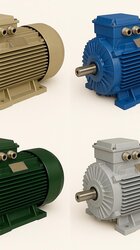
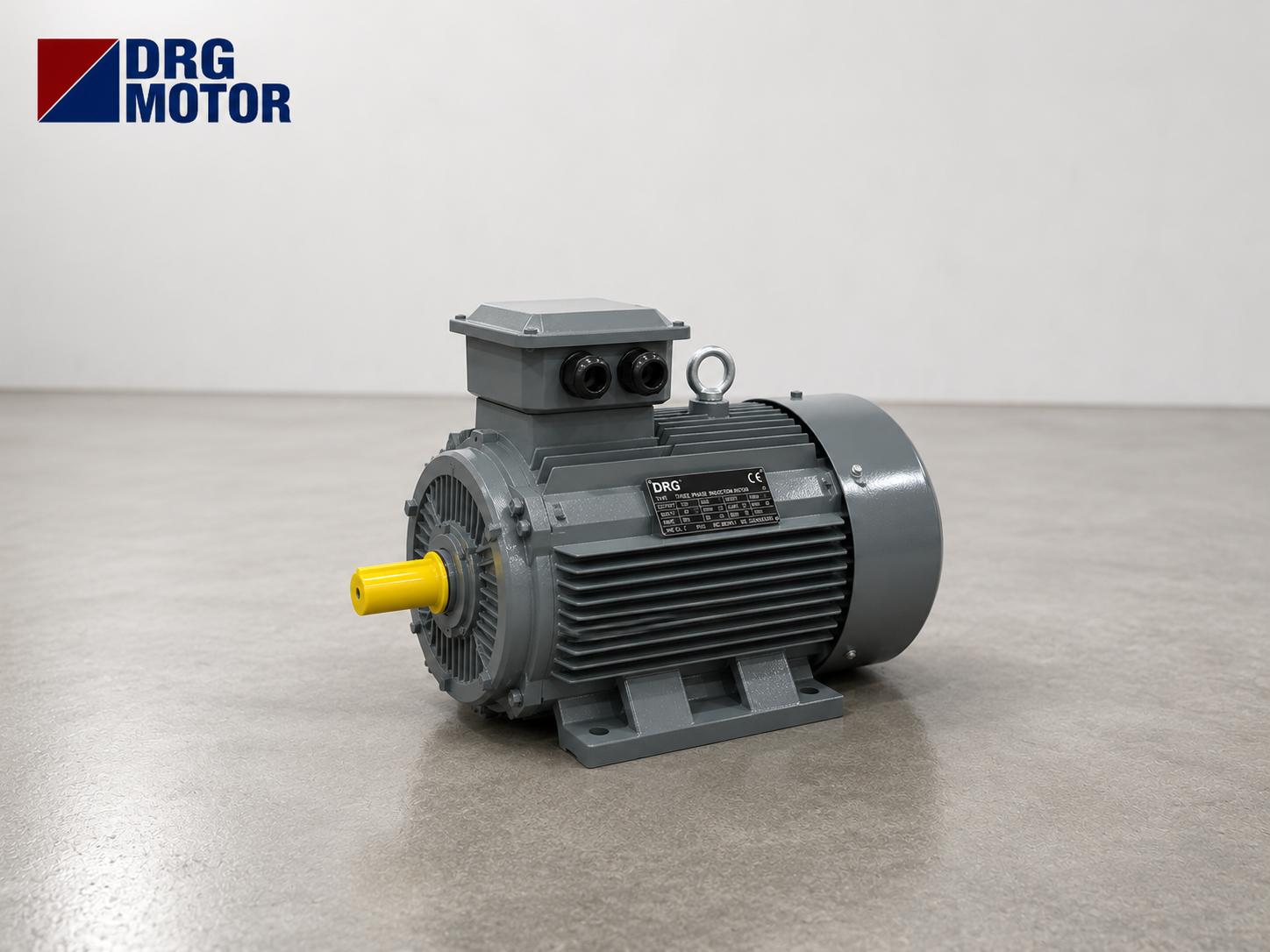

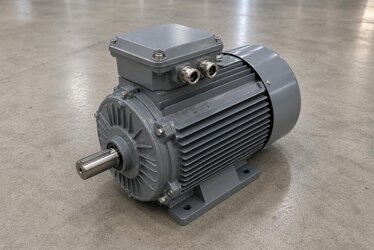
Dust is one of the quietest yet most stubborn enemies an electric motor faces. In a cement plant, a lime kiln, a woodworking shop, a feed mill or a mining site, the fine particles suspended in the air besiege every millimetre of the motor frame all day long. Over time this invisible layer clogs the cooling fins, creeps past the bearing seals and forms a moisture-trapping film over the winding insulation. The result is rarely sudden; it is an insidious decline: the motor first starts running a little hotter, then the bearing note changes, and one day it stops in the middle of a shift no one expected. This is exactly where the choice of the right protection class can double a motor's life or cut it in half. In this article we look concretely at what IP55 and higher protection classes do for a dusty environment motor, which class you need in which situation, and how to lock in that decision through the right supply.
The Real Damage Dust Does to a Motor
The problem a motor faces in a dusty environment is not merely getting dirty; dust directly sabotages the motor's ability to shed heat. The particles packed between the cooling fins act almost like a blanket, stopping the frame from releasing its heat to the surrounding air. Of two identical motors running at the same load, the dust-coated one operates at a markedly higher temperature than the clean one. Every ten degrees of extra heat roughly halves the insulation life, so that layer of dust is really the motor's lifespan quietly melting away over the years. On top of this, conductive dust (metal swarf, carbon, coal dust) creates paths for leakage current and short circuits in the terminal box or at the winding ends. Choosing a dusty environment motor is therefore not a simple matter of a cover; it is about protecting the motor's thermal and electrical health.
What the IP Protection Rating Actually Tells You
The two digits next to the IP mark carry two entirely separate pieces of information. The first digit describes protection against solid objects and dust, while the second describes protection against water. When it comes to a dusty environment motor, the digit to focus on is the first one. The 5 in IP55 means a level of protection that does not fully exclude dust but does prevent it from entering in harmful quantities. The 6 in IP6X means complete dust-tightness; no dust gets in at all. Because the second digit defines water protection, IP55 also withstands water jets from any direction. Reading these two digits correctly stops you from buying too much or too little protection for your setting, since over-specifying raises cost while under-specifying means early failure.
Why IP55 Is a Sensible Starting Point for Most Dusty Settings
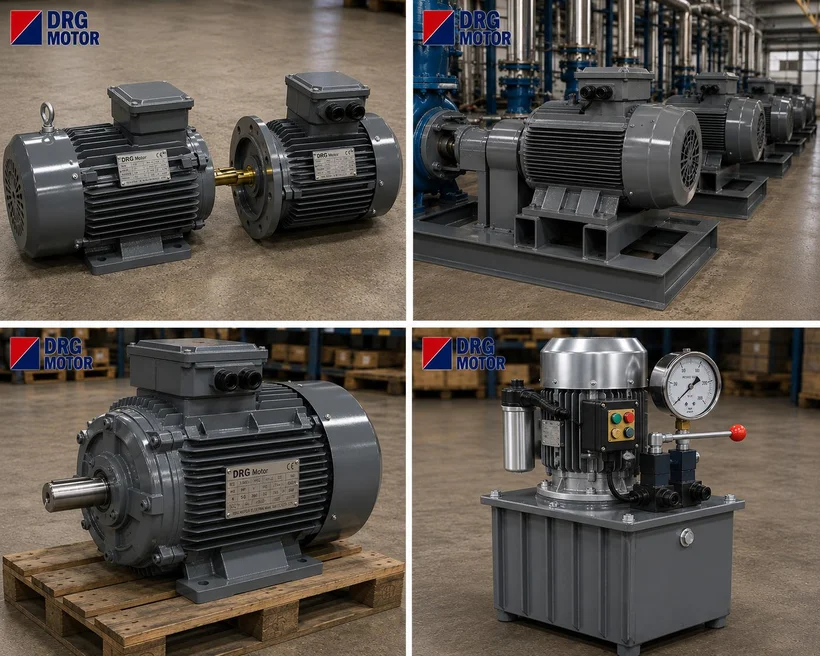
For the majority of dusty environments found in industry, IP55 is a balanced and economical starting point. General manufacturing shops, packaging lines with moderate dust, grain and feed processing, woodworking and many process lines run safely on an IP55-protected motor. This class keeps dust ingress at a harmless level while also providing extra assurance in settings with washdown and water splash. Because IP55 motors are the most widely stocked protection class on the market, lead times are short and spare availability is high, which is a practical advantage for businesses wanting to minimise downtime in the event of a fault. In most applications the right move is to start directly with IP55 rather than a standard open motor, and step up a class only if the environment is genuinely severe.
When You Need to Move Up to IP65 and Beyond
In some environments the dust is so fine, dense or dangerous that IP55 is no longer enough. Where dust ingress must be completely prevented, IP65 and higher protection classes come into play. The following conditions warrant serious consideration of a higher class:
- Sites with ultra-fine, abrasive dust such as cement, lime and mineral grinding
- Food and chemical lines with explosion risk (potentially ATEX scope) from flour, starch or sugar dust
- Environments heavy with conductive dust such as metal swarf, carbon or coal dust
- Plants where the motor is regularly washed down with pressurised water
- Open-air mining and aggregate sites exposed to wind-borne dust and rain at the same time
In these conditions IP65, IP66 and, where necessary, explosion-proof (Ex) motors pay for themselves quickly despite their extra cost, because the cost of a single unexpected stoppage usually far exceeds the difference in protection.
Protection Class Alone Is Not Enough: Cooling and Seals
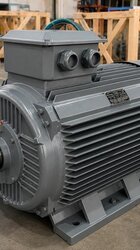
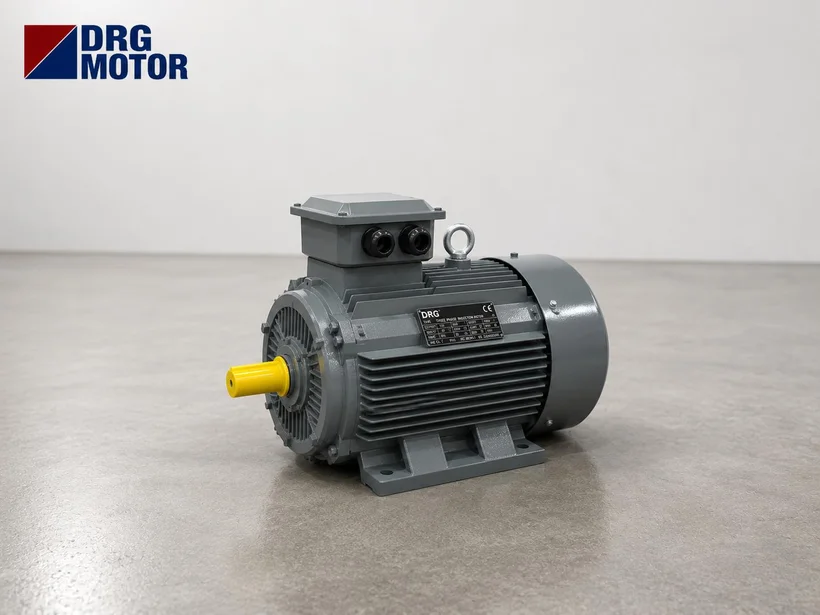
A high IP value keeps dust out, but the other side of the coin must not be forgotten: the more tightly a motor is sealed, the harder it becomes for it to shed its heat. That is why a dusty environment motor must be chosen with the cooling solution in mind alongside the protection class. While a standard finned (TEFC) frame is enough in most cases, very high ambient temperatures or sealed protection classes may call for additional cooling, an external fan or a step up to a larger frame size. The type of bearing seal is equally critical; V-rings, labyrinth seals or dust-shield caps keep particles from reaching the bearing and protect the motor's weakest link. The right supplier factors in this thermal and mechanical balance when selecting the protection class; otherwise, on an over-sealed but under-cooled motor, the search for a motor ısınma çözüm soon comes back onto the agenda.
Efficiency Class and Protection Should Be Considered Together
A motor working in a dusty environment is already under tough conditions in terms of heat management, so the choice of efficiency class directly affects its life too. A high-efficiency motor (IE3 and above) does the same work with fewer losses and therefore runs cooler. On a motor whose cooling is already restricted by dust, every degree saved feeds directly into insulation life. What is more, dusty environments are mostly continuously running heavy process lines; on these lines the efficiency difference turns into a saving that exceeds the cost of the motor within the annual energy bill. For this reason, protection class and efficiency class should be treated not as separate decisions but as two parts of the same whole. On high-power lines this balance becomes even more decisive; on a heavy conveyor or mill drive, for example, an investment at the scale of a 75 kw elektrik motoru makes getting protection and efficiency right together a direct determinant of total cost of ownership.
Practical Measures That Make Maintenance Easier
The right protection class works no miracles on its own; what keeps a motor alive in a dusty environment is the combination of protection and regular maintenance. Even with a high IP class, the layer of dust building up on the cooling fins reduces heat dissipation, so the fins must be cleaned periodically with compressed air or suitable methods. The integrity of the terminal box gaskets, the correct tightness of cable glands and the condition of the seals should be checked regularly. The motor's mounting orientation also makes a difference; where possible, a position that reduces dust accumulation should be chosen. These simple measures turn the lifespan promised by the protection class you bought into reality. Otherwise, even the highest IP class gradually loses its effect in the face of neglect.
Buying the Right Motor from a Reliable Source
For a motor chosen for a dusty environment, it is vital that the IP value on the nameplate reflects reality. With products of unknown origin, parallel imports or relabelled nameplates, the stated protection class often fails to match real performance; dust gets in on site, and in the event of a fault there is no valid warranty or responsible party to turn to. Bought from a B2B supplier, the motor is delivered with its invoice, warranty certificate and test report, and spare parts and technical support remain accessible when needed. The most common solution for dusty settings, three-phase asynchronous motors, are offered across a wide range of IP55 and higher protection classes, which makes it possible to source exactly the protection level your application needs together with the right frame and efficiency class.
The Factors That Set the Price
It is not possible to express the price of a high-protection motor for a dusty environment as a single figure; several factors together determine the final cost. Protection class (IP55, IP65, IP66 or Ex), power and speed, efficiency class, housing material, the seal and cooling solution and the requested lead time all influence the price directly. A higher-protection motor with special seals carries a higher starting cost than a standard model, yet that difference is recovered quickly once the failure and downtime costs that dust would cause are taken into account. For this reason, rather than a flat price, the soundest approach is to obtain a quotation prepared specifically for your environment and the character of your dust.
Let Us Determine the Right Protection for Your Setting Together
The way to extend motor life in a dusty plant is to read the environment correctly and choose the protection class accordingly. While IP55 offers a solid foundation for many applications, settings with cement, food dust, mining or conductive dust call for higher protection classes. At DRG Motor we listen to the character of your dust, your duty cycle and your ambient temperature, then price the right protection and efficiency combination for you with a clear delivery time. Do not let the dust in your plant wear your motors down in silence; send us your requirement, let us prepare a quote tailored to your application quickly, and together secure the uninterrupted flow of your production even under dusty conditions.