 English
 Le français
 Türkçe

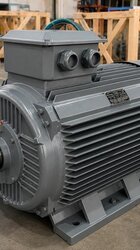
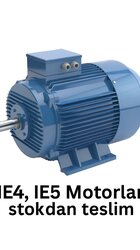


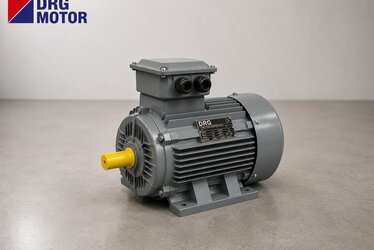
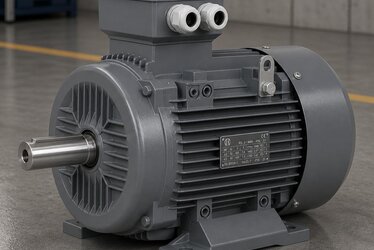
An efficient AC electric motor delivers the same mechanical output while drawing less power from the grid, reducing losses through careful rotor, stator and magnetic-core design. As an İzmir-based supplier, DRG Motor treats the efficiency class as a measurable feature that has a direct effect on a plant's electricity bill.
How the Efficiency Class Drives the Bill
IEC 60034-30-1 classifies motors from IE1 Standard up to IE5 Ultra Premium. The few percentage points between classes may look small, but on a motor running 16 to 24 hours a day under S1 continuous duty they translate into a substantial annual saving. In continuously loaded applications the difference is paid back through energy cost rather than purchase price.
Design Details That Raise Efficiency
High efficiency comes from the whole machine, not a single part: low-loss silicon-steel lamination stacks, optimised slot geometry, quality copper windings and a tight air-gap tolerance. Class F insulation and IP55 protection let the motor hold its efficiency under heat, dust and washdown conditions.
Matching Speed and Load
A motor reaches its true efficiency at rated load; an oversized motor loses efficiency at half load. On a 50 Hz supply, 2 poles give 3000 rpm, 4 poles 1500 rpm and 6 poles 1000 rpm of synchronous speed. Choosing the right pole count and power for the application's torque-speed demand decides the real saving, independent of the nameplate class.
Choosing the Right Efficient Motor
DRG Motor builds efficient AC motors from 0.55 to 355 kW for 400 V / 50 Hz supply, with B3 foot-mounted, B5 flange-mounted and B14 face-mounted options in cast iron and aluminium housings. Share your operating hours and load profile, and we will set the right efficiency class and frame together.