 English
 Le français
 Türkçe

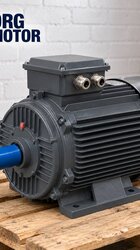
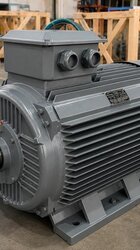
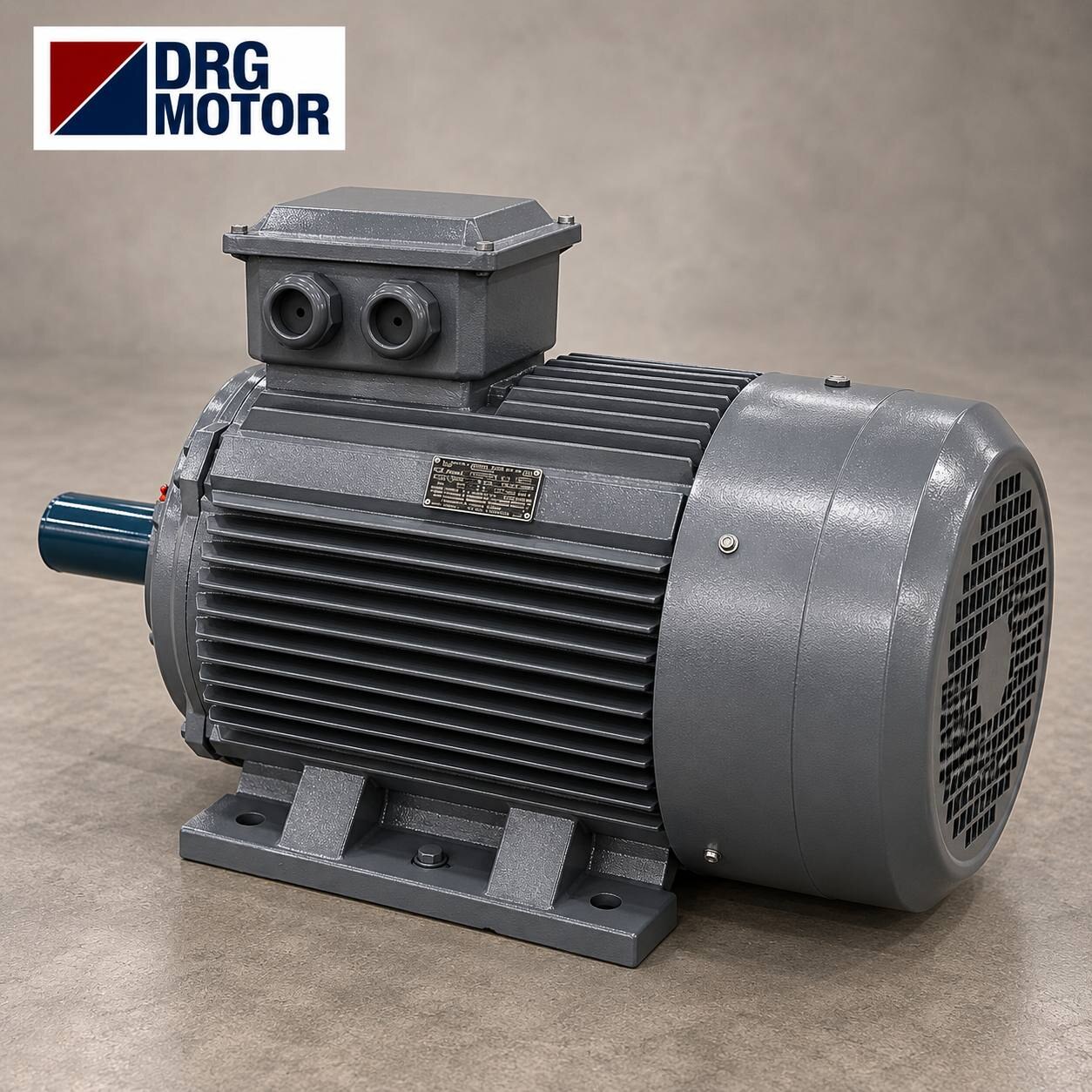

When a motor fails, the power and speed of the replacement can usually be read straight off the nameplate; what drags the job out is how the motor is fixed to the machine. If a flanged motor arrives to replace one bolted to a base by its feet, or the flange hole circle does not match, the motor sits in the store. This article explains what the B3, B5, B14 and B35 mounting codes mean, which one is used on which machine, which dimensions to take before a replacement and which mounting type the shop list prices refer to.
What Does the Mounting Code Tell You?
The IEC 60034-7 standard defines how a motor is attached to a machine with codes starting with “IM”; in the field they are simply written as B3, B5 and so on. The letter and number tell you whether the motor is horizontal or vertical and whether it is held by feet or by a flange:
- B3: Foot-mounted, horizontal. The feet under the frame are bolted to a base or chassis. No flange.
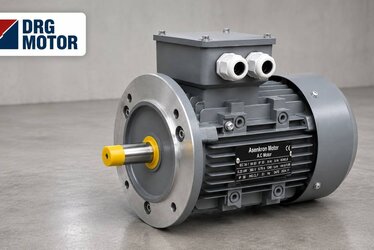
- B5: Large flange, horizontal. No feet; the motor is attached to the machine by the wide flange on the front end shield. The flange holes are clearance holes; the bolt passes through the flange.
- B14: Small (face) flange, horizontal. No feet; the flange diameter is smaller than the frame and the holes are threaded, so the bolt is screwed into the flange from the machine side.
- B35: Feet plus B5 flange, horizontal. It sits on a base and is also attached by the flange.
Vertical use of the same motor is shown with different codes (for example V1 with the flange facing down). Because bearings and water ingress are assessed separately for vertical mounting, it must be stated clearly in the order.
Which Mounting on Which Machine?
| Machine / drive type | Typical mounting | Why |
|---|---|---|
| Coupled centrifugal pump (separate base) | B3 | Motor and pump are aligned on a common chassis. |
| Belt-driven fan, compressor, crusher | B3 | Belt tension is set with slide rails; the feet are fixed to the rails. |
| Close-coupled pump, motor fixed directly to the fan casing | B5 | The motor sits on the machine’s carrying flange. |
| Small gearbox, dosing pump, light machine | B14 | A compact face connection is enough. |
| Heavy motor flanged to a gearbox | B35 | The flange centres the motor, the feet carry the weight. |
As a rule, the heavier the motor, the riskier it becomes to hang it on the flange alone; on large frames that need a flange connection, B35 is preferred.
Flange Size and Shaft Match
For a flanged motor to fit the machine, two things must match together: the flange and the shaft. B5 flanges are referred to as “FF” and B14 flanges as “FT”, followed by the hole circle diameter in mm; FF165 is a B5 flange with a 165 mm hole circle. On the same frame, B5 and B14 flanges have different sizes, so saying “132 flanged” is not enough on its own.
On the shaft side, D is the shaft diameter and E the shaft length. The coupling or pulley hub has been machined to these two dimensions. If the frame number (which is also the shaft height in mm) is the same, the foot hole dimensions and shaft size are the same under the IEC standard; they do not change from brand to brand. This is the most important rule that makes replacement easier.
The table below shows typical IEC dimensions together with the foot-mounted 1500 rpm cast iron model listed in the shop for each frame. On large frames, the shaft size of 2-pole motors may differ from 4-pole ones; compare with the dimension table in the catalogue before ordering.
| IEC frame | Shaft D × E (mm) | B5 flange | B14 flange | Foot-mounted (B3) model, cast iron, 1500 rpm | Power | excl. VAT | incl. VAT (20%) |
|---|---|---|---|---|---|---|---|
| 80 | 19 × 40 | FF165 | FT100 | DRG-802-4 | 0.75 kW | 4,601.30 TRY | 5,521.56 TRY |
| 90L | 24 × 50 | FF165 | FT115 | DRG-90L-4 | 1.5 kW | 6,506.50 TRY | 7,807.80 TRY |
| 100L | 28 × 60 | FF215 | FT130 | DRG-100L2-4 | 3 kW | 9,201.50 TRY | 11,041.80 TRY |
| 112M | 28 × 60 | FF215 | FT130 | DRG-112M-4 | 4 kW | 11,482.90 TRY | 13,779.48 TRY |
| 132M | 38 × 80 | FF265 | FT165 | DRG-132M-4 | 7.5 kW | 17,825.50 TRY | 21,390.60 TRY |
| 160M | 42 × 110 | FF300 | FT215 | DRG-160M-4 | 11 kW | 25,674.00 TRY | 30,808.80 TRY |
Prices are taken from the DRG Motor online shop list dated 24.09.2026; a 3% discount applies to bank transfer/EFT payments, shipping is not included in the price and is paid by the buyer. For current prices please see the shop page.
Which Mounting Does the Shop Price Apply To?
The list prices in the online shop are for the standard foot-mounted (B3) model. If you need a flanged version (B5, B14 or B35), there are two routes:
- When ordering from the shop, write the mounting code and flange size in the order note (for example “B5, FF265”).
- Or ask for a quote by phone or e-mail before ordering; the price and availability of the flanged version will be sent to you separately.
Because the price difference of the flanged version varies by frame and flange type, we do not give a figure in this article; adding a fixed percentage to the foot-mounted price would be misleading. For payment options and bank accounts, see the payment page.
Dimensions to Take When Replacing an Old Motor
If the old motor’s nameplate is unreadable or does not show the mounting code, take these measurements with a tape measure and calliper. Writing them all on one sheet and sending it with a photo greatly reduces the risk of a wrong order.
| Dimension | How to measure | What for |
|---|---|---|
| Shaft height (H) | From foot base to shaft centre | Finding the frame number |
| Foot hole spacing (A and B) | Hole centres across and along | Fitting the base |
| Shaft diameter and length (D, E) | Diameter with calliper, length from shoulder to tip | Coupling/pulley fit |
| Key width | Width of the keyway | Hub keyway fit |
| Flange outer diameter and hole circle | Between centres of two opposite holes | Finding the FF/FT size |
| Flange hole type | Clearance or threaded? | B5 or B14? |
| Spigot diameter | Diameter of the raised ring on the flange | Seating in the machine recess |
| Terminal box position | Seen from the shaft, on top or on the side? | Cable entry and tight spaces |
Common Mounting Mistakes in the Field
- Mixing up B5 and B14: Both are called “flanged”. The large flange with clearance holes is B5; the small flange with threaded holes is B14.
- Looking only at the frame: Even with the same frame, the wrong flange may arrive if the flange size is not stated separately.
- Hanging a heavy motor on the flange: Using B5 alone on a large frame strains the flange and the machine housing; B35 and a support foot should be considered.
- Forgetting the terminal box position: In a narrow machine compartment, a box on the wrong side makes cabling difficult.
- Not stating vertical use: If a motor ordered with a horizontal code will run vertically, say so from the start.
What to Include in Your Order Message
For a quick and accurate quote, your message should include: power (kW), speed (rpm), frame number, mounting code (B3/B5/B14/B35), FF or FT size if flanged, shaft diameter, voltage (230/400 V or 400/690 V) and a photo of the old motor’s nameplate. If you selected the product in the online shop, add this information to the order note. For delivery and shipping options, see the delivery and shipping page.
Frequently Asked Questions
Can I convert a foot-mounted motor to a flanged one later?
On some frames a flange can be added by changing the front end shield, but this does not apply to every model and requires extra parts. Ordering the right mounting type from the start means less work.
Do flanges from different brands fit on the same frame?
For motors built to the IEC standard, the same frame and the same flange code (e.g. FF215) give the same connection dimensions. Still, measuring the spigot diameter and shaft size on the old motor and comparing them is the safest way.
When is B35 needed?
B35 is used when the motor is centred on a gearbox or pump by its flange but, because of its weight, must also sit on a base. It is also preferred in belt-tensioned applications because the feet carry the load.
Why can’t I see the price of a flanged motor in the shop?
The shop list prices are for the standard foot-mounted model. For a flanged version you can write the mounting code in the order note or ask for a quote.
To determine the mounting type or flange size together, call +90 (542) 666 11 11, send dimensions and photos to [email protected] or use our contact page.