 English
 Le français
 Türkçe

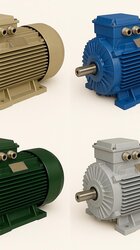
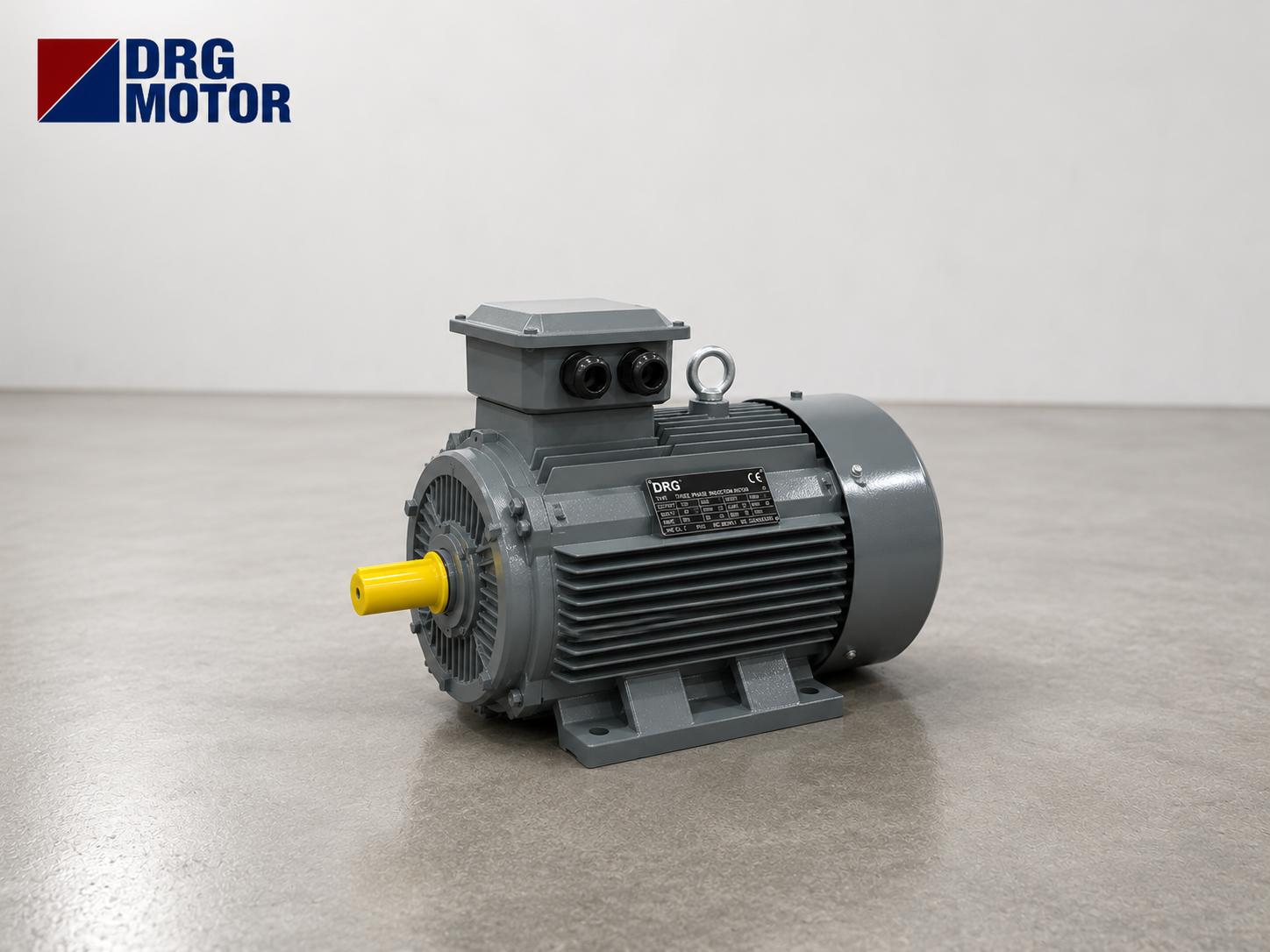

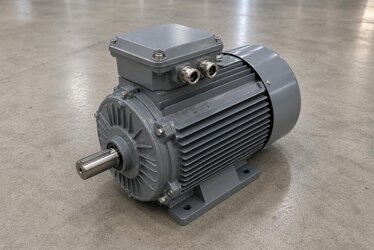
The first figure most people look at when buying an electric motor is the kW rating, yet the value that actually determines whether the motor will work in harmony with your facility's electrical infrastructure is the full load current printed on its nameplate. This current expresses what the motor draws at rated load, and it directly shapes a long list of decisions, from cable cross-section and fuse rating to contactor size and transformer capacity. A miscalculated current value slips past you at first glance but resurfaces during commissioning as tripping fuses, overheating cables, and a protection relay that keeps dropping out. At DRG Motor, we supply motors with the right current and voltage compatibility alongside the right power, drawing on stock availability and fast delivery. In this article we explain why the motor full load current sits at the center of the purchasing decision, where grid compatibility quietly hides, and which details you should share at the quotation stage to save both money and time.
What the Current Figure on the Nameplate Really Tells You
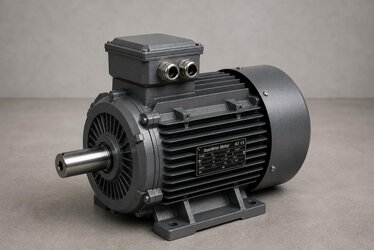
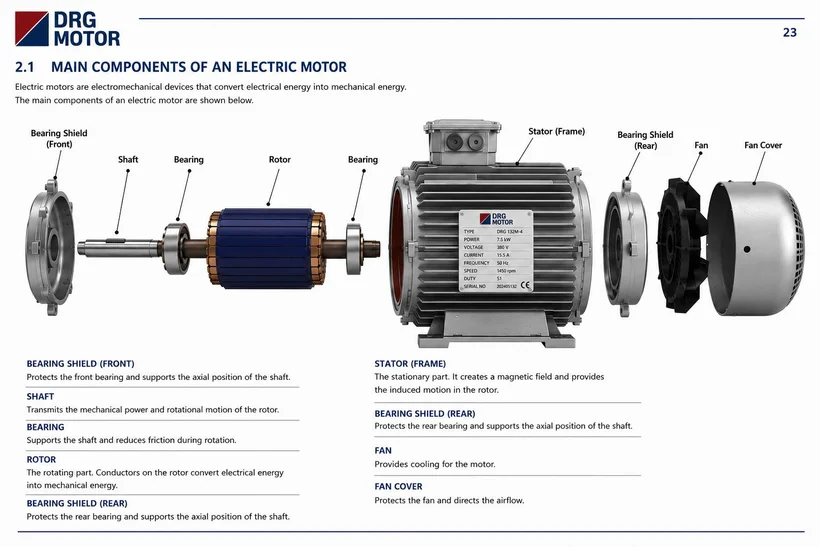
The current value on a motor nameplate shows what the motor draws at its rated power and rated voltage. That number is not arbitrary; it is the combined result of power, voltage, power factor, and efficiency. Two motors of the same power can draw different currents because their efficiency classes and power factors differ. A higher-efficiency motor does the same work with less current, which means less load on cables and protection devices and lower energy cost over the long run. Looking only at the kW figure and ignoring the current leads you to size your infrastructure incorrectly. We share the nameplate values of the motors we supply transparently and evaluate together whether your existing panel and wiring are compatible with them, so the arrival of the motor does not come with a surprise infrastructure upgrade cost.
The Relationship Between Grid Voltage and Current
Current and voltage are inversely related; a motor of a given power draws more current at 230V and less at 400V. That is why reporting your facility's grid voltage correctly is the first step in motor selection. The 380 volt trifaze motor infrastructure common in industrial applications distributes current evenly across three phases, reducing cable cross-section and losses. Motors running on a single-phase supply draw noticeably more current for the same power, which calls for thicker cable and a larger protection device. Voltage fluctuations on your grid also affect current: when voltage drops, the motor draws more current to deliver the same torque and heats up. For this reason we evaluate not only the nominal voltage but the real voltage conditions on site at the quotation stage.
Starting Current: The Real Surprise Lives Here
A value just as important as full load current is the current the motor draws at the instant of start-up. An asynchronous motor started directly on line can draw six to eight times its full load current for a few seconds. At small power ratings this is not an issue, but at medium and large ratings that inrush current stresses your transformer and can cause a voltage dip on the grid that affects other equipment. Choosing the correct starting method is therefore an inseparable part of the purchasing decision:
- Direct-on-line: the simplest solution for small ratings with adequate transformer capacity
- Star-delta: the classic method that cuts starting current to roughly a third
- Soft starter: raises current gradually and also reduces mechanical shock
- Variable-frequency drive: the most flexible option, smoothing the start while providing speed control and energy savings
We determine which method suits you in line with your motor power and transformer capacity, and supply the motor with matching specifications.
Selecting Cable Cross-Section and Protection Devices
The correct cable cross-section cannot be chosen without knowing the full load current. A cable that is too thin cannot carry the current, overheats, and over time degrades its insulation and creates a fire risk; a cable that is thicker than necessary is simply wasted cost. In the same way, the fuse, contactor, and thermal overload relay are all selected according to the motor's current value. The thermal overload relay continuously monitors the current the motor draws and disconnects it under overload; setting this relay to the correct current range is one of the most critical measures for preventing a winding burnout. We recommend suitable protection device ranges based on the nameplate current of the motors we supply, and we assess whether your existing panel can handle these values. A correctly sized protection chain is an invisible but vital investment that protects both the motor and the safety of your facility.
Power Factor and Its Effect on the Energy Bill
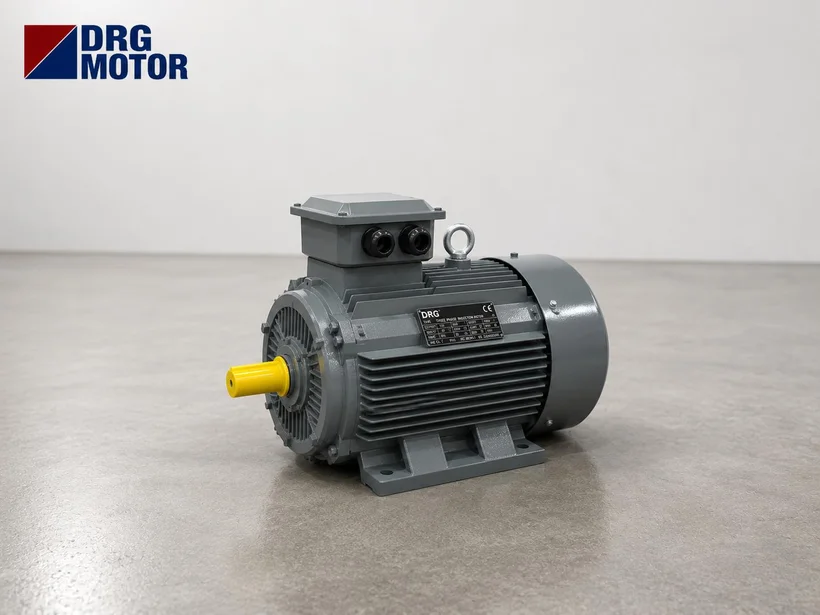
Part of the current a motor draws is converted into work, while another part is the reactive component spent on building the magnetic field. The power factor (cos φ) describes this relationship, and a low power factor means more current is drawn for the same work. A low power factor needlessly loads your cables and can trigger a reactive penalty from the electricity distribution company. Motors with high efficiency and a favorable power factor reduce this burden from the outset. If you have reactive power compensation installed at your facility, the motor's power factor also matters for sizing that system correctly. At the quotation stage we share the motor's power factor and, where needed, guide you in calculating your compensation requirement accurately.
How Ambient Conditions Change Current Demand
The current a motor actually draws in the field can differ from the ideal catalog conditions. High ambient temperature, altitude above sea level, and dusty or humid environments affect the motor's cooling and efficiency, which in turn changes the current demand. In damp and wet environments the protection class is part of this equation too; in applications where an ip55 motor should be chosen, selecting the correct protection class lets the motor run stably within its expected current and temperature range. In a continuously running application (S1 duty type) the motor is loaded with full load current constantly, while in short-time or intermittent duty (such as S3) the average current demand differs. Defining your duty type correctly helps you choose a motor that is neither oversized nor undersized; both are unnecessary cost.
The Right Motor From a Single Supplier
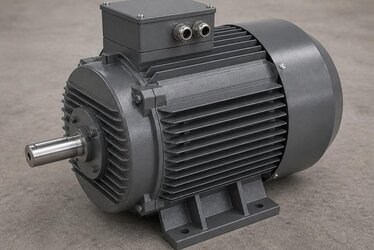
When current compatibility is established correctly, motor selection becomes easier too. Our broad three-phase asynchronous motors range, covering a wide span of power and speed, lets us answer different current and voltage needs from a single supplier. If you share the power, voltage, current, and speed details from your existing motor's nameplate, we quickly identify a directly compatible equivalent and send our quotation. For a new installation, we evaluate your load characteristics and grid conditions together and recommend a solution that fits your infrastructure precisely. Thanks to the common power ranges we keep in stock, we can ship quickly for urgent needs.
The Factors Behind the Cost and the Quotation Process
Before giving a firm price we prefer to understand your application's requirements, because the cost of a motor depends not on a single value but on a range of factors:
- Power (kW), speed, and rated current
- Grid voltage and number of phases (single-phase / three-phase)
- Efficiency class (IE3 and so on) and power factor
- Starting method and drive compatibility
- Protection class and ambient conditions
- Lead time and order quantity
Once you share these details, we present several options with correctly matched current and voltage that best fit your infrastructure and budget. Our quotation is transparent; it clearly states which feature affects the price and why.
Reading the Current Right Means Investing Right
A motor running in harmony with your facility begins with reading the current value on the nameplate correctly and matching it to your grid conditions. Our aim at DRG Motor is not simply to sell you a motor, but to deliver a solution that fits your infrastructure exactly, works with your protection and wiring, and lowers your energy cost, all under reliable supply terms. Share your motor power, your grid voltage, and the nameplate details of your existing motor if you have one; let our specialist team evaluate current compatibility with you and recommend the most suitable motor the first time. Reach out to us today and receive a quotation for a motor perfectly matched to your facility in the shortest possible time.