 English
 Le français
 Türkçe


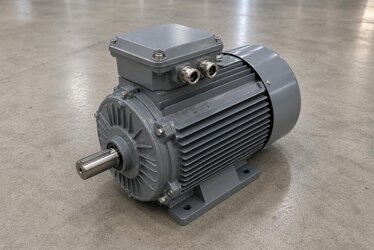
The moment a motor enters an environment full of dust, water and pressure washing, the rules change. A standard frame holds up for a few months, then the bearings seize, the windings absorb moisture and the line stops. This is exactly where choosing an IP55 motor stops being optional and becomes a requirement. In this guide we explain, from a supplier's point of view, where IP55 protection is genuinely necessary, where it is simply wasted money, and how to order the right frame quickly.
What the IP digits really mean on the floor
The two digits in an IP rating describe two independent risks. The first digit covers protection against solid objects and dust, while the second covers protection against liquids. In an IP55 motor the first 5 means the frame is dust protected: not fully sealed, but it will not let in enough dust to harm operation. The second 5 means protection against low pressure water jets from any direction. In practice this level is enough for the vast majority of sites that face hose-down cleaning, dust and outdoor exposure.
Reading this level correctly settles the purchasing decision early. An IP54 frame offers similar dust protection but is weak against water jets, while IP65 adds full dust sealing and stronger water protection at a higher cost and longer lead time. For most industrial applications the right middle ground is IP55, because buying more protection than you need also inflates the budget unnecessarily.
Sites where an IP55 motor is truly a must
In some environments choosing a standard frame means accepting a loss before you start. In the following sites IP55 protection is not up for negotiation:
- Food and beverage plants: end-of-shift pressure washing puts the motor in direct contact with water.
- Cement, marble, mining and ready-mix plants: fine dust finds every gap, and anything below IP54 fails quickly.
- Textile dye houses and chemical plants: humidity and vapour density are high.
- Outdoor pump, fan and conveyor applications: rain and dust arrive together.
- Woodworking and grain handling lines: combustible dust build-up is both a failure and a safety risk.
In these sites you are not just buying and fitting a motor; you are guaranteeing the continuity of production. Fitting a cheap frame instead of IP55 on a food line comes back as double the cost during the first wash-down season.
When IP55 is simply extra spend
An honest supplier does not try to sell the highest protection on every motor. For a motor running in a dry, clean, enclosed and air-conditioned machine room, IP44 or IP54 can be more than enough instead of IP55. Buying excessive protection raises the unit cost and, in some cases, slightly affects cooling efficiency, since more enclosed frames are a little more restricted in dissipating heat. The right decision is to choose the frame according to the site, which is why sharing the environment details with us at the quotation stage is so valuable.
Site questions that decide the protection class
To decide which frame is right, ask yourself these questions before requesting a quote:
- Does the motor come into direct or indirect contact with water or pressure washing?
- Is there fine, conductive or combustible dust build-up in the area?
- Will the motor run outdoors or in an enclosed, controlled space?
- Are high humidity, steam or chemical vapours present?
- How frequent is maintenance, and what does a breakdown cost you per hour of downtime?
The answers to these questions directly determine the protection class and, where needed, extra measures such as a condensation drain, special bearing grease or a tropicalised winding.
Technical points to check when picking the right frame
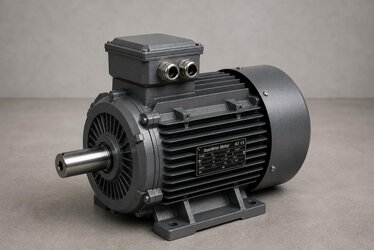
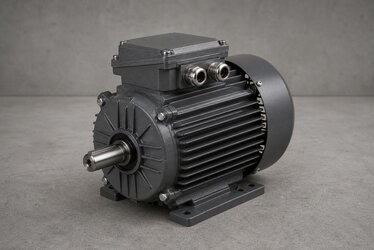
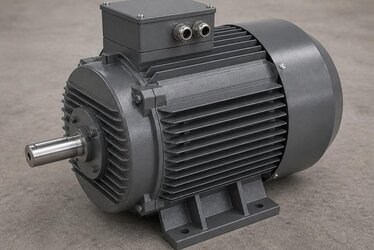
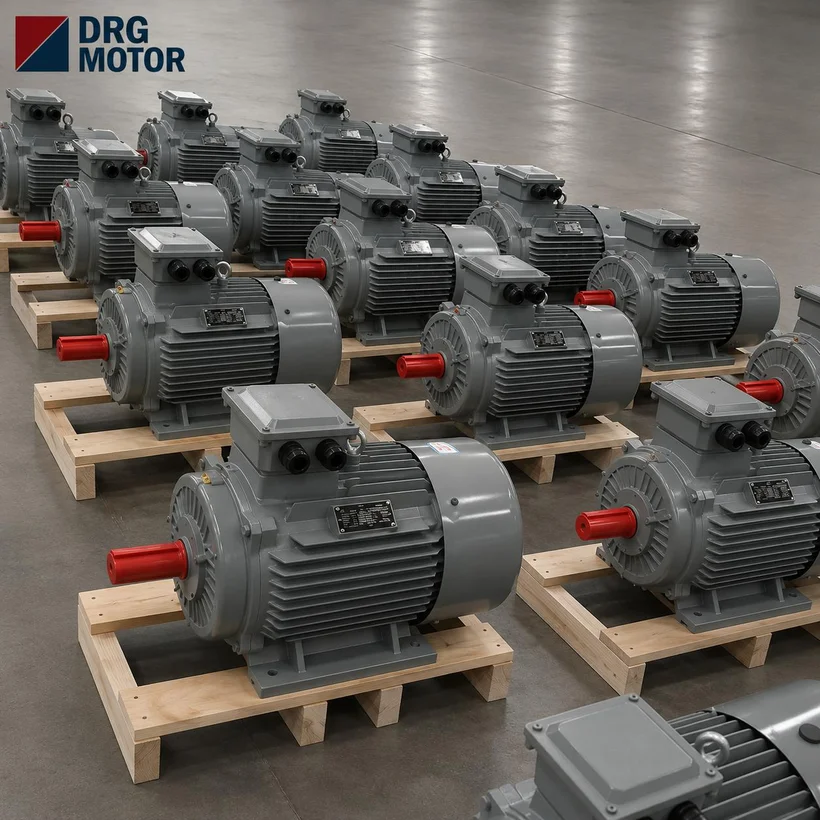
The IP55 label alone is not enough; the frame has to fit your application. Across our stock we match power, speed and mounting type to the site. In most applications the widely chosen three-phase asynchronous motors family is readily available with IP55 protection, which also shortens lead times. Details such as efficiency class (IE2/IE3), pole count, flange or foot mounting and terminal box orientation should be settled up front so the motor drops onto the site without trouble.
Industry examples and similar needs
An IP55 requirement often arrives together with specific machine types. In plastic injection, heat and dust occur together, so the drive motor is expected to be protected; when supplying an enjeksiyon makinesi motoru we set the protection class with you according to the site. On compressed-air lines, because of humidity and continuous load, IP55 is often the default choice when selecting a kompresör motoru. In other words, the protection-class decision cannot be considered apart from the operating profile of the machine the motor is attached to.
On-site habits that extend an IP55 motor's life
Choosing the right protection class is half the job; the other half is the discipline of use on site. An IP55 frame resists water jets and dust, but it is not unlimited; aiming pressure washing straight at the motor's terminal box will, over time, let moisture in no matter how good the seal is. Directing water at the surrounding surfaces rather than onto the motor, periodically cleaning the intake of the cooling fan, and fully tightening the terminal box cover bolts all ensure the frame actually meets its rated protection level on the floor.
Another critical point is condensation. In environments where the temperature changes frequently, condensed water can form inside the motor; that is why, at the correct mounting angle, the condensation drains should face downward and be left open when needed, protecting the winding from moisture coming from inside. These small details directly determine whether the IP55 investment delivers its expected life, and they are exactly why we discuss the mounting position with you at the quotation stage.
Thinking about efficiency class and protection class together
A common mistake on site is treating protection class and efficiency class as separate decisions. In reality both are set in the same purchase. On a continuously running IP55 motor that accumulates high running hours, choosing the IE3 efficiency class delivers tangible savings on the energy bill, and because the frame is already protected, that saving compounds together with lower maintenance cost. By contrast, on a low-power application that runs rarely, the combination of IE2 with IP55 is often the most balanced choice. We set the right combination together according to your operating hours and load profile, so you land on the right point for both protection and running cost.
Information to send us before ordering
The information we need for a fast, accurate quote is limited and clear. Sharing these items up front removes back-and-forth correspondence and shortens the lead time:
- Required power (kW or HP) and speed or pole count.
- Mounting type: foot (B3), flange (B5/B14) or combined.
- Operating environment: enclosed, outdoor, dusty, wet, with chemical vapour.
- Supply voltage and frequency, and whether it will run on a drive.
- Quantity needed and how urgent it is.
These five items are enough to fit the IP55 frame to the site exactly and to head off unnecessary revisions. A fast price given with missing information often turns into a motor that does not fit on site; we prevent that by asking the right question from the start.
Stock, lead time and the cost balance
As a supplier, the sentence we hear most often is this: the motor brought the line down, we need it as soon as possible. The standard power and speed ranges of IP55 frames are usually ready in our stock, which significantly shortens lead times for urgent needs. For jobs that require special power, a special flange or increased protection, we share a clear delivery schedule at the quotation stage. On the price side, since protection class, efficiency class, power and quantity all act together, giving a single list price would be misleading; instead we prepare a project-based price tailored to your site.
Securing the line with the right frame
Used on the right site, IP55 means buying continuity of production rather than an expensive motor. Anywhere dust and water are present, the wrong frame comes back within a few months as compounding maintenance, downtime and replacement costs. Send us your site conditions, your machine type and its power; we will assess the environment together and prepare a fast, clear quote for the IP55 motor that fits your need exactly. Choosing the right protection class the first time is the cheapest insurance against future stoppages.