 English
 Le français
 Türkçe

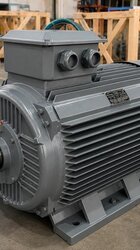
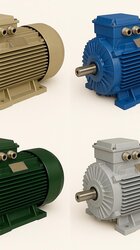
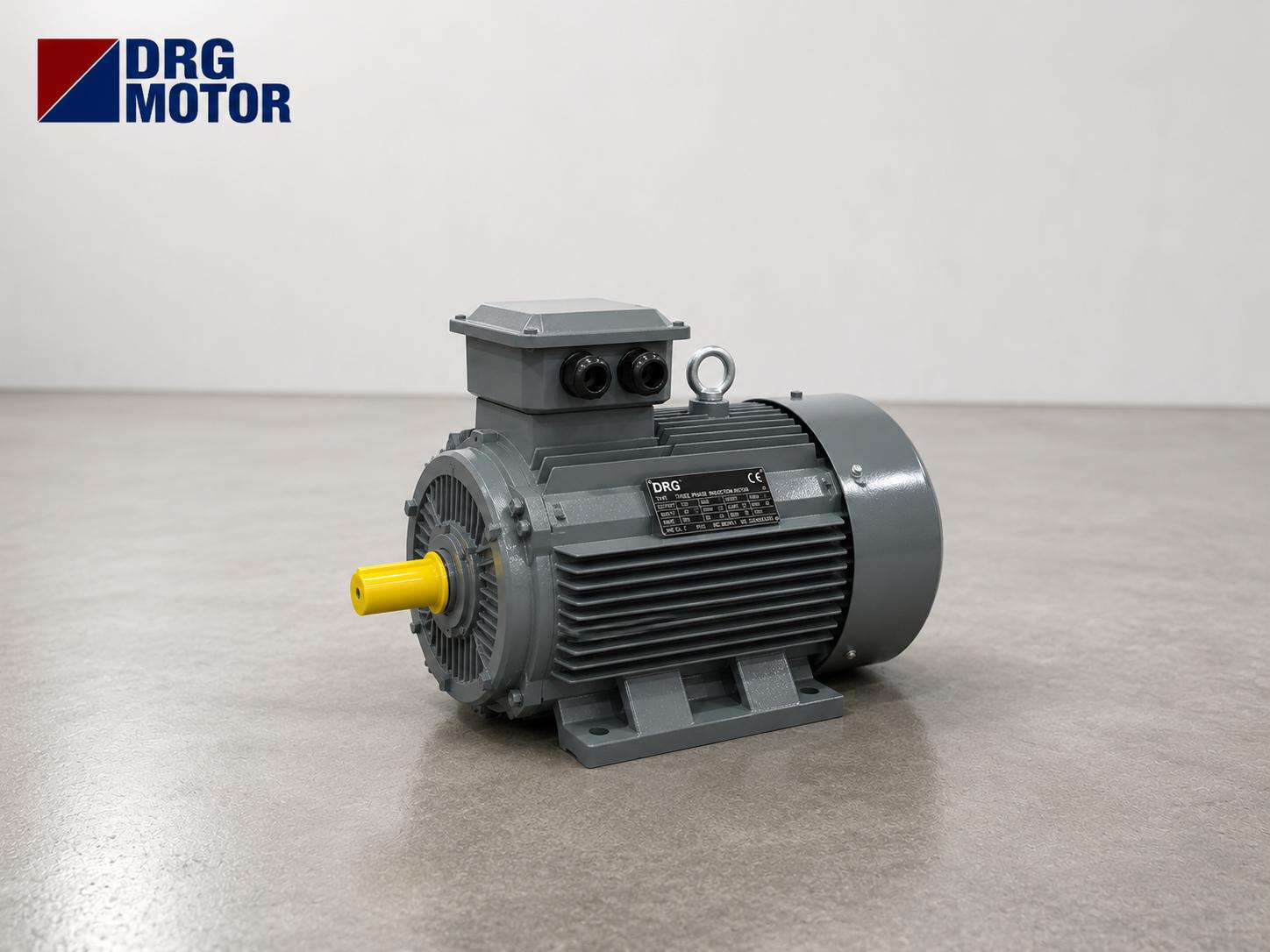

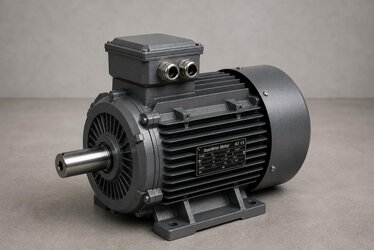
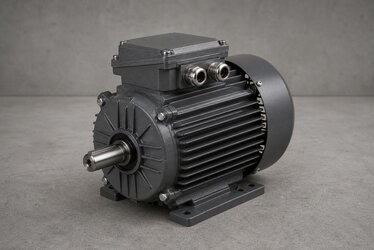
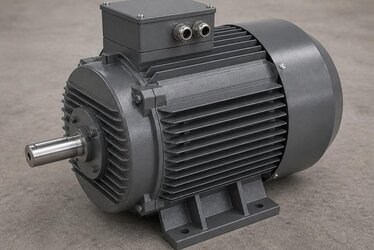
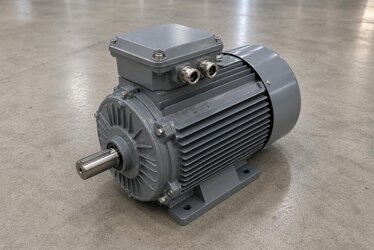
The single most important factor in determining the efficiency of a compressor line is the choice of the right drive motor. Whether the unit is a piston, screw, or scroll compressor, compressing air or gas demands high and continuous mechanical power. This is exactly where a two-pole high-speed compressor motor becomes the most widely adopted solution, because it satisfies both the speed requirement and the demanding, continuous duty regime that compressors operate under. As DRG Motor, we supply these motors to compressor manufacturers and maintenance companies across Turkey directly from stock, and we work with you to define the right combination of power, speed, and protection class for your specific application.
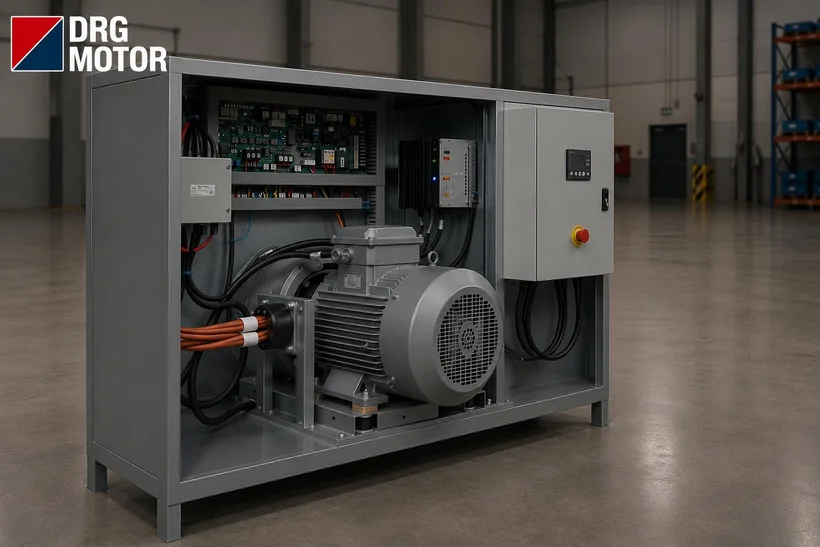
Why Two-Pole Motors Are Preferred in Compressors
In an asynchronous motor the number of poles directly governs the rotational speed. A two-pole motor reaches a synchronous speed of roughly 3000 rpm on a 50 Hz supply, and once slip losses are accounted for it typically settles around 2850-2950 rpm at full load. Most compressors, particularly piston and screw types, are designed to deliver their most efficient flow within this high-speed band. While lower-speed four- or six-pole motors require an additional pulley ratio or gearbox, a two-pole solution can often be coupled directly or through a simple belt drive. That translates into fewer mechanical losses and lower maintenance costs over the life of the installation.
Starting Torque and Load Characteristics
A frequently overlooked aspect of compressor selection is how the motor behaves when starting under load. Piston compressors demand a high breakaway torque, especially when they restart while the pressure tank is already charged. Even though screw compressors use valve arrangements to ease the start, the motor still has to accelerate an inertial mass quickly to high speed. The two-pole motors DRG supplies are selected with designs that offer a balanced starting torque and inrush current suited to compressor loads. Depending on the requirement, we recommend models compatible with direct-on-line (DOL) starting, star-delta, or soft starters, so that both supply-side current surges and mechanical stress are kept to a minimum.
Thermal Endurance for Continuous Operation
Compressors generally run in S1 continuous duty, or in frequently cycling S3/S4 regimes. In either case the thermal load on the motor is critical. For this reason we recommend at least Class F insulation in compressor applications. Class F windings withstand temperatures up to 155 °C, and when operated within a Class B temperature rise they give the motor a clear thermal safety margin. In compressor rooms where ambient temperatures climb during the summer, this margin directly extends motor life. On request, we can also supply models equipped with thermistor (PTC) protection or thermal contacts for added safeguarding.
Protection Class: Dust, Moisture and Environment
Compressor rooms are very often dusty, humid, and subject to vibration. The protection class (IP rating) of the motor therefore matters as much for durability as it does for performance. For standard industrial compressor applications, an IP55 rating provides reliable protection against dust ingress and low-pressure water jets. In harsher conditions, near outdoor locations, or where wash-down takes place, the rating can be raised to IP56 or IP65. At DRG we assess the environment of the installation and recommend the correct IP rating, helping you avoid both unnecessary cost and inadequate protection.
- Speed: Two-pole, ~2850-2950 rpm at full load
- Insulation: Class F (155 °C), Class B temperature rise recommended
- Protection: IP55 as standard; IP56/IP65 for harsh conditions
- Duty: S1 continuous or frequently cycling S3/S4
- Starting: DOL, star-delta, or soft-starter compatible
Efficiency Class and Energy Cost
Compressors are among the most energy-hungry pieces of equipment in any facility and frequently run all day long. Because of this, the efficiency class of the motor becomes a far larger cost item than the purchase price itself. High-efficiency IE3 and higher-class motors carry a slightly higher upfront cost, but they deliver meaningful savings on the annual energy bill. On a continuously running compressor, moving up one efficiency class can allow the motor to pay for itself within a few years. DRG's two-pole motor range includes several efficiency classes, and we guide you toward the best balance based on your facility's operating hours.
Connection, Mounting and Mechanical Fit
Choosing the right motor is only half the task; defining the correct mounting arrangement is equally important. Depending on the compressor type, you may need a foot-mounted (B3), flange-mounted (B5/B14), or combined housing. Piston compressors usually favor a foot-mounted frame for pulley-belt transmission, while compact screw units commonly use a flanged direct connection. Ensuring that the shaft diameter, keyway, and frame dimensions match the existing compressor exactly prevents wasted installation time and adaptation costs. When you share the nameplate data or technical drawing of your current motor, we identify an exact equivalent or a more suitable alternative and present it together with our quotation.
Spare Motors and Fast Supply
For most production lines, a stopped compressor means stopped production. Keeping a spare on hand for critical compressor motors therefore significantly reduces the risk of unplanned downtime. As DRG, we supply two-pole motors in common power and speed ranges directly from stock, offering a fast solution when urgent needs arise. Beyond compressors, you can also draw on our broad portfolio of three-phase asynchronous motors for pump, fan, and conveyor lines, meeting all your motor requirements from a single supplier.
Choosing the Right Power: Avoiding Under- and Over-Sizing
Two of the most common mistakes in compressor motor selection are choosing a rating that is too low or too high. An undersized motor is constantly strained when the compressor runs at full load, overheats, and fails far earlier than expected. An oversized motor, on the other hand, often runs at partial load, lowering its efficiency while adding unnecessary upfront cost. The right choice requires evaluating the rated power of the compressor together with its working pressure, cycling frequency, and ambient conditions. At the quotation stage, DRG reviews these parameters with you so the motor is selected at a rating that fits the application precisely, neither too much nor too little. This approach lowers both energy cost and maintenance frequency over the long term.
Maintainability and Spare Part Continuity
The total cost of ownership of a motor is not limited to its purchase price; serviceability and spare part availability are also significant items over time. A compressor motor built to standard IEC frame sizes makes parts such as bearings, fans, and terminal boxes easy to source and shortens service times. Because the motors DRG supplies conform to common IEC standards, you will not struggle to find parts during future maintenance and repairs. In addition, for facilities that run regularly, we recommend models that simplify periodic lubrication and thermal monitoring, helping you streamline the maintenance plan of your compressor line.
Vibration, Bearings and Noise Management
In high-speed motors, mechanical balance is a factor that directly affects both service life and operating comfort. Because a two-pole motor spins at a much higher speed than its four-pole counterpart, rotor balance quality and bearing selection become even more critical. An unbalanced rotor shortens bearing life and increases the vibration transmitted into the compressor body. The high-speed motors DRG supplies come with dynamically balanced rotors and appropriate bearing solutions as standard, and for heavily loaded lines we can evaluate reinforced or re-greasable bearing options on request. In facilities that require low noise levels, we also recommend motors with suitable fan and cover designs to protect the acoustic comfort of the working environment.
Operation with a Variable Frequency Drive (VFD)
A significant share of modern screw compressors run on variable speed drive (VSD/VFD), adjusting flow to match air demand and thereby achieving substantial energy savings. Unlike a fixed mains supply, a motor driven by an inverter is exposed to additional thermal and insulation stresses. For inverter-fed compressor applications we therefore recommend motors with reinforced insulation and, where needed, shaft grounding or forced cooling support. If your application will use a frequency inverter, sharing this at the quotation stage allows us to select a motor suited to that mode of operation and to ensure a long service life.
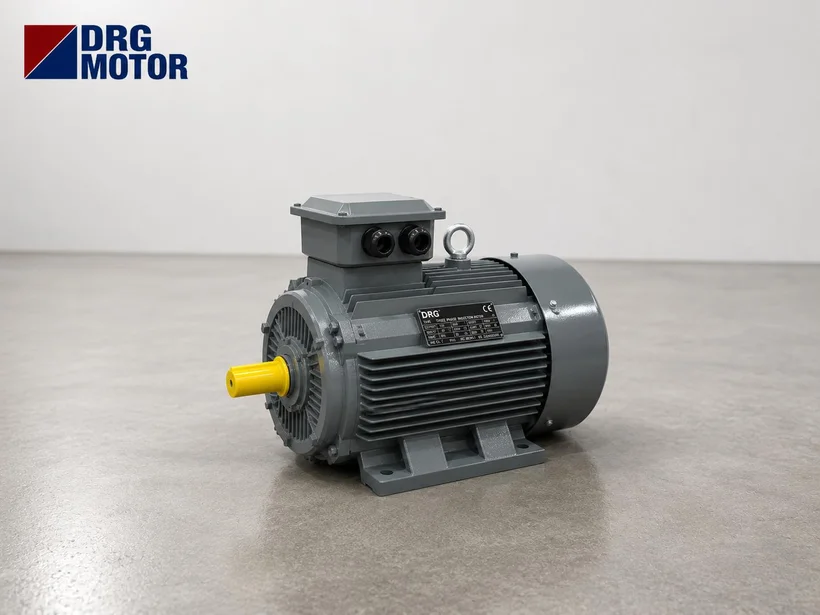
Request a Quote Tailored to Your Application
Every compressor application calls for a different combination of power, speed, protection class, and mounting. That is why, rather than picking a motor at random from a catalog, we recommend defining the correct specification together for your particular setup. For the compressor motor you need, simply share the compressor type, working pressure, daily run time, and the nameplate data of your existing motor. The DRG Motor expert team will identify the right two-pole high-speed motor and provide a fast quotation complete with stock availability, delivery time, and pricing. For reliable supply to every corner of Turkey, get in touch with us today and let us match your compressor line with the right motor to keep it running without interruption.