 English
 Le français
 Türkçe

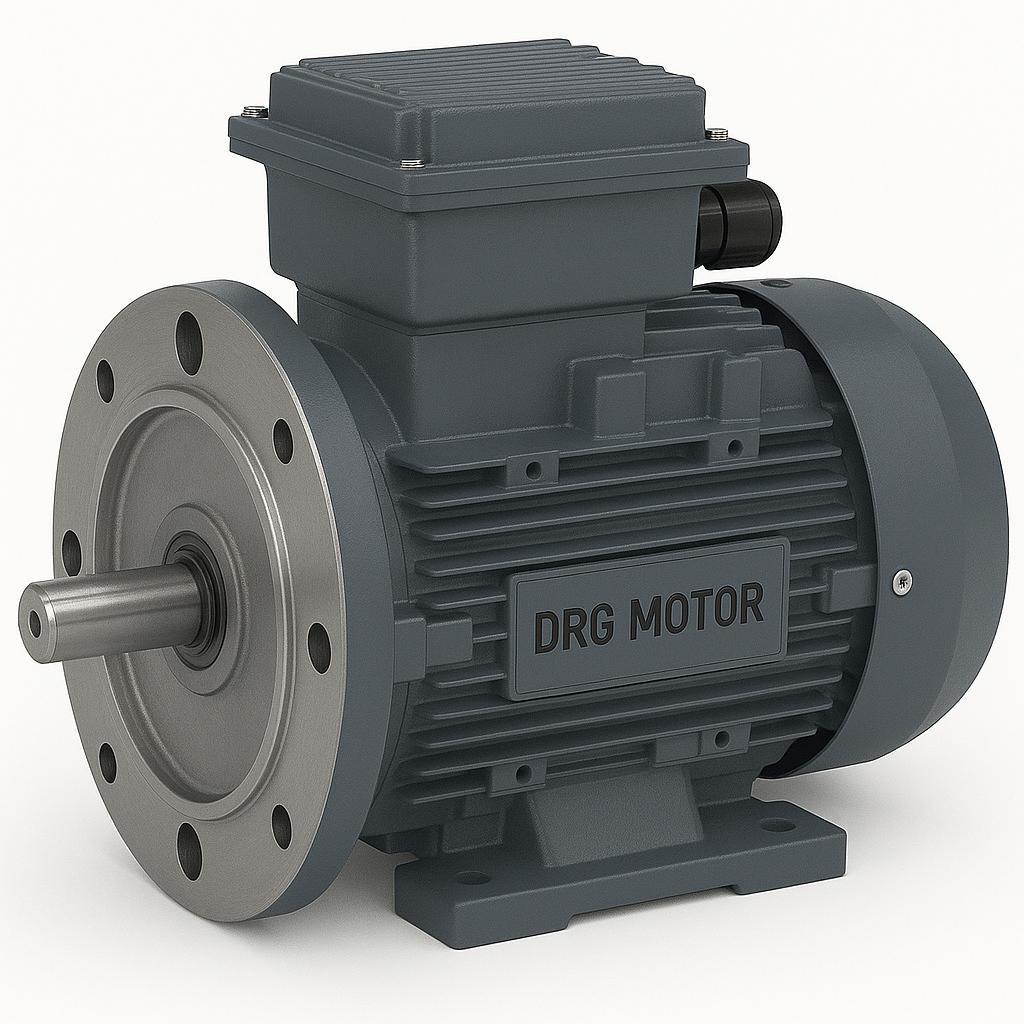

In electric motors, the concept of "pole" is one of the most fundamental features determining the motor's speed (rotation rate). The number of poles expresses how many pole pairs the magnetic field created in the stator contains, and it directly affects the motor's revolutions per minute (RPM). Understanding the pole concept is important for correct motor selection.
How Does the Number of Poles Determine the Speed?
The synchronous speed of an asynchronous motor depends on the mains frequency and the number of poles. On a 50 Hz supply; a 2-pole motor turns at about 3000 rpm, a 4-pole at 1500 rpm, a 6-pole at 1000 rpm and an 8-pole at 750 rpm. As the number of poles increases, the motor's speed decreases, but higher torque is obtained at the same power.
Which Pole Count for Which Application?
In pump and fan applications requiring high speed, 2-pole (3000 rpm) motors are preferred. In conveyor, mixer and general drive systems, the most common choice is 4-pole (1500 rpm) motors. In heavy applications such as crushers and mills requiring high torque and low speed, 6- or 8-pole motors are used.
Pole and Torque Relationship
In a motor of the same power, torque increases as speed decreases. Therefore, in applications that need to turn slowly but powerfully, motors with a higher number of poles are selected. The correct pole–power combination is critical for both efficient operation and long motor life.
Motor Selection at the Right Speed
Determining the speed required by the machine your motor will drive is the first step in choosing the correct number of poles. The 0.55–355 kW range carries 2, 4, 6 and 8-pole options, so the speed is fixed at order time instead of being corrected with a belt drive later. You can also benefit from our what is an electric motor guide for power and speed selection.
Pole Count and Efficiency Relationship
Pole count sets the speed. It also shifts the efficiency figure, because a 6-pole unit and a 2-pole unit of the same rating do not carry the same losses. In general, 4-pole (1500 rpm) motors are the most balanced option in terms of efficiency and application suitability, and are the most widely used type in industry. In very high- or very low-speed applications, selecting the correct number of poles prevents unnecessary energy loss.
Frequently Asked Questions
What is the difference between a 2-pole and a 4-pole motor?
A 2-pole motor runs at high speed (~3000 rpm), a 4-pole motor at medium speed (~1500 rpm). 4-pole motors are the most common choice in industry because they offer higher torque at the same power.
Can I change the pole count later?
No; the number of poles is determined by the motor's winding structure and is fixed. If a different speed is needed, a motor with a different pole count or a frequency inverter is used.